Home › Blog › Science & Environment › Bathynomus Vaderi Discovery
The Deep Dark Side of the Ocean: Unveiling Bathynomus vaderi, the Newly Discovered "Darth Vader" Supergiant Isopod
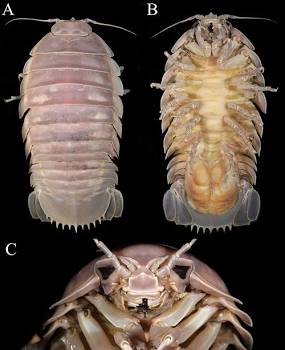
Key Takeaways & Summary
- The Discovery: A newly cataloged 14-legged deep-sea crustacean, Bathynomus vaderi, measuring up to 32.5 cm (12.8 in) and weighing nearly 1 kg (2.2 lbs).
- The Darth Vader Moniker: Named after its triangular head shield (clypeus) which closely matches the iconic silhouette of Darth Vader's helmet.
- Benthic Habitat: Inhabits muddy substrates in the South China Sea near the Spratly Islands at depths of 300 to 1,000 meters.
- Deep-Sea Gigantism: Driven by freezing temperatures (2°C–4°C), delayed sexual maturity, high hydrostatic pressure, and the need to endure prolonged starvation between food falls.
- Conservation Warning: Targeted by an unregulated luxury seafood fishery in Vietnam before baseline population data can be established by science.
Table of Contents
- 1. How Bathynomus vaderi Was Discovered
- 2. Anatomical and Biological Profile of Bathynomus vaderi
- 3. The Science of Deep-Sea Gigantism
- 4. Habitat, Diet, and Ecological Role in the Benthic Ecosystem
- 5. Commercial Exploitation and Conservation Concerns
- 6. Landmark Ocean Discoveries Matrix
- 7. Modern Technology in Species Cataloging
- 8. Exam Relevance & UPSC Science Syllabus
1. How Bathynomus vaderi Was Discovered: From Fishermen’s Nets to Science
Deep beneath the surface of the South China Sea, in pitch-black ocean trenches where sunlight cannot penetrate, lies a world populated by some of the most unusual organisms on Earth. In a landmark taxonomic discovery, marine biologists officially described a massive, 14-legged benthic crustacean that looks remarkably like one of cinema's most famous villains: Bathynomus vaderi, commonly known as the Darth Vader supergiant isopod.
Measuring over 32.5 centimeters (12.8 inches) in length and weighing nearly 1 kilogram (2.2 pounds), this newly cataloged marine creature belongs to an elite group of deep-sea scavengers known as "supergiants." The species earned its scientific name after taxonomists realized that the frontal structure of its head—specifically its prominent clypeus and head shielding—bears an uncanny resemblance to the iconic helmet of Star Wars antagonist Darth Vader.
The Vietnamese Seafood Phenomenon
For decades, deep-sea trawlers operating off the central coast of Vietnam frequently discarded giant isopods caught in deep nets. Local fishermen viewed these armored creatures as worthless bycatch due to their tough chitinous shells and unusual appearance. Around 2017, culinary interest shifted. Media coverage highlighting the sweet, lobster-like flavor of giant isopod meat triggered a consumer trend across major Vietnamese cities. Live "sea bugs" (bọ biển) began fetching premium prices in seafood restaurants across Hanoi, Ho Chi Minh City, and Da Nang.
Recognizing that the commercial trade was exploiting creatures whose exact species identities remained unverified, academic staff from Hanoi University acquired four giant isopods from a market in Quy Nhơn City. Two of these specimens were forwarded to Dr. Peter K. L. Ng at the Lee Kong Chian Natural History Museum at the National University of Singapore (NUS).
The Taxonomic Investigation
Dr. Peter Ng collaborated with Dr. Conni M. Sidabalok from Indonesia’s National Research and Innovation Agency (BRIN) and Dr. Thanh Son Nguyen from Vietnam National University. When comparing the Quy Nhơn specimens against known giant isopod species—such as Bathynomus giganteus from the Gulf of Mexico and Bathynomus jamesi from the South China Sea—the researchers noticed distinct anatomical differences:
- Head Shield Morphology: The triangular head plate (clypeus) featured a unique, inverted flare that matched the silhouette of a helmet.
- Pleotelson Spines: The rear tail shield (pleotelson) possessed seven sharp, upwardly curved marginal spines, a feature shared by only three other Bathynomus species worldwide.
- Antennal Length & Pereopods: The primary sensory antennae were unusually elongated, adapted for navigating lightless benthic muds.
Confirming these anatomical markers, the research team formally published their findings in the open-access scientific journal ZooKeys, naming the creature Bathynomus vaderi.
2. Anatomical and Biological Profile of Bathynomus vaderi
| Taxonomic Classification | Biological Characteristics |
|---|---|
| Kingdom: Animalia | Phylum: Arthropoda | Maximum Length: 32.5 cm (12.8 inches) |
| Subphylum: Crustacea | Order: Isopoda | Maximum Weight: 0.997 kg (2.2 lbs) |
| Family: Cirolanidae | Genus: Bathynomus | Locomotion: 14 jointed legs (7 pairs) |
| Species: Bathynomus vaderi | Habitat: Benthic zone (300 to 1,000 meters deep) |
The Anatomy of a Supergiant
Common terrestrial isopods—such as the pill bugs or woodlice found in garden soil—typically reach lengths of just a few millimeters to a single centimeter. Bathynomus vaderi, by contrast, represents a supergiant isopod, expanding to more than 30 times the size of its land-dwelling relatives.
- The Cephalon (Head Region): The head is fused with the first thoracic segment, housing compound eyes composed of nearly 10,000 individual ommatidia (facets). These massive eyes allow Bathynomus vaderi to detect faint bioluminescent flashes in total darkness.
- The Pereon (Body & Legs): The central body consists of seven distinct thoracic segments, each bearing a pair of jointed walking legs (pereopods), giving the creature a total of 14 legs. The front legs feature sharp claws designed to grip slippery fish carcasses.
- The Exoskeleton & Defense: The body is covered by a rigid, overlapping chitinous shell reinforced with calcium carbonate. Like terrestrial pill bugs, Bathynomus isopods can curl their bodies into a protective ball when threatened by deep-sea predators.
- The Pleotelson (Tail Shield): The rear section features a flattened tail fan flanked by uropods. In Bathynomus vaderi, the rear margin of the pleotelson features seven prominent, upwardly curved spines.
3. The Science of Deep-Sea Gigantism: Why Do They Grow So Large?
One of the most intriguing questions in evolutionary biology is why creatures like Bathynomus vaderi evolve into giants at the bottom of the sea, while their shallow-water cousins remain tiny. This biological phenomenon, known as abyssal or deep-sea gigantism, is driven by three primary evolutionary pressures operating in the deep ocean:
Surviving Months Between Meals
In the deep ocean benthic zone, food is extraordinarily scarce. Organisms residing on the abyssal sea floor survive almost entirely on marine snow—a continuous fall of organic debris sinking from the sunlit surface waters—or on rare food falls such as sunken whale carcasses (whale falls) or dead tuna. For Bathynomus vaderi, meals are unpredictable. A large body mass allows the isopod to engorge itself when a fish carcass sinks to the sea floor. Laboratory studies demonstrate that related Bathynomus species can survive for more than five years without food in captivity by drastically lowering their metabolic rate.
4. Habitat, Diet, and Ecological Role in the Benthic Ecosystem
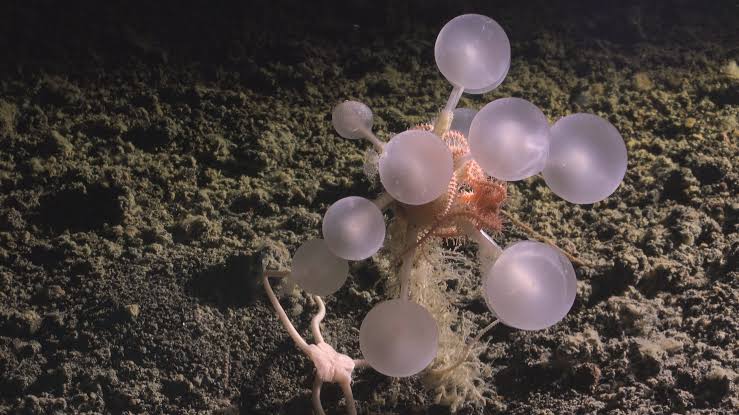
Currently, confirmed specimens of Bathynomus vaderi have been documented in the South China Sea, specifically near the Spratly Islands off the south-central coast of Vietnam. The species inhabits soft mud and clay substrates at depths ranging from 300 meters down to over 1,000 meters (1,000 to 3,300 feet). At these depths, sunlight is completely absent, water temperatures hover between 4°C and 9°C, and hydrostatic pressure ranges from 30 to over 100 times greater than atmospheric pressure at sea level.
The Scavengers of the Sea Floor
Ecologically, Bathynomus vaderi functions as an essential benthic decomposer. Equipped with powerful, calcified mandibles capable of slicing through tough cartilage and scales, these giant isopods consume:
- Sunken fish carcasses, squid, and marine mammal remains.
- Slow-moving benthic invertebrates such as sea cucumbers, sponges, and worms.
- Organic detritus settling into deep ocean trenches.
By consuming decaying organic matter on the ocean floor, Bathynomus vaderi prevents the accumulation of toxic organic waste, recycles critical nitrogen and carbon nutrients back into the marine food web, and feeds larger deep-sea predators.
5. Commercial Exploitation and Conservation Concerns
While the discovery of Bathynomus vaderi has excited the scientific community, it has simultaneously triggered serious conservation concerns among marine biologists. The rapid rise of Bathynomus species as a commercial delicacy in Vietnamese urban centers has created an unregulated fishery. Trawlers operating off Bình Định and Khánh Hòa provinces actively harvest live isopods using deep-water bottom nets.
Because giant isopods reproduce extremely slowly—producing small broods of eggs carried in a specialized belly pouch (marsupium) for months—they are exceptionally vulnerable to over-fishing. Scientists urge regulatory authorities to establish fishing quotas and protected marine sanctuaries in the South China Sea.
6. Landmark Ocean Discoveries Matrix
To understand the scope of contemporary deep-sea exploration, the table below compares Bathynomus vaderi against other newly documented marine species:
| Species Name | Common Name | Discovery Location | Primary Depth | Unique Biological Feature |
|---|---|---|---|---|
| Bathynomus vaderi | Darth Vader Supergiant Isopod | South China Sea (Vietnam) | 300 to 1,000 m | 32.5 cm length; 14 legs; Darth Vader helmet-like head morphology. |
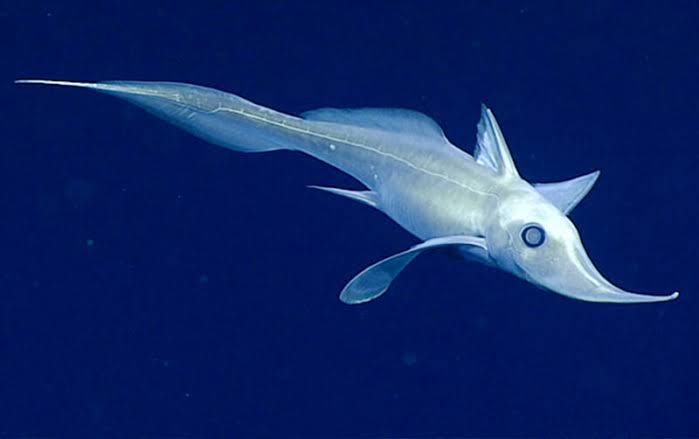
| Chimaera sp. 1 | Coral Sea Ghost Shark | Coral Sea Marine Park (Australia) | 802 to 838 m | Cartilaginous lineage predating dinosaurs by over 400M years. |
| Photinopolynoe iskrae | Iskra's Glitter Worm | Pacific Ocean (California Coast) | 1,200 to 2,500 m | Shimmering scale-covered worm found on whale falls & methane seeps. |
| Corallizoanthus aureus | Golden Glow Zoantharian | Southern Japan Sea Caves | 385 m | Bioluminescent deep-cave anemone emitting 515-nm green light. |
| Eunice siphoninsidiator | Sponge Ambusher Worm | Northwest Pacific Ocean | 1,000 m | Ambush predator living inside the central cavity of glass sponges. |
7. Modern Technology in Species Cataloging
Historically, the time lag between discovering a new marine organism at sea and publishing its formal scientific description in a peer-reviewed journal averaged 13.5 years. Today, global taxonomic alliances are transforming this timeline through digital initiatives:
- High-Definition ROV Imaging: Remotely Operated Vehicles equipped with 4K camera arrays capture live behavior, coloration, and habitat context before specimen collection.
- 3D Morphological Scanning: Computed Tomography (CT) scans create digital 3D models of internal bone and shell structures, allowing international taxonomists to collaborate remotely.
- Environmental DNA (eDNA) Barcoding: Water samples collected from deep ocean trenches are analyzed for genetic material shed by organisms, enabling scientists to detect rare species without disturbing the sea floor.
8. Exam Relevance & UPSC Science Syllabus
UPSC & Competitive Exam Study Notes
GS Paper 3 (Science & Technology / Environment): Deep-sea ecosystems, benthic biodiversity, taxonomy fundamentals, environmental adaptation, threats of unregulated marine harvesting.
Key Biological Terms: Isopoda order, Crustacea subphylum, 14 pereopods, ommatidia eyes, abyssal gigantism, clypeus morphology, eDNA barcoding.
Frequently Asked Questions
Why is this new species named Bathynomus vaderi?
The species earned its name because its triangular head plate (clypeus) and helmet-like shielding bear a striking morphological resemblance to Star Wars villain Darth Vader's helmet.
Where was Bathynomus vaderi discovered and at what depths?
It was discovered in the benthic zone of the South China Sea, specifically near the Spratly Islands off the central coast of Vietnam, at depths ranging between 300 and 1,000 meters.
What is deep-sea gigantism and how does it affect Bathynomus vaderi?
Deep-sea gigantism is an evolutionary phenomenon where benthic animals grow significantly larger than shallow-water relatives due to cold temperatures slowing metabolism, high hydrostatic pressure, and the need to endure prolonged starvation between erratic food falls.
Sources: ZooKeys Scientific Journal (Vol. 1223), National University of Singapore (NUS), BRIN Indonesia, Lee Kong Chian Natural History Museum.
NEEDS DOUBLE-CHECK: none
Master Science & Environment Subjects on RRBCONTENTS
Practice past year questions, study mock papers, and explore comprehensive study guides.
Solve Biology PYQs → Explore Govt Jobs →Join our official Telegram channel: @rrbcontents