Home › Blog › 16th BRICS Trade Ministers Meeting Jaipur
India Concludes 16th BRICS Trade Ministers’ Meeting in Jaipur – Key Outcomes on MSMEs, GVCs and WTO Reform for Exams
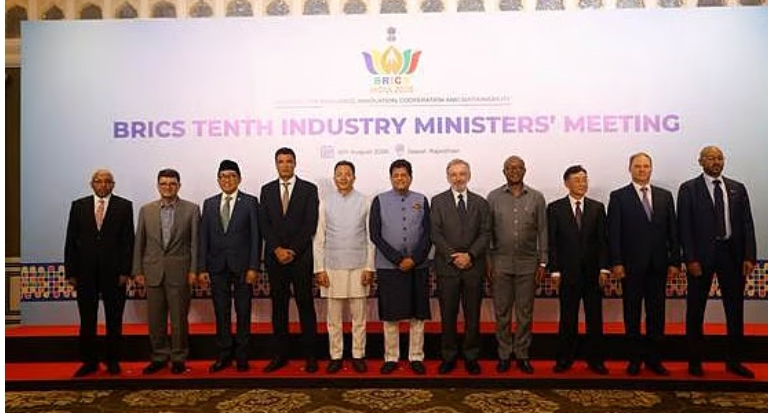
India successfully concluded the 16th BRICS Trade Ministers’ Meeting in Jaipur on 7–8 August 2026 under its BRICS chairship. Chaired by Commerce and Industry Minister Piyush Goyal, the meeting produced a Chair’s Statement and Outcome Document containing four annexes covering the multilateral trading system, micro, small and medium enterprises (MSMEs), global value chains, and digitally delivered services. Member countries also advanced the Strategy for BRICS Economic Partnership 2030 for submission to leaders at the forthcoming New Delhi Summit.
A central outcome was the Jaipur Consensus, under which ministers agreed to study a BRICS invoice-discounting mechanism aimed at narrowing the large global trade-finance gap that particularly affects smaller firms. They also adopted guiding principles for credit-assessment frameworks that would allow lenders to evaluate export-oriented MSMEs on the basis of cash flows rather than traditional collateral. These steps form part of a broader work programme on the internationalisation of MSMEs.
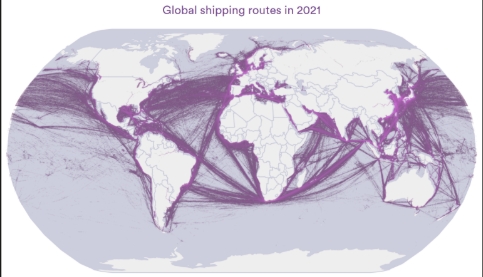
On global value chains, the meeting adopted an Action Plan for 2026–2030. The plan envisages a BRICS Technical Council, a “BRICS Connect” platform, joint studies, and the possible creation of strategic supply-chain and investment-promotion platforms, including in pharmaceuticals and food security. Ministers further approved principles to facilitate safe and secure cross-border delivery of digital services, reflecting the growing importance of the digital economy in intra-BRICS trade.
Throughout the discussions India emphasised the centrality of the World Trade Organization and the need to preserve Special and Differential Treatment for developing countries. The outcomes reaffirm support for an open, inclusive, transparent and rules-based multilateral trading system while seeking to make that system more responsive to the needs of emerging economies and smaller enterprises.
For competitive-exam aspirants the Jaipur meeting supplies high-value material for International Relations and Economy papers. Key themes include the evolving role of BRICS as a platform for economic coordination among major emerging economies, India’s priorities as chair (MSME finance, resilient value chains, digital trade, and defence of WTO principles), and the practical instruments being developed to address trade-finance gaps and supply-chain vulnerabilities. The distinction between consensus-based outcome documents and formal treaties, the concept of Special and Differential Treatment, and the challenges of coordinating diverse national interests within BRICS are all examinable.
The emphasis on MSMEs is particularly relevant for India, where small enterprises form the backbone of employment and exports yet face persistent difficulties in accessing affordable trade finance. The proposed invoice-discounting mechanism and cash-flow-based credit assessment, if implemented, could serve as models for broader South-South cooperation. Similarly, the focus on diversified and resilient global value chains responds to the disruptions experienced in recent years and aligns with India’s own efforts to attract investment in manufacturing and integrate more deeply into international production networks.
As the Strategy for BRICS Economic Partnership 2030 moves toward leader-level endorsement, the Jaipur outcomes will be judged by the concreteness of follow-up actions—whether pilot projects on invoice discounting materialise, whether the Technical Council becomes operational, and whether digital-services principles translate into measurable increases in cross-border transactions. For the present, the meeting demonstrates India’s ability to forge consensus on practical economic deliverables while upholding its long-standing positions on the multilateral trading system.
Accurate knowledge of the venue and chair, the main elements of the Jaipur Consensus, the GVC Action Plan, the digital-services principles, and the status of the 2030 Strategy will equip aspirants to handle both factual and analytical questions on contemporary BRICS economic cooperation.
Frequently Asked Questions
What were the main outcomes of the 16th BRICS Trade Ministers’ Meeting in Jaipur?
Adoption of the Jaipur Consensus on MSME trade finance, a Global Value Chains Action Plan 2026-2030, principles for digitally delivered services, and progress on the Strategy for BRICS Economic Partnership 2030.
What is the Jaipur Consensus?
An agreement to study a BRICS invoice-discounting mechanism and adopt guiding principles for credit assessment of export-oriented MSMEs based on cash flows rather than collateral.
Who chaired the meeting?
India’s Commerce and Industry Minister Piyush Goyal, under India’s 2026 BRICS chairship.
Why is this relevant for exam aspirants?
It covers BRICS economic cooperation, India’s chairship priorities, MSME finance, resilient global value chains, digital trade, and defence of the WTO-based multilateral system—key themes in IR and Economy papers.
Master BRICS & International Trade Current Affairs
In-depth coverage of multilateral forums, WTO negotiations, and MSME trade finance initiatives.
Daily Current Affairs → All Exams →Join our official Telegram channel for instant updates: @rrbcontents