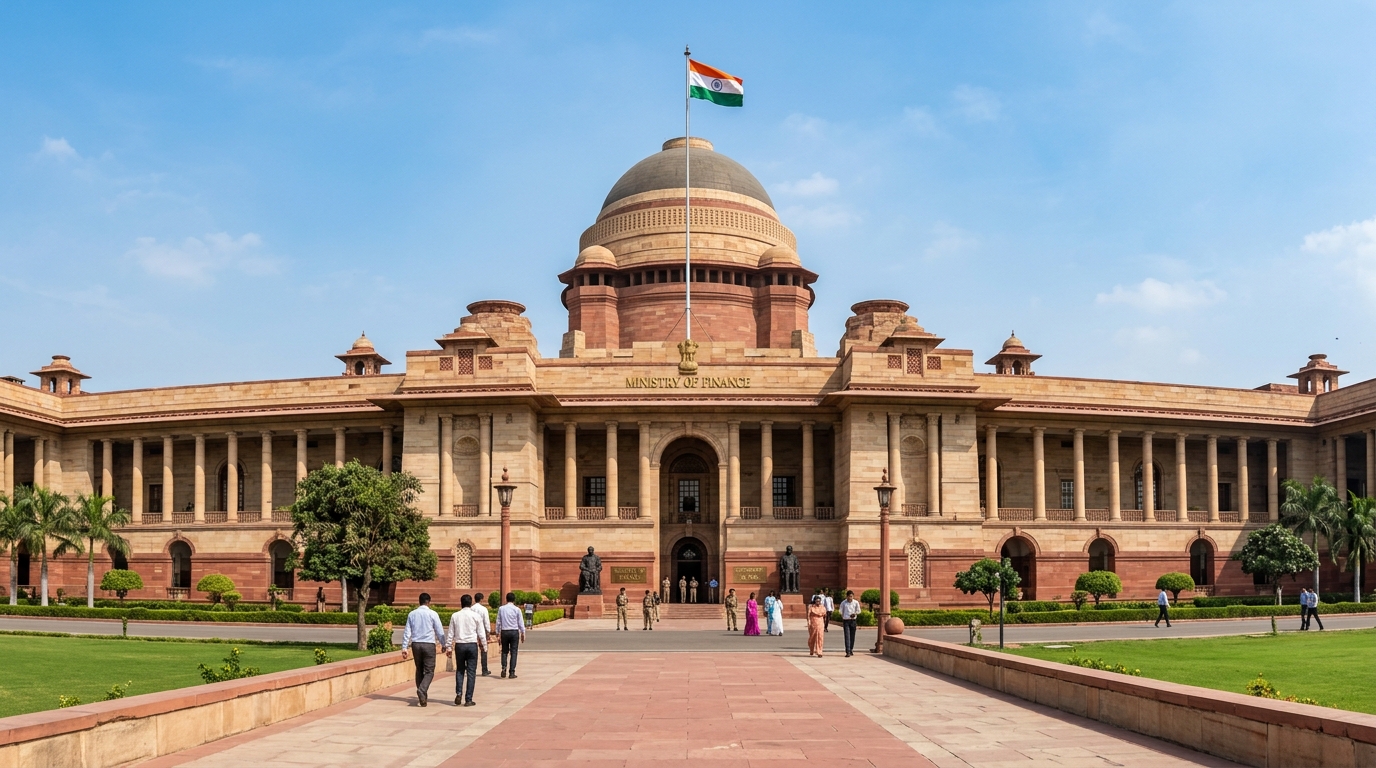
CENTRE-STATE FINANCIAL RELATIONS IN INDIA: CONSTITUTIONAL FRAMEWORK (ARTICLES 268–293), TAX DEVOLUTION, GRANTS-IN-AID, GST COUNCIL & FISCAL FEDERALISM ISSUES (COMPLETE MASTER GUIDE FOR COMPETITIVE EXAMS)
Chapter 1
INTRODUCTION
Financial federalism is the bedrock of India's quasi-federal constitutional structure. In a nation featuring 28 States and 8 Union Territories with immense economic disparities, the constitutional scheme governing financial relations between the Union Government and the State Governments dictates how public revenue is raised, shared, transferred, and borrowed.
For aspirants preparing for competitive examinations such as UPSC Civil Services (GS Paper II Governance, Polity & GS Paper III Economy), SSC CGL, State Public Service Commissions (BPSC, UPPSC, MPPSC, RAS, WBPSC), and RRB NTPC, a thorough mastery of Articles 268 to 293 in Part XII of the Indian Constitution is indispensable.
The Indian Constitution incorporates a deliberate vertical fiscal asymmetry:
- Revenue Raising Advantage to the Centre: The Centre controls major, elastic, high-yield revenue sources (Corporate Tax, Income Tax, Customs Duty, Central GST, IGST).
- Expenditure Burden on States: States are assigned major socio-economic development subjects (Public Health, Education, Agriculture, Police, Infrastructure, Rural Development).
To bridge this structural gap, the Constitution provides a robust mechanism for vertical tax devolution and horizontal fiscal equalization through the quinquennial Finance Commission (Article 280), Grants-in-aid (Articles 275 and 282), and the cooperative GST Council (Article 279A).
This master guide provides an exhaustive breakdown of Centre-State Financial Relations in India—covering constitutional taxonomy of taxes, devolution formulas, GST Council voting dynamics, borrowing limits under Article 293, commission recommendations, emerging friction points, and 15 exam-focused FAQs.
---
Chapter 2
CONSTITUTIONAL ARTICLES MATRIX (PART XII: ARTICLES 268–293)
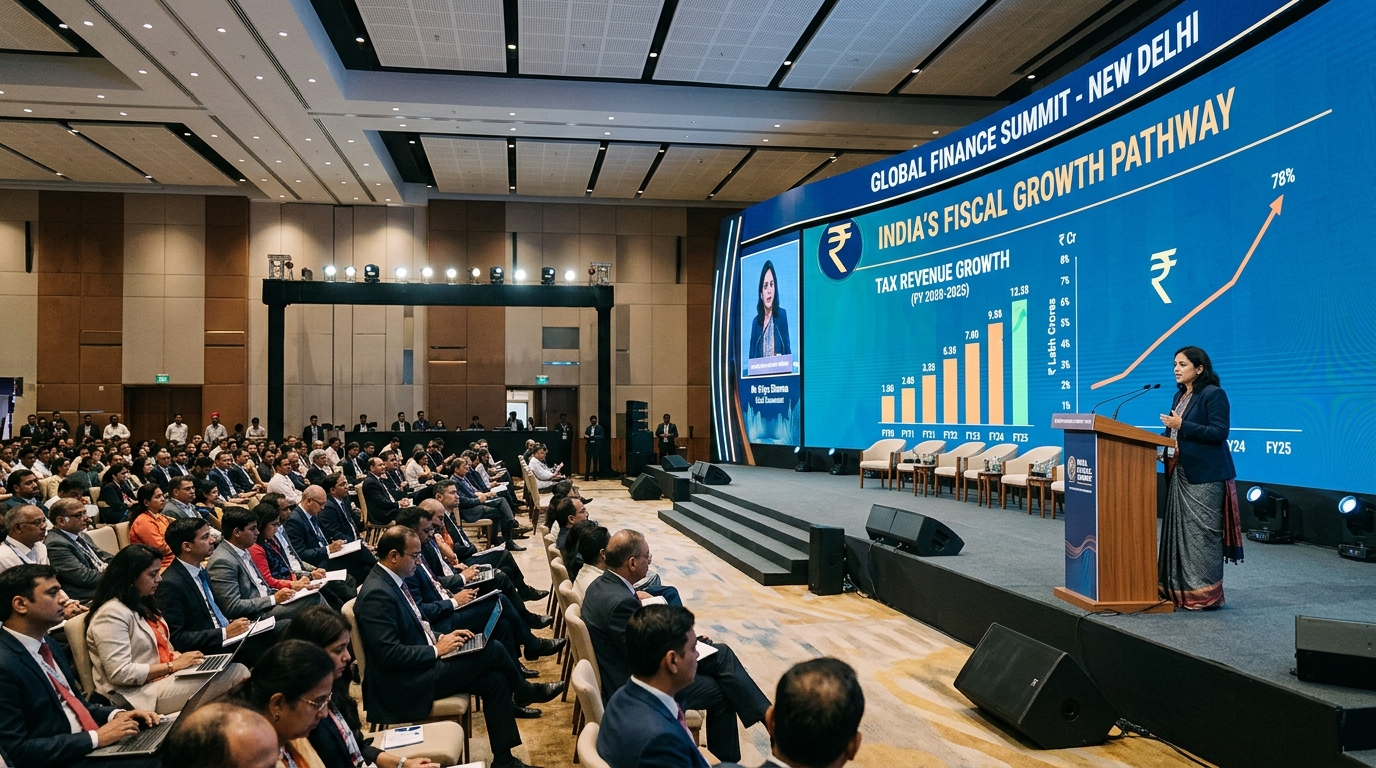
CONSTITUTIONAL ARTICLES MATRIX (PART XII: ARTICLES 268–293) - Illustrative Reference
| Article | Heading / Constitutional Mandate | Core Legal Provision & Significance |
|---|---|---|
| Article 268 | Duties levied by the Union but collected and appropriated by the States | Stamp duties and duties of excise on medicinal & toilet preparations. Collected and kept entirely by States. |
| Article 268A | Service Tax (Omitted by 101st Amendment Act 2016) | Formerly levied by Union, collected & appropriated by Union and States. Merged into GST. |
| Article 269 | Taxes levied and collected by the Union but assigned to the States | Taxes on sale/purchase of goods in inter-state trade or commerce (consignment tax). Sent to States where goods consumed. |
| Article 269A | Goods and Services Tax on Inter-State Trade or Commerce (IGST) | Inserted by 101st Amendment 2016. IGST levied & collected by Centre; apportioned between Centre and States based on GST Council formula. |
| Article 270 | Taxes levied and distributed between Union and States (Divisible Pool) | All taxes levied & collected by Union (except Art 268, 269, 269A, surcharges under Art 271, and targeted cesses) form the Divisible Pool shared with States based on Finance Commission recommendations. |
| Article 271 | Surcharge on certain duties and taxes for purposes of the Union | Parliament can levy surcharges on taxes under Art 269 & 270. Proceeds go EXCLUSIVELY to the Centre (NOT shared with States). Major friction point. |
| Article 275 | Statutory Grants-in-Aid of the Revenues of specific States | Parliament provides statutory grants to States in need of financial assistance, based on Finance Commission recommendations. Charged on Consolidated Fund of India. |
| Article 279A | Goods and Services Tax Council (GST Council) | Inserted by 101st Amendment 2016. Constitutional joint forum chaired by Union FM to decide GST rates, exemptions, threshold limits, and revenue compensation. |
| Article 280 | Finance Commission of India | Quasi-judicial body appointed every 5 years by President to recommend vertical & horizontal tax sharing formula. |
| Article 282 | Discretionary Grants | Union or State may make grants for any public purpose, even if not within its legislative competence. Used for Centrally Sponsored Schemes (CSS). |
| Article 292 | Borrowing by the Central Government | Central Government can borrow upon the security of the Consolidated Fund of India within limits set by Parliament. |
| Article 293 | Borrowing by State Governments | States can borrow domestically upon the security of Consolidated Fund of State. Article 293(3): State CANNOT raise any fresh loan without Centre's consent if any part of a central loan remains outstanding. |
---
Chapter 3
TAXONOMY OF TAX DISTRIBUTION SCHEME IN INDIA
The distribution of tax revenues between the Centre and States is structured into five distinct legal channels:
Distribution of Tax Revenues
├── 1. Levied by Union, Collected & Appropriated by States (Art 268) | Stamp duties
├── 2. Levied & Collected by Union, Assigned to States (Art 269) | Inter-state consignment tax
├── 3. Integrated GST (IGST) on Inter-State Trade (Art 269A) | Shared 50:50 Centre & Destination State
├── 4. Divisible Pool Taxes Shared between Centre & States (Art 270) | Income Tax, Corp Tax, CGST, Customs
└── 5. Union Surcharges & Cesses (Art 271) | 100% retained by Union (Not in Divisible Pool)
---
Chapter 4
FINANCE COMMISSION & TAX DEVOLUTION (VERTICAL VS HORIZONTAL)
The Finance Commission (Article 280) performs a dual balancing role in Indian fiscal federalism:
Chapter 5
# 1. Vertical Devolution (Centre to States):
The percentage of the Union's net tax proceeds (Divisible Pool under Article 270) shared with State Governments:
- 10th Finance Commission: 29%
- 11th Finance Commission: 29.5%
- 12th Finance Commission: 30.5%
- 13th Finance Commission: 32%
- 14th Finance Commission (Y.V. Reddy): Historic jump to 42% (increased state fiscal autonomy).
- 15th Finance Commission (N.K. Singh): Adjusted to 41% (1% reduction to account for the newly created Union Territories of Jammu & Kashmir and Ladakh out of central funds).
Chapter 6
# 2. Horizontal Devolution (State to State Formula):
The 15th Finance Commission (2020–2026) adopted a 6-parameter formula for distributing the 41% share among individual States:
| Criteria Parameter | Weightage (%) | Strategic Rationale / Objective |
|---|---|---|
| Income Distance | 45.0% | Measures distance of State per capita GSDP from highest state. Promotes fiscal equity for poorer states (e.g., Bihar, UP). |
| Population (2011 Census) | 15.0% | Represents general expenditure needs of population. Replaced 1971 census. |
| Area | 15.0% | Accounts for administrative cost of delivering public services in geographically large states (e.g., Rajasthan, MP). |
| Forest Cover & Ecology | 10.0% | Rewards states maintaining dense forest cover, recognizing opportunity cost of non-industrialization (e.g., Arunachal Pradesh, MP). |
| Demographic Performance | 12.5% | New Criterion: Incentivizes states that achieved lower Total Fertility Rate (TFR), addressing southern states' concerns. |
| Tax & Fiscal Effort | 2.5% | New Criterion: Rewards states demonstrating higher tax collection efficiency relative to GSDP capacity. |
---
Chapter 7
GOODS AND SERVICES TAX (GST) & GST COUNCIL (ARTICLE 279A)
The introduction of the Goods and Services Tax (GST) via the 101st Constitutional Amendment Act 2016 marked the most significant tax reform in India's post-independence history, pooling the indirect tax sovereignty of the Union and States.
Chapter 8
# 1. Dual GST Architecture:
- CGST (Central GST): Levied by Union on intra-state supply of goods and services.
- SGST (State GST): Levied by States/UTs on intra-state supply.
- IGST (Integrated GST): Levied by Centre under Article 269A on inter-state supply and imports; revenue shared between Centre and consuming destination State.
- Subsumed Taxes: Replaced Central Excise, Service Tax, State VAT, Entry Tax, Octroi, Luxury Tax, and Entertainment Tax.
Chapter 9
# 2. GST Council Voting Dynamics (Article 279A):
- Chairperson: Union Finance Minister.
- Members: Union Minister of State for Finance and Finance Ministers of all 28 States and 3 UTs with Assemblies (Delhi, Puducherry, J&K).
- Voting Formula:
- Centre's vote weight = 1/3rd (33.33%) of total votes cast.
- States' vote weight = 2/3rd (66.67%) of total votes cast (each state has equal vote regardless of size/population).
- Decision threshold = 3/4th (75%) majority of weighted votes present and voting.
- Veto Implication: Neither the Centre alone nor States alone can pass a resolution; both must agree for a 75% majority, embodying cooperative federalism.
Chapter 10
# 3. Landmark SC Ruling — Mohit Minerals Case (2022):
In Union of India v. Mohit Minerals Pvt Ltd (2022), a 3-Judge Supreme Court Bench held:
- Recommendations of the GST Council are not legally binding on Parliament and State Legislatures.
- GST Council recommendations have persuasive value. Article 246A gives simultaneous power to both Parliament and State Assemblies to legislate on GST. Cooperative federalism relies on dialogue and consensus, not mandatory command.
---
Chapter 11
GRANTS-IN-AID SCHEME: ARTICLE 275 VS ARTICLE 282
The Constitution provides two primary routes for transferring non-tax funds from the Centre to States:
| Feature | Statutory Grants (Article 275) | Discretionary Grants (Article 282) |
|---|---|---|
| Legal Basis | Explicit statutory grant provision under Article 275(1). | General public purpose expenditure provision under Article 282. |
| Recommendation Body | Distributed on the explicit recommendations of the Finance Commission. | Formerly transferred on recommendations of Planning Commission / NITI Aayog; used for Centrally Sponsored Schemes (CSS). |
| Charge on Fund | Charged directly upon the Consolidated Fund of India (non-votable). | Subject to annual parliamentary approval and budget allocations. |
| Nature of Transfer | Tied & Untied revenue deficit grants, disaster relief, local body grants. | Tied conditional grants for specific central priority schemes (e.g., Samagra Shiksha, PM-KISAN, Jal Jeevan Mission). |
| Fiscal Status | Right of States under FC formula to bridge fiscal gaps. | Executive discretion of Centre; often criticized for reducing state flexibility. |
---
Chapter 12
BORROWING POWERS & DEBT CAPS (ARTICLE 292 & 293)
Chapter 13
# 1. Article 292 (Union Borrowing):
- Central Government can borrow domestically or externally upon the security of the Consolidated Fund of India within limits fixed by Parliament under the FRBM Act.
Chapter 14
# 2. Article 293 (State Borrowing):
- States can borrow ONLY domestically (cannot borrow directly from foreign governments or international agencies; foreign loans must be routed through Central Government).
- Article 293(3) - Central Control: A State CANNOT raise any fresh loan without the consent of the Government of India if there is still outstanding any part of a loan made to the State by the Central Government.
- Net Borrowing Ceiling (NBC): Centre fixes annual NBC (typically 3% of GSDP under FRBM norms) for each state.
Chapter 15
# 3. Off-Budget Borrowing Controversy:
- States (e.g., Kerala, Andhra Pradesh, Telangana, Punjab) raised loans through state-owned corporations (e.g., KIIFB in Kerala) without counting them under the official state budget deficit.
- In 2022, Union Finance Ministry ruled that off-budget borrowings serviced through state budgetary resources will be deducted from the State's annual NBC.
- Kerala SC Suit (2024): State of Kerala filed an original suit under Article 131 in the Supreme Court challenging the Centre's borrowing caps, arguing it violates state autonomy under Article 293.
---
Chapter 16
COMMISSIONS ON CENTRE-STATE FINANCIAL RELATIONS
Chapter 17
# 1. Sarkaria Commission (1983–1988):
- Cesses & Surcharges: Recommended that surcharges under Article 271 should be levied for short periods only and should eventually be integrated into the divisible pool.
- Consolidation of CSS: Recommended reducing the number of Centrally Sponsored Schemes and transferring funds directly as block grants.
- Corporate Tax: Recommended bringing Corporate Tax into the divisible pool (later implemented by 80th Constitutional Amendment Act 2000).
Chapter 18
# 2. Punchhi Commission (2007–2010):
- Cess Cap: Recommended a strict cap on the proportion of cesses and surcharges relative to total central tax revenue to prevent erosion of the divisible pool.
- FC Terms of Reference: Recommended that Terms of Reference (ToR) for the Finance Commission should be drafted in consultation with State Governments.
- CSS Rationalization: Categorized CSS into core, core-of-core, and optional schemes with 90:10 funding for Himalayan/Northeast states and 60:40 for general states.
---
Chapter 19
MAJOR FISCAL FEDERALISM FRICTION POINTS
1. Cessification of Tax Revenues: Central Government increasingly levies Cesses and Surcharges (e.g., Health & Education Cess, Road & Infrastructure Cess, Clean Energy Cess) under Article 271. Because cesses are excluded from the Divisible Pool, the effective tax share reaching States is lower than the nominal 41% FC target (~31-32% actual realization).
2. Rigidity of Centrally Sponsored Schemes (CSS): CSS mandate uniform implementation guidelines across diverse states, limiting state innovation and forcing matching state contributions (40%).
3. Off-Budget Borrowing Restrictions: Deducting state PSU loans from state borrowing ceilings restricts state capital expenditure capacity.
4. GST Compensation Sunset: Discontinuation of the guaranteed 14% annual GST revenue compensation to States post-June 2022 created structural revenue deficits in manufacturing-heavy states (e.g., Tamil Nadu, Gujarat, Maharashtra).
---
Chapter 20
EXAM REVISION MNEMONICS
- Article 268-271 Sequence Mnemonic: "L-A-I-D"
- 268: Levied by Union, collected by States (Stamp duties)
- 269: Assigned to States (Inter-state consignment tax)
- 269A: IGST on inter-state trade
- 270: Divisible pool shared between Centre & States
- 15th Finance Commission Horizontal Formula Mnemonic: "I-P-A-F-D-T"
- Income Distance = 45%
- Population (2011) = 15%
- Area = 15%
- Forest & Ecology = 10%
- Demographic Performance = 12.5%
- Tax Effort = 2.5%
---
---
Chapter 21
ADDITIONAL EXAM INSIGHTS: TAX REFORMS & FISCAL INFRASTRUCTURE
Chapter 22
# 1. HISTORICAL EVOLUTION OF TAX REFORMS IN INDIA
India's tax structure underwent systematic reforms post-1991 economic liberalization:
| Reform Committee | Year | Key Tax Policy Recommendations | Impact / Implementation |
|---|---|---|---|
| Raja Chelliah Committee | 1991–1993 | Lower tax rates, broader tax base, reduction in peak customs tariffs, introduction of Service Tax. | Introduced Service Tax in 1994 at 5% rate on 3 services (Telephone, Insurance, Stockbroking). |
| Task Force on Direct & Indirect Taxes (Vijay Kelkar) | 2002 | Integrated National GST, rationalization of income tax slabs, abolition of wealth tax. | Laid foundational roadmap for Value Added Tax (VAT 2005) and eventual GST (2017). |
| Parthasarathi Shome Committee | 2012 | Tax administration reforms, deferral of General Anti-Avoidance Rules (GAAR), retrospective tax amendments review. | Led to operational guidelines for GAAR implementation (2017) and resolution of Vodafone retrospective tax issue. |
| N.K. Singh Committee on FRBM | 2017 | Recommended replacing fixed deficit targets with Debt-to-GDP targets (60% total: 40% Centre + 20% States), creating an independent Fiscal Council. | Framework adopted for medium-term fiscal consolidation post-COVID. |
---
Chapter 23
# 2. GOODS AND SERVICES TAX NETWORK (GSTN) — IT INFRASTRUCTURE
- Legal Entity: Non-government private company incorporated in 2013 under Section 8 (not-for-profit) of Companies Act 2013; converted into a 100% Government-owned entity in 2018 (50% Union + 50% States).
- Core Function: Provides shared IT infrastructure and frontend services (registration, return filing, tax payment, e-way bill generation) for Centre and all 28 States + 3 UTs.
- E-Way Bill System: Mandatory electronic document for movement of goods worth >₹50,000 across state borders or within state, preventing tax evasion.
- GSTR Return Filing Architecture: GSTR-1 (Outward supplies), GSTR-3B (Summary return & tax payment), GSTR-9 (Annual return).
---
Chapter 24
# 3. ARTICLE 307 & INTER-STATE TRADE CLEARANCE
- Constitutional Provision: Article 307 empowers Parliament to appoint such authority as it considers appropriate for carrying out the purposes of Articles 301 to 304 (Free Trade, Commerce, and Intercourse throughout India).
- Restrictions on State Taxation (Article 304): A State Legislature can impose non-discriminatory taxes on goods imported from other States, BUT cannot impose discriminatory tariffs favoring local goods over out-of-state goods.
---
Chapter 25
# 4. CONTINGENCY FUND & PUBLIC ACCOUNT MECHANISM
| Fund Type | Constitutional Article | Custodian & Operational Control | Parliamentary Authorization |
|---|---|---|---|
| Consolidated Fund of India | Article 266(1) | Union Government | Mandatory prior parliamentary approval (Appropriation Act) required for withdrawal. |
| Public Account of India | Article 266(2) | Executive (Ministry of Finance) | Executive payments (Provident Funds, Small Savings, Judicial Deposits); NO prior parliamentary vote needed. |
| Contingency Fund of India | Article 267(1) | Held by Finance Secretary on behalf of President | Imprest fund (₹30,000 crore corpus) for emergency expenditure; ex-post parliamentary approval required to recoup fund. |
---
---
Chapter 26
ADDITIONAL FISCAL DEVOLUTION & BORROWING CONCEPTS
Chapter 27
# 1. WAYS AND MEANS ADVANCES (WMA) & OVERDRAFT FACILITY FOR STATES
State Governments frequently experience temporary cash flow mismatches between revenue receipts and expenditure outflows:
| Facility Type | RBI Legal Mechanism | Key Operational Rules |
|---|---|---|
| Normal WMA | Section 17(5) of RBI Act 1934 | Clean advance provided by RBI without collateral. Limits fixed based on 3-year average revenue expenditure. Interest charged at Repo Rate. |
| Special Drawing Facility (SDF) | Backed by State Government Securities | Provided against collateral of Government of India securities held by the State. Interest charged at 1% below Repo Rate. State must exhaust SDF before using WMA. |
| Overdraft (OD) | Beyond WMA limit | Activated when State exceeds WMA limit. State can stay in OD for 14 consecutive working days; maximum 36 days in a quarter. Interest charged at Repo Rate + 2%. |
---
Chapter 28
# 2. GST COMPENSATION ACT 2017 & REVENUE PROTECTION
- Legal Guarantee: Goods and Services Tax (Compensation to States) Act 2017 guaranteed States a 14% compound annual revenue growth over base year 2015-16 revenue for 5 years (1 July 2017 to 30 June 2022).
- GST Compensation Cess Fund: Funded by levying a special Compensation Cess on sin and luxury goods (pan masala, tobacco, aerated drinks, motor vehicles) over the 28% GST slab.
- COVID-19 Back-to-Back Loan Mechanism (2020-21): During COVID revenue shortfalls, Central Government borrowed ₹1.10 lakh crore (2020-21) and ₹1.59 lakh crore (2021-22) on behalf of States and passed it on as back-to-back debt without burdening state borrowing ceilings.
- Post-2022 Status: GST Compensation Cess collection extended up to March 2026 ONLY to service the principal and interest on back-to-back loans raised during COVID-19, not for fresh compensation to States.
---
Chapter 29
# 3. CENTRALLY SPONSORED SCHEMES (CSS) CATEGORIZATION (BASED ON CHATTISGARH CM COMMITTEE 2015)
| Scheme Category | Number of Schemes | Funding Pattern (Centre : State) | Key Scheme Examples |
|---|---|---|---|
| Core of the Core | 6 Schemes | 60:40 (General) / 90:10 (NE & Himalayan) | MGNREGA, National Social Assistance Program (NSAP), Umbrella Scheme for SCs/STs/OBCs. |
| Core Schemes | ~20 Schemes | 60:40 (General) / 90:10 (NE & Himalayan) | Pradhan Mantri Awas Yojana (PMAY), POSHAN Abhiyaan, Swachh Bharat Mission, Jal Jeevan Mission, Samagra Shiksha. |
| Optional Schemes | ~2 Schemes | 50:50 (General) / 80:20 (NE & Himalayan) | National Heritage City Development (HRIDAY), Border Area Development Programme (BADP). |
---
Chapter 30
# 4. FINANCIAL EMERGENCY UNDER ARTICLE 360
- Grounds: Threat to the financial stability or credit of India or any part of its territory.
- Approval: Must be approved by both Houses of Parliament within 2 months by simple majority.
- Executive Effects:
- Executive authority of Union extends to giving financial directions to any State.
- President may direct reduction of salaries and allowances of all state public servants, Supreme Court & High Court judges.
- Money Bills and other Financial Bills passed by State Legislatures can be reserved for President's consideration.
- History: Financial Emergency under Article 360 has NEVER been proclaimed in India (not even during the 1991 balance of payments crisis).
---
Chapter 31
# COMPOSITION OF STATE REVENUE SOURCES (SOTR VS CENTRAL TRANSFERS)
State Governments rely on three primary revenue streams:
1. State's Own Tax Revenue (SOTR): Revenue raised independently by States through State GST (SGST), State Excise Duty (alcohol for human consumption), Stamp Duty and Registration Fees, Sales Tax/VAT on petroleum products, Motor Vehicle Tax, and Electricity Duty. SOTR accounts for ~45-50% of total revenue for advanced industrial states (e.g., Maharashtra, Tamil Nadu, Karnataka).
2. Share in Central Taxes (Devolution under Art 270): Vertical tax share (41%) transferred monthly by the Union Treasury to States based on 15th FC formula. Accounts for ~40-50% of revenue for less-industrialized states (e.g., Bihar, UP, MP).
3. Grants-in-Aid from Centre (Art 275 & Art 282): Statutory Finance Commission revenue deficit grants + Centrally Sponsored Schemes (CSS) matching grants.
Chapter 32
# TAXATION RESTRICTIONS ON STATES (ARTICLES 285–288)
- Article 285: Exemption of Central Government property from State taxation. State Governments cannot levy property tax on central infrastructure (e.g. Railways, Defence land, Central PSUs) unless authorized by parliamentary law.
- Article 286: Restrictions on States imposing tax on sale or purchase of goods taking place outside the State, or during import into / export out of India.
- Article 287: Exemption of Central Government and Railways from State electricity duty.
---
Chapter 33
# FISCAL COUNCIL PROPOSAL FOR FINANCIAL TRANSPARENCY
- Fiscal Council Concept: Recommended by the N.K. Singh FRBM Review Committee (2017) and supported by the 15th Finance Commission.
- Proposed Mandate: An independent statutory fiscal watch-dog body to conduct ex-ante micro-fiscal audits of central and state budget estimates, verify debt projections, evaluate off-budget liabilities, and advise Parliament on triggering FRBM escape clauses during national emergencies.
---
Chapter 34
# CAPITAL EXPENDITURE INCENTIVE SCHEME (SASCI)
- Scheme for Special Assistance to States for Capital Investment (SASCI): Introduced in Union Budget 2020-21 and expanded in 2022-23.
- Provides 50-year interest-free loans to State Governments for capital projects (roads, bridges, irrigation, school buildings).
- Tied partly to states achieving specific structural reforms: urban planning reforms, scrapping old government vehicles, digitizing land records, and implementing single-window industrial clearances.
---
Chapter 35
# LOCAL BODY UNTIED VS TIED GRANTS UNDER 15TH FINANCE COMMISSION
- Untied Grants (40%): Local self-governments can utilize untied grants for location-specific feel needs, basic maintenance, and civic amenities.
- Tied Grants (60%): Earmarked specifically for drinking water supply, rainwater harvesting, sanitation, and maintaining Open Defecation Free (ODF) status.
---
Chapter 36
FREQUENTLY ASKED QUESTIONS (FAQS)
Chapter 37
# Q1: Which constitutional article governs the Divisible Pool of tax revenues in India?
Answer: Article 270 governs the Divisible Pool. It mandates that all taxes and duties levied and collected by the Union (except Articles 268, 269, 269A, surcharges under Art 271, and targeted cesses) shall be distributed between the Union and the States based on Finance Commission recommendations.
Chapter 38
# Q2: Why are Surcharges and Cesses levied under Article 271 controversial?
Answer: Under Article 271, proceeds from surcharges and cesses levied by the Union go 100% to the Central Government and are excluded from the Divisible Pool shared with States. States argue that expanding cesses reduces the effective tax pool shared under Finance Commission recommendations.
Chapter 39
# Q3: What is the current vertical tax devolution percentage recommended by the 15th Finance Commission?
Answer: The 15th Finance Commission (chaired by N.K. Singh) recommended a vertical devolution of 41% of the net divisible pool of central taxes to States for the 2020–2026 period (adjusted down from 14th FC's 42% to account for 1% allocation to UTs of J&K and Ladakh).
Chapter 40
# Q4: What is the difference between Article 275 and Article 282 Grants?
Answer: Article 275 provides Statutory Grants recommended by the Finance Commission and charged directly on the Consolidated Fund of India to bridge state revenue deficits. Article 282 provides Discretionary Grants used by the Union for public purposes, primarily funding Centrally Sponsored Schemes (CSS).
Chapter 41
# Q5: Under what constitutional amendment was the GST Council created?
Answer: The GST Council was created by the 101st Constitutional Amendment Act, 2016, which inserted Article 279A into the Indian Constitution.
Chapter 42
# Q6: How are votes weighted in the GST Council under Article 279A?
Answer: The Central Government holds 1/3rd (33.33%) of total votes cast, while all State Governments combined hold 2/3rd (66.67%). Decisions require a 3/4th (75%) majority of weighted votes present and voting.
Chapter 43
# Q7: Did the Supreme Court hold GST Council decisions binding in the Mohit Minerals case?
Answer: No. In Union of India v. Mohit Minerals (2022), the Supreme Court held that recommendations of the GST Council are persuasive and not legally binding on Parliament and State Assemblies, maintaining simultaneous legislative powers under Article 246A.
Chapter 44
# Q8: Can a State Government borrow directly from foreign international lenders?
Answer: No. Under Article 293, State Governments can borrow only within the territory of India (domestic borrowing). External loans from international bodies (e.g., World Bank, ADB) must be contracted by the Central Government and passed on to States.
Chapter 45
# Q9: When does a State require Central consent to raise a fresh domestic loan under Article 293(3)?
Answer: A State requires the consent of the Central Government to raise any fresh loan if there is still outstanding any part of a central loan or a loan guaranteed by the Centre to that State.
Chapter 46
# Q10: What is the Net Borrowing Ceiling (NBC) for States under FRBM guidelines?
Answer: The Net Borrowing Ceiling limits a State's total annual borrowings (typically fixed at 3% of Gross State Domestic Product - GSDP), enforced by the Union Finance Ministry under Article 293(3).
Chapter 47
# Q11: What was the 80th Constitutional Amendment Act 2000 regarding tax devolution?
Answer: The 80th Amendment Act 2000 enacted the Alternative Scheme of Devolution recommended by the 10th Finance Commission, placing all central taxes (including Corporation Tax and Customs) into a single divisible pool shared with States.
Chapter 48
# Q12: Which census population data was used by the 15th Finance Commission for horizontal devolution?
Answer: The 15th Finance Commission completely shifted to the 2011 Census data (assigning 15% weightage), discontinuing the 1971 Census data used by previous commissions.
Chapter 49
# Q13: How does the 15th Finance Commission reward demographic performance?
Answer: The 15th FC introduced a 12.5% weightage for Demographic Performance, rewarding States that achieved lower Total Fertility Rates (TFR) to balance concerns of southern states regarding 2011 population data.
Chapter 50
# Q14: What was the primary recommendation of the Sarkaria Commission regarding Cesses?
Answer: The Sarkaria Commission (1988) recommended that surcharges under Article 271 should be levied for brief emergency periods only and should eventually be merged into the basic tax rate to form part of the divisible pool.
Chapter 51
# Q15: What is Integrated GST (IGST) under Article 269A?
Answer: IGST is levied and collected by the Central Government on all inter-state supplies of goods and services and imports. The tax proceeds are apportioned 50:50 between the Centre and the destination State where consumption occurs.
---
Chapter 52
CONCLUSION
Centre-State financial relations form the core of cooperative fiscal federalism in India. Balancing vertical equity through Finance Commission tax sharing (41%), resolving GST Council voting consensus, protecting Article 275 statutory grants, and managing state borrowing limits under Article 293 ensures fiscal stability and nation-building across all 28 States and Union Territories.
---
👉 Official Telegram Channel: https://t.me/rrbcontents
👉 Official Website: https://rrbcontents.com
Prepare with RRBCONTENTS
Free mock tests, previous year papers, and daily current affairs for UPSC, SSC & Railway exams.
Start Free Mock Tests →Continue Reading
Explore More Articles
Knowledge Hub
More Blog Articles
In-depth articles on Polity, Economy, Environment and Current Affairs.
Study Material
Exam Study Notes
Subject-wise notes and digests for Railway, SSC, Banking and State PSC exams.
Current Affairs
Daily Current Affairs & GK
Daily updates and static GK bank with active-recall quizzes.