 RRB
RRB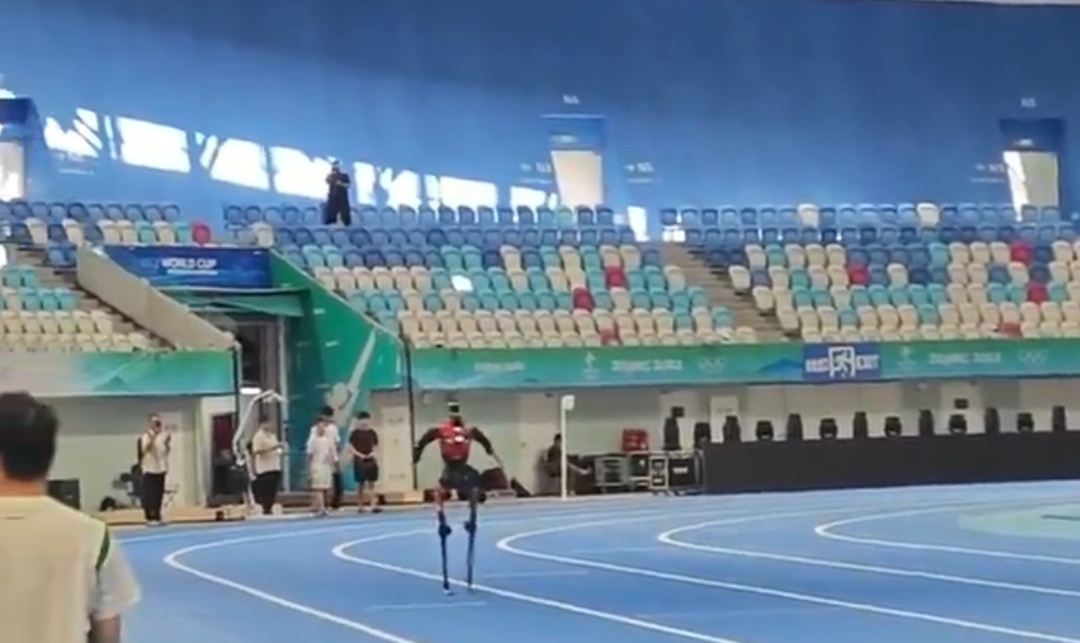
A video has been doing the rounds. A Chinese humanoid robot, developed under the Honor brand, is shown completing a half-marathon in a time faster than the current human world record. The post by analyst Shen Shiwei, which carried the clip, also pointed to the second World Humanoid Robot Games scheduled in Beijing this weekend, where more than two thousand robots from hundreds of teams are expected to compete.
The clip is striking. The robot runs with a steady, mechanical rhythm, arms swinging, legs covering ground at a pace that looks almost unnatural in its consistency. For many watching, it is another reminder of how quickly the technology is moving in China.
But the natural question that follows is simpler: where does India stand in all of this?
China’s Current Momentum
China has poured money, policy support and manufacturing scale into humanoid robots. Companies such as Unitree have already shipped thousands of units. The government has set clear targets for commercial deployment. The half-marathon video is part of a larger pattern of public demonstrations that range from running and dancing to factory work and even traffic management in some cities.
These demonstrations are designed to show progress. They also put pressure on other countries to respond.
India’s Position — Realistic Picture
India is not yet in the same league when it comes to mass production or high-speed public demonstrations of humanoid robots. The work here is more measured and still largely in the research and early prototype stage. There are, however, several concrete efforts under way.
ISRO’s Vyommitra remains the most visible government-linked humanoid programme. Designed as a half-humanoid for the Gaganyaan mission, Vyommitra is meant to handle certain cabin tasks, monitor systems and communicate with ground stations during uncrewed test flights. It is not a full bipedal walking robot of the kind seen in Chinese demonstration videos, but it is a serious, mission-driven project with clear objectives.
DRDO has been working on bipedal and quadruped platforms under programmes such as STAR (Systems and Technologies for Advanced Robotics). The focus is military and high-risk environments — reconnaissance, handling dangerous materials, and reducing risk to soldiers. Progress has been shown in controlled demonstrations, but these systems are still far from mass deployment.
On the private and academic side, a few startups and IIT-linked teams have unveiled prototypes aimed at industrial use. Companies such as Ati Motors have shown humanoid-inspired platforms for manufacturing and logistics. Other groups, including teams associated with IIT Madras, IIT Delhi and private firms in Bengaluru, are developing lower-cost humanoid concepts specifically for Indian factory floors. The emphasis is usually on affordability and suitability for Indian conditions rather than record-breaking speed or athletic performance.
The government has also begun putting regulatory and funding frameworks in place. MeitY and related bodies have talked about safety standards, liability rules and support for domestic robotics under broader AI and manufacturing initiatives. A dedicated push for robotics within the India AI Mission has been discussed, with the aim of helping startups and reducing dependence on imported systems.
What Is Missing
There is no large-scale, publicly funded “humanoid robot mission” in India comparable to China’s national push. There is also no Indian company yet shipping thousands of humanoid units or regularly releasing viral performance videos. Most Indian work is still at the laboratory, prototype or limited pilot stage.
That said, the direction is clear. Both the space programme and the defence research establishment see value in humanoid and bipedal platforms. Private industry is beginning to treat the technology as commercially relevant for manufacturing and logistics. And the policy conversation has moved from pure research to questions of safety, standards and domestic production.
Verified Context from Official Side
Public statements from ISRO over the past year have confirmed that Vyommitra remains part of the Gaganyaan timeline. DRDO has, on occasion, shared updates on its legged robotics work through official channels and defence exhibitions. High-level political leadership has repeatedly spoken about the need for India to develop advanced robotics and AI capabilities under the broader Atmanirbhar Bharat and Make in India frameworks, though specific high-profile tweets focused only on humanoid robots from the Prime Minister’s Office or key ministries have been limited in recent months.
The contrast with China’s public demonstration culture is real. India’s approach so far has been quieter, more application-focused, and still catching up in terms of scale.
The Chinese half-marathon video is impressive. It also serves as a useful mirror. India has pieces of the puzzle — space-related humanoids, defence prototypes, academic research, and early commercial efforts. What it does not yet have is the same combination of manufacturing volume, public spectacle and national-level urgency that China is currently displaying. Whether that gap narrows in the next few years will depend on how consistently funding, policy support and private investment continue to flow into the sector.