Home › Blog › Colombia’s New President Abelardo de la Espriella Sworn In Outside Bogotá; US Pledges $1 Billion Security Package – Exam-Focused Analysis
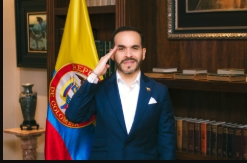
Colombia’s New President Abelardo de la Espriella Sworn In Outside Bogotá; US Pledges $1 Billion Security Package – Exam-Focused Analysis
The ceremony did not take place in the Plaza de Bolívar or the congressional buildings of Bogotá. On the afternoon of 7 August 2026, Abelardo de la Espriella was sworn in as the 36th President of Colombia in Cali, a city long associated with the violence of armed groups and the cocaine trade. The choice of location was deliberate. It signalled a break with both constitutional custom and the negotiated-peace approach of the outgoing leftist administration of Gustavo Petro. Within hours the United States State Department announced that the Trump administration, working with Congress, intended to provide $1 billion in security assistance as the cornerstone of a renewed bilateral partnership.
De la Espriella, a 48-year-old lawyer who had represented high-profile right-wing figures earlier in his career, won the June 2026 runoff against Iván Cepeda of the Historic Pact. His campaign platform rested on three pillars: a hard line against armed groups and drug trafficking, sharp reductions in the size of the state, and a revival of the oil and gas sector. In his inaugural address he spoke of closing “a long chapter of national resignation” and beginning “the most profound transformation of our destiny.” He pledged to eradicate illicit crops using methods he described as environmentally and humanly safe, and announced that Colombia would join the Shield of the Americas, a security initiative associated with the Trump administration.
The American response was swift and public. A presidential delegation led by Acting Attorney General Todd Blanche attended the inauguration. The State Department statement framed the $1 billion package as support for shared goals: dismantling transnational narco-terrorist networks, strengthening Colombian security forces through technology and interoperability, expanding coca eradication and cocaine interdiction, and improving coordination on illegal immigration. The language was unambiguous. Washington viewed the change of government in Bogotá as an opportunity to reset a relationship that had cooled under Petro.
The decision to hold the inauguration in Cali carried both symbolic and practical weight. Cali and the surrounding southwest have for decades been among the regions most affected by the presence of residual guerrilla factions, criminal organisations and the coca economy. By taking the oath there rather than in the capital, de la Espriella placed the security issue at the centre of the political stage from the first hour of his presidency. Security measures around the ceremony were heavy. The outgoing president did not attend, underscoring the depth of the political polarisation that characterised the 2026 election cycle.
For observers of Latin American politics the inauguration fits a broader pattern of rightward electoral shifts across the region in recent years. De la Espriella’s victory followed similar outcomes in other countries and was openly welcomed by the Trump administration. The new Colombian president had received an endorsement from Trump during the campaign. The $1 billion pledge and the invitation to join the Shield of the Americas therefore represent both continuity with earlier periods of close US-Colombia security cooperation and a deliberate contrast with the more autonomous and left-leaning foreign policy of the Petro years.
The practical content of the security package remains to be detailed by Congress and the two executives. Past US assistance to Colombia has included training, equipment, intelligence sharing and support for aerial and manual eradication programmes. The new package is expected to emphasise technology transfer, joint operations and financial disruption of criminal networks. De la Espriella’s public commitment to resume or expand the use of herbicides against coca fields has already drawn attention; earlier programmes that relied on aerial spraying were controversial on environmental and health grounds and were scaled back under previous governments.
Indian competitive-exam aspirants encounter Colombia most often in the context of the global cocaine trade, the impact of drug trafficking on regional stability, and the role of external security assistance in Latin America. The current transition updates that knowledge. Questions may focus on the evolution of Plan Colombia-style cooperation, the relationship between domestic political change and foreign security partnerships, or the implications of a renewed hard-line approach for cocaine supply routes that ultimately affect markets far beyond the Andes. The explicit linkage of security assistance to counter-narcotics, counter-terrorism and migration control also illustrates how contemporary bilateral packages bundle multiple policy objectives.
Economically, de la Espriella campaigned on austerity and resource-sector revival. He has spoken of shrinking the state by as much as 40 percent and restoring investor confidence. Colombia’s fiscal position and oil production trends will therefore be watched closely. Any sustained increase in security spending financed partly by external assistance will have to be balanced against the fiscal targets the new government has set for itself. The interaction between security policy and macroeconomic management is likely to become a recurring theme of the early de la Espriella administration.
The regional reaction has been mixed. Neighbouring governments that share concerns about cross-border criminal activity have welcomed the emphasis on interdiction. Human-rights organisations and segments of Colombian civil society have expressed caution about a return to more militarised approaches and about the environmental consequences of expanded eradication. The new president’s past legal work on behalf of paramilitary figures has also been cited by critics as a source of concern. These domestic debates will shape the political space available for the security agenda even as external support arrives.
From the perspective of US policy the $1 billion commitment is both a signal of confidence in the new government and an instrument of influence. By front-loading assistance at the moment of inauguration, Washington has sought to lock in cooperation on priorities it defines as shared. The performance of the Colombian security forces, the trajectory of coca cultivation statistics, and the volume of cocaine interdicted will serve as the practical metrics against which the partnership is judged. The Shield of the Americas framework, still relatively new, provides an additional multilateral layer for coordination among like-minded governments in the hemisphere.
For India the direct bilateral stakes are limited, yet the episode is relevant in several indirect ways. First, the global cocaine market continues to affect transit countries and consumer markets; any significant change in Colombian supply dynamics can influence enforcement challenges elsewhere. Second, the model of large-scale external security assistance tied to domestic political alignment offers a comparative case for students examining India’s own defence and security partnerships. Third, the speed with which the United States moved to embrace the new Colombian government illustrates the importance Washington attaches to ideological and policy congruence in the Western Hemisphere at a time of broader great-power competition.
The coming months will test whether the rhetorical and financial commitments made on 7 August translate into measurable changes on the ground. Coca cultivation figures, homicide rates in key regions, the operational tempo of security forces, and the legislative progress of austerity and energy measures will all serve as early indicators. The untraditional choice of Cali as the inauguration site has already set a tone. The $1 billion American pledge has supplied resources and political cover. The rest depends on the capacity of the new administration to convert campaign promises into sustained policy under the constraints of a divided Congress and a polarised society.
In the study of comparative politics and international relations, the Colombian transition of August 2026 offers a compact case of how electoral outcomes, symbolic politics, and external security assistance interact. Aspirants who can explain the significance of the Cali venue, the content of the US package, the policy reverse on drugs and armed groups, and the place of this episode within the wider Latin American rightward shift will be well equipped for both objective and analytical questions.
Frequently Asked Questions
Where and when was Abelardo de la Espriella sworn in as President of Colombia?
He was sworn in on 7 August 2026 in Cali, breaking with the traditional practice of holding the inauguration in Bogotá.
What security assistance did the United States pledge to the new Colombian government?
The US State Department announced the intention to provide $1 billion in security assistance, subject to congressional processes, as the cornerstone of a renewed partnership.
What are the main policy priorities announced by President de la Espriella?
A hard line against armed groups and drug trafficking, significant reduction in the size of the state, revival of the oil and gas sector, and joining the Shield of the Americas initiative.
Why is this development relevant for Indian competitive exam aspirants?
It updates knowledge on US-Latin America security cooperation, the global cocaine trade, electoral shifts in the region, and the linkage between domestic politics and external assistance – topics that appear in international relations and current-affairs sections of UPSC, SSC and related examinations.
Master Latin America Geopolitics & Security
In-depth current affairs analysis for UPSC, SSC, RRB, and state recruitment examinations.
Daily Current Affairs → All Exams →Join our official Telegram channel for instant updates: @rrbcontents