Table of Contents
1. Key Overview and Primary Developments
The Centre has told the Supreme Court that the principle of creamy layer does not apply to reservations for Scheduled Castes (SCs) and Scheduled Tribes (STs). In an affidavit filed in response to public interest litigations seeking the introduction of an income-based exclusion within SC and ST quotas, the government stated that judicial precedents have clarified that the creamy layer concept is not applicable to these categories.
The government submitted that it has nowhere been specifically held that the principle of creamy layer applies to SCs and STs. References to the concept, it argued, have been general observations made in the context of reservations for Other Backward Classes (OBCs) or Socially and Educationally Backward Classes (SEBCs). The Centre cited the Constitution Bench judgment in Ashoka Kumar Thakur v. Union of India to support its position that the principles of creamy layer are not applicable to SCs and STs for the purpose of reservation.
The affidavit emphasised that the identification of SCs and STs is based on historical and social criteria such as caste, tribe and social backwardness, and not solely on economic status. Reservation for these communities is intended to address centuries of social discrimination, which cannot be measured by income alone. In contrast, the creamy layer principle is currently applied only to OBCs to exclude the better-off sections from reservation benefits, as laid down in the 1992 Indira Sawhney judgment.
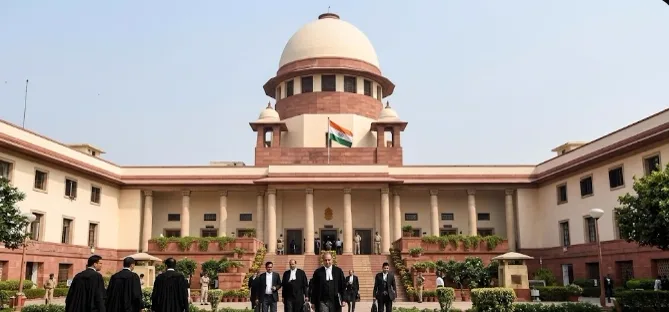
Centre Tells Supreme Court that Creamy Layer Principle Does Not Apply to SC/ST Reservations
The Union government has informed the Supreme Court that the principle of creamy layer is not applicable to reservations...
Polity & Constitution · Official Visual Reporting
2. Statutory Provisions and Official Statements
The Centre further stated that the petitions do not disclose any infringement of fundamental rights under the Constitution. It argued that any modification of reservation policy, particularly the introduction of income-based preferences within reserved categories, should be preceded by a holistic review and thorough empirical study, including socio-economic data of beneficiaries.
The government also noted that in a majority of welfare and development schemes for SCs, STs and OBCs (except reservation in educational institutions and services under the State), a means test already exists to ensure that benefits reach those who actually deserve them.
The stand has been taken in response to petitions that sought the application of the creamy layer principle to SC and ST reservations and a direction to the Centre to frame policies for a more equitable system of reservation in government employment. The matter is pending before the Supreme Court.
For competitive examination aspirants the development is highly relevant. The distinction between SC/ST reservations and OBC reservations, the origin and application of the creamy layer principle, key judgments such as Indira Sawhney and Ashoka Kumar Thakur, and the constitutional basis of affirmative action are standard topics in polity. Candidates should be clear that the creamy layer doctrine has so far been confined to OBCs and that the Centre maintains it does not extend to SCs and STs.

Polity & Constitution Statutary Framework
Polity & Constitution · Statutory Reporting
3. Socio-Economic & Strategic Implications
Key verified points from the Centre’s affidavit are:
The creamy layer principle is not applicable to SC/ST reservations.
Identification of SCs and STs is based on historical and social criteria, not solely on economic status.
The concept has been recognised in the context of OBC/SEBC reservations.
Any policy change should be preceded by a comprehensive empirical review.
Most welfare schemes already incorporate a means test.
These facts enable aspirants to answer both factual and analytical questions on reservation policy with accuracy.
The Centre’s position reaffirms the existing legal framework under which SC and ST reservations operate without a creamy layer exclusion. The final determination on the petitions will rest with the Supreme Court.
Verified Exam Reference Points
- • Centre's Affidavit: Creamy layer principle applies only to OBC reservations, not SC/ST quotas.
- • Social Basis: SC/ST reservations are based on historical backwardness and social criteria.
- • Constitutional Bench: Sub-classification and creamy layer debate pending before Supreme Court.