Home › Blog › On the Frontlines of Digital Warfare: What Being a Cybersecurity Incident Responder Really Takes

On the Frontlines of Digital Warfare: What Being a Cybersecurity Incident Responder Really Takes
It is 2:14 AM on a rainy Tuesday. Inside a Security Operations Center (SOC), a soft ping breaks the low hum of cooling fans and monitors. On screen, a high-severity alert flashes red: a critical database server in an enterprise network has just initiated an outbound connection to an unknown IP address in Eastern Europe, transferring encrypted payloads at 400 megabytes per second.
For most people, this sounds like a scene straight out of a Hollywood techno-thriller. But for a Cybersecurity Incident Responder, this is just another Tuesday morning.
While software developers build digital systems and penetration testers look for cracks in the armor, Incident Responders are the digital firefighters of the modern world. When an intruder bypasses the firewall, deploys ransomware, or exfiltrates confidential corporate data, it is the responder who steps into the breach to halt the attack, evict the adversary, and piece together the digital crime scene.
In an era where ransomware attacks cost businesses billions annually and state-sponsored cyber espionage threatens critical infrastructure, the role of the Incident Responder (IR) has evolved from a niche IT discipline into one of the most vital, strategic, and intense professions in technology.
Here is an in-depth dive into the world, mindset, methodologies, and realities of a Cybersecurity Incident Responder.
1. What Is an Incident Responder? (Beyond the Hype)
At its core, an Incident Responder is a specialized cybersecurity professional tasked with detecting, containing, investigating, and remediating active cyber threats within an organization's digital ecosystem.
Emergency Doctor & Homicide Detective Metaphor
The Emergency Doctor Aspect: When a breach happens, time is the enemy. Every minute an adversary maintains access means more stolen files or encrypted servers. The responder must make high-stakes containment decisions under immense pressure.
The Detective Aspect: Once the immediate damage is contained, the responder must answer fundamental forensic questions: How did they get in? What did they touch? Did they leave a backdoor? Who are they?
2. The Anatomy of an Incident Response Life Cycle
To bring order to the chaos of a breach, professional responders follow established frameworks published by NIST (National Institute of Standards and Technology) and SANS Institute.
NIST / SANS 6-Phase Incident Response Lifecycle
1. Preparation (Playbooks & Hardening) → 2. Identification / Detection (SIEM & EDR Triage) → 3. Containment (Host Isolation & C2 Blocking) → 4. Eradication (Malware & Backdoor Removal) → 5. Recovery (Staged System Restore) → 6. Lessons Learned (Post-Mortem Analysis).
Phase Breakdown in Real-World Intrusions
- Phase 1: Preparation: Establishing playbooks, deploying EDR agents across workstations, centralized SIEM logging, and running simulated tabletop exercises.
- Phase 2: Identification & Triage: Analyzing suspicious PowerShell scripts or EDR alerts to distinguish false positives from Advanced Persistent Threat (APT) intrusions.
- Phase 3: Containment: Short-term isolation of servers from the Wi-Fi/subnet network, revoking compromised Active Directory accounts, and locking C2 channels.
- Phase 4: Eradication: Wiping infected drives, purging attacker scheduled tasks, revoking stolen Kerberos tickets, and patching entry vulnerabilities.
- Phase 5: Recovery: Controlled bring-online of critical business workloads with real-time telemetry monitoring.
- Phase 6: Lessons Learned: Host a post-mortem review and deliver an executive root-cause report to executive leadership.
3. The Digital Detective: Core Skills and Tools of the Trade
Incident response requires a unique combination of deep technical expertise, technical intuition, and calm under fire.
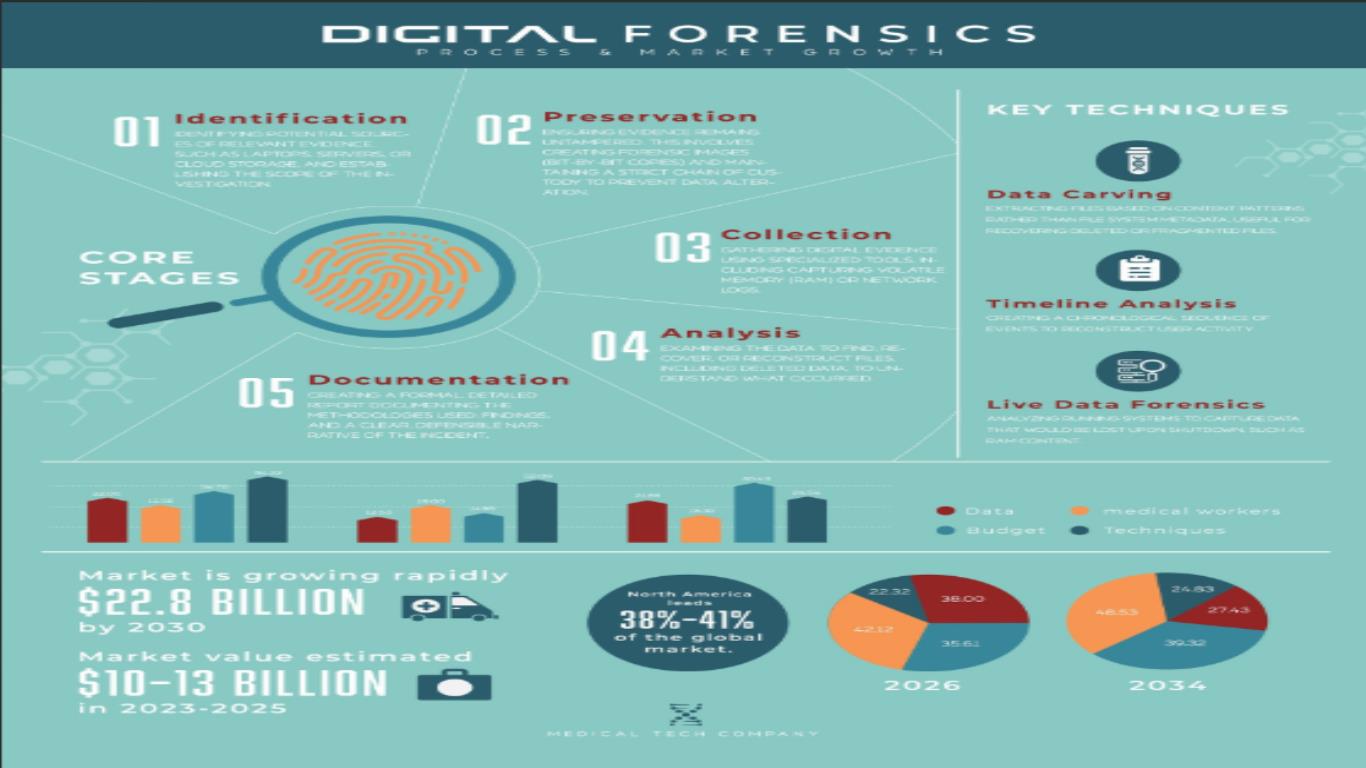
- A. Digital Forensics & Memory Analysis: Inspecting volatile RAM before powering down machines to capture encryption keys, injected shellcode, and live network sockets.
- B. Log Analysis & SIEM Mastery: Querying Splunk, Elastic Stack (ELK), or Microsoft Sentinel to correlate events across cloud and enterprise domain controllers.
- C. Reverse Engineering & Malware Triage: Executing suspicious payloads in isolated sandbox environments to observe registry keys, C2 IP calls, and dropped executables.
- D. Network Traffic Analysis: Analyzing PCAP files in Wireshark or Zeek to trace DNS tunneling and data exfiltration streams.
4. A Day in the Life: Incident Response in Action
09:00 AM - Initial Anomaly: An Office document triggers an unauthorized cmd.exe process spawning certutil.exe on an assistant's workstation.
09:15 AM - Triage & Isolation: The responder uses the EDR console to isolate the endpoint instantly, pulling RAM forensic images for offline analysis.
11:30 AM - Uncovering the Footprint: Memory analysis reveals Cobalt Strike beacons and lateral movement attempts targeting internal domain controllers.
02:00 PM - The War Room: The responder briefs the CISO, Legal Counsel, and IT leadership on containment steps and credential resets.
06:00 PM - Eradication & All-Clear: Compromised accounts are revoked and EDR signatures updated, averting a multi-million dollar ransomware attack.
5. How to Become a Cybersecurity Incident Responder
| Certification Level | Recommended Certs | Focus Area |
|---|---|---|
| Entry / Foundational | CompTIA Security+, CySA+ | Core security concepts, network OSI, and basic triage. |
| Intermediate | BTL1 (Blue Team Level 1), GCIH (GIAC Incident Handler) | Hands-on incident handling, log correlation, & containment. |
| Advanced / Forensic | GCFA (GIAC Forensic Analyst), GREM | Memory forensics, disk artifacts & reverse engineering. |
Q: Should I start directly in Incident Response or get general IT experience first?
A: General IT, Systems Administration, or Junior SOC Analyst roles provide crucial context. Understanding Active Directory, Windows internals, and TCP/IP routing is vital before responding to live intrusions.
Conclusion: The Cyber Guardians of the Digital Age
As society becomes increasingly reliant on digital infrastructure—from cloud-hosted healthcare systems to global supply chains—the line between the digital world and physical safety continues to blur.
A Cybersecurity Incident Responder is more than just a tech professional managing server logs. They are defenders who safeguard privacy, protect critical infrastructure, and preserve trust in the modern digital economy. When crisis strikes, they are the steady hands at the keyboard, working tirelessly in the dark so the rest of the world can safely stay connected.
Ready to Build Your Cybersecurity Career in 2026?
Explore comprehensive technical study guides, PYQs, and career intelligence resources on RRBCONTENTS.
Browse Study Guides → View Latest Tech Jobs →Join our official Telegram channel for instant updates: @rrbcontents