Home › Blog › Polity & Governance › Education Secretary Changed
The Changing Face at Shastri Bhawan: Was the Education Secretary Replaced Under Pressure, and What Does It Mean for India’s Students?
Track administrative notifications, UPSC exam schedules & Govt recruitment alerts on RRBCONTENTS Jobs Portal.
Key Takeaways & Summary
- Top-Level Bureaucratic Reshuffle: Senior IAS officer Vineet Joshi was replaced as Higher Education Secretary and transferred to the Ministry of Panchayati Raj on July 23, 2026.
- New Leadership: Naresh Pal Gangwar (1994-batch IAS, IIT Delhi/Roorkee alumnus) appointed as Higher Education Secretary; T.K. Anil Kumar appointed as School Education Secretary.
- The Catalyst: Comes following intense public pressure built by the Cockroach Janta Party (CJP) and student demonstrations at Jantar Mantar over NEET paper leaks and testing irregularities.
- Legal & Structural Impact: Fast-track courts announced by PM Modi; strict enforcement of Public Examinations (Prevention of Unfair Means) Act, 2024.
Table of Contents
- 1. The Bureaucratic Reshuffle: What Officially Happened vs. Political Reality
- 2. The Rise of the Cockroach Movement: How Students Forced the Narrative
- 3. Deep Analysis: Is This Real Reform or Just "Optical" Damage Control?
- 4. The Broader Impact: How the CJP Protests Are Reshaping Indian Education
- 5. Comparative Analysis: Reactive vs. Proactive Educational Governance
- 6. What Must the New Higher Education Secretary Do Next? A Realist's Roadmap
- 7. High-Yield Takeaways for Competitive Exam Aspirants
If you have spent any time over the past few weeks talking to a teenager preparing for competitive exams, or sitting with parents in a living room anywhere from Patna to Pune, you know the atmosphere has been heavy. It is an anxiety born not from the difficulty of textbooks, but from a profound loss of trust in the system that grades their children's futures.
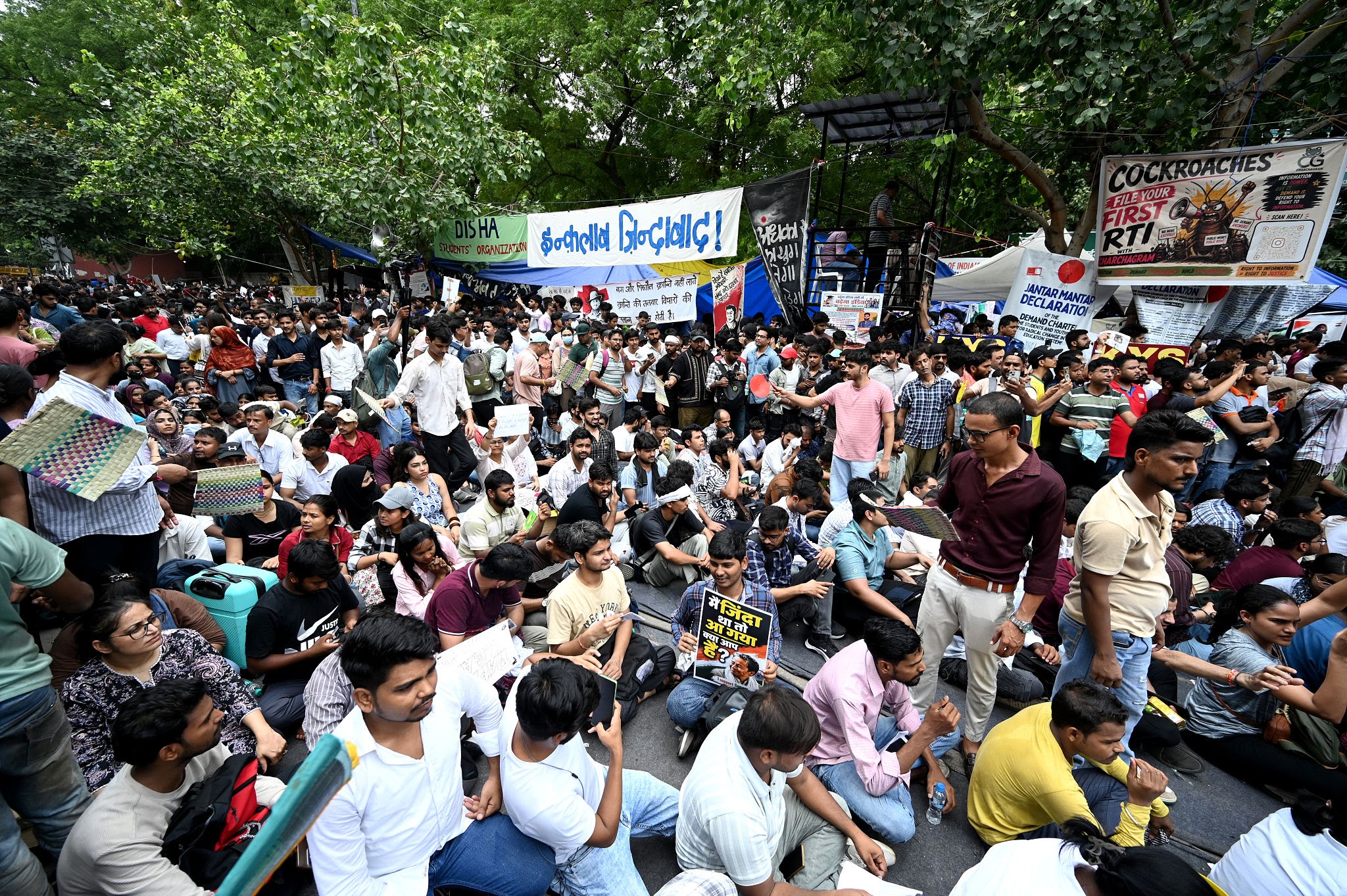
For months, millions of young aspirants who poured their youth into 14-hour study days faced the devastating reality of paper leaks, grace mark controversies, and administrative paralysis. On the streets of New Delhi, that quiet heartbreak transformed into a vocal, visible movement. Thousands of young citizens, united under the banner of the Cockroach Janta Party (CJP), marched to Jantar Mantar and Parliament, demanding accountability, systemic reforms, and political responsibility.
Then came the sudden announcement. On July 23, 2026, the Appointments Committee of the Cabinet (ACC), headed by Prime Minister Narendra Modi, issued a major bureaucratic reshuffle. Senior IAS officer Vineet Joshi was abruptly moved out of his post as Secretary of the Department of Higher Education and transferred to the Ministry of Panchayati Raj. In his place, Naresh Pal Gangwar, a 1994-batch Rajasthan cadre IAS officer and an engineering alumnus of IIT Delhi and Roorkee, was appointed as India's new Higher Education Secretary. Simultaneously, T.K. Anil Kumar took over as Secretary for School Education and Literacy.
This rapid administrative overhaul leaves two critical questions hanging over the nation: Was this top-level bureaucratic removal a direct result of the intense pressure built by the CJP protests? And more importantly, does changing the face at an executive desk actually fix India's deeply troubled education system?
Below is a deep, empathetic, and comprehensive analysis of the political realities, administrative mechanics, and long-term consequences of this moment for India's youth.
1. The Bureaucratic Reshuffle: What Officially Happened vs. Political Reality
To understand whether the CJP protests forced the government's hand, one must look at how the Indian bureaucracy operates during a political crisis.

| Position / Role | Officer Details & Movement |
|---|---|
| OUTGOING Higher Education Secretary | Vineet Joshi (1992-batch IAS, Manipur Cadre) • Transferred to: Secretary, Ministry of Panchayati Raj (w.e.f. July 31, 2026) |
| INCOMING Higher Education Secretary | Naresh Pal Gangwar (1994-batch IAS, Rajasthan Cadre) • Former Role: Secretary, Dept of Animal Husbandry & Dairying • Qualifications: B.Tech (Roorkee), M.Tech (IIT Delhi), MA Economics |
| SCHOOL EDUCATION Secretary | T.K. Anil Kumar (1995-batch IAS, Karnataka Cadre) • Appointed as: Secretary, Dept of School Education & Literacy |
The Official Line: "Routine Administrative Exercise"
Officially, orders issued by the Appointments Committee of the Cabinet (ACC) never provide justifications for transfers. The Department of Personnel and Training (DoPT) notification listed Vineet Joshi's transfer alongside a broader reshuffle involving a dozen senior secretaries across various ministries, including Mines, Labour, Urban Development, and the National Human Rights Commission. Spokespersons for the ruling establishment maintain that bureaucratic rotations are standard procedure to realign administrative capabilities across government departments.
The Ground Reality: Classic Crisis Management and "Damage Control"
While official notifications speak in neutral administrative language, nobody in the corridors of power in New Delhi views this as a routine shift.
In democratic governance, when public outrage over a sensitive issue—such as national competitive examination leaks—reaches a boiling point, the executive faces immense pressure to show visible action. However, sacrificing a cabinet-level political leader like Union Education Minister Dharmendra Pradhan carries heavy political costs for a governing coalition. It can be interpreted by political opponents as an admission of complete moral and policy failure.
When political heads cannot be easily removed, governments turn to the classic administrative playbook: replacing the top bureaucratic leadership.
By moving Vineet Joshi—who previously served as the founding Director General of the National Testing Agency (NTA) and was deeply associated with the central exam architecture—the government sought to achieve three distinct goals:
- Signal a Fresh Start: Installing an administrator with strong technical credentials (an IIT Delhi alumnus like Naresh Pal Gangwar) sends a signal to angry students and parents that the ministry is handing the reins to an expert problem-solver.
- Defuse the Protest Momentum: Removing a key administrative official serves as a partial concession to protesters, breaking the momentum of demands for higher-level ministerial resignations.
- Re-establish Administrative Control: A new secretary enters without the baggage of past institutional mistakes, allowing the ministry to roll out new security policies without appearing defensive about previous oversights.
Therefore, while the government will never officially credit street demonstrations for its personnel decisions, there is little doubt among policy analysts that the overwhelming public pressure created by the CJP protests was the primary catalyst that accelerated this removal.
2. The Rise of the Cockroach Movement: How Students Forced the Narrative
To appreciate why this bureaucratic change occurred, one must look at the unique nature of the protest movement that swept through the capital.

| Phase | Evolution of the CJP Movement |
|---|---|
| Phase 1: Digital Satire & Awareness | Started by youth activists using 'Cockroach' symbolism to reflect how students felt ignored and resilient despite systemic failures. |
| Phase 2: Mass Physical Mobilization | Over 20,000 students gathered at Jantar Mantar, crossing traditional party lines and regional divides. |
| Phase 3: Direct Confrontation & Impact | Marches toward Parliament faced police barricades; PM announced fast-track courts. |
| Phase 4: Administrative Concessions | Top-level restructuring of the Ministry of Education leadership. |
The Cockroach Janta Party (CJP)—founded by student activist Abhijeet Dipke alongside figures like Saurav Das and backed by hunger strikes from climate campaigner Sonam Wangchuk—did something rare in contemporary Indian politics. It bypassed established political party youth wings (like NSUI or ABVP) and built a single-issue, youth-driven coalition focused strictly on examination integrity, student dignity, and administrative transparency.
The name itself carried poignant emotional psychology. Protesters pointed out that students in India had been treated like "cockroaches"—pushed into overcrowded coaching hubs, ignored when exams were leaked, and expected to survive quietly in dark, high-pressure environments. But like cockroaches, they proved remarkably resilient, refusing to vanish when ignored.
When tens of thousands of young people filled the streets around Jantar Mantar, breaching police barricades and holding peaceful sit-ins despite lathi-charges and detentions, the political cost of inaction rose dramatically. The protest brought Parliament to a standstill, dominated prime-time broadcasts, and forced senior ministers like J.P. Nadda and Jitendra Singh to invite protest representatives for talks.
It was against this intense backdrop of public scrutiny that the decision to replace the Higher Education Secretary was executed.
3. Deep Analysis: Is This Real Reform or Just "Optical" Damage Control?
Now we arrive at the core question troubling every student, parent, and educator in India: Does changing a senior bureaucrat actually fix the education system?
To answer this honestly, we must distinguish between surface-level administrative changes and deep structural reforms.
The Risk of Bureaucratic Scapegoating
Historically, Indian public administration has suffered from a tendency to substitute personnel transfers for structural repair. When a bridge collapses, an engineer is suspended. When a paper leaks, a secretary is transferred.
While shifting an IAS officer creates a headline that suggests action, it does not automatically fix the underlying vulnerabilities that caused the crisis:
- The Monopoly of Centralized Testing: The National Testing Agency (NTA) was created to streamline examinations. However, conducting a single, high-stakes test for over 2.4 million candidates on a single day creates an immense, high-value target for organized criminal syndicates. Changing the Education Secretary does not magically alter this dangerous centralization.
- Outsourced Logistics and Private Exam Centers: Over the past decade, central testing bodies increasingly outsourced exam center operations, digital infrastructure, and invigilation to private third-party vendors. Many paper leaks occur not at the top ministry level, but at sub-contracted ground-level centers. A new secretary sitting in Shastri Bhawan still inherits these weak private logistics networks.
- The Coaching Factory Ecosystem: The intense commercialization of entrance exams has created a multi-billion-dollar coaching industry where the financial incentives to secure leaked papers are extraordinarily high. Administrative reshuffles do not address the broader societal obsession with a tiny handful of professional seats.
The Potential for Genuine Positive Impact
However, dismissing the change as purely "cosmetic" would be an oversimplification. Bringing in a new administrative head can serve as a powerful catalyst for systemic improvement if accompanied by genuine authority and political backing:
- Breaking Bureaucratic Inertia: Long-tenured officials can sometimes develop blind spots or become defensive about systems they helped build. A new secretary like Naresh Pal Gangwar enters without personal attachment to existing NTA protocols, making him far more willing to dismantle flawed practices, cancel dubious vendor contracts, and audit internal processes.
- Technical Competence in Leadership: Gangwar’s background as an engineer (B.Tech from Roorkee and M.Tech from IIT Delhi) gives him an intrinsic understanding of digital infrastructure, cyber security, data encryption, and algorithmic normalisation—skills urgently required to rebuild computer-based and hybrid testing security.
- Heightened Political Priority: Because this reshuffle occurred under intense public spotlight, the new administrative team knows they are operating under zero-margin-for-error conditions. Every policy decision over the next 12 months will be executed under severe scrutiny, naturally forcing higher standards of diligence.
4. The Broader Impact: How the CJP Protests Are Reshaping Indian Education
Regardless of whether individual administrative transfers were intended as damage control, the broader protest movement has undeniably set off a chain reaction that is transforming the landscape of Indian education and governance.
| Impact Area | Transformative Changes Triggered |
|---|---|
| 1. Legal & Judicial Teeth | Fast-track courts announced by PM Modi; strict enforcement of Public Exams Act 2024 (10-yr prison). |
| 2. Institutional Audit of NTA | Re-evaluating single-day super-exams vs. multi-shift computer-based tests with hybrid security. |
| 3. Rise of Single-Issue Youth Democracy | Shifting student politics away from partisan party banners toward issue-based accountability. |
| 4. Mental Health & Aspirant Dignity | Forcing policy makers to acknowledge the psychological toll of exam uncertainty on millions of families. |
Impact 1: Legislative and Judicial Fast-Tracking
The most immediate structural gain triggered by the student outcry was Prime Minister Narendra Modi’s formal announcement on July 23, 2026, establishing fast-track courts specifically dedicated to trying paper-leak cases. Combined with the enforcement of the Public Examinations (Prevention of Unfair Means) Act, 2024—which prescribes up to 10 years in prison and ₹1 Crore in fines for organized leak syndicates—the legal framework surrounding exam security has shifted from lax administrative penalties to severe criminal prosecution.
Impact 2: Re-evaluating the "One Nation, One Exam" Model
For years, education policy drifted toward absolute centralization: one single exam for all medical seats, one single exam for all central universities (CUET). The sheer magnitude of the 2026 crisis has forced policymakers to reconsider whether this "all eggs in one basket" approach is sustainable.
Discussions are now gaining traction within the Ministry of Education to:
- Decentralize testing logistics back to state-level execution while maintaining central evaluation standards.
- Split massive single-day paper-and-pencil exams into multi-session, highly encrypted Computer-Based Tests (CBT).
- Reduce the weightage of a single three-hour exam by integrating continuous school board evaluation metrics.
Impact 3: A Paradigm Shift in Indian Youth Politics
Perhaps the most profound human impact of the CJP movement is sociological. For decades, student politics in India was dominated by the youth wings of major political parties, often degenerating into ideological squabbles that ignored the practical daily struggles of students.
The CJP movement proved that Indian youth can organize independently around shared real-world grievances: fair exams, timely job calendars, transparent answer keys, and mental health dignity. This shift forces every political party—whether in power or opposition—to realize that young voters can no longer be placated with generic promises while their exam systems crumble.
5. Comparative Analysis: Reactive vs. Proactive Educational Governance
To clearly visualize the shift occurring inside India's administrative setup, the table below compares the traditional, reactive approach to education management with the emerging post-protest accountability model:
| Operational Dimension | Traditional Reactive Model (Pre-Protest) | Emerging Accountability Model (Post-Protest) |
|---|---|---|
| Primary Testing Focus | Maximizing scale and speed; centralizing all exams into single mega-events. | Balancing scale with multi-layered cyber security & regional flexibility. |
| Vulnerability Handling | Treating paper leaks as "isolated local incidents" handled by local police. | Handing leak investigations directly to CBI; fast-tracking trials in dedicated courts. |
| Vendor Management | Heavy reliance on low-bid private third-party centers with minimal state oversight. | Strict governmental auditing, biometric verifications, and direct state-held infrastructure. |
| Bureaucratic Response | Quiet internal transfers after public anger fades; minimal public communication. | Rapid executive reshuffles, public policy announcements, and direct student outreach. |
| Legal Penalties | Light administrative bans on individual students; delayed court proceedings. | Stringent criminal prosecution under Public Exams Act 2024 (Up to 10 yrs prison & ₹1 Cr fine). |
| Student Grievance Channel | Opaque helpline numbers; delayed response to answer key discrepancies. | Transparent digital portals, fast-track review committees, and judicial oversight. |
6. What Must the New Higher Education Secretary Do Next? A Realist's Roadmap
For incoming Higher Education Secretary Naresh Pal Gangwar, the honeymoon period does not exist. To rebuild trust among millions of grieving aspirants, his team at Shastri Bhawan must prioritize concrete, verifiable actions over administrative rhetoric:
- Complete Overhaul of NTA's Operational Structure: The NTA cannot remain a lean agency that outsources its core security duties. It must be transformed into a fully staffed, technologically self-reliant statutory body operating under direct parliamentary oversight.
- Transparent Security Audits: Before the next examination cycle begins, the ministry should publish a clear "Exam Security White Paper" outlining how question papers are created, encrypted, transported, and stored, assuring students that loopholes have been sealed.
- Establishing an Independent Ombudsman for Aspirants: Students who face technical glitches, wrong answer keys, or center-level irregularities currently feel powerless. Creating an independent, legally empowered Student Grievance Redressal Ombudsman would give aspirants a fair platform to raise concerns without rushing to the Supreme Court every season.
- Institutionalized Mental Health Support: The intense stress caused by exam cancellations and legal delays takes a devastating toll on young minds. The Ministry of Education must partner with state governments to establish accessible, free counseling networks for competitive exam candidates.
7. High-Yield Takeaways for Competitive Exam Aspirants
UPSC GS-2 & Ethics Syllabus Revision Points
- Appointments Committee of the Cabinet (ACC): Headed by the Prime Minister, with the Union Home Minister as a member. Approves top Secretary and Director-General appointments across central ministries.
- Bureaucratic Accountability vs. Political Responsibility: Analyzing ministerial responsibility versus the civil service duty of execution during public policy failures.
- Role of Civil Society (Article 19(1)(b)): How non-party student formations act as pressure groups to influence public administration.
- Public Examinations (Prevention of Unfair Means) Act, 2024: Prescribes 3 to 10 years imprisonment and fines up to ₹1 Crore for organized paper leak syndicates.
Interactive Polity Practice Quiz
Q1. Who heads the Appointments Committee of the Cabinet (ACC) in India?
A) Cabinet Secretary
B) Union Home Minister
C) Prime Minister
D) President of India
Correct Answer: C
Explanation: The ACC is chaired by the Prime Minister of India, with the Union Home Minister serving as a member.
Q2. What is the maximum prison sentence prescribed under the Public Examinations Act, 2024 for organized leak syndicates?
A) 3 Years
B) 5 Years
C) 7 Years
D) 10 Years
Correct Answer: D
Explanation: The 2024 Act prescribes up to 10 years imprisonment and fines up to ₹1 Crore for organized crime syndicates involved in paper leaks.
Stay Updated on Governance & Govt Job Recruitment
Explore free polity study notes, administrative analyses, and exam updates on RRBCONTENTS.
Solve Polity PYQs → Check Govt Jobs →Join our official Telegram community: @rrbcontents