GOVERNOR OF A STATE: POWERS, DISCRETIONARY POWERS, CONSTITUTIONAL PROVISIONS, CONTROVERSIES & REFORMS (COMPLETE GUIDANCE FOR COMPETITIVE EXAMS)
Chapter 1
INTRODUCTION
In the constitutional scheme and federal framework of the Republic of India, the Governor occupies a dual and pivotal position: he is the Constitutional Head of the State Executive (De Jure Head of the State) and simultaneously functions as the crucial vital link and representative of the Central Government in the State.
Under Part VI (The States - Chapter II: The Executive) of the Indian Constitution, Article 153 mandates: "There shall be a Governor for each State." However, through the 7th Constitutional Amendment Act of 1956, a single person can be appointed as the Governor of two or more States simultaneously.
While the Governor acts on the aid and advice of the State Council of Ministers headed by the Chief Minister in routine administrative matters, the office has historically been a storm center of intense political debates, Centre-State friction, and constitutional litigations. Issues such as the arbitrary imposition of President's Rule under Article 356, withholding assent or delaying State Bills under Article 200, appointing Chief Ministers in hung assemblies, acting as University Chancellors, and sudden political dismissals have drawn severe scrutiny from the Supreme Court and constitutional commissions.
For serious aspirants preparing for UPSC Civil Services, State PSCs (UPPSC, BPSC, MPPSC, RPSC), SSC CGL, and judicial service examinations, a deep conceptual understanding of the Governor's powers, discretionary authority under Article 163, landmark judicial precedents, and committee recommendations is vital.
This comprehensive and highly detailed master career guide provides an exhaustive breakdown of the Governor of a State. We cover every legal detail—from constitutional articles and appointment rules to legislative vetoes under Article 200, ordinance-making powers (Art 213), pardoning jurisdiction under Article 161, explicit versus situational discretion, major controversies, Sarkaria and Punchhi committee reports, 12 exam-focused FAQs, and essential memory tools.
---
Chapter 2
HISTORICAL BACKGROUND & ORIGIN OF THE GOVERNOR'S OFFICE
HISTORICAL BACKGROUND & ORIGIN OF THE GOVERNOR'S OFFICE - Illustrative Reference
Governor under British East India Company (Regulating Act 1773 & Charter Acts)
       │
       ▼ (Government of India Act 1858)
Provincial Governors representing British Crown
       │
       ▼ (Government of India Act 1935)
Provincial Governors with Extensive Discretionary & Overriding Powers
       │
       ▼ (26th January 1950 - Enactment of Indian Constitution)
Constitutional Governor of State (Dual Role: State Head + Union Representative)
During the drafting of the Constitution, the Constituent Assembly engaged in heated debates regarding whether the Governor should be directly elected by the people or appointed by the President:
1. Directly Elected Governor Model: Originally proposed by the Drafting Committee. Proponents argued that a directly elected Governor would enhance state autonomy and democratic legitimacy.
2. Nominated / Appointed Governor Model: Strongly advocated by Dr. B.R. Ambedkar, Jawaharlal Nehru, and H.V. Kamath. They argued that:
- A directly elected Governor would inevitably clash with the elected Chief Minister, creating a dual power center in the state executive.
- Direct elections would focus on local political issues, compromising the Governor's impartial federal role as a representative of the Union.
- An appointed Governor ensures national integration and federal cohesion between the Centre and the States.
---
Chapter 3
CONSTITUTIONAL ARTICLES AT A GLANCE (ARTICLES 153 TO 167)
| Constitutional Article | Subject Matter / Constitutional Provisions |
|---|---|
| Article 153 | Governors of States (7th Amendment 1956 permits 1 Governor for 2+ States). |
| Article 154 | Executive power of State vested in Governor, exercised directly or through subordinates. |
| Article 155 | Appointment of Governor by President by warrant under his hand and seal. |
| Article 156 | Term of office of Governor (Holds office during the pleasure of the President / 5 Yrs). |
| Article 157 | Qualifications for appointment as Governor (Citizen of India, Age 35+ Years). |
| Article 158 | Conditions of Governor's office (No Office of Profit, Raj Bhavan residence). |
| Article 159 | Oath or Affirmation by the Governor (Administered by Chief Justice of State High Court). |
| Article 161 | Power of Governor to grant pardons, reprieves, respites, remissions, or commute sentences. |
| Article 163 | Council of Ministers to aid and advise Governor (Explicit Discretion under Art 163(1)). |
| Article 164 | Appointment of Chief Minister and State Ministers by the Governor. |
| Article 165 | Appointment of Advocate General for the State by the Governor. |
| Article 167 | Duties of Chief Minister in furnishing information to the Governor. |
| Article 174 | Sessions of State Legislature, prorogation, and dissolution of Legislative Assembly. |
| Article 175 | Right of Governor to address and send messages to the House/Houses of State Legislature. |
| Article 176 | Special Address by the Governor at commencement of first session each year. |
| Article 200 | Assent to Bills passed by State Legislature (Assent, Withhold, Return, Reserve for President). |
| Article 201 | Bills reserved by Governor for consideration of the President. |
| Article 213 | Power of Governor to promulgate Ordinances during recess of State Legislature. |
| Article 217 | Governor consulted by President in appointment of High Court Judges. |
| Article 233 | Appointment of District Judges by the Governor in consultation with High Court. |
---
Chapter 4
QUALIFICATIONS, APPOINTMENT, OATH & CONDITIONS OF OFFICE
Chapter 5
1. Must be a Citizen of India.
Chapter 6
2. Must have completed 35 years of age.
- Outsider Convention: The person appointed should be an outsider (not belonging to the state where he/she is posted) to remain free from local party politics.
- Chief Minister Consultation Convention: The President (Union Government) consults the Chief Minister of the concerned State before making the appointment. (Note: Both conventions have frequently been violated in practice).
- A Governor holds office during the pleasure of the President.
- Subject to the pleasure of the President, the normal term of office is 5 years from the date of entering office.
- A Governor can resign at any time by writing to the President of India.
- No Security of Tenure: The Constitution does not prescribe any grounds or procedure for the removal of a Governor by the President. The Union Government can remove or transfer a Governor at any time without assigning reasons.
The oath of office is administered by the Chief Justice of the High Court exercising jurisdiction over the State, or in his absence, the senior-most available Judge of that High Court.
- Must not be a member of either House of Parliament or of a House of State Legislature.
- Must not hold any other office of profit.
- Entitled without payment of rent to the use of official residence (Raj Bhavan).
- Salary: ₹3,50,000 per month (determined by Parliament; cannot be diminished during tenure).
- When the same person is appointed Governor of two or more States, the salary and allowances are shared among the States in such proportion as determined by the President.
---
Chapter 7
COMPREHENSIVE POWERS AND FUNCTIONS OF THE GOVERNOR
Powers of Governor of a State
├── 1. Executive Powers (Appointments, Administration & CM Communication Art 167)
├── 2. Legislative Powers (Summoning, Assent Art 200, Ordinance Art 213)
├── 3. Financial Powers (State Budget Art 202, Money Bills, State Finance Commission)
├── 4. Judicial Powers (Pardons Art 161, District Judge Appointments Art 233)
├── 5. Discretionary Powers (Constitutional Discretion Art 163 & Situational Discretion)
└── 6. Emergency Role (Recommending President's Rule Article 356)
---
Chapter 8
# 1. EXECUTIVE POWERS
- Appointing Key State Constitutional Authorities:
- Appoints the Chief Minister and other State Ministers on CM's advice (Article 164). (In Jharkhand, Madhya Pradesh, Chhattisgarh, and Odisha, the Governor must ensure a Minister in charge of Tribal Welfare).
- Appoints the Advocate General for the State (Article 165) and determines his remuneration.
- Appoints the State Election Commissioner (Article 243-K) and determines conditions of service. (Note: State Election Commissioner can be removed ONLY in like manner and on like grounds as a High Court Judge, by the President).
- Appoints the Chairman and Members of State Public Service Commission (SPSC) (Article 316). (Note: SPSC members are appointed by the Governor, but can be removed ONLY by the President on grounds of misbehavior after Supreme Court inquiry).
- Administrative Directives (Article 167): Can seek any information from the Chief Minister relating to state administration and legislative proposals.
- Chancellor of Universities: Acts as the ex-officio Chancellor of state universities in most states, appointing Vice-Chancellors (VCs) under state university acts.
---
Chapter 9
# 2. LEGISLATIVE POWERS
The Governor is an integral part of the State Legislature (Article 168: State Legislature consists of Governor + Legislative Assembly + Legislative Council where applicable).
- Summoning & Dissolution (Article 174): Summons or prorogues the State Legislature and can dissolve the Legislative Assembly.
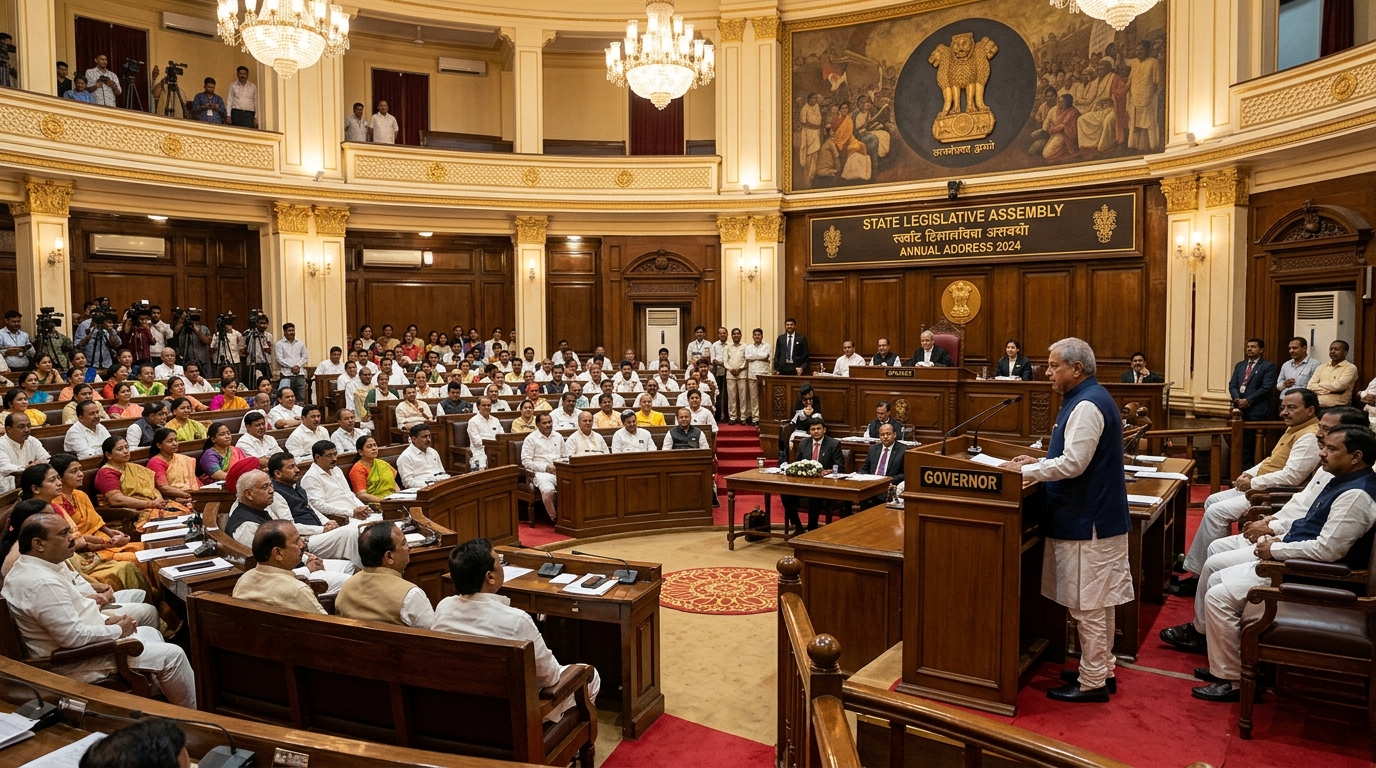
- Addressing State Assembly (Article 175 & 176): Addresses the State Legislature at the commencement of the first session after each general election and the first session of each year.
- Nomination Powers:
- Nominates 1/6th of total members to State Legislative Council (Vidhan Parishad) having special knowledge or practical experience in Literature, Science, Art, Cooperative Movement, and Social Service (Article 171). (Note: Cooperative Movement is included in Governor's nomination, whereas it is NOT included in President's RS nomination).
- Prior Recommendation for Bills: Prior recommendation of Governor is required for introducing Money Bills (Article 198) in the State Assembly.
---
Governor's Options under Article 200
├── 1. Give Assent (Bill becomes State Law)
├── 2. Withhold Assent (Bill dies)
├── 3. Return Bill for Reconsideration (If not a Money Bill)
└── 4. Reserve Bill for Consideration of the President
1. Give Assent: The Bill becomes an Act/Law of the State.
2. Withhold Assent: The Governor withholds assent; the Bill fails to become law.
3. Return Bill for Reconsideration: The Governor returns an Ordinary Bill to the State Assembly with a message for reconsideration. If the State Legislature passes the Bill again (with or without amendments) by a simple majority, the Governor MUST give assent (cannot withhold assent second time).
4. Reserve Bill for Consideration of President: The Governor reserves the Bill for the President's consideration. Reservation is MANDATORY if the Bill endangers the constitutional position of the State High Court. Other grounds include:
- Opposed to Directive Principles of State Policy (DPSP).
- Contrary to larger national interest.
- Dealing with compulsory acquisition of property under Article 31A.
- The President may assent, withhold assent, or direct the Governor to return the Bill to the State Legislature.
- If the State Legislature passes the Bill again within 6 months, the President is STILL NOT BOUND to give assent. The President can withhold assent indefinitely!
---
Chapter 10
1. Promulgated ONLY when the State Legislative Assembly (or both Houses in bicameral states) is not in session.
Chapter 11
2. Must be laid before the State Legislature when it reassembles. Ceases to operate at the expiry of 6 weeks from reassembly, or earlier if disapproved.
3. Maximum Life: 6 Months and 6 Weeks.
4. Prior Presidential Instructions Required: Governor cannot issue ordinances without President's instructions if:
- A Bill containing same provisions would have required prior Presidential sanction.
- Governor would have deemed it necessary to reserve a Bill containing same provisions for President.
---
Chapter 12
# 3. FINANCIAL POWERS
- State Money Bills (Article 198): Introduced in Legislative Assembly ONLY with prior recommendation of Governor.
- Annual Financial Statement (Article 202): Causes State Budget to be laid before State Assembly.
- Contingency Fund of State: Can make advances out of State Contingency Fund to meet unforeseen expenditure.
- State Finance Commission (Article 243-I & 243-Y): Constitutes State Finance Commission every 5 years to review financial position of Panchayats and Municipalities.
---
Under Article 161, the Governor has the power to grant pardons, reprieves, respites, or remissions of punishment, or to suspend, remit, or commute the sentence of any person convicted of any offense against any law relating to a matter to which the executive power of the State extends.
Chapter 13
# Comparison: Pardoning Powers of President (Art 72) vs Governor (Art 161):
| Feature / Power | President of India (Article 72) | Governor of a State (Article 161) |
|---|---|---|
| Court Martial Sentences | Can Pardon Court Martial sentences. | CANNOT Pardon Court Martial sentences. |
| Death Sentence Pardoning | Can Completely Pardon Death sentences. | CANNOT Completely Pardon Death sentences. (Can suspend, remit, or commute death sentence). |
| Applicable Laws | Offenses against Union Laws. | Offenses against State Laws. |
(Supreme Court 2021 clarification: Governor can exercise remission powers under Art 161 for prisoners serving 14+ years in jail, even in death sentence commutation cases, based on Cabinet advice).
---
Chapter 14
DISCRETIONARY POWERS OF THE GOVERNOR (ARTICLE 163)
Article 163(2) states: "If any question arises whether any matter is or is not a matter as respects which the Governor is by or under this Constitution required to act in his discretion, the decision of the Governor in his discretion shall be final."
Discretionary Powers of the Governor
├── 1. Constitutional Discretion (Explicitly granted by the Constitution)
│      ├── Reservation of State Bill for President (Art 200)
│      ├── Recommendation of President's Rule (Art 356)
│      ├── Seeking administrative info from CM (Art 167)
│      └── Determining Tribal District Council Royalties (6th Schedule)
└── 2. Situational Discretion (Arising out of political contingencies)
       ├── Appointment of CM in a Hung Assembly
       ├── Dismissal of Ministry losing majority in Assembly
       └── Dissolution of Legislative Assembly when Ministry loses majority
1. Reserving a Bill for President's Consideration (Article 200).
2. Recommending President's Rule in the State (Article 356).
3. Seeking Information from Chief Minister (Article 167).
4. Determining Tribal Council Royalties: Determining amount payable to Autonomous District Councils as royalties from mineral extraction licenses in Assam, Meghalaya, Tripura, and Mizoram (6th Schedule).
5. Special Responsibilities under Article 371: Managing law and order in Nagaland, regional development boards in Maharashtra/Gujarat (Vidarbha/Marathwada/Saurashtra), Assam hill areas, Manipur hill areas, Sikkim, Arunachal Pradesh, and Karnataka-Hyderabad region.
1. Appointment of Chief Minister in Hung Assembly: Inviting political party leaders when no party has a clear majority.
2. Dismissal of Council of Ministers: Dismissing a Ministry that fails to prove majority on the floor of the House.
3. Dissolution of Assembly: Dissolving Assembly when the Ministry has lost majority and no alternative government is viable.
---
Chapter 15
MAJOR CONTROVERSIES SURROUNDING THE GOVERNOR'S OFFICE
Chapter 16
# 2. Delaying Assent to State Bills / "Pocket Veto" by Governors:
Governors in states like Tamil Nadu, Kerala, Telangana, and Punjab have been accused of sitting on bills passed by elected State Legislatures for months or years without taking action under Article 200.
Governors have faced allegations of partisanship by inviting single largest parties instead of post-poll coalitions, or vice-versa, to give unfair advantage to the ruling party at the Centre (e.g., Karnataka 2018, Maharashtra 2019).
State Governments have clashed with Governors over the appointment of Vice-Chancellors, leading several states (such as West Bengal, Tamil Nadu, Kerala, and Punjab) to pass bills removing the Governor as Chancellor of State Universities.
---
Chapter 17
LANDMARK SUPREME COURT JUDGMENTS ON GOVERNOR'S POWERS
| Landmark Case | Year | Supreme Court Ruling & Constitutional Impact |
|---|---|---|
| Shamsher Singh v. State of Punjab | 1974 | 7-Judge Bench ruled Governor must act strictly on aid and advice of Council of Ministers, except where discretion is explicitly provided. |
| S.R. Bommai v. Union of India | 1994 | 9-Judge Bench held recommendation of President's Rule under Art 356 is subject to Judicial Review. Majority MUST be tested on floor of Assembly (Floor Test). |
| Rameshwar Prasad v. Union of India | 2006 | Dissolution of Bihar Assembly by Governor held unconstitutional, arbitrary, and mala fide. |
| BP Singhal v. Union of India | 2010 | Constitution Bench held Governor cannot be removed arbitrarily or simply due to change of Central Government. Removal subject to judicial review. |
| Nabam Rebia v. Deputy Speaker | 2016 | Supreme Court held Governor's discretionary powers under Art 163 are limited. Governor cannot summon or advance Assembly session without Cabinet advice. |
| State of Punjab v. Governor of Punjab | 2023 | Supreme Court held Governor CANNOT sit indefinitely on Bills under Art 200. If Governor returns Bill and Assembly passes it again, Governor MUST assent. |
---
Chapter 18
RECOMMENDATIONS OF MAJOR COMMISSIONS ON GOVERNOR REFORMS
- Appointment of Governor: Governor must be an eminent person, an outsider to the state, detached from local politics, and not an active politician in the recent past.
- Consultation with Chief Minister: State Chief Minister MUST be effectively consulted before appointing a Governor.
- Use of Article 356: President's Rule should be used sparingly, as a matter of last resort.
- 6-Month Limit under Art 200: Governor must decide on State Bills within 6 months.
- Fixed 5-Year Tenure: Governor should be granted a fixed 5-year tenure. Removal should NOT depend on the sweet will of the Centre.
- Impeachment by State Legislature: Recommended that Governors be removed through a process of Impeachment by the State Legislative Assembly (similar to President's impeachment).
- Removal from University Chancellor Role: Governor should be relieved of statutory Chancellor duties in universities to avoid political conflicts.
- Guidelines for Hung Assembly: Clear order of preference for CM invitation:
Chapter 19
1. Pre-poll alliance with largest numbers.
Chapter 20
2. Single largest party claiming majority.
Chapter 21
3. Post-poll coalition of parties.
---
Chapter 22
COMPARATIVE ANALYSIS: PRESIDENT VS GOVERNOR
| Aspect | President of India | Governor of a State |
|---|---|---|
| Constitutional Position | Head of Indian Union (Executive) | Head of State & Agent of Centre |
| Election / Appointment | Elected indirectly by Electoral College | Appointed by President of India |
| Tenure Security | Removed ONLY by Impeachment (Art 61) | Holds office during Pleasure of President |
| Explicit Discretion | NO explicit constitutional discretion | HAS explicit discretion (Art 163(1)) |
| Ordinance Power | Article 123 (Union / Concurrent List) | Article 213 (State / Concurrent List) |
| Pardoning Death Penalty | CAN completely pardon Death Sentence | CANNOT completely pardon Death Sentence |
| Veto over Returned Bill | MUST give assent if repassed (Art 111) | MUST give assent if repassed (Art 200) |
---
Chapter 23
IMPORTANCE FOR COMPETITIVE EXAMS & QUICK REVISION
1. Articles: Art 153 (Office), Art 155 (Appointment by President), Art 156 (Pleasure of President), Art 159 (Oath by High Court CJ), Art 161 (Pardons), Art 163 (Discretion), Art 200 (Assent to Bills), Art 213 (Ordinance).
2. Pardoning Difference: Governor CANNOT pardon Death Penalty or Court Martial sentences (Art 161 vs Art 72).
3. Article 200 Options: Assent, Withhold, Return (Ordinary Bills), Reserve for President.
4. Ordinance Max Life: 6 Months and 6 Weeks (Art 213).
---
Chapter 24
FREQUENTLY ASKED QUESTIONS (FAQS)
Answer: The Governor is appointed by the President of India by warrant under his hand and seal (Article 155).
Answer: A Governor holds office during the pleasure of the President (Article 156). Subject to Presidential pleasure, the normal term of office is 5 years.
Chapter 25
# Q3: Can a Governor completely pardon a death sentence under Article 161?
Answer: No. The Governor cannot completely pardon a death sentence. Only the President of India has the power to pardon a death sentence under Article 72. However, the Governor can suspend, remit, or commute a death sentence under Article 161.
Chapter 26
# Q4: What are the four options available to a Governor regarding State Bills under Article 200?
Answer: Under Article 200, the Governor can: (1) Give assent, (2) Withhold assent, (3) Return the Bill for reconsideration (if not a Money Bill), or (4) Reserve the Bill for consideration of the President.
Chapter 27
# Q5: Can the same person be appointed as Governor of two or more States?
Answer: Yes. Through the 7th Constitutional Amendment Act, 1956, a single person can be appointed Governor for two or more States simultaneously.
Chapter 28
# Q6: Who administers the oath of office to a State Governor?
Answer: The oath of office is administered by the Chief Justice of the concerned State High Court, or in his absence, the senior-most available Judge of that High Court (Article 159).
Chapter 29
# Q7: What is the difference between explicit discretion of President and Governor?
Answer: The Constitution does NOT grant explicit constitutional discretion to the President. However, Article 163(1) explicitly grants constitutional discretionary powers to the Governor.
Chapter 30
# Q8: What is the maximum validity period of an Ordinance promulgated by a Governor?
Answer: An Ordinance issued under Article 213 must be approved by the State Legislature within 6 weeks from its reassembly. The maximum life of an Ordinance is 6 Months and 6 Weeks.
Chapter 31
# Q9: What did the Supreme Court rule in BP Singhal v. Union of India (2010)?
Answer: The Supreme Court held that while Governors serve at the pleasure of the President, they cannot be removed arbitrarily, capriciously, or simply due to a change of government at the Centre.
Chapter 32
# Q10: What did the Punchhi Commission recommend regarding the removal of Governors?
Answer: The Punchhi Commission (2007) recommended that Governors be given a fixed 5-year tenure and should be removed through a process of Impeachment by the State Legislative Assembly.
Chapter 33
# Q11: What is the role of the Governor regarding State Finance Commission under Article 243-I?
Answer: The Governor constitutes a State Finance Commission every 5 years to review the financial position of Panchayats and Municipalities and recommend tax distribution between the State and local bodies.
Chapter 34
# Q12: Can the Governor nominate members to the State Legislative Council?
Answer: Yes. Under Article 171, the Governor nominates 1/6th of total members of the State Legislative Council from fields of Literature, Science, Art, Cooperative Movement, and Social Service.
---
Chapter 35
CONSTITUTIONAL IMMUNITIES AND PRIVILEGES OF THE GOVERNOR (ARTICLE 361)
- No Criminal Proceedings: No criminal proceedings whatsoever can be instituted or continued against a Governor in any court during their term of office.
- No Process for Arrest: No process for the arrest or imprisonment of the Governor can be issued from any court during their tenure.
- Non-Answerability to Courts: The Governor is not answerable to any court for the exercise and performance of the powers and duties of their office.
- Civil Proceedings Notice: Civil proceedings against a Governor regarding personal acts require a mandatory two-month prior written notice.
---
Chapter 36
GOVERNOR'S SPECIAL RESPONSIBILITIES UNDER CONSTITUTIONAL ARTICLES
In addition to general executive powers, the Governor holds special constitutional responsibilities under specific articles:
| Article | State / Region | Special Responsibility |
|---|---|---|
| Article 371(1) | Maharashtra & Gujarat | Establishment of separate development boards for Vidarbha, Marathwada, Saurashtra, and Kutch. |
| Article 371A | Nagaland | Law and order in the State as long as internal disturbances caused by Naga insurgent groups continue. |
| Article 371C | Manipur | Secure the proper functioning of the committee of the Legislative Assembly consisting of members from the Hill Areas. |
| Article 371F | Sikkim | Peace and for ensuring social and economic advancement of different sections of the population. |
| Article 371H | Arunachal Pradesh | Law and order in the State of Arunachal Pradesh. |
---
Chapter 37
# Financial Powers of the Governor:
- State Money Bills can be introduced in the State Legislative Assembly only with prior recommendation of the Governor.
- No demand for a grant can be made in the State Legislature except on the recommendation of the Governor.
- Can make advances out of the State Contingency Fund to meet unforeseen expenditure.
- Constitutes a State Finance Commission every 5 years to review financial position of Panchayats and Municipalities.
---
Chapter 38
# Appointment Convention and Sarkaria Commission Recommendations:
- Consultation with Chief Minister: Governor should be appointed only after informal consultation with the Chief Minister of the concerned State.
- Outsider Rule: The appointee should be an eminent person in some walk of life, belonging to outside the State, and not deeply involved in local state politics.
- Rare Removal: Governor should be allowed to complete 5-year tenure; removal before tenure should be in rare and exceptional circumstances with reasons communicated to the State CM.
---
Chapter 39
CONCLUSION
The office of the Governor is a crucial linchpin in Indian federalism. Designed by the framers of the Constitution as an impartial constitutional umpire and a bridge between the Centre and the States, the Governor plays a key role in ensuring political stability and constitutional governance in the States.
While political misuse of powers under Article 356 and Article 200 has generated historical controversies, landmark judicial rulings by the Supreme Court—such as S.R. Bommai (1994), BP Singhal (2010), Nabam Rebia (2016), and Punjab (2023)—have substantially strengthened constitutional accountability, enforcing the rule of law and preserving state autonomy.
For competitive exam aspirants, mastering Article 153 through Article 213, discretionary powers, comparative differences with the President, and committee recommendations ensures complete preparation for scoring top marks in Indian Polity.
👉 Official Career Portal: [https://rrbcontents.com](https://rrbcontents.com)
👉 Official Telegram Channel: [Join RRBCONTENTS Telegram (@rrbcontents)](https://t.me/rrbcontents)
---
Chapter 40
GOVERNOR'S DISCRETIONARY POWERS: WHEN & HOW USED
The Governor's discretion is the most controversial aspect of the office. Constitutional text says the Governor acts on "aid and advice" of Council of Ministers, but some situations allow independent action:
| Discretionary Situation | Governor's Action | Constitutional Basis |
|---|---|---|
| Hung Assembly (no clear majority) | Invite largest party/coalition to prove majority on floor | Constitutional convention |
| Dismissal of Ministry | Only if Ministry has lost floor confidence but refuses to resign | Bommai case ruling |
| Withholding assent to State Bill | Can withhold assent and send back ONCE for reconsideration, or reserve for President | Article 200 |
| Reserving Bill for President | Mandatory for bills affecting High Court powers; discretionary for others | Article 201 |
| Report to President under Article 356 | Can recommend President's Rule when constitutional machinery fails | Article 356 |
| Appointment of CM | When no post-election clear majority; Governor calls leader with strongest claim | Constitutional convention |
Key Case: B.P. Singhal v. Union of India (2010) SC Ruling: The Supreme Court held that Governors cannot be removed arbitrarily or for political reasons. Removal must have 'some cause' — not mere political convenience of new government at Centre.
Chapter 41
IMAGE GENERATION PROMPTS
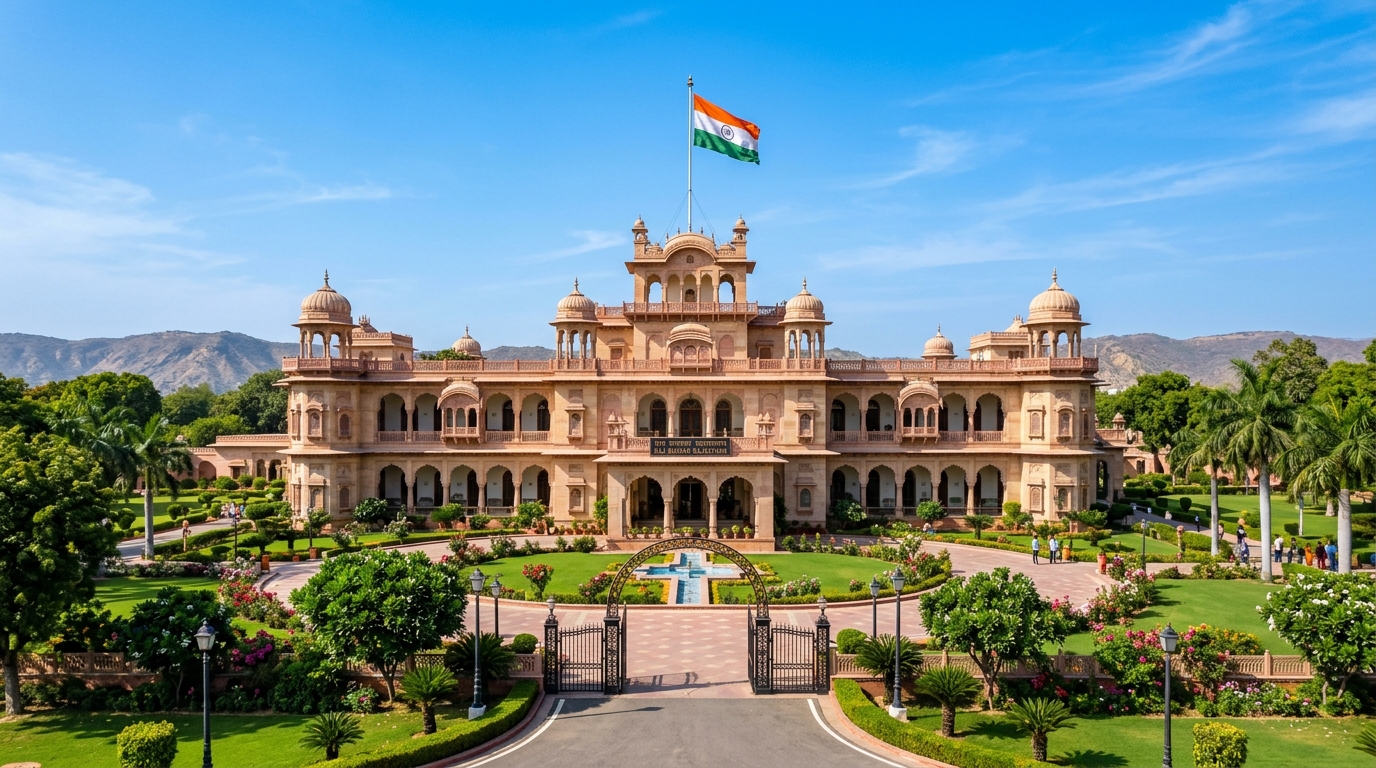
`A high-resolution, realistic digital photograph of Raj Bhavan building in Jaipur or Mumbai under clear blue skies, showing grand colonial architecture, lush green gardens, and the Indian National Flag flying proudly. Professional architecture lighting, 8k resolution, photorealistic quality.`
`A detailed realistic photo illustration of a formal State Legislative Assembly hall in India, with the Governor delivering the annual address to elected members of the assembly. High detail, warm interior lighting, photorealistic quality.`
Prepare with RRBCONTENTS
Free mock tests, previous year papers, and daily current affairs for UPSC, SSC & Railway exams.
Start Free Mock Tests →Continue Reading
Explore More Articles
Knowledge Hub
More Blog Articles
In-depth articles on Polity, Economy, Environment and Current Affairs.
Study Material
Exam Study Notes
Subject-wise notes and digests for Railway, SSC, Banking and State PSC exams.
Current Affairs
Daily Current Affairs & GK
Daily updates and static GK bank with active-recall quizzes.