 RRB
RRB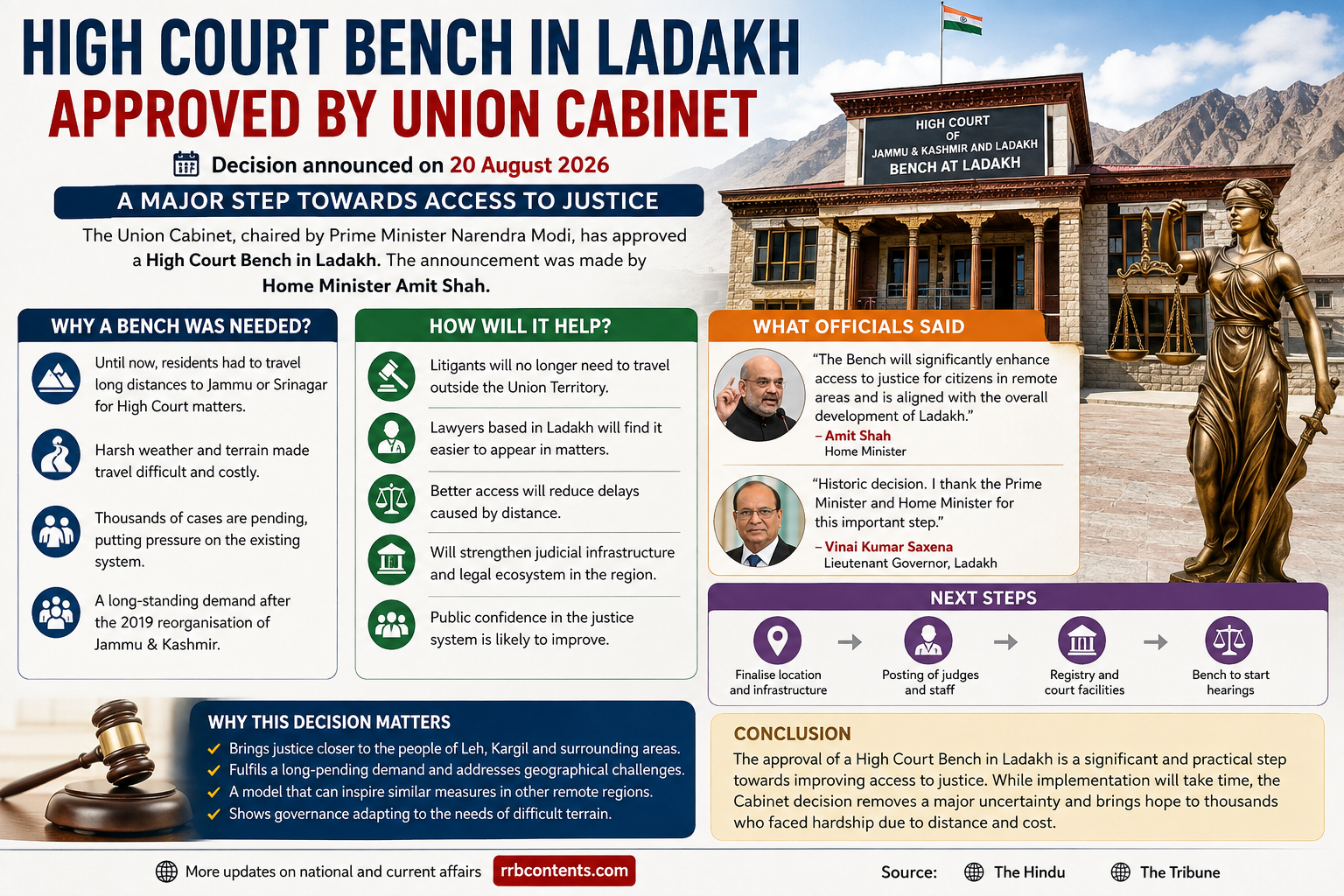
The High Court Bench in Ladakh has been approved by the Union Cabinet. The decision was announced on 20 August 2026. As a result, residents of the remote Union Territory will soon have better access to higher judicial services. Home Minister Amit Shah shared the news. Therefore, the announcement carries clear weight for the region.
Until now, people from Ladakh had to travel long distances to Jammu or Srinagar for High Court matters. Because of this, ordinary litigants faced heavy cost and time pressure. In addition, the move responds to a demand raised for several years after the 2019 reorganisation. Consequently, the decision is being seen as practical relief.
The new Bench will work as part of the existing High Court of Jammu and Kashmir and Ladakh. It will not be a completely separate court. Still, its presence inside the Union Territory marks a clear improvement. In short, access to justice is set to become easier.
What the High Court Bench in Ladakh Decision Means
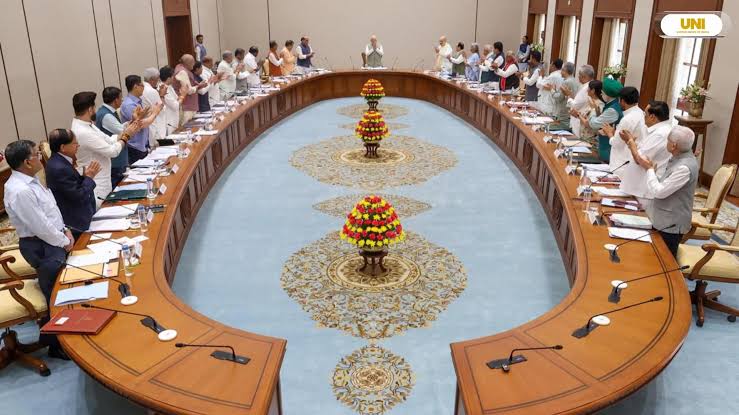
The Union Cabinet, chaired by Prime Minister Narendra Modi, cleared the proposal. Amit Shah confirmed the decision through an official statement. He said the Bench would significantly enhance access to justice for citizens living in remote areas. Moreover, he linked the step to the larger development goals of the region.
According to the Home Minister, the new facility will cut the time required to avail legal services. Therefore, people will no longer lose days only in travel. In addition, the government has repeated its commitment to constitutional safeguards. As a result, the announcement carries both administrative and political meaning.
Ladakh Lieutenant Governor Vinai Kumar Saxena welcomed the decision. He called it historic. At the same time, he thanked both the Prime Minister and the Home Minister. Local organisations that have been pressing for better facilities also view the step as positive. Consequently, the initial response has been encouraging.
Why a Bench Was Needed in Ladakh
After the reorganisation of Jammu and Kashmir in 2019, Ladakh became a separate Union Territory. The High Court continued as a common court for both regions. Its main seats remained in Srinagar and Jammu. Because of this arrangement, residents of Leh and Kargil often had to undertake long journeys.
Weather conditions in the region make travel even harder for several months of the year. As a result, many ordinary citizens found it difficult to pursue High Court cases. Moreover, judicial pendency figures show pressure on the existing system. Thousands of cases remain pending. Therefore, bringing judicial services closer to the people is expected to ease some of that burden.
In short, the decision responds to both geographical reality and long-standing local expectations. First, distance was a real barrier. Second, cost added to the difficulty. Third, seasonal isolation made the problem worse. Consequently, a local Bench was a logical demand.
How the High Court Bench in Ladakh Will Help
First, litigants will no longer need to travel outside the Union Territory for most High Court work. Second, lawyers based in Ladakh will find it easier to appear in matters. Third, the presence of a Bench can gradually strengthen the overall legal ecosystem. In addition, the move may encourage better judicial infrastructure on the ground.
Courtrooms, registry facilities and support staff will need to be put in place. Once these systems start functioning, the benefit will reach ordinary residents more directly. Moreover, the Bench is expected to reduce delays caused purely by distance. When hearings become more accessible, cases can move faster. Consequently, public confidence in the justice system may improve.
At the same time, the decision keeps the High Court structure unified. The new facility will work under the existing High Court of Jammu and Kashmir and Ladakh. Therefore, institutional continuity is maintained while local reach improves.
Official Statements and Next Steps
Amit Shah underlined that the government remains committed to the development of Ladakh. He also mentioned constitutional safeguards. These points are important. Because local bodies in Ladakh have repeatedly raised concerns about land, jobs and cultural identity. While the new Bench does not address every demand, it does fulfil one practical need. Therefore, the announcement has been received as a constructive step.
The Cabinet approval is the first major step. Actual functioning will require further administrative and logistical work. Locations, infrastructure, posting of judges and support staff will have to be finalised. Until those arrangements are completed, residents will continue to use the existing system. However, the direction is now clear.
Officials are expected to work out the operational details in the coming months. Once the Bench starts hearing cases, the real impact on access to justice will become visible. In the meantime, the decision itself removes a long-pending uncertainty.
Why This Decision Matters
Access to justice is a basic constitutional promise. When distance and geography become barriers, that promise weakens for ordinary citizens. Setting up judicial services inside Ladakh shows that the system can adapt to difficult terrain. Moreover, similar demands exist in other parts of the country. Therefore, the Ladakh example may be watched closely by other regions.
For students and aspirants following current affairs, the story also illustrates how administrative decisions, judicial structure and regional aspirations interact. It is a useful example of governance responding to a practical need. In addition, it shows how Cabinet decisions can translate into visible change for remote populations.
You can follow more national and current affairs updates on rrbcontents.com. Detailed reporting is available at The Hindu and The Tribune.
Conclusion
The approval of a High Court Bench in Ladakh is a significant step for the Union Territory. It addresses a real difficulty faced by people who earlier had to travel far for higher judicial remedies. Amit Shah’s announcement makes the government’s intent clear. Therefore, the decision carries both symbolic and practical value.
Implementation will take time. Infrastructure and staffing must still be arranged. Yet the Cabinet decision itself removes a major uncertainty. Residents of Ladakh now have a clear path toward better access to the High Court. Consequently, the focus will now shift to how quickly the Bench becomes functional.
In the longer run, the success of the Bench will depend on how effectively it serves the people of Leh, Kargil and the surrounding areas. For now, the decision stands as a concrete measure aimed at bringing justice closer to those who need it most.