 RRB
RRB
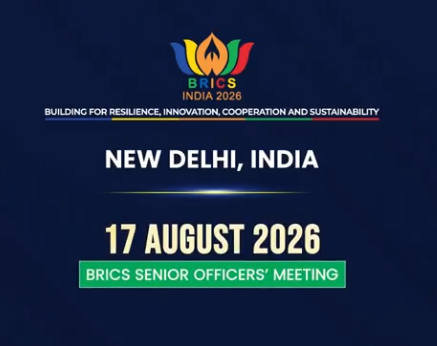
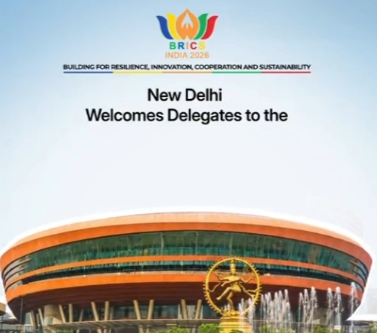
New Delhi will soon host a series of important BRICS conferences on the topic of environment. The senior officials and environment ministers of BRICS members states will be convening in Bharat Mandapam on 17 and 18 August 2026. The meetings will take place as part of India’s BRICS Chairship theme for 2026 which is “Building for Resilience, Innovation, Cooperation and Sustainability”.
Union Minister for Environment, Forest and Climate Change Bhupender Yadav will chair the Environment Minister's conference on 18 August 2026. 17 August will be the time for senior officials from the Environment Working Group and the Contact Group on Climate Change and Sustainable Development.
What Exactly Is Happening
The schedule is already ready. On 17 August senior officials will be holding an inaugural session followed by discussions on the priorities India has set for the Environment Working Group. The following day, 18 August, will be the time for the 12th BRICS Environment Ministers' Conference. The ministers, policymakers and experts will be reviewing the work that has been done by the senior officials and trying to finalise an outcome document.
The Contact Group on Climate Change and Sustainable Development was established in 2024. It provides BRICS countries with an additional venue for discussing the topic of climate change without involving broader political discussion. Combining the Environment Working Group and the Contact Group meetings within the same two-day period is designed to ensure that the dialogue remains cohesive.
India has set out four priorities for these conferences. The first priority is promotion of sustainable lifestyles including exchange of practical examples from various countries. The second priority includes issues related to afforestation, forest fire management and disaster resilience including landscape level planning and early detection of the fires. The third one involves the discussion of circular economy ideas. The fourth priority relates to climate adaptation solutions, particularly those that involve communities and indigenous knowledge.
Why These Priorities Are Important
The concept of sustainable lifestyles sounds quite vague until one looks at the data. Increase in consumption in fast-growing economies puts pressure on resources, waste management systems and CO2 emissions. India's initiative is not about imposing anything on the other countries, it is about the exchange of practical experiences of what was tried and what has worked.
Forest fires have become more frequent and severe in several BRICS countries. Landscape level planning and early warning systems as well as community participation can help minimise the negative impact. Afforestation and land restoration activities relate to carbon sink and biodiversity. Exchange of the techniques that proved themselves in practice will save everybody's time.
Discussions on the circular economy usually include reduction of waste, material reuse and development of long-life goods. In case of major developing economies it is both environmental and economic issue. Adaptation, the fourth priority, is where the impacts of climate change meet people's daily lives in the form of altered precipitation patterns, heat, floods and need for the solutions that are applicable at local level.
All these four priorities fit the overall BRICS Chairship theme quite well. Resilience requires practical tools. Innovation requires exchange. Cooperation requires common language. Sustainability requires implementation on the ground.
The Diplomatic Context
Over the years BRICS has expanded and the internal dialogue has gained additional structure. The environment has been included in the BRICS agenda from the beginning. Environment Working Group and the Contact Group allow BRICS countries to discuss the issues in a more focused way. Hosting the environment ministers' conference in New Delhi during the year of India's BRICS Chairship gives the country an opportunity to set the tone of the discussion.
Union Minister Bhupender Yadav will chair the Indian delegation at the ministerial level. The Ministry of Environment, Forest and Climate Change has been preparing the ground for weeks. Venue arrangements at Bharat Mandapam, coordination with other ministries and logistics for visiting delegations are among the steps that have been taken in preparation.
The conference for the visiting ministers and senior officials gives them an opportunity to exchange information on what works at home and how the collective positions on particular issues could be strengthened. The climate negotiations on the global level tend to go slow. Sometimes smaller groups such as this one can move faster on some issues.
What Would Make It a Successful Conference
A good result would be a document that records the agreement on the priorities and outlines next steps. It doesn't have to be groundbreaking. Work plans on forest fires management, exchange of the successful sustainable lifestyle programmes and common approach to circular economy projects would be considered as success too.
In addition to the official results there are less formal talks that take place in margins. Bilateral meetings of the countries, discussions of the experts and just being in the same room during two days can open additional channels for communication.
India has been trying to link its domestic programmes on lifestyle changes, afforestation and climate adaptation with the international platforms. The upcoming BRICS conferences provide another such channel.
Putting It Into Broader Context
The cooperation on environmental issues among the major emerging economies is significant because these countries represent a considerable share of global population, economic growth and increasingly - of emissions and resource use. When these countries manage to find something in common on some environmental issues it can influence the discussions on the UN level and elsewhere.
On the other hand the challenges these countries are facing are different and uneven. Some of them suffer more from extreme weather events, others have problems with urbanisation and waste management. Forest coverage, industrial pollution and energy transition are different everywhere. That is why the value of BRICS environment track is that it allows taking into account these differences while looking for the common interests.
The newly established Contact Group on Climate Change and Sustainable Development will develop further in the next few years depending on the quality of discussions at conferences such as the upcoming one.
Technical Details and Public Interest
The meetings will be closed for the most part as it is usual for such diplomatic events. Official statements and the outcome document are expected after the ministerial session on 18 August. The Ministry of Environment has already made public the outline of the agenda and the four priorities.
From the point of view of the Indian public the interest is obvious. Climate change impacts, forest fires, waste management and changes in the consumption patterns are not abstract international issues. They appear in daily life through heatwaves, floods-prone areas, increased cost of living and polluted local environment. Anything that improves the toolkit for addressing these issues is beneficial both internationally and domestically.
The domestic programmes of India on sustainable lifestyles, afforestation and disaster preparedness provide the country with the practical experience that could be shared. Exchange of such experience is the main aim of the exercise.
What Will Follow the Conferences
After the ministers finish their work on 18 August the real work will begin. Outcome documents need to be followed up. Working groups need to continue their meetings. National ministries need to implement the agreements made into actual projects or exchanges. The chairmanship year provides with the window, but continuity after the end of the year will matter even more.
For now the main thing is the two days in New Delhi. Senior officials will set the ground on 17 August. Ministers will be trying to give political guidance on 18 August. The theme of resilience, innovation, cooperation and sustainability provides the framework. How far they will manage to move within that framework will become clear by the end of the week.
The conferences will not solve the problem of climate change and restore the degraded land. But they can provide with the additional practical connections between countries that face similar challenges. In the year of India's BRICS Chair it is worth putting an effort here.