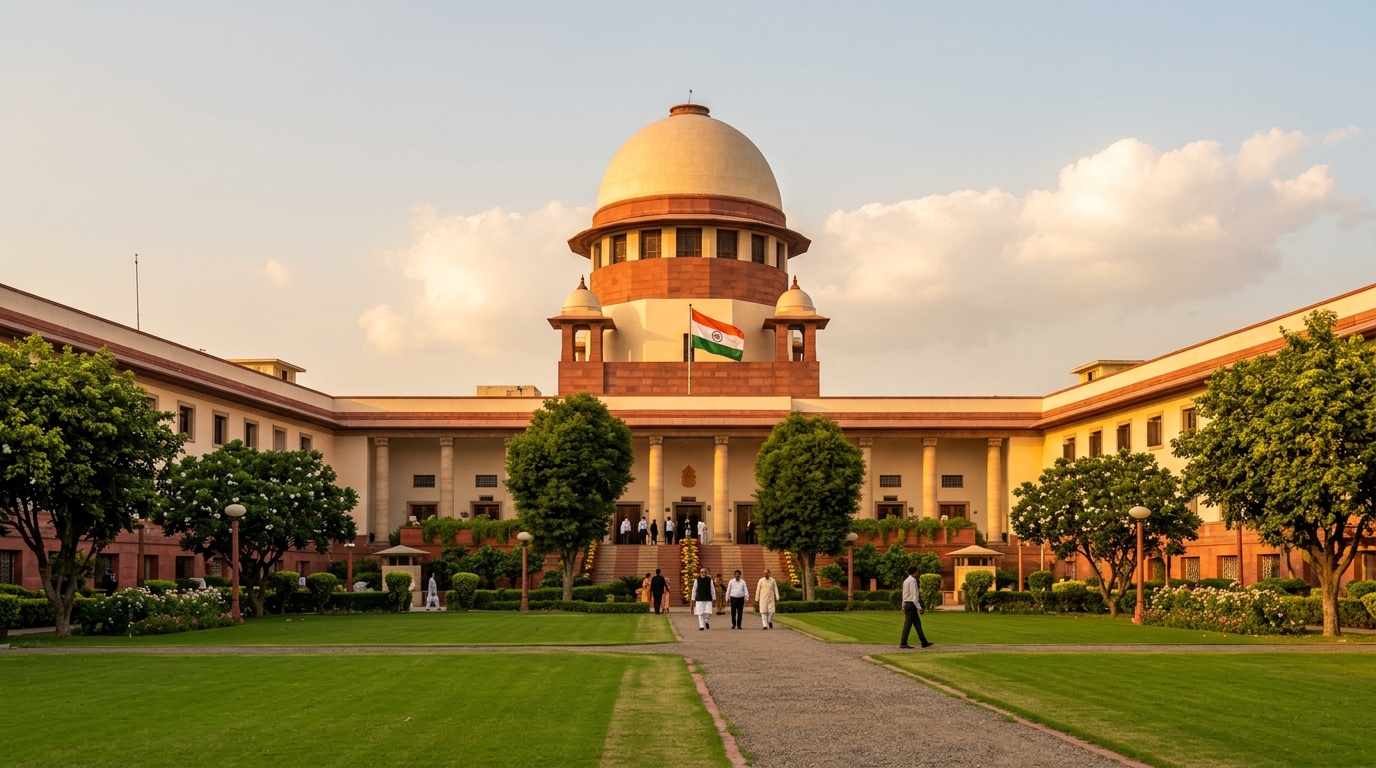
INDIAN JUDICIARY: CONSTITUTIONAL HIERARCHY, SUPREME COURT (ARTICLES 124–147), HIGH COURTS, COLLEGIUM SYSTEM, JUDICIAL REVIEW & REFORMS (COMPLETE MASTER GUIDE FOR COMPETITIVE EXAMS)
Chapter 1
INTRODUCTION
An independent, impartial, and robust judiciary is the cornerstone of constitutional democracy and the guardian of fundamental rights in India. Unlike federal systems with dual court structures (such as the United States), India adopted a single integrated judicial system headed by the Supreme Court of India, followed by High Courts at the state level and Subordinate Courts at the district level.
For aspirants preparing for competitive examinations such as UPSC Civil Services (GS Paper II Judicial Hierarchy, Polity & Governance), SSC CGL, State Public Service Commissions (BPSC, UPPSC, MPPSC, RAS, WBPSC), and Judiciary Service Exams, a complete mastery of Articles 124 to 147 (Supreme Court) and Articles 214 to 237 (High Courts and Subordinate Courts) is vital.
The Indian Judiciary performs a tripartite constitutional mandate:
1. Guardian of Fundamental Rights: Enforces Part III rights through writ jurisdiction under Article 32 (Supreme Court) and Article 226 (High Courts).
2. Umpire of Federalism: Settles disputes between the Union and States or between States under Original Jurisdiction (Article 131).
3. Interpreter of the Constitution: Exercises Judicial Review to strike down any executive action or legislative enactment violating the Constitution or its Basic Structure.
This comprehensive master guide provides an exhaustive breakdown of the Indian Judiciary—covering constitutional court hierarchy, appointment evolution (First to Fourth Judges Cases / Collegium System), writ types, judicial review vs overreach, case pendency challenges, digital reforms (e-Courts, NJDG), and 15 exam-focused FAQs.
---
Chapter 2
INTEGRATED JUDICIAL HIERARCHY IN INDIA
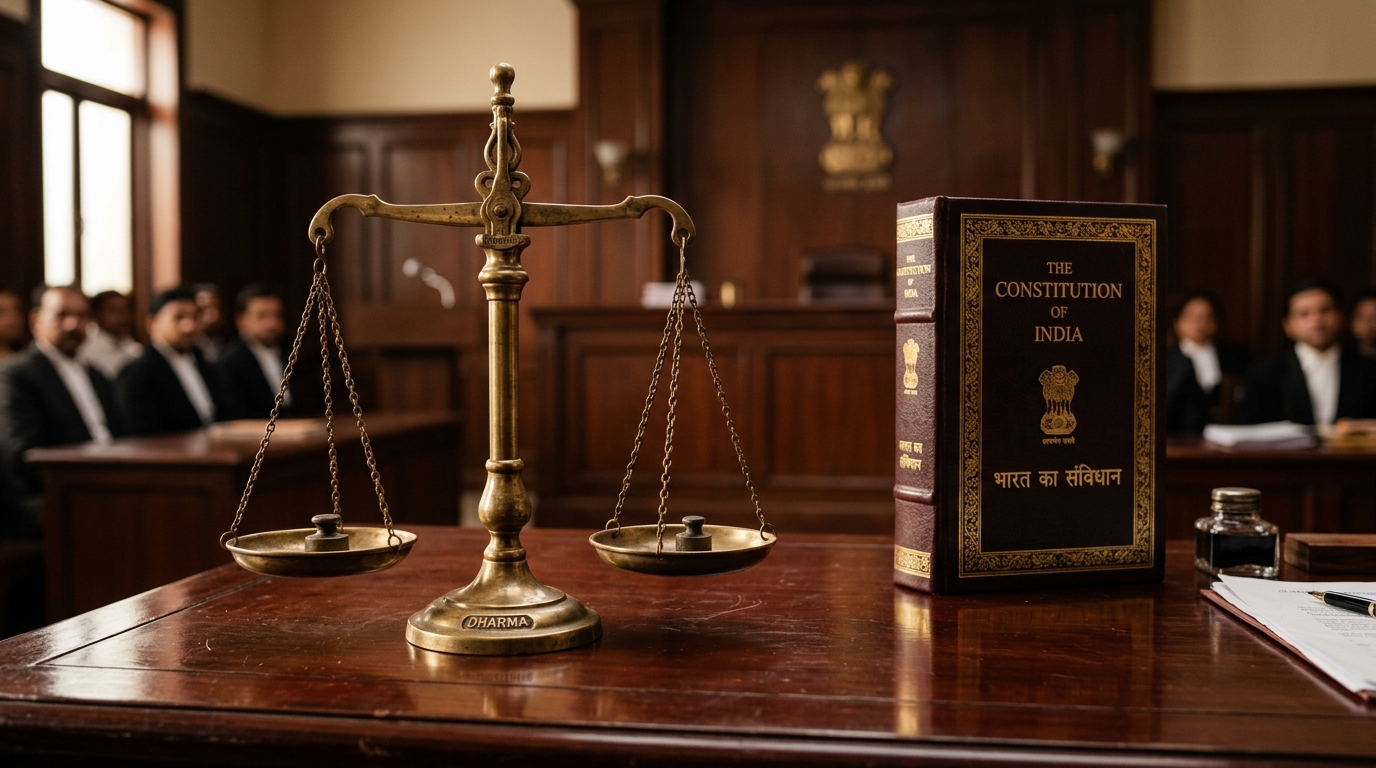
INTEGRATED JUDICIAL HIERARCHY IN INDIA - Illustrative Reference
Integrated Judicial Structure of India
├── APEX COURT: Supreme Court of India (Articles 124–147) | New Delhi
├── STATE LEVEL: High Courts of India (Articles 214–231) | 25 High Courts
└── DISTRICT & SUBORDINATE COURTS (Articles 233–237)
    ├── Civil Side: District Judge Court ➔ Sub-Judge Court ➔ Munsiff Court
    └── Criminal Side: Sessions Judge Court ➔ Chief Judicial Magistrate (CJM) ➔ Judicial Magistrate 1st Class
---
Chapter 3
SUPREME COURT VS HIGH COURTS — COMPARATIVE CONSTITUTIONAL MATRIX
| Feature / Aspect | Supreme Court of India (Part V) | High Courts of India (Part VI) |
|---|---|---|
| Constitutional Articles | Articles 124 to 147 | Articles 214 to 231 |
| Sanctioned Strength | 34 Judges (1 Chief Justice + 33 Judges) fixed by Parliament | Fixed by the President of India based on workload (varies by State). |
| Appointment Authority | President by warrant under hand and seal | President by warrant after consulting CJI, Governor, and HC CJ. |
| Retirement Age | 65 Years | 62 Years (15th Amendment Act 1963 raised from 60 to 62). |
| Writ Jurisdiction | Article 32: Narrower scope — can issue writs ONLY for Fundamental Rights. Mandatory FR guaranteed. | Article 226: Wider scope — can issue writs for FRs AND for any other legal right. Discretionary remedy. |
| Supervisory Jurisdiction | No general administrative superintendence over High Courts; hears appeals. | Article 227: High Court has administrative & judicial superintendence over all subordinate courts and tribunals in its territory. |
| Court of Record | Article 129: Power to punish for contempt of itself. | Article 215: Power to punish for contempt of itself. |
| Advisory Jurisdiction | Article 143: President can seek SC opinion on questions of law/fact. | No advisory jurisdiction. |
| Removal Mechanism | Removed by President ONLY after Parliamentary address passed by Special Majority under Article 124(4). | Removed by President on SAME grounds and procedure as a Supreme Court Judge. |
---
Chapter 4
EVOLUTION OF JUDICIAL APPOINTMENTS: THE COLLEGUM SYSTEM
The appointment of judges to the higher judiciary (Supreme Court and High Courts) has evolved through four landmark judicial cases interpreting Article 124(2) and Article 217(1):
Chapter 5
# 1. First Judges Case — SP Gupta v. Union of India (1981):
- Supreme Court held that the word "consultation" in Article 124 does NOT mean concurrence.
- Executive (President/Cabinet) held ultimate primacy in judicial appointments over the Chief Justice of India.
Chapter 6
# 2. Second Judges Case — Supreme Court Advocates-on-Record Association (1993):
- SC reversed its 1981 verdict and held that "consultation" DOES mean concurrence.
- Birth of Collegium System: Primacy shifted to the Judiciary. SC ruled that appointment of SC judges should be made on the recommendation of the CJI and 2 senior-most SC judges.
Chapter 7
# 3. Third Judges Case — Presidential Reference under Article 143 (1998):
- Expanded the SC Collegium to a 5-member body consisting of the CJI and 4 senior-most Supreme Court judges.
- Specified that if two judges give an adverse opinion, the CJI shall not send the recommendation to the Government.
- High Court Collegium: Consists of the CJI and 2 senior-most SC judges for HC appointments.
Chapter 8
# 4. Fourth Judges Case — NJAC Case (2015):
- Parliament passed the 99th Constitutional Amendment Act 2014 and NJAC Act 2014, creating the National Judicial Appointments Commission (NJAC) consisting of 6 members (CJI, 2 SC judges, Law Minister, 2 eminent persons).
- In October 2015, a 5-Judge Constitution Bench (4:1 majority) struck down the 99th Amendment and NJAC Act as UNCONSTITUTIONAL.
- SC held that judicial independence is part of the Basic Structure of the Constitution and executive involvement in judicial appointments violates this independence. Restored the Collegium system.
---
Chapter 9
JURISDICTION AND POWERS OF THE SUPREME COURT
Supreme Court Jurisdiction
├── 1. Original Jurisdiction (Art 131) | Federal disputes (Centre vs State / State vs State)
├── 2. Writ Jurisdiction (Art 32) | Enforcement of Fundamental Rights (Habeas Corpus, Mandamus, etc.)
├── 3. Appellate Jurisdiction (Arts 132-136) | Constitutional, Civil, Criminal & Special Leave Petition (SLP Art 136)
├── 4. Advisory Jurisdiction (Art 143) | Presidential references on questions of law/fact
├── 5. Review Jurisdiction (Art 137) | Power to review its own judgments
└── 6. Plenary Powers (Art 142) | Power to pass any decree necessary for "Complete Justice"
Chapter 10
# Detailed Breakdown of Key Jurisdictions:
- Original Jurisdiction (Article 131): Exclusive jurisdiction over legal disputes between:
Chapter 11
1. Government of India and one or more States; OR
Chapter 12
2. Government of India and any State(s) on one side and one or more States on the other; OR
Chapter 13
3. Two or more States.
(Note: Excludes pre-constitution treaties, political disputes, or commercial river water disputes).
- Special Leave Petition - SLP (Article 136): Discretionary plenary power of SC to grant special leave to appeal against any judgment, decree, or order in any cause or matter passed by any court or tribunal in India (except military courts/court-martials).
- Enforcement of Decrees & Complete Justice (Article 142): SC can pass any order or decree necessary for doing "complete justice" in any cause or matter pending before it. Used in landmark cases (e.g., Union Carbide Bhopal gas compensation, Ayodhya title suit, Coal block cancellations).
---
Chapter 14
FIVE CONSTITUTIONAL WRITS: ARTICLE 32 VS ARTICLE 226
Both the Supreme Court (Art 32) and High Courts (Art 226) issue 5 high prerogative writs borrowed from English Common Law:
| Writ Type | Latin Meaning | Purpose & Grounds for Issuance | Issued Against |
|---|---|---|---|
| Habeas Corpus | "To have the body of" | Orders release of a person unlawfully or illegally detained. Bulwark of personal liberty. | Public officials AND private individuals. |
| Mandamus | "We Command" | Commands a public authority or officer to perform a mandatory statutory duty which he has failed/refused to perform. | Public authorities, inferior courts, statutory bodies. (Cannot issue against President/Governor or private entities). |
| Prohibition | "To forbid" | Issued by higher court to lower court/tribunal to prevent it from exceeding its jurisdiction or usurping unauthorized jurisdiction. | Judicial and quasi-judicial bodies only. (Prevents pending proceedings). |
| Certiorari | "To be certified" | Issued by higher court to quash an order already passed by a lower court/tribunal in excess of jurisdiction or violation of natural justice. | Judicial, quasi-judicial, and administrative authorities (post-1991 SC ruling). |
| Quo-Warranto | "By what authority?" | Inquires into the legality of a person's claim to a public office, preventing illegal usurpation of public office. | Public statutory offices. (Can be sought by any interested person, not just aggrieved person). |
---
Chapter 15
JUDICIAL REVIEW, JUDICIAL ACTIVISM & JUDICIAL OVERREACH
- Judicial Review (Article 13 & Basic Structure): The power of courts to examine the constitutionality of legislative enactments and executive orders. Explicitly grounded in Articles 13, 32, 226, 131, 136, 141, and 246. Declared part of the Basic Structure in Minerva Mills (1980) and L. Chandra Kumar (1997).
- Judicial Activism: Proactive role played by courts in asserting human rights, public interest, and good governance, primarily through Public Interest Litigation (PIL) (pioneered by Justice P.N. Bhagwati and Justice V.R. Krishna Iyer in cases like SP Gupta 1981 and Bandhua Mukti Morcha 1984).
- Judicial Overreach: When the judiciary crosses the boundary of separation of powers (Article 50) and enters into executive policy-making or legislative functions (e.g., imposing highway liquor bans, framing environmental policies, regulating festival celebrations).
---
Chapter 16
MAJOR CHALLENGES FACING THE INDIAN JUDICIARY
1. Massive Pendency of Cases: Over 5.0 crore cases are pending across Indian courts (nearly 4.4 crore in Subordinate Courts, 60 lakh in High Courts, and 80,000+ in the Supreme Court).
2. Low Judge-to-Population Ratio: India has approximately 21 judges per million population, compared to 50+ per million in the US, UK, and Europe. Law Commission 120th Report recommended 50 judges per million.
3. High Judicial Vacancies: High Courts routinely operate with 30% to 40% vacant judicial posts due to delays in Collegium recommendations and executive clearances.
4. Lack of Modern Infrastructure: Poorly equipped trial courtrooms, inadequate digital infrastructure in rural districts, and lack of specialized court staff.
---
Chapter 17
JUDICIAL REFORMS & DIGITAL INITIATIVES
- e-Courts Integrated Mission Mode Project: Digitizes court records, provides online case status, electronic filing (e-Filing), and virtual court hearings across 18,000+ district courts.
- National Judicial Data Grid (NJDG): Online database providing real-time data on case pendency, disposal rates, and case status across all High Courts and District Courts in India.
- All India Judicial Service (AIJS - Article 312): Proposed central competitive examination for recruiting District Judges under Article 312 (requires Rajya Sabha resolution passed by 2/3rd majority).
- Fast Track Special Courts (FTSCs): Specialized courts set up under Criminal Law Amendment Act 2018 for expeditious disposal of rape and POSCO Act cases within 1 year.
- Live Streaming of Supreme Court Proceedings: SC began live-streaming Constitution Bench proceedings in 2022 to enhance transparency and public access to justice (Swapnil Tripathi Case 2018).
---
Chapter 18
EXAM REVISION MNEMONICS
- Writs Mnemonic: "H-M-P-C-Q"
- Habeas Corpus (To have the body)
- Mandamus (We command)
- Prohibition (To forbid - pending case)
- Certiorari (To quash - decided case)
- Quo-Warranto (By what authority)
- Judges Cases Evolution Mnemonic: "1-2-3-4"
- 1st Case (1981): Executive Primacy (Consultation ≠ Concurrence)
- 2nd Case (1993): Birth of Collegium (CJI + 2 SC Judges)
- 3rd Case (1998): Full Collegium (CJI + 4 SC Judges)
- 4th Case (2015): Struck down NJAC; restored Collegium
---
---
Chapter 19
ADDITIONAL EXAM INSIGHTS: LEGAL SERVICES & ALTERNATIVE DISPUTE RESOLUTION (ADR)
Chapter 20
# 1. NATIONAL LEGAL SERVICES AUTHORITY (NALSA) & LOK ADALATS
- Statutory Provision: Established under the Legal Services Authorities Act, 1987 (entered into force November 1995) to provide free and competent legal services to weaker sections of society.
- Constitutional Mandate: Implements Article 39A in Part IV (DPSP) — Equal Justice and Free Legal Aid.
- Patron-in-Chief: Chief Justice of India (CJI) serves as Patron-in-Chief of NALSA.
- Beneficiaries of Free Legal Aid (Section 12): SC/ST members, women and children, victims of human trafficking/begar, industrial workmen, persons with disabilities, victims of disasters/violence, and persons with annual income below statutory limits (₹3 Lakh for SC/HC, ₹1 Lakh for trial courts).
Chapter 21
# Lok Adalats (People's Courts):
- Statutory Status: Granted statutory status under the Legal Services Authorities Act 1987.
- Composition: Consists of a judicial officer (sitting or retired) and a legal practitioner / social worker.
- Jurisdiction: Any case pending before any court OR any dispute at pre-litigation stage, provided matter is compoundable (e.g. matrimonial disputes, motor vehicle accident claims, land acquisition, bank recovery).
- Binding Award: Award of Lok Adalat is deemed to be a decree of a Civil Court and is FINAL AND BINDING on all parties. NO APPEAL lies against the award of a Lok Adalat in any court of law (Section 21).
---
Chapter 22
# 2. GRAM NYAYALAYAS ACT 2008 — VILLAGE COURTS
- Statutory Provision: Enacted in 2008 based on Law Commission 114th Report to provide affordable and speedy justice at the grass-root level in rural areas.
- Presiding Officer: Nyayadhikari — appointed by State Government in consultation with the concerned High Court; holds same qualifications and salary as a Judicial Magistrate 1st Class.
- Headquarters & Mobile Courts: Established for every Panchayat at intermediate level; Nyayadhikaris hold mobile courts in villages.
- Procedure: Summary procedure in civil and criminal cases; not strictly bound by Indian Evidence Act 1872 but guided by principles of natural justice.
---
Chapter 23
# 3. CONTEMPT OF COURTS ACT, 1971
Articles 129 and 215 declare Supreme Court and High Courts as Courts of Record with power to punish for contempt:
| Contempt Type | Statutory Definition | Key Judicial Exceptions |
|---|---|---|
| Civil Contempt | Section 2(b): Wilful disobedience to any judgment, decree, direction, order, or writ of a court, or wilful breach of an undertaking given to a court. | Good faith compliance or genuine inability to comply. |
| Criminal Contempt | Section 2(c): Publication of any matter or doing of any act which (i) scandalizes or lowers court authority, (ii) prejudices judicial proceedings, or (iii) interferes with administration of justice. | Truth as a Valid Defence (Section 13 - 2006 Amendment): Court may permit truth as a valid defence if satisfied it is in public interest and request is bona fide. |
Limitation Period (Section 20): No court shall initiate any proceedings for contempt after the expiry of a period of 1 year from the date on which the contempt is alleged to have been committed.
---
Chapter 24
# 4. PUBLIC INTEREST LITIGATION (PIL) EVOLUTION
- Origin: Borrowed from American "Social Action Litigation". Introduced in India in late 1970s / early 1980s by Justice V.R. Krishna Iyer and Justice P.N. Bhagwati.
- Relaxation of Locus Standi: Traditional rule (Locus Standi) required that only the aggrieved person whose legal right was violated could file a petition. PIL relaxed this rule—allowing any public-spirited citizen or NGO to approach the court on behalf of marginalized or disadvantaged groups who cannot approach the court due to poverty, ignorance, or disability.
- Epistolary Jurisdiction: Courts accepted informal letters, postcards, or telegrams as writ petitions (e.g. Sunil Batra Case 1978 on prison conditions).
Chapter 25
## Landmark PIL Cases for Competitive Exams:
1. Hussainara Khatoon v. Home Secretary, State of Bihar (1979): First landmark PIL case. Supreme Court ordered release of 40,000+ undertrial prisoners in Bihar who had been detained for periods longer than the maximum sentence for their alleged offences. Recognized Right to Speedy Trial as part of Article 21.
2. Bandhua Mukti Morcha v. Union of India (1984): SC appointed commissions of inquiry to identify and release bonded laborers working under inhumane conditions in stone quarries.
3. Vishaka v. State of Rajasthan (1997): SC laid down Vishaka Guidelines to prevent sexual harassment of women at workplaces in the absence of enacted legislation (enforced until POSH Act 2013).
4. Olga Tellis v. Bombay Municipal Corporation (1985): SC held that Right to Livelihood is an integral part of the Right to Life under Article 21.
5. MC Mehta v. Union of India (Taj Trapezium / Ganga Pollution): Series of environmental PILs introducing Polluter Pays Principle, Precautionary Principle, and Absolute Liability.
---
---
Chapter 26
ADDITIONAL CONSTITUTIONAL DETAILS: HIGH COURTS & SUBORDINATE JUDICIARY
Chapter 27
# 1. COMMON HIGH COURTS & JURISDICTION MATRIX
Under Article 231, Parliament may by law establish a common High Court for two or more States or for two or more States and a Union Territory:
| High Court Name | Principal Seat | Permanent / Circuit Benches | Jurisdiction States & UTs |
|---|---|---|---|
| Bombay High Court | Mumbai | Nagpur, Aurangabad, Panaji (Goa) | Maharashtra, Goa, Dadra & Nagar Haveli and Daman & Diu |
| Calcutta High Court | Kolkata | Port Blair (Circuit Bench), Jalpaiguri | West Bengal, Andaman & Nicobar Islands |
| Guwahati High Court | Guwahati | Kohima, Aizawl, Itanagar | Assam, Nagaland, Mizoram, Arunachal Pradesh |
| Madras High Court | Chennai | Madurai | Tamil Nadu, Puducherry |
| Punjab & Haryana High Court | Chandigarh | Chandigarh | Punjab, Haryana, UT of Chandigarh |
| Kerala High Court | Ernakulam | Ernakulam | Kerala, Lakshadweep |
| Jammu & Kashmir High Court | Srinagar & Jammu | Srinagar (Summer) / Jammu (Winter) | UT of J&K, UT of Ladakh |
Unique UT Status: Delhi is the ONLY Union Territory that has its own separate High Court (established 1966). All other UTs fall under the jurisdiction of neighboring State High Courts.
---
Chapter 28
# 2. SUBORDINATE COURTS JURISDICTION & PROCEDURE (ARTICLES 233–237)
The district-level judiciary is divided into civil and criminal divisions, operating under the administrative superintendence of the concerned High Court (Article 227):
Subordinate Judiciary Structure
├── CIVIL SIDE (Governed by Code of Civil Procedure - CPC)
│   ├── District Judge Court (Apex District Civil Court - Unlimited monetary jurisdiction)
│   ├── Senior Civil Judge / Sub-Judge Court (Higher monetary claims)
│   └── Junior Civil Judge / Munsiff Court (Basic monetary claims)
│
└── CRIMINAL SIDE (Governed by Bharatiya Nagarik Suraksha Sanhita - BNSS / CrPC)
    ├── Sessions Judge Court (Can pass any sentence authorized by law, including DEATH PENALTY*)
    ├── Chief Judicial Magistrate (CJM) / Chief Metropolitan Magistrate (Sentences up to 7 years)
    ├── Judicial Magistrate 1st Class / Metropolitan Magistrate (Sentences up to 3 years / ₹10,000 fine)
    └── Judicial Magistrate 2nd Class (Sentences up to 1 year / ₹5,000 fine)
Death Penalty Capital Sentence Rule: A sentence of death passed by a Sessions Judge MUST BE CONFIRMED BY THE HIGH COURT before it can be executed (Section 366 of CrPC / BNSS).
---
Chapter 29
# 3. FAST TRACK SPECIAL COURTS (FTSC) & POCSO COURTS
- Statutory Framework: Constituted under the Criminal Law (Amendment) Act 2018 and funded via Nirbhaya Fund (60:40 Centrally Sponsored Scheme).
- Mandate: Expeditious trial and disposal of pending cases of rape and violations of the Protection of Children from Sexual Offences (POCSO) Act 2012.
- Target Timeline: Statutory mandate to complete investigation within 2 months and trial within 2 months (total 4-month timeline).
---
Chapter 30
# MASTER OF THE ROSTER DOCTRINE
- Constitutional Principle: The Chief Justice of India (CJI) is the "Master of the Roster" in the Supreme Court.
- Roster Powers: The CJI has exclusive administrative authority to allocate cases and constitute benches (Single Bench, Division Bench, or 3-Judge/5-Judge Constitution Benches).
- SC Rulings: Confirmed in Asok Pande v. Supreme Court of India (2018) and Shanti Bhushan v. Supreme Court (2018) — individual judges or senior collegium members cannot unilaterally allocate cases or direct bench formations.
Chapter 31
# ARBITRATION AND CONCILIATION ACT 1996 — COMMERCIAL ADR
- Statutory Framework: Enacted under UNCITRAL Model Law on International Commercial Arbitration.
- Arbitral Tribunal: Alternative Dispute Resolution (ADR) mechanism for resolving commercial disputes outside traditional courtrooms.
- Minimal Judicial Interference (Section 5): Courts cannot intervene in arbitral proceedings except as explicitly provided under the Act.
- Enforcement: Arbitral award is executed as a decree of a Civil Court under CPC.
---
Chapter 32
# TRIBUNAL REFORMS ACT 2021 & JUDICIAL SCRUTINY
- Statutory Enactment: Tribunal Reforms Act 2021 abolished 9 appellate tribunals (e.g. Film Certification Appellate Tribunal - FCAT, Intellectual Property Appellate Board - IPAB) and transferred their jurisdiction back to High Courts.
- Search-cum-Selection Committee: Fixed 4-year tenure for tribunal members (minimum age 50 years).
- SC Challenge (Madras Bar Association Case): SC struck down provisions setting 4-year tenure and age 50 requirement, holding that short tenure violates judicial independence and security of service.
Chapter 33
# LIVE STREAMING OF COURT PROCEEDINGS GUIDELINES
- Swapnil Tripathi v. Supreme Court of India (2018): SC held that live streaming of court proceedings of public importance is part of Right to Access to Justice under Article 21 and freedom of speech under Article 19(1)(a).
- Implementation: SC launched official YouTube live streaming for Constitution Bench hearings in 2022. High Courts of Gujarat, Karnataka, Orissa, Madhya Pradesh, and Kerala pioneered full live streaming of courtroom proceedings.
---
Chapter 34
# SISTER COURTS AND COMMERCIAL COURTS ACT 2015
- Statutory Provision: Enacted to establish specialized Commercial Courts at District level and Commercial Divisions in High Courts for resolving high-value commercial disputes (>₹3 Lakhs).
- Mandatory Pre-Institution Mediation: Mandates compulsory mediation before filing a commercial suit unless urgent interim relief is sought, accelerating ease of doing business in India.
---
Chapter 35
# FASTER (FAST AND SECURED TRANSMISSION OF ELECTRONIC RECORDS)
- Software Platform: Launched by Chief Justice of India in 2022 to securely transmit bail orders, stay orders, and court decrees directly from the Supreme Court to prison authorities and trial courts electronically via encrypted digital signatures, eliminating delays in releasing bailed inmates.
---
Chapter 36
# SUVAS (SUPREME COURT VIDHIK ANUVAAD SOFTWARE)
- AI Translation Tool: Trained machine-learning tool launched by the Supreme Court to translate judicial orders, writs, and judgments from English into regional Indian languages (Hindi, Tamil, Telugu, Marathi, etc.) to enhance access to justice for rural litigants.
---
Chapter 37
FREQUENTLY ASKED QUESTIONS (FAQS)
Chapter 38
# Q1: What is the current sanctioned strength of Judges in the Supreme Court of India?
Answer: The current sanctioned strength of the Supreme Court is 34 Judges (1 Chief Justice of India + 33 other Judges), increased from 31 by the Supreme Court (Number of Judges) Amendment Act, 2019.
Chapter 39
# Q2: Who fixes the strength of Judges in High Courts?
Answer: Unlike the Supreme Court (whose strength is fixed by Parliament), the strength of Judges in a High Court is fixed by the President of India from time to time, depending on the workload of the concerned High Court.
Chapter 40
# Q3: What is the retirement age of a Supreme Court Judge vs a High Court Judge?
Answer: A Supreme Court Judge retires at the age of 65 years, while a High Court Judge retires at the age of 62 years (raised from 60 to 62 by the 15th Constitutional Amendment Act, 1963).
Chapter 41
# Q4: Why is High Court writ jurisdiction under Article 226 wider than Supreme Court writ jurisdiction under Article 32?
Answer: Under Article 32, the Supreme Court can issue writs ONLY for the enforcement of Fundamental Rights. Under Article 226, a High Court can issue writs for the enforcement of Fundamental Rights AND for any other legal right (ordinary legal rights), giving it a wider functional scope.
Chapter 42
# Q5: What was the Supreme Court's ruling in the 4th Judges Case (NJAC Case 2015)?
Answer: In October 2015, a 5-Judge Constitution Bench of the Supreme Court struck down the 99th Constitutional Amendment Act 2014 and the NJAC Act 2014 as unconstitutional, holding that judicial independence is part of the Basic Structure and executive presence in judicial appointments impairs judicial independence.
Chapter 43
# Q6: What is the Collegium composition for recommending Supreme Court Judges?
Answer: For recommending appointments of Supreme Court Judges, the SC Collegium consists of 5 members: the Chief Justice of India (CJI) and the 4 senior-most Judges of the Supreme Court.
Chapter 44
# Q7: What is Article 142 of the Indian Constitution?
Answer: Article 142 empowers the Supreme Court to pass any decree or order necessary for doing "complete justice" in any cause or matter pending before it. Such decrees are enforceable throughout the territory of India.
Chapter 45
# Q8: Can the Supreme Court review its own judgments?
Answer: Yes. Under Article 137, the Supreme Court has the power to review any judgment pronounced or order made by it, subject to the provisions of any law made by Parliament or rules made under Article 145.
Chapter 46
# Q9: What is a Curative Petition?
Answer: A Curative Petition is the final legal remedy available after a Review Petition has been dismissed by the Supreme Court. It was evolved in the landmark case Rupa Ashok Hurra v. Ashok Hurra (2002) to cure gross miscarriages of justice and prevent abuse of court process.
Chapter 47
# Q10: What is Special Leave Petition (SLP) under Article 136?
Answer: Article 136 grants the Supreme Court discretionary plenary power to grant special leave to appeal against any judgment, decree, sentence, or order in any cause or matter passed by any court or tribunal in India (except military courts).
Chapter 48
# Q11: What is the difference between Prohibition and Certiorari writs?
Answer: Both writs are issued against judicial/quasi-judicial bodies. Prohibition is preventive—issued while the proceedings are pending to stop the lower court from exceeding its jurisdiction. Certiorari is curative—issued after an order has been passed to quash the illegal decision.
Chapter 49
# Q12: Which article mandates the separation of the Judiciary from the Executive?
Answer: Article 50 in the Directive Principles of State Policy (DPSP, Part IV) directs the State to take steps to separate the judiciary from the executive in the public services of the State.
Chapter 50
# Q13: What is the National Judicial Data Grid (NJDG)?
Answer: NJDG is a national online database created under the e-Courts Project that tracks real-time data on case pendency, filing, and disposal rates across all High Courts and Subordinate Courts in India.
Chapter 51
# Q14: How are District Judges appointed in a State?
Answer: Under Article 233, District Judges are appointed, posted, and promoted by the Governor of the State in consultation with the High Court exercising jurisdiction over that State.
Chapter 52
# Q15: What is All India Judicial Service (AIJS) under Article 312?
Answer: Article 312 empowers Parliament to create an All India Judicial Service (AIJS) common to the Union and States for recruiting District Judges, provided the Rajya Sabha passes a resolution supported by at least 2/3rd of members present and voting.
---
Chapter 53
CONCLUSION
An independent integrated judiciary is vital for safeguarding democratic freedoms and constitutional governance in India. Understanding the hierarchy of Supreme Court and High Courts, the Collegium system, writ jurisdiction, judicial review, and ongoing digital reforms (e-Courts, NJDG) ensures complete preparation for UPSC, SSC, and State PSC examinations.
---
👉 Official Telegram Channel: https://t.me/rrbcontents
👉 Official Website: https://rrbcontents.com
Prepare with RRBCONTENTS
Free mock tests, previous year papers, and daily current affairs for UPSC, SSC & Railway exams.
Start Free Mock Tests →Continue Reading
Explore More Articles
Knowledge Hub
More Blog Articles
In-depth articles on Polity, Economy, Environment and Current Affairs.
Study Material
Exam Study Notes
Subject-wise notes and digests for Railway, SSC, Banking and State PSC exams.
Current Affairs
Daily Current Affairs & GK
Daily updates and static GK bank with active-recall quizzes.