 RRB
RRB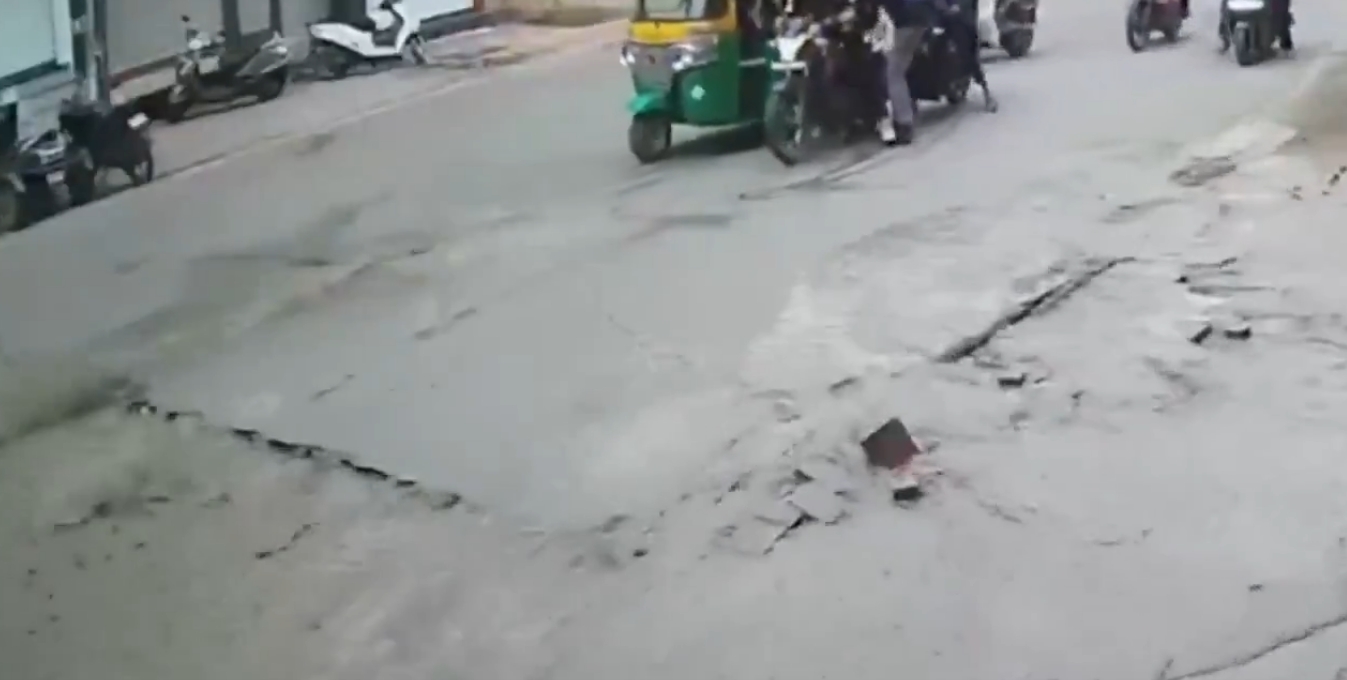
The Indore Smart City road near Gorakund has come under sharp public scrutiny. A section of the road gave way during high-pressure testing of a new water pipeline. As a result, water burst through the surface and created a visible crater. The video spread fast. Therefore, questions about construction quality returned with force.
The incident took place on 17 August 2026. CCTV captured normal traffic moving when the surface suddenly broke. Cars, autos and bikes were on the road at that moment. Fortunately, no one was seriously hurt. Still, the panic was clear. People stopped and moved away at once.
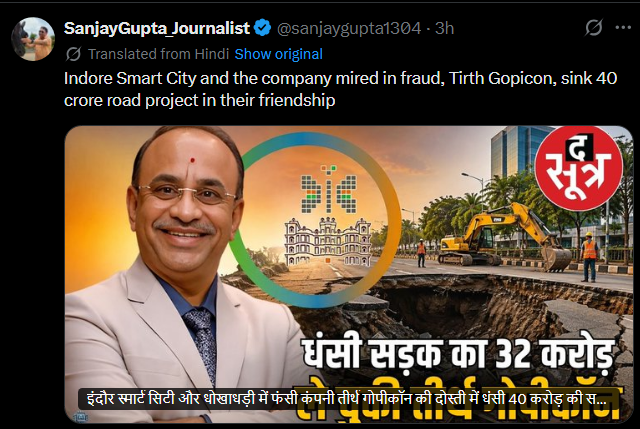
The stretch is widely reported to have cost around ₹40 crore. It forms part of the Smart City Area Based Development work linked to the Bada Ganpati–Krishnapura Chhatri corridor. Because of the cost figure and the “model road” image, the failure hit harder than a routine pothole story.
What Exactly Happened at Gorakund
Engineers were testing a newly connected section of the 24-hour water supply pipeline. The line is part of the larger Narmada-linked network planned for the Smart City zone. After the connection was made, pressure was applied.
Soon after, water forced its way upward. The soil under the temporary surface was washed out. Then the top layer broke. Paver blocks and bitumen pieces were thrown aside. A large opening formed in the middle of the carriageway. As a result, traffic had to be managed around the damaged spot.
Local reports place the site about 20 metres from Gorakund Square. The visual was dramatic enough to go viral within hours. In addition, the timing mattered. The road had already been carrying traffic for a long period. Therefore, many citizens assumed it was a finished asset.
Official Explanation from ISCDL
Indore Smart City Development Limited has given a specific technical reply. CEO Arth Jain stated that a 150-metre section near Gorakund was intentionally left as a temporary bitumen and WBM surface. It was not given the final cement concrete finish.
The reason cited is pending pipeline interconnectivity work. Encroachments near Ram Dwara and Mataji temple had delayed the remaining connections. Therefore, the agency kept that portion temporary so testing could still take place.
ISCDL also said no completion certificate has been issued for the unfinished stretch. Final payment to the contractor for that portion has not been released either. Maintenance teams repaired the surface quickly so traffic could resume on a temporary basis.
Officials added that major interconnectivity work at Subhash Tank is complete. The remaining work near Gorakund will resume after the Rakshabandhan festival. Once final testing and commissioning of the water line are done, permanent concrete restoration will follow. In short, the agency presents the damaged portion as incomplete work that was still under process.
Why the Public Is Not Fully Convinced
The official clarification is important. However, it does not end the debate. Citizens saw a road that looked ready and was already in daily use. When that surface failed during a routine pressure test, trust took a hit.
Local reporting has also pointed to repeated repairs on the wider showcase stretch over the last few years. One detailed account spoke of dozens of repair interventions on a relatively short corridor. In addition, traders in the area have questioned overall durability. Because of these earlier complaints, the latest failure felt like confirmation rather than a one-off accident.
Rajendra Rathore, an Indore Municipal Corporation member and head of the Information Committee, has demanded a high-level probe. He has written to the Prime Minister’s Office, the Union Housing and Urban Affairs Minister, the Madhya Pradesh Chief Minister and the state Urban Development Minister. He has also flagged quality concerns across a much larger set of Smart City works. Therefore, the political and civic pressure is now wider than one junction.
Deeper Analysis of the Indore Smart City Road Failure
Pipeline testing should not destroy a road surface that is meant to last. When it does, several layers of the process usually need examination.
First, the joint or packing on the water line may have been weak. Second, the backfilling and compaction under the temporary surface may not have been strong enough for high pressure. Third, coordination between the water utility schedule and the road finishing schedule appears weak. As a result, one system failed and damaged the other.
In many Indian cities the same pattern repeats. Roads are cut for cables, drains and water lines. Each opening weakens the structure. If reinstatement is rushed or poorly supervised, the road never regains full strength. The Indore Smart City road case fits this familiar cycle.
There is also a visibility problem. Showcase projects often look finished on the top layer. The unseen layers decide real life. When those layers are incomplete or poorly compacted, failure can look sudden. In reality, the weakness was already present.
Public money is involved. Therefore, quality control cannot remain a paper exercise. Independent testing, staged payments and clear defect liability periods exist for a reason. When those checks are soft, the public pays twice — once for construction and again for repair.
Practical Solutions That Can Reduce Repeat Failures
A one-time patch will not solve the underlying issue. Several concrete steps can help.
1. Publish a clear technical audit
An independent team should examine the pipeline joint, the soil condition and the temporary surface design. The findings should be made public. Without this, speculation will continue.
2. Enforce defect liability strictly
If any contractor or supervisor is still under liability for the unfinished stretch, the repair cost should not quietly shift to the public budget. Penalties and blacklisting should follow proven negligence.
3. Finish utility work before final surfacing
No road should be treated as complete while major water interconnectivity remains pending. Testing must come before the final concrete layer, or the design must allow safe reopening. Otherwise, the same cycle will return.
4. Create a simple public dashboard
Indore can list major Smart City roads with construction date, contractor name, last repair and current status. Transparency reduces suspicion even when problems occur.
5. Strengthen third-party material and compaction tests
Field tests must be real and recorded by agencies not controlled by the executing contractor. Paper compliance is not enough.
6. Coordinate festival and traffic calendars with works
Officials have already linked remaining work to the period after Rakshabandhan. Better advance planning of diversions and public information can reduce both inconvenience and safety risk.
These steps are not dramatic. Yet they are practical. Cities that follow them see fewer viral collapse videos.
What Citizens and Aspirants Should Note
Indore has built a strong national image on cleanliness and urban ranking. That image creates higher expectations. When a high-cost stretch fails in public view, the gap between branding and daily experience becomes visible.
For students and job aspirants following current affairs, this episode is useful. It shows how urban projects, public finance, contractor accountability and citizen trust interact. Similar questions appear in many state and central infrastructure schemes.
The immediate repair has restored temporary movement. Permanent concrete restoration is promised after final pipeline commissioning. Until that work is complete and the audit findings are shared, the Indore Smart City road story will remain open.
You can follow more civic and current affairs updates on rrbcontents.com. Related reporting is available through The Times of India, India Today and local coverage of the Gorakund incident. Official updates should also be tracked through Indore Smart City Development Limited and the Indore Municipal Corporation.
Conclusion
The collapse near Gorakund turned a routine pipeline test into a public examination of Smart City quality. A stretch linked to a ₹40 crore claim failed while traffic was moving. People escaped injury. The larger damage is to confidence.
Officials have explained that the damaged portion was still temporary and incomplete. That clarification matters. However, repeated earlier repairs and the scale of public spending mean citizens want more than a temporary fix. A transparent audit, firm accountability and better coordination between utility and road work remain the minimum next steps.
If those steps are taken openly, the incident can still lead to improvement. If it ends only with a filled crater and silence, similar videos will appear from other junctions. For now, the Indore Smart City road episode stands as a clear reminder that durable work matters more than the first photo opportunity.