Home › Blog › Jharkhand Student Protest Over JPSC-JSSC Exam Irregularities
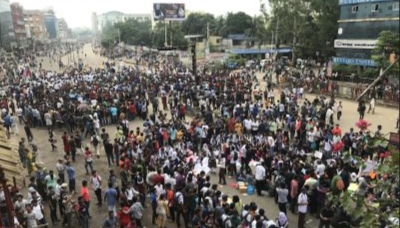
Jharkhand Student Protest Enters 15th Day Over JPSC-JSSC Exam Irregularities – Recruitment Reform Analysis for Aspirants
The student agitation in Ranchi over alleged irregularities in Jharkhand’s competitive examinations for government jobs entered its 15th day on 8 August 2026. Hundreds of aspirants have been camping at Jaipal Singh Munda Stadium, with some on hunger strike, demanding a Central Bureau of Investigation inquiry, cancellation of the disputed 14th Jharkhand Public Service Commission (JPSC) Civil Services Preliminary examination, and systemic reforms in the conduct of both JPSC and Jharkhand Staff Selection Commission (JSSC) exams.
The immediate trigger was the declaration of results of the JPSC Combined Civil Services Preliminary examination. Candidates raised serious questions after discrepancies appeared between the official results and answer sheets circulating on social media. Allegations of paper leaks, manipulation of OMR sheets, and irregularities involving a private agency previously blacklisted by the JSSC fuelled widespread distrust. The Jharkhand Criminal Investigation Department has already arrested multiple individuals, including officials and employees of the private data-processing firm, and the former JPSC chairman has been questioned. Despite these steps, protesters insist that only a CBI investigation can restore credibility.
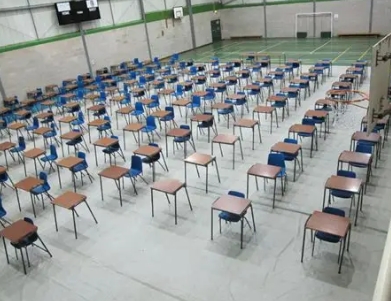
Talks between a state government delegation comprising ministers and different factions of the protesting students have so far failed to break the deadlock. Students maintain that their core demands—CBI probe, cancellation of the tainted examination, and creation of a transparent, technology-driven testing agency on the lines of the National Testing Agency—remain unmet. The government has assured that irregularities will be examined and recruitment processes improved, but the agitation continues.
The protest reflects deeper structural problems that many Indian states face in recruitment examinations: repeated delays, opaque evaluation processes, repeated reliance on private vendors with questionable track records, and the absence of robust real-time monitoring. For thousands of young people who invest years preparing for limited government vacancies, each instance of alleged malpractice represents not only lost opportunity but also erosion of faith in the system.
For competitive-exam aspirants across India the Jharkhand agitation carries direct relevance. It highlights the critical importance of examination integrity, the need for independent and professionally run testing bodies, the risks of excessive outsourcing without adequate oversight, and the value of transparency measures such as timely publication of category-wise cut-offs, answer keys and OMR images. The demand for a state-level testing agency modelled on the National Testing Agency echoes similar calls heard in other states after paper-leak controversies.
The episode also underscores the human cost of prolonged uncertainty. Many protesters have spent the better part of a decade appearing in successive delayed or cancelled examinations. The psychological and financial toll on candidates and their families is substantial. At the same time, the peaceful and sustained nature of the agitation demonstrates the organisational capacity of student groups when trust in recruitment systems collapses.
Policy lessons emerging from the crisis include the necessity of end-to-end digital processes with strong audit trails, randomised question-paper delivery, multi-layered invigilation, and swift, independent investigation mechanisms when allegations arise. States that have moved towards computer-based testing with robust cybersecurity protocols have generally faced fewer large-scale leak scandals, though no system is entirely immune.
As negotiations continue, the immediate test for the Jharkhand government is whether it can offer concrete, time-bound commitments that address both the specific disputed examination and the broader architecture of recruitment. For aspirants nationwide, the events in Ranchi serve as a reminder that vigilance, collective voice, and insistence on systemic transparency remain essential in the long struggle for fair access to public employment.
Accurate knowledge of the main demands, the examinations under cloud, the investigative steps already taken, and the wider issues of testing-agency reform will equip candidates to answer questions on governance, youth unemployment and institutional integrity.
Frequently Asked Questions
What are the main demands of the protesting students in Jharkhand?
A CBI inquiry into alleged irregularities, cancellation of the disputed 14th JPSC Civil Services Preliminary examination, and systemic reforms including a transparent state testing agency.
Which examinations are under controversy?
Primarily the Jharkhand Public Service Commission (JPSC) Combined Civil Services examination and certain Jharkhand Staff Selection Commission (JSSC) examinations.
What investigative steps have been taken so far?
The Jharkhand CID has arrested multiple persons, including officials and private agency staff, and questioned the former JPSC chairman. Protesters still demand a CBI probe.
Why is this relevant for competitive exam aspirants?
It highlights examination integrity, risks of opaque processes and private vendor dependence, the need for independent testing agencies, and the human cost of repeated irregularities—core concerns for all serious aspirants.
Stay Updated on Exam Recruitment & Reforms
Reliable news and analysis for JPSC, BPSC, UPPSC, SSC, and Railway examinations.
Latest Jobs & Exams → Daily Current Affairs →Join our official Telegram channel for instant updates: @rrbcontents