Home › Blog › Indian Judiciary › Justice Ujjal Bhuyan Speech
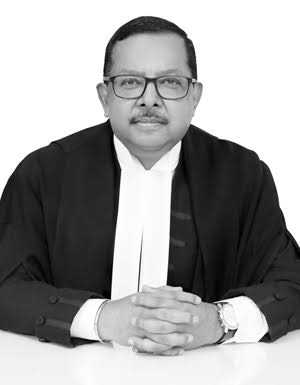
"Consuming Biryani Is No Offence": Why Supreme Court Judge Justice Ujjal Bhuyan Is Trending Nationwide
Track State Judicial Services, Law Officer, High Court Registry & UPSC Legal Assistant notifications on RRBCONTENTS Jobs Portal.
Key Takeaways & Summary
- Viral Biryani Observation: Justice Bhuyan questioned how 14 youths spent 3 months in jail for eating chicken biryani on a boat in Varanasi, stating "consuming chicken biryani is not an offence."
- Bail Jurisprudence: Critiqued the trend of lower courts denying bail for non-criminal acts, reiterating "bail is the rule, jail is the exception."
- Campus Dissent & Free Speech: Highlighted that student protests and environmental activism must not be treated as criminal acts under Article 19(1)(a).
- Post-Retirement Appointments: Criticized former judges accepting political roles (e.g. Rajya Sabha) as a fundamental fallacy violating the Separation of Powers (Article 50).
Table of Contents
- 1. Who Is Justice Ujjal Bhuyan? Profile and Judicial Career
- 2. The Varanasi Boat Incident: What Triggered the "Biryani" Remark?
- 3. Four Core Pillars of Justice Bhuyan's NLIU Speech
- 4. Summary Matrix: Key Insights from the Speech
- 5. High-Yield Exam Corner for Competitive Aspirants
- 6. Frequently Asked Questions (FAQ)
"Consuming Biryani Is No Offence": Why Supreme Court Judge Justice Ujjal Bhuyan Is Trending Nationwide
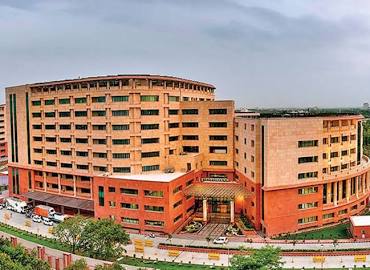
In an era where the boundary between criminal offenses and everyday personal liberties is under intense public debate, Justice Ujjal Bhuyan, a sitting judge of the Supreme Court of India, generated national headlines following an unreserved address at the 4th Justice G.P. Singh Memorial Lecture organized by the National Law Institute University (NLIU) in Bhopal.
Speaking on the theme of shrinking public space for democratic debate and the routine denial of bail, Justice Bhuyan highlighted a case where a group of young individuals spent three months in jail after being arrested for hosting an Iftar gathering and eating chicken biryani on a boat in the middle of the Ganga river in Varanasi.
"I am sure consuming chicken biryani is not an offence. It can't be an offence. There is no law prohibiting consumption of chicken over the Ganga river; they were arrested for that very reason and they had to remain in jail for three months. Can people be arrested and denied bail for 3 months for such an activity, I ask myself! Citizens are watching, people are watching."
His direct observation went viral across media platforms, drawing attention to fundamental freedoms under Article 21 (Right to Life and Personal Liberty), the doctrine that "bail is the rule, jail is the exception," and the independence of the judiciary.
This research-backed report provides a fact-checked breakdown of who Justice Ujjal Bhuyan is, the legal case behind the biryani remark, his key statements on student protests and post-retirement judicial appointments, and high-yield notes for competitive examinations.
1. Who Is Justice Ujjal Bhuyan? Profile and Judicial Career
Elevated to the Supreme Court of India on July 14, 2023, Justice Ujjal Bhuyan is recognized across legal circles for his firm stance on constitutional liberties, procedural fairness, and executive accountability.
Throughout his judicial tenure, Justice Bhuyan has authored landmark rulings safeguarding personal liberty against arbitrary arrest, emphasizing that investigating agencies cannot use prolonged pre-trial incarceration as a substitute for conviction.
2. The Varanasi Boat Incident: What Triggered the "Biryani" Remark?

To understand why Justice Bhuyan cited the biryani case, one must examine the specific police investigation that unfolded in Varanasi, Uttar Pradesh:
A. The March 2026 Case Chronology
- The Incident: A group of 14 young men organized a small Iftar gathering on a rented wooden boat cruising along the Ganga river in Varanasi, where they consumed chicken biryani.
- The Viral Video & FIR: After a video of the event circulated on social media, a local organization chief lodged a complaint alleging that consuming meat on the holy river hurt religious sentiments.
- Police Action & Bail Denials: Varanasi Police registered an FIR under Bharatiya Nyaya Sanhita (BNS) sections relating to injuring or defiling a place of worship and promoting enmity. All 14 individuals were arrested and remanded to judicial custody.
- 3-Month Incarceration: Lower courts repeatedly rejected their bail petitions, keeping the accused in jail for 90 days (three months) before higher judicial intervention was sought.
Justice Bhuyan highlighted this case to demonstrate how ordinary, non-criminal daily acts are increasingly criminalized, and how lower courts often fail to exercise discretion when granting bail.
3. Four Core Pillars of Justice Bhuyan's NLIU Speech
Beyond the biryani comment, Justice Bhuyan's address at the National Law Institute University covered four critical constitutional areas:
A. On Campus Protests and Environmental Activism
Justice Bhuyan observed that universities must remain spaces for critical inquiry and debate. He noted that students protesting for their academic rights or citizens voicing concern over environmental degradation are often treated like criminals, suspended, and kept in jail for 30–40 days before receiving bail.
B. On Restrictive Bail Conditions
He raised concerns about a growing judicial practice where courts grant bail but impose severe restrictions—such as barring the individual from attending public meetings, speaking to the press, or posting on digital platforms.
"Imposing such restrictive conditions severely undermines fundamental freedoms and liberty. People would be justified in asking whether, by passing such orders, the Court is sending a message: 'don't participate in public activities'?"
C. On Judicial Independence & Post-Retirement Roles
Addressing the principle of separation of powers, Justice Bhuyan delivered a direct critique of former judges and Chief Justices accepting political nominations or executive appointments shortly after retirement:
Using the metaphor of a three-legged stool, he explained:
"If two legs are in one place, the stool will fall apart. This is the fundamental principle. Therefore, when a former Chief Justice of India says he is going to the Rajya Sabha to 'bridge the gap between the judiciary and the executive,' it is fundamentally wrong... It goes against the principles of separation of powers."
4. Summary Matrix: Key Insights from the Speech
| Topic / Issue | Key Remark by Justice Bhuyan | Constitutional Relevance |
|---|---|---|
| Varanasi Biryani Case | "Consuming chicken biryani over Ganga is no offence; why jailed for 3 months?" | Article 21: Personal Liberty & Protection against arbitrary detention. |
| Student & Civic Protests | "Debate and dissent are the essence of democracy; ordinary acts are criminalised." | Article 19(1)(a) & 19(1)(b): Freedom of Speech & Peaceful Assembly. |
| Restrictive Bail Terms | Banning public speeches or social media posts while on bail undermines freedom. | Judicial enforcement of the "Bail is the rule, Jail is the exception" principle. |
| Post-Retirement Roles | Accepting Rajya Sabha seats to "bridge the executive gap" is fundamentally wrong. | Basic Structure Doctrine: Separation of Powers (Article 50). |
🎓 High-Yield Exam Corner for Competitive Aspirants (UPSC / Judicial Services)
For candidates preparing for UPSC Civil Services (GS Paper 2: Indian Constitution, Judiciary, Fundamental Rights & Governance) and State Judicial Services, Justice Bhuyan's speech highlights key legal concepts:
- 1. Fundamental Rights & Personal Liberty: Article 21 guarantees protection of life and personal liberty. The Supreme Court in Maneka Gandhi v. Union of India (1978) established that procedure depriving liberty must be "just, fair, and reasonable." Article 19(1)(a) & (b) protects freedom of expression and peaceful assembly without arms.
- 2. Bail Jurisprudence: State of Rajasthan v. Balchand (1977): Justice V.R. Krishna Iyer laid down the landmark principle that "Bail is the rule and jail is an exception." Nikesh Tarachand Shah v. Union of India (2018): Reaffirmed that stringent bail conditions must not become a form of punitive pre-trial punishment.
- 3. Separation of Powers & Judicial Integrity: Article 50: Directive Principle guiding the State to separate the judiciary from the executive in public services. Law Commission 14th Report (1958): Recommended a cooling-off period or restriction on retired judges accepting government positions to preserve judicial impartiality and public trust.
6. Frequently Asked Questions (FAQ)
Who is Justice Ujjal Bhuyan?
Justice Ujjal Bhuyan is a sitting judge of the Supreme Court of India, elevated on July 14, 2023. He previously served as Chief Justice of the Telangana High Court.
Why did Justice Ujjal Bhuyan make the biryani remark?
Justice Bhuyan cited a case from Varanasi where 14 youths spent three months in jail for eating chicken biryani on a boat in the Ganga river, highlighting the arbitrary criminalization of everyday acts and the routine denial of bail.
What did Justice Bhuyan say about post-retirement judicial appointments?
Justice Bhuyan criticized retired judges accepting political roles (such as Rajya Sabha nominations), calling it a fundamental fallacy that collapses the separation of powers.
🚀 Master Legal & Constitutional Notes!
Get complete notes on Constitutional Law, Landmark SC Judgments, and Judicial Services job updates on RRBCONTENTS.
Explore Legal Jobs Portal Join @rrbcontents on Telegram