Home › Blog › Polity & Law › Kapil Sibal CJP Legal Aid
Kapil Sibal’s ₹1 Crore to CJP: Why This Legal Aid Move Matters
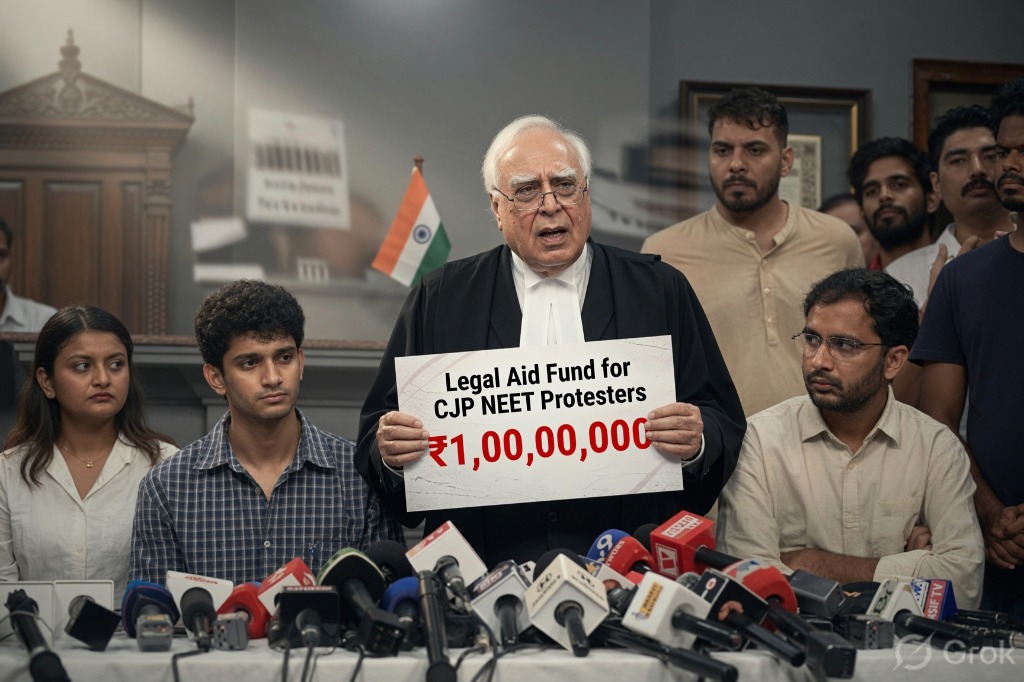
Aspirants, let’s talk straight. In the middle of exam season chaos, paper leaks, cancelled papers and student suicides, something happened on 27 July 2026 that many of you might have scrolled past. Senior advocate and Independent Rajya Sabha MP Kapil Sibal stood next to Cockroach Janta Party spokesperson Saurav Das and announced he is putting ₹1 crore of his own money into a legal aid fund. The money is meant for students and peaceful protesters who now face FIRs and police cases after the long Jantar Mantar agitation over the NEET-UG 2026 paper leak.
This is not just another celebrity donation. For those of us who have sat through long coaching classes, fought for every mark, and watched friends break under pressure of competitive exams, this moment hits differently. It raises basic questions we keep asking in polity and current affairs: What happens to the right to peaceful protest once the cameras leave? Who protects ordinary students when the state machinery starts filing cases? And why would a veteran lawyer, who has argued some of the biggest constitutional cases, put his own money on the line for a group that calls itself the Cockroach Janta Party?
The protests themselves forced the resignation of Union Education Minister Dharmendra Pradhan. The government agreed to compensation for families of students who died by suicide and promised no punitive action against protesters. Within days, reports of detentions and FIRs started coming from Bihar, Assam, West Bengal and other places. CJP cried foul. Sibal stepped in. Understanding why he did it forces us to look at the entire chain — from the leak itself to the politics of dissent in today’s India.
Table of Contents
- 1. Background & Historical Context
- 2. What Exactly Happened – The Facts
- 3. Why It Happened – Causes and Triggers
- 4. Political Dimension
- 5. Economic Dimension
- 6. Social & Cultural Dimension
- 7. Legal & Constitutional Dimension
- 8. Impact on India – Short-term and Long-term
- 9. Government Response & Official Stand
- 10. Criticism & Counter-arguments
- 11. Way Forward
- 12. Relevance for Competitive Exams
- 13. Stakeholder Comparison Table & Must-Remember Points
1. Background & Historical Context
Paper leaks are not new in India. From the Vyapam scam in Madhya Pradesh to multiple SSC and railway exam controversies, the pattern keeps repeating. NEET-UG, introduced as a single national medical entrance test, was meant to end the mess of multiple state exams. Instead, it became a high-stakes pressure cooker. The 2026 paper leak on 3 May led to cancellation, CBI investigation, and a re-test. Student suicides were reported. Anger had been building for years over NTA’s handling of exams, on-screen marking issues, and the sheer scale of competition — over 22 lakh candidates for limited medical seats.
The Cockroach Janta Party did not start as a traditional political party. It grew out of online satire after a remark by the Chief Justice comparing certain unemployed youth turning to activism with “cockroaches.” Young people, many of them first-generation aspirants from small towns, adopted the label with dark humour. They organised sit-ins, used social media cleverly, and kept the Jantar Mantar protest going for more than a month in peak summer heat. Activist Sonam Wangchuk joined with a hunger strike. The movement forced a rare ministerial resignation. That background is important. Sibal’s donation is not happening in a vacuum. It sits on top of years of student frustration with an examination system that feels broken.
2. What Exactly Happened – The Facts
On 25 July 2026, after talks with Union Ministers J.P. Nadda and Jitendra Singh, CJP called off its agitation. Education Minister Dharmendra Pradhan had already resigned. The government indicated it would provide “honourable” compensation to families of students who died by suicide and withdraw or not pursue FIRs against peaceful protesters. CJP spokespersons said they had sought legal guidance from Kapil Sibal even while the protest was on.
By 27 July, reports emerged of students being detained or facing cases in several states. CJP claimed the understanding reached during talks was being breached. At a joint press conference, Saurav Das and Kapil Sibal announced that CJP would create a website to track every FIR and case against protesters across India. Lawyers willing to help could register. A legal aid fund was opened. Sibal declared he was contributing ₹1 crore from his side and appealed to the entire legal fraternity to chip in, even if it was just one rupee. He repeatedly stressed that the protest had been organic and peaceful, and that governments should not target dissenters once the heat dies down.
The fund is meant only for legal defence — tracking cases, paying for lawyers where needed, and connecting affected students with counsel. CJP will manage the operational side. Sibal’s role is financial support plus moral and legal weight.
3. Why It Happened – Causes and Triggers
Three things came together. First, genuine fear among protesters. History shows that after big agitations — whether farmers’ protests or earlier student movements — individuals often face delayed cases, surveillance or harassment. CJP leaders said they had seen this “playbook” before and did not want students’ futures ruined by criminal records.
Second, the vacuum of institutional trust. Many students and parents no longer believe that police and lower courts will automatically protect peaceful protestors. They look for senior lawyers and public figures who can push back.
Third, Sibal’s own long-standing position on civil liberties. He has repeatedly argued in courts and in Parliament that the right to protest is fundamental. When a group of young people who forced a minister to resign suddenly starts facing cases, it fits the pattern he has criticised for years. The donation is both practical help and a public statement that the legal community will not stay silent.
4. Political Dimension
This is where it gets interesting for aspirants. Kapil Sibal left the Congress in 2022 and sits as an Independent in the Rajya Sabha (with earlier Samajwadi Party support for his election). He is not formally part of any major opposition party right now. Yet his move gives the CJP movement a degree of legitimacy that pure street politics sometimes lacks.
For the ruling side, the narrative is that the protest was hijacked or that anti-national elements tried to exploit student anger. Pradhan’s resignation letter itself spoke of preventing “anti-national forces” from taking advantage. Sibal’s intervention challenges that framing. It says the core issue was genuine student pain over a broken exam system, not conspiracy.
Opposition parties had supported the demands for accountability. Sibal’s independent status allows him to act without the baggage of party politics. At the same time, critics will ask whether this is soft support for a movement that embarrassed the government. In Indian politics, money and legal help for protesters always carry political meaning, even when the stated purpose is pure legal aid.
5. Economic Dimension
One crore rupees is not a small sum for an individual, even a successful senior advocate. Legal battles across multiple states can drain ordinary families. Court fees, travel, documentation, and lawyer fees add up quickly. Many of the students involved come from middle-class or lower-middle-class homes where one FIR can destroy years of savings and a career plan.
By putting money on the table and opening the fund to public contributions, Sibal is trying to reduce that economic barrier. The website model is also interesting — it tries to crowd-source both money and pro-bono legal talent. If it works, it could become a template for future movements. If it fails to attract enough lawyers or donations, the economic pressure on individual students will remain.
There is also the larger economic cost of paper leaks — wasted years, mental health expenses, and loss of productive youth energy. The legal aid fund is a tiny response to a much bigger problem of trust in the examination economy.
6. Social & Cultural Dimension
Call yourself a cockroach and suddenly the word loses its sting. That was the cultural cleverness of CJP. Young people turned an insult into a badge. The protest mixed serious demands with humour, music, and social media virality. It spoke the language of Gen-Z aspirants who feel the system is rigged against them.
Sibal, at 77, standing with these young people creates an unusual bridge. One generation that fought legal battles in the Supreme Court is now putting money behind another generation fighting for fair exams. In a society where exam success is still the main ticket to mobility for millions of families, the emotional weight is high. Parents who have spent lakhs on coaching will watch carefully whether their children face police cases after peaceful protest.
7. Legal & Constitutional Dimension
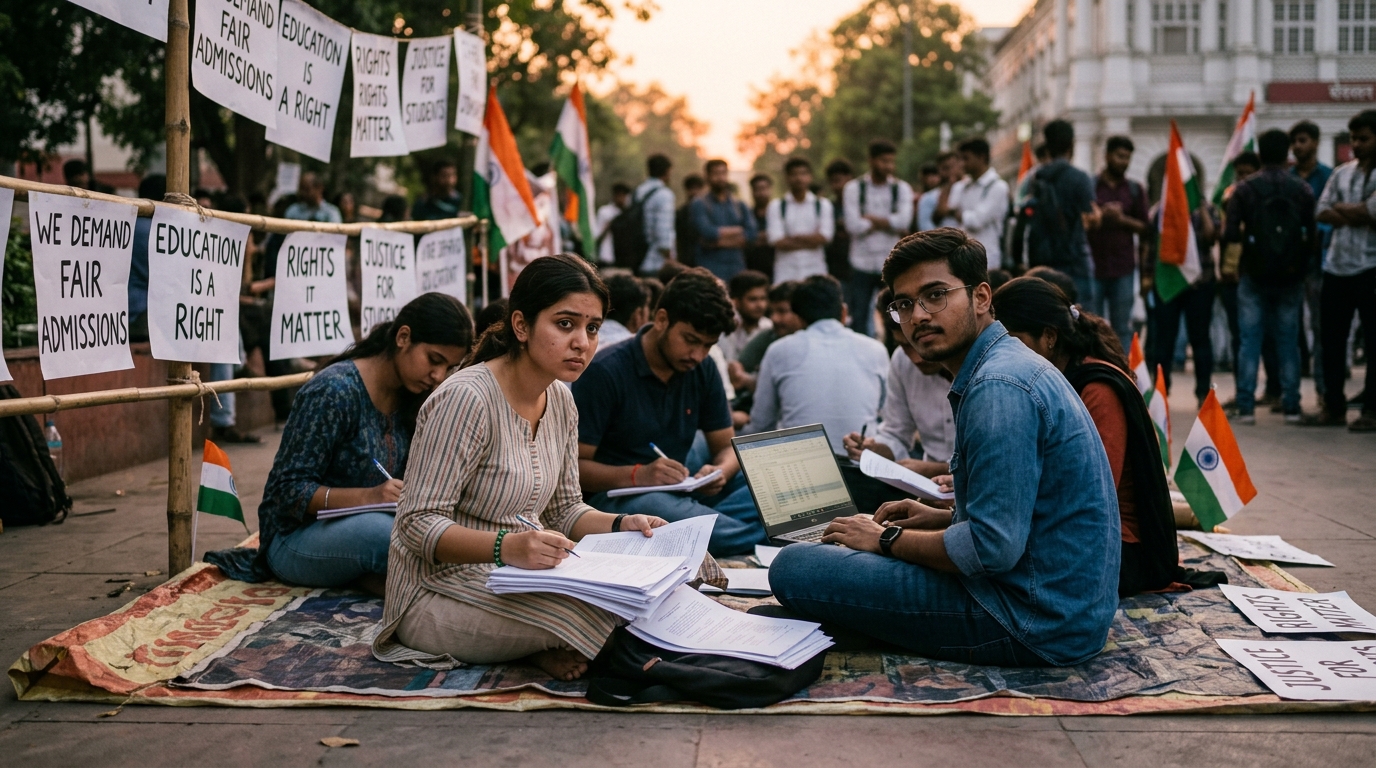
Article 19(1)(a) and 19(1)(b) give citizens the right to free speech and peaceful assembly. Reasonable restrictions exist, but the Supreme Court has repeatedly said that mere participation in a protest does not automatically make someone a criminal. Sibal’s argument is straightforward: once the government accepts that the protest was legitimate enough to force a minister’s resignation and agree to demands, turning around and filing cases against ordinary participants looks like misuse of process.
The practical legal problem is different. FIRs can be registered in different states under different sections. Tracking them, getting copies, applying for quashing, and arranging local lawyers is hard work. That is why the website and fund make sense on paper. Whether courts will treat these cases as political vendetta or genuine law-and-order issues will decide the real outcome.
8. Impact on India – Short-term and Long-term
In the short term, the donation gives immediate psychological relief to students who fear cases. It also keeps the issue alive in the media. The government is under pressure to show that the assurances given on 25 July are being honoured.
Long-term, two possibilities open up. One is healthier: a civil society mechanism that protects the right to protest without depending only on political parties. The other is more worrying: if such funds become common, every major agitation could end with competing legal war chests, deepening polarisation.
For the examination system itself, the bigger impact is the message that student anger can force change — including a minister’s exit and promises of reform. Whether the high-powered task force announced by the Prime Minister actually delivers transparent, technology-driven exams will decide if this episode becomes a turning point or just another cycle.
9. Government Response & Official Stand
So far the government has not issued a detailed point-by-point reply to the legal aid announcement. Earlier, ministers had maintained that action would be taken only against those who broke the law, not against peaceful protesters. The resignation of Pradhan and the talks with CJP were presented as responsive governance. The new task force under Nandan Nilekani is the official reform track. How the Centre and state governments handle the pending FIRs in the coming weeks will show whether the “no punitive action” assurance holds.
10. Criticism & Counter-arguments
Critics of Sibal argue that a senior constitutional lawyer should not fund a group whose name and style some find deliberately provocative. They say it politicises legal aid. Others ask why similar energy is not always visible when other groups face cases. There is also the practical question: will the fund remain transparent? Who audits the spending? CJP has said the money will be used only for legal protection of protesters, but accountability mechanisms matter.
On the other side, supporters say that when the state has enormous resources to prosecute, ordinary students need some counter-balance. Leaving them alone after a successful movement is itself a form of silencing.
11. Way Forward

Three practical steps make sense. First, the government should publicly clarify the status of all FIRs linked to the NEET protests and withdraw those against peaceful participants as promised. Second, the legal aid website should be transparent about cases handled and money spent. Third, the examination reform task force must deliver visible changes before the next major cycle of tests — computer-based systems that are genuinely hard to leak, faster grievance redressal, and less dependence on a single high-stakes paper.
Students themselves need to stay careful. Peaceful protest is a right. Violence or damage to public property is not. The line must remain clear.
12. Relevance for Competitive Exams
Exam Breakdown for Aspirants:
This topic is pure gold for prelims and mains. Key test areas include:
- RRB & SSC: Direct questions on the resignation, the legal aid announcement, or the task force for exam reforms.
- Banking Exams: Economic impact of institutional trust erosion and financial loss caused by examination cancellations.
- UPSC CSE:
- GS Paper 2 (Polity): Fundamental Rights under Article 19(1)(a) & 19(1)(b), role of civil society and independent lawyers in protecting dissent.
- GS Paper 2 (Governance): Statutory bodies (NTA), administrative accountability, and civil service exam reforms.
- GS Paper 1 (Social Issues): Youth movements, student mental health, and social media activism.
13. Stakeholder Comparison Table & Must-Remember Points
| Stakeholder | Stated Position | Core Concern |
|---|---|---|
| Kapil Sibal / CJP | Peaceful protesters need legal protection | Misuse of law after agitation ends |
| Central Government | Assurances given; only law-breakers face action | Maintaining order & preventing misuse |
| Student Aspirants | Fair exams + no criminal record for peaceful protest | Career and mental health impact |
| Legal Fraternity | Mixed; some support pro-bono, others cautious | Professional ethics & neutrality |
Quick Revision / Must Remember Points
- Date of announcement: 27 July 2026
- Amount: ₹1 crore personal contribution by Kapil Sibal
- Purpose: Legal aid fund + website to track FIRs and connect lawyers
- Context: Post-NEET paper leak protests, Dharmendra Pradhan resignation on 25 July
- CJP full form: Cockroach Janta Party (youth-led protest group)
- Key constitutional articles: Article 19(1)(a) [Speech] and Article 19(1)(b) [Assembly]
- Possible exam questions: Role of civil society, right to protest, ministerial accountability
Conclusion
Kapil Sibal’s ₹1 crore is not going to solve the deeper rot in the examination system. One fund cannot erase years of student anxiety or the structural problems of NTA. But it does something important. It puts a senior legal voice and real money behind the idea that peaceful protest should not automatically invite criminal cases once the political moment passes.
For aspirants, the takeaway is clear. The system can be forced to listen — a minister resigned, compensation was promised, reforms were announced. At the same time, the aftermath shows how fragile those gains can be. Your job is to understand both sides without becoming cynical. Master the static concepts of fundamental rights, stay updated on the reform process, and never forget that the students sitting in those protests could easily have been any one of us preparing for RRB, SSC, Bank or UPSC exams.
Keep reading, keep questioning, and keep preparing with a clear head. The real test is not just clearing the exam. It is understanding the country you want to serve.
Master Indian Polity & Legal Current Affairs on RRBCONTENTS
Explore full notes, case law summaries, and daily exam current affairs.
Daily Current Affairs → Indian Polity Notes →Join our official Telegram channel: @rrbcontents