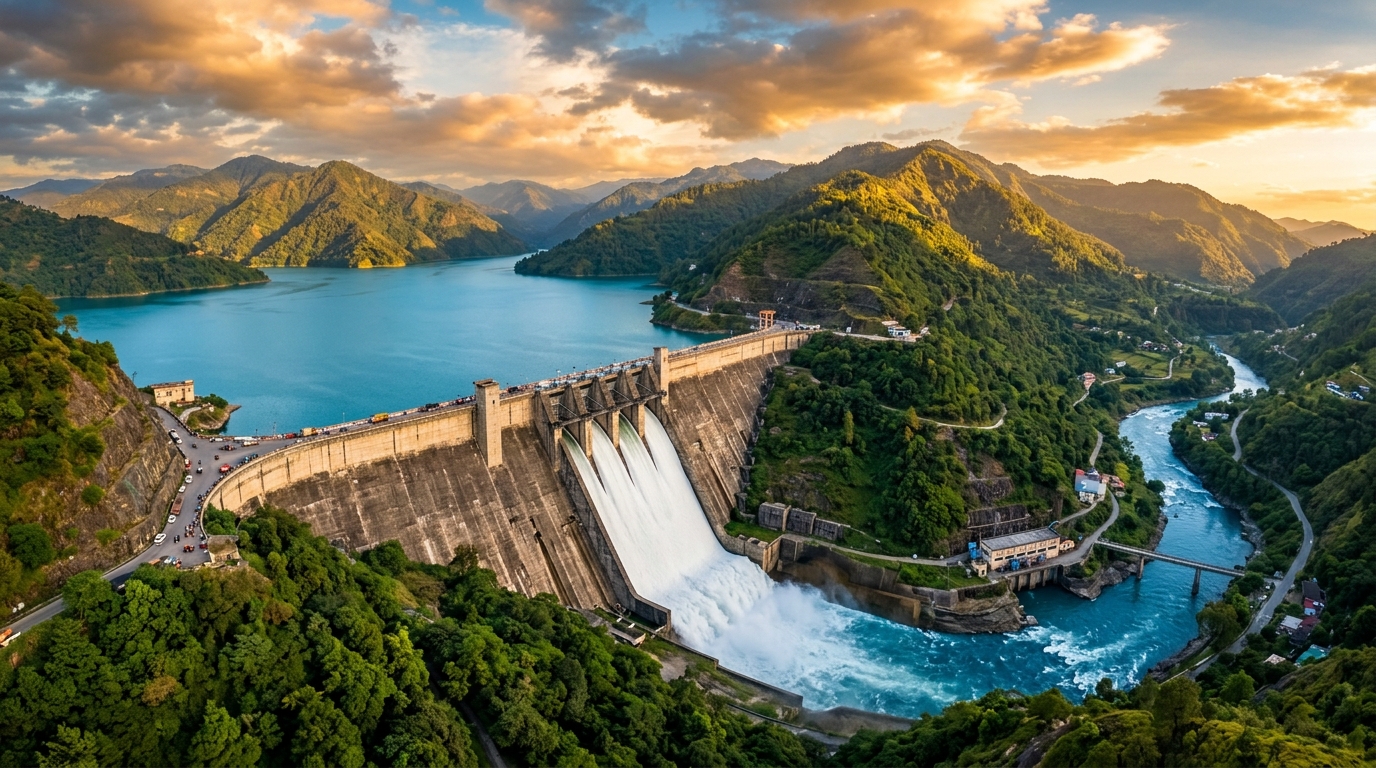
Introduction
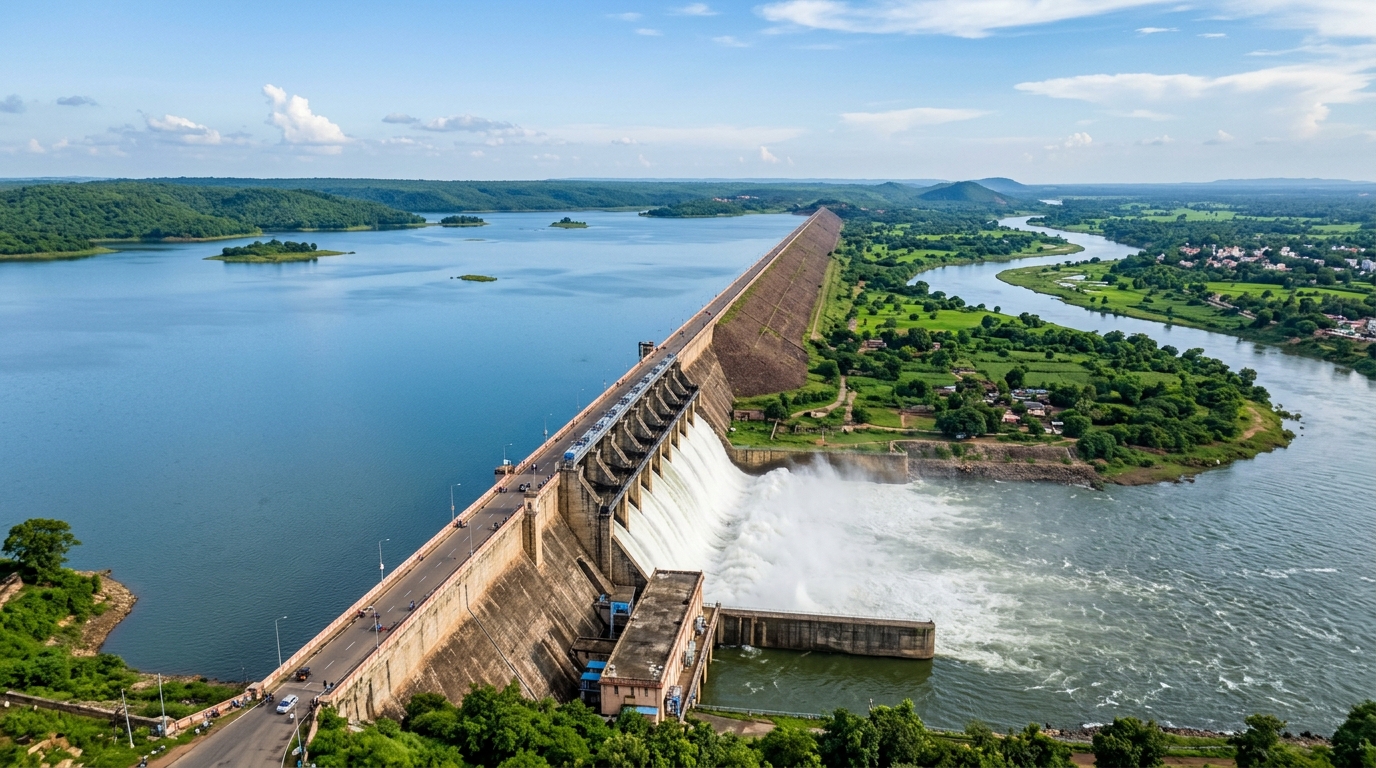
India has one of the largest dam portfolios in the world, ranking third globally after China and the United States. As of 2026, the country has 6,628 specified dams registered with the Central Water Commission (CWC), of which 6,545 are operational and 83 are under construction. These dams collectively store approximately 330 billion cubic metres of water and are the lifeline of India's agriculture, drinking water supply, hydroelectric power generation, and flood management systems. Jawaharlal Nehru famously called dams the "Temples of Modern India," recognising their transformative role in nation-building during the post-independence era. For competitive examination aspirants preparing for RRB, SSC, Banking, and UPSC Prelims, the topic of major dams is a perennial favourite that appears across General Studies, General Awareness, and Current Affairs sections. This article presents a complete and detailed treatment of India's major dams — covering their rivers, states, heights, capacities, purposes, types, and exam-relevant facts — all updated for 2026.
What is a Dam and Why Are Dams Important
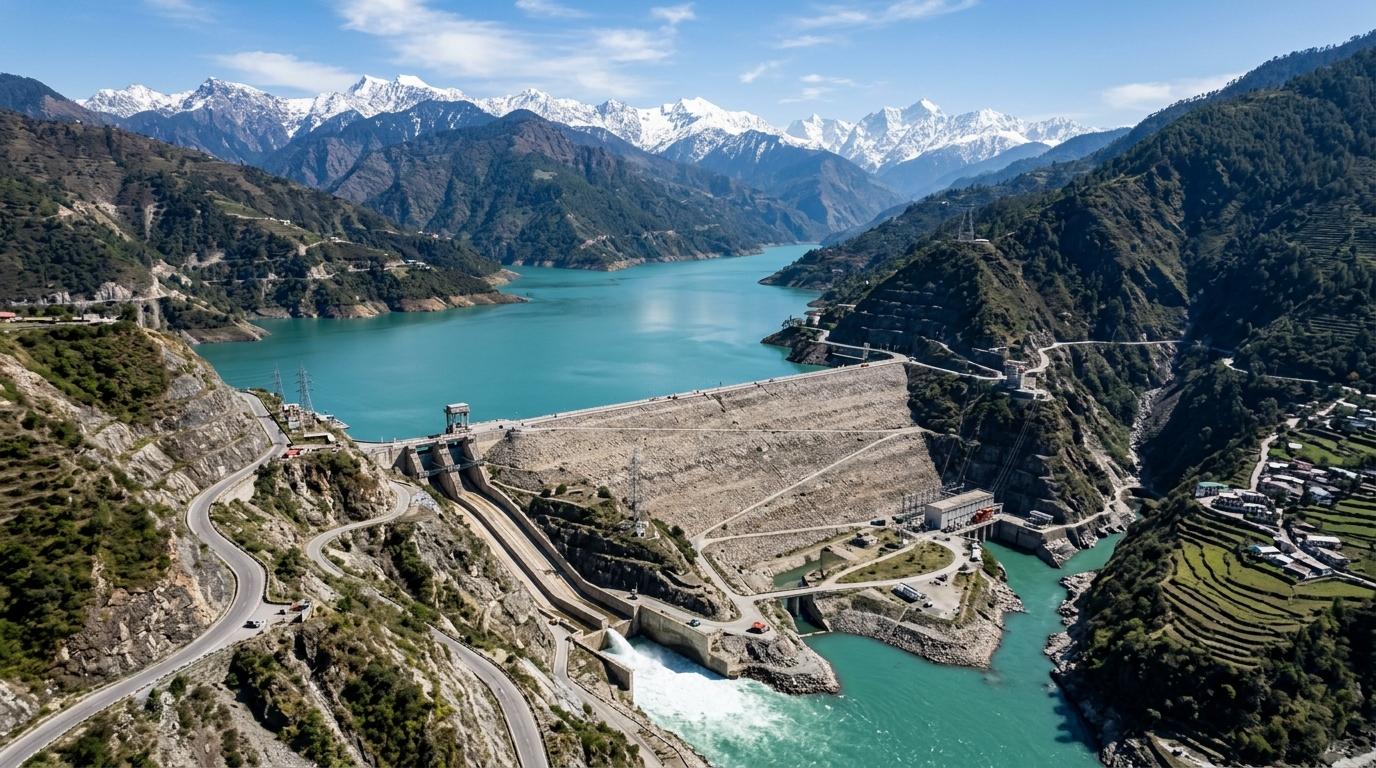
A dam is a barrier constructed across a river or stream to impound water for various beneficial purposes. Dams serve multiple critical functions in a country like India, where water resources are unevenly distributed in both space and time.
Irrigation – India is an agrarian economy, and over 50 per cent of the cultivated area depends on irrigation. Dams store monsoon water and release it during the dry season, enabling year-round cultivation. Major irrigation projects associated with dams have transformed arid regions into productive agricultural belts. The Indira Gandhi Canal, fed by the waters of the Sutlej River stored behind the Bhakra Dam, turned vast stretches of the Thar Desert in Rajasthan into cropland.
Hydroelectric Power Generation – Dams harness the potential energy of stored water to generate clean, renewable electricity. India has an installed hydroelectric capacity of over 47,000 MW, and several major dams contribute significantly to the national power grid. Hydropower is particularly important as a peaking power source because it can be ramped up and down quickly to meet fluctuating demand.
Flood Control – Rivers like the Mahanadi, Brahmaputra, and Damodar are prone to devastating floods during the monsoon. Dams on these rivers regulate water flow by storing excess water during peak flows and releasing it gradually, thereby reducing flood damage downstream. The Hirakud Dam on the Mahanadi was built specifically to tame the river's notorious flooding of the Mahanadi delta.
Drinking Water Supply – Several major dams serve as primary sources of drinking water for large cities. The Tehri Dam on the Bhagirathi River supplies drinking water to Delhi. The Bhavanisagar Dam provides water to cities in Tamil Nadu.
Navigation – In some cases, the reservoirs created by dams improve navigation on rivers by maintaining adequate water depth throughout the year.
Industrial Use – Dams provide a reliable supply of water for industrial processes, thermal power plants, and other commercial activities.
Types of Dams
Understanding the structural classification of dams is important for competitive examinations. Dams are classified based on their construction material, structural design, and the mechanism by which they resist water pressure.
| Type | Material | Mechanism | Example in India |
|---|---|---|---|
| Gravity Dam | Concrete or stone masonry | Resists water pressure through its own weight | Bhakra Dam (Sutlej, Himachal Pradesh) |
| Arch Dam | Concrete | Curves upstream; transfers water pressure to canyon walls (abutments) | Idukki Dam (Periyar, Kerala) |
| Earth-fill (Embankment) Dam | Compacted earth, clay, sand, rock | Relies on massive base and impervious core to resist seepage | Tehri Dam (Bhagirathi, Uttarakhand) |
| Buttress Dam | Concrete | Flat upstream face supported by triangular buttresses at intervals | Koyna Dam (Koyna, Maharashtra) |
| Composite Dam | Combination of materials | Uses multiple structural types in different sections | Hirakud Dam (Mahanadi, Odisha) |
Gravity dams are the most common type for large dam construction in India. They are massive, solid structures where each cross-section is independently stable. Arch dams are suitable for narrow gorges with strong rock walls, as they use far less material than gravity dams by transferring loads to the valley sides. Earth-fill dams are economical and suitable for wide valleys where the foundation may not support the enormous weight of a concrete structure. Buttress dams use a series of vertical supports behind a thin upstream wall, reducing the amount of concrete needed. Composite dams like Hirakud use different structural types across their length — concrete in some sections and earthen dykes in others.
Complete Detailed Table of Major Dams in India
The following comprehensive table covers the most important dams in India that are frequently tested in competitive examinations. The table is organised by state for easy reference and includes the dam name, river, state, approximate height, type, and primary purpose.
| S.No | Dam Name | River | State | Height (m) | Type | Primary Purpose |
|---|---|---|---|---|---|---|
| 1 | Tehri Dam | Bhagirathi | Uttarakhand | 260.5 | Earth-fill/Rock-fill | Hydropower, Irrigation, Drinking Water |
| 2 | Bhakra Dam | Sutlej | Himachal Pradesh | 226 | Concrete Gravity | Hydropower, Irrigation |
| 3 | Sardar Sarovar Dam | Narmada | Gujarat | 163 | Concrete Gravity | Irrigation, Hydropower, Drinking Water |
| 4 | Lakhwar Dam | Yamuna | Uttarakhand | 204 | Concrete Gravity | Hydropower, Irrigation |
| 5 | Idukki Dam | Periyar | Kerala | 169 | Concrete Arch | Hydropower |
| 6 | Srisailam Dam | Krishna | Andhra Pradesh/Telangana | 143 | Concrete Gravity | Hydropower, Irrigation |
| 7 | Nagarjuna Sagar Dam | Krishna | Telangana/Andhra Pradesh | 124 | Masonry Gravity | Irrigation, Hydropower |
| 8 | Hirakud Dam | Mahanadi | Odisha | 61 | Composite | Flood Control, Irrigation, Hydropower |
| 9 | Bhavani Sagar Dam | Bhavani | Tamil Nadu | 105 | Earth-fill | Irrigation, Hydropower |
| 10 | Koyna Dam | Koyna | Maharashtra | 103 | Rubble Concrete Gravity | Hydropower |
| 11 | Mettur Dam | Kaveri | Tamil Nadu | 65 | Concrete Gravity | Irrigation, Hydropower |
| 12 | Tungabhadra Dam | Tungabhadra | Karnataka | 49 | Masonry/Earth-fill | Irrigation, Hydropower |
| 13 | Krishna Raja Sagara (KRS) Dam | Kaveri | Karnataka | 40 | Gravity | Irrigation, Drinking Water |
| 14 | Indira Sagar Dam | Narmada | Madhya Pradesh | 92 | Concrete Gravity | Hydropower, Irrigation |
| 15 | Gandhi Sagar Dam | Chambal | Madhya Pradesh | 62 | Concrete Gravity | Hydropower, Irrigation |
| 16 | Rana Pratap Sagar Dam | Chambal | Rajasthan | 54 | Concrete Gravity | Hydropower, Irrigation |
| 17 | Jawahar Sagar Dam | Chambal | Rajasthan | 45 | Concrete Gravity | Hydropower |
| 18 | Bisalpur Dam | Banas | Rajasthan | 39 | Concrete Gravity | Drinking Water, Irrigation |
| 19 | Rihand Dam | Rihand (Son tributary) | Uttar Pradesh | 91 | Concrete Gravity | Hydropower, Irrigation |
| 20 | Maithon Dam | Barakar | Jharkhand | 56 | Concrete Gravity | Flood Control, Hydropower |
| 21 | Panchet Dam | Damodar | Jharkhand | 49 | Composite | Flood Control, Irrigation |
| 22 | Tilaiya Dam | Barakar | Jharkhand | 29 | Concrete Gravity | Flood Control, Irrigation |
| 23 | Ukai Dam (Vallabh Sagar) | Tapi | Gujarat | 81 | Earth-fill/Gravity | Irrigation, Hydropower, Flood Control |
| 24 | Dharoi Dam | Sabarmati | Gujarat | 50 | Earth-fill/Gravity | Irrigation, Drinking Water |
| 25 | Kadana Dam | Mahi | Gujarat | 67 | Earth/Gravity | Irrigation, Hydropower |
| 26 | Nathpa Jhakri Dam | Sutlej | Himachal Pradesh | 60 | Concrete Gravity | Hydropower |
| 27 | Pong Dam (Maharana Pratap Sagar) | Beas | Himachal Pradesh | 133 | Earth-fill | Irrigation, Hydropower |
| 28 | Chamera Dam | Ravi | Himachal Pradesh | 140 | Concrete Gravity | Hydropower |
| 29 | Pandoh Dam | Beas | Himachal Pradesh | 76 | Concrete Gravity | Hydropower |
| 30 | Salal Dam | Chenab | Jammu and Kashmir | 113 | Concrete Gravity | Hydropower |
| 31 | Baglihar Dam | Chenab | Jammu and Kashmir | 143 | Concrete Gravity | Hydropower |
| 32 | Uri Dam | Jhelum | Jammu and Kashmir | 40 | Concrete Gravity | Hydropower |
| 33 | Somasila Dam | Pennar | Andhra Pradesh | 81 | Masonry/Earth-fill | Irrigation |
| 34 | Jayakwadi Dam | Godavari | Maharashtra | 41 | Earth-fill | Irrigation |
| 35 | Ujjani Dam | Bhima | Maharashtra | 56 | Earth-fill/Masonry | Irrigation |
| 36 | Tawa Dam | Tawa (Narmada tributary) | Madhya Pradesh | 58 | Earth-fill | Irrigation |
| 37 | Bansagar Dam | Son | Madhya Pradesh | 67 | Concrete Gravity | Irrigation, Hydropower |
| 38 | Nizam Sagar Dam | Manjira | Telangana | 34 | Masonry | Irrigation |
| 39 | Massanjore Dam | Mayurakshi | Jharkhand | 47 | Concrete Gravity | Irrigation, Flood Control |
| 40 | Mullaperiyar Dam | Periyar | Kerala (operated by TN) | 54 | Concrete Gravity | Irrigation, Hydropower |
| 41 | Cheruthoni Dam | Cheruthoni | Kerala | 138 | Concrete Gravity | Hydropower |
| 42 | Bhavanisagar Dam | Bhavani | Tamil Nadu | 105 | Earth-fill | Irrigation, Hydropower |
| 43 | Vaigai Dam | Vaigai | Tamil Nadu | 71 | Masonry/Earth-fill | Irrigation |
| 44 | Supa Dam | Kali | Karnataka | 101 | Concrete Gravity | Hydropower |
| 45 | Linganamakki Dam | Sharavathi | Karnataka | 56 | Masonry | Hydropower |
| 46 | Almatti Dam | Krishna | Karnataka | 52 | Concrete/Earth-fill | Irrigation, Hydropower |
| 47 | Farakka Barrage | Ganga | West Bengal | 15 | Barrage | Navigation, Water Diversion |
| 48 | Durgapur Barrage | Damodar | West Bengal | 16 | Barrage | Irrigation, Industrial Water |
| 49 | Subansiri Lower Dam | Subansiri | Arunachal Pradesh/Assam | 116 | Concrete Gravity | Hydropower (under construction) |
| 50 | Omkareshwar Dam | Narmada | Madhya Pradesh | 73 | Concrete Gravity | Hydropower |
Key Records – Tallest, Longest, Oldest, and Largest
This section covers the records that are the most frequently tested in competitive examinations. Memorising these facts is essential for quick-recall questions.
Tallest Dam in India
The Tehri Dam on the Bhagirathi River in Uttarakhand is the tallest dam in India at 260.5 metres. It is also one of the tallest dams in the world. The Tehri Dam is an earth-fill and rock-fill embankment dam that was completed in 2006 after decades of construction and controversy. The dam serves a multipurpose function — generating 1,000 MW of hydroelectric power, providing irrigation water to large parts of Uttar Pradesh, and supplying approximately 500 million litres of drinking water per day to Delhi through the Upper Ganga Canal system. The reservoir behind the dam, known as the Tehri Lake, has become a popular tourism destination. The old town of Tehri was submerged by the reservoir, and the displaced population was resettled in New Tehri.
Longest Dam in India
The Hirakud Dam on the Mahanadi River in Odisha is the longest dam in India. The main dam structure is approximately 4.8 kilometres long, but when the earthen dykes on both sides are included, the total length extends to approximately 25.8 kilometres. The Hirakud Dam was one of the first major multipurpose river valley projects undertaken in independent India. Construction began in 1948, and the dam was completed in 1957. Its primary purpose was to tame the Mahanadi, which caused devastating floods almost every year in the Mahanadi delta region. The dam also generates hydroelectric power and provides irrigation to over 75,000 hectares of kharif cropland and 1,10,000 hectares of rabi cropland.
Oldest Dam in India (and Still in Use)
The Kallanai Dam, also known as the Grand Anicut, on the Kaveri River in Tamil Nadu is the oldest water-diversion structure in the world that is still in use. Built by the Chola King Karikalan in the 2nd century AD (approximately 150 CE), the Kallanai is a stone dam approximately 329 metres long, 20 metres wide, and 5.4 metres high. It was designed to divert the waters of the Kaveri into the fertile Thanjavur delta for irrigation. The engineering principles used in the Kallanai influenced later dam builders, including Sir Arthur Cotton, who studied its design extensively before constructing the British-era irrigation works on the Godavari and Krishna rivers.
Largest Reservoir by Capacity
The Indira Sagar Dam on the Narmada River in Madhya Pradesh creates the largest reservoir in India by gross storage capacity. The Indira Sagar reservoir holds approximately 12,220 million cubic metres of water. The dam was commissioned in 2005 and generates 1,000 MW of hydroelectric power while providing irrigation to 2,69,000 hectares of agricultural land.
River-Wise Classification of Major Dams
Understanding dams grouped by their river systems is highly useful for examination preparation, as questions often link dams to their respective rivers.
Dams on the Narmada River
The Narmada is one of the most dammed rivers in India, with several major structures forming the Narmada Valley Development Project.
| Dam | State | Purpose |
|---|---|---|
| Sardar Sarovar Dam | Gujarat | Irrigation, Hydropower, Drinking Water |
| Indira Sagar Dam | Madhya Pradesh | Hydropower, Irrigation |
| Omkareshwar Dam | Madhya Pradesh | Hydropower |
| Tawa Dam | Madhya Pradesh | Irrigation |
Dams on the Chambal River
| Dam | State | Purpose |
|---|---|---|
| Gandhi Sagar Dam | Madhya Pradesh | Hydropower, Irrigation |
| Rana Pratap Sagar Dam | Rajasthan | Hydropower, Irrigation |
| Jawahar Sagar Dam | Rajasthan | Hydropower |
The Chambal river valley project is a joint venture between Rajasthan and Madhya Pradesh, and the three dams form a cascade system where the discharge from the upstream dam feeds the reservoir of the downstream dam.
Dams on the Krishna River
| Dam | State | Purpose |
|---|---|---|
| Srisailam Dam | Andhra Pradesh/Telangana | Hydropower, Irrigation |
| Nagarjuna Sagar Dam | Telangana/Andhra Pradesh | Irrigation, Hydropower |
| Almatti Dam | Karnataka | Irrigation, Hydropower |
| Tungabhadra Dam | Karnataka | Irrigation, Hydropower |
Dams on the Sutlej River
| Dam | State | Purpose |
|---|---|---|
| Bhakra Dam | Himachal Pradesh | Hydropower, Irrigation |
| Nathpa Jhakri Dam | Himachal Pradesh | Hydropower |
| Gobind Sagar Reservoir | Punjab/Himachal Pradesh | Water storage |
Dams on the Damodar River System
The Damodar Valley Corporation (DVC), modelled on the Tennessee Valley Authority of the United States, manages a system of dams on the Damodar River and its tributaries to control flooding in the Damodar basin, which was once known as the "River of Sorrow" due to its devastating floods.
| Dam | River | State | Purpose |
|---|---|---|---|
| Maithon Dam | Barakar | Jharkhand | Flood Control, Hydropower |
| Panchet Dam | Damodar | Jharkhand | Flood Control, Irrigation |
| Tilaiya Dam | Barakar | Jharkhand | Flood Control, Irrigation |
| Durgapur Barrage | Damodar | West Bengal | Irrigation, Industrial Water |
Multipurpose River Valley Projects in India
Multipurpose river valley projects are integrated development projects that construct dams and associated infrastructure to serve multiple purposes simultaneously — irrigation, hydroelectric power, flood control, water supply, fisheries, navigation, and recreation. These projects were the centerpiece of India's planned economic development during the Five-Year Plans.
| Project | River | States Involved |
|---|---|---|
| Bhakra Nangal Project | Sutlej | Himachal Pradesh, Punjab, Haryana, Rajasthan |
| Damodar Valley Project | Damodar | Jharkhand, West Bengal |
| Hirakud Project | Mahanadi | Odisha |
| Nagarjuna Sagar Project | Krishna | Telangana, Andhra Pradesh |
| Narmada Valley Development Project | Narmada | Gujarat, Madhya Pradesh, Maharashtra, Rajasthan |
| Chambal Valley Project | Chambal | Rajasthan, Madhya Pradesh |
| Tungabhadra Project | Tungabhadra | Karnataka, Andhra Pradesh |
| Kosi Project | Kosi | Bihar |
| Tehri Hydro Development Project | Bhagirathi | Uttarakhand |
| Indira Gandhi Canal Project | Sutlej (via Bhakra) | Rajasthan |
Detailed Profiles of Iconic Dams
Several dams in India are iconic structures with significant historical, engineering, or geopolitical importance. A deeper understanding of these dams helps aspirants tackle both factual and analytical questions in examinations.
Bhakra Nangal Dam, Himachal Pradesh and Punjab
The Bhakra Nangal project is one of the most significant multipurpose river valley projects in India. The Bhakra Dam, a 226-metre-high concrete gravity dam on the Sutlej River, was completed in 1963 and was the highest dam in India until the Tehri Dam surpassed it. The reservoir behind the dam, known as Gobind Sagar, is one of the largest man-made lakes in India, stretching approximately 90 kilometres in length. The Nangal Dam, located about 13 kilometres downstream of the Bhakra Dam, is a subsidiary dam that diverts water into the Nangal Hydel Channel for power generation and the Bhakra Main Line Canal for irrigation. Together, the Bhakra Nangal project provides irrigation to approximately 10 million acres across Punjab, Haryana, and Rajasthan, and generates 1,325 MW of electricity. The Bhakra Beas Management Board (BBMB) manages the project. Jawaharlal Nehru inaugurated the project and referred to the Bhakra Dam as the "New Temple of Resurgent India."
Sardar Sarovar Dam, Gujarat
The Sardar Sarovar Dam on the Narmada River in Gujarat is the terminal dam of the Narmada Valley Development Project and one of the most controversial dam projects in India's history. At 163 metres height, it is one of the largest concrete gravity dams in the world by the volume of concrete used in its construction. The dam was envisaged to provide irrigation to drought-prone areas of Gujarat, Rajasthan, and Maharashtra, generate 1,450 MW of hydroelectric power, and supply drinking water to 9,633 villages and 173 urban centres. The Sardar Sarovar Canal is 458 kilometres long and is the largest lined canal in the world. The dam's construction was the subject of prolonged legal battles and social movements, most notably the Narmada Bachao Andolan, which raised critical questions about development, displacement, and environmental justice.
Nagarjuna Sagar Dam, Telangana and Andhra Pradesh
The Nagarjuna Sagar Dam, constructed across the Krishna River, is one of the world's largest masonry dams. Completed in 1967, the dam is 124 metres high and 1,450 metres long. Its reservoir has a gross storage capacity of approximately 11,472 million cubic metres. The dam provides irrigation to over 8.6 lakh hectares through two major canal systems: the left canal extending into Andhra Pradesh and the right canal serving Telangana. The construction of Nagarjuna Sagar was a massive national effort, with voluntary labour contributing significantly to its completion. The Nagarjuna Sagar island, located in the middle of the reservoir, houses a Buddhist museum containing relics from archaeological excavations conducted before the area was submerged.
Koyna Dam, Maharashtra
The Koyna Dam on the Koyna River in Maharashtra is a rubble concrete gravity dam, 103 metres high, primarily designed for hydroelectric power generation. It is one of India's most significant hydropower dams, generating approximately 1,920 MW across multiple powerhouses. The dam gained global attention in December 1967 when a devastating earthquake measuring 6.3 on the Richter scale struck the Koyna region. This earthquake is one of the most well-documented cases of reservoir-induced seismicity (RIS) in the world. The weight of the water in the reservoir is believed to have triggered seismic activity in the underlying geological fault. The Koyna earthquake killed 177 people and caused extensive damage. Since then, the area has continued to experience micro-seismic activity, and it has become one of the most important sites globally for studying the relationship between dam reservoirs and earthquake activity.
Upcoming and Under-Construction Dam Projects
India continues to expand its dam and hydropower portfolio, with several significant projects under construction or in the planning stage as of 2026.
The Subansiri Lower Hydroelectric Project on the Subansiri River at the Arunachal Pradesh-Assam border is one of the most anticipated projects. When completed, it will be a 116-metre-high concrete gravity dam with an installed capacity of 2,000 MW, making it one of the largest hydroelectric projects in India. The project has faced repeated delays due to concerns raised by local communities in Assam about potential downstream flooding and ecological impacts.
The Dibang Multipurpose Project on the Dibang River in Arunachal Pradesh, with a proposed capacity of 2,880 MW, is designed to be another mega hydropower project. Environmental clearances and tribal rights issues have delayed the project.
The Polavaram Dam (also known as the Indira Sagar Polavaram Project) on the Godavari River in Andhra Pradesh is a national project aimed at providing irrigation, drinking water, and hydroelectric power to the Godavari delta region. The project involves a 42-metre-high earth-cum-rock-fill dam with a gross storage capacity of approximately 7,800 million cubic metres.
The Ken-Betwa River Linking Project, connecting the Ken River in Madhya Pradesh with the Betwa River in Uttar Pradesh through a link canal and dam (Daudhan Dam), is the first inter-linking project under the National River Linking Plan. The project aims to transfer surplus water from the Ken basin to the water-deficit Betwa basin, providing irrigation to 10.62 lakh hectares and drinking water to 62 lakh people. The project has environmental implications as part of the submergence area falls within the Panna Tiger Reserve.
Role of Dams in India's Water Security
India faces a significant water security challenge. With 18 per cent of the world's population but only 4 per cent of the world's freshwater resources, efficient storage, management, and distribution of water is critical for the country's economic and social development.
Dams are the primary instruments of water storage in India. The 6,628 dams in the country store approximately 330 billion cubic metres of water, but this represents only a fraction of the total annual rainfall and river flows. India's per capita water storage capacity through dams is approximately 225 cubic metres, which is significantly lower than countries like the United States (over 5,000 cubic metres per capita) and Australia (over 4,700 cubic metres per capita). This storage deficit means that a large proportion of India's rainfall runs off into the sea without being captured, contributing to a paradox of floods in the monsoon season and droughts in the summer.
The Government of India has prioritised the construction of new storage infrastructure and the rehabilitation of existing dams through programmes like DRIP, the Jal Jeevan Mission (for drinking water supply), and the Pradhan Mantri Krishi Sinchayee Yojana (PMKSY) for enhancing irrigation efficiency. The optimal utilisation of existing dam capacity — through better reservoir management, use of real-time data from the DHARMA platform, and inter-basin water transfer — is equally important as building new infrastructure.
Controversies and Challenges Related to Dams
Dams, while essential for water resource management, have generated significant social and environmental controversies in India.
Displacement and Rehabilitation
Large dam construction invariably displaces communities living in the submergence zone. The Tehri Dam displaced approximately 1,00,000 people, and the Sardar Sarovar Dam affected over 2,40,000 people across Gujarat, Madhya Pradesh, and Maharashtra. The Narmada Bachao Andolan (NBA), led by Medha Patkar, became one of India's most prominent social movements, challenging the Sardar Sarovar Dam project on grounds of inadequate rehabilitation and environmental damage. The Supreme Court of India, in its 2000 judgment, allowed the construction to continue but directed compliance with rehabilitation norms.
Environmental Impact
Dams alter the natural flow regime of rivers, affecting sediment transport, downstream ecosystems, and aquatic biodiversity. They can block fish migration routes, change water temperature and chemistry, and cause the submergence of forests and agricultural land. The Environmental Impact Assessment (EIA) process is now mandatory for all large dam projects in India.
Dam Safety Concerns
With over 26 per cent of India's dams being more than 50 years old and 291 dams being over 100 years old, the safety of ageing dam infrastructure is a growing concern. The Dam Safety Act, 2021 established the National Dam Safety Authority (NDSA) to oversee the surveillance, inspection, and maintenance of all specified dams. The Dam Rehabilitation and Improvement Project (DRIP), supported by the World Bank and the Asian Infrastructure Investment Bank (AIIB), is being implemented across 19 states to strengthen the structural safety of 736 dams.
Sedimentation
Over time, reservoirs lose storage capacity as sediment carried by rivers accumulates behind the dam. Several Indian reservoirs, including the Bhakra reservoir (Gobind Sagar), have lost significant storage capacity due to siltation. Desilting operations are expensive and technically challenging.
Inter-State Water Disputes
Many major rivers in India are shared between multiple states, and the allocation of dam water has been a source of inter-state disputes. The Cauvery water dispute between Karnataka and Tamil Nadu, the Krishna water dispute between Karnataka, Andhra Pradesh, and Telangana, and the Mullaperiyar Dam dispute between Kerala and Tamil Nadu are among the most significant.
Dam Safety Act, 2021
The Dam Safety Act, 2021 is a landmark legislation that provides a comprehensive legal framework for the surveillance, inspection, operation, and maintenance of all specified dams in India. Key provisions include:
- Establishment of the National Dam Safety Authority (NDSA) as a regulatory body.
- Creation of a National Committee on Dam Safety (NCDS) to formulate dam safety policies and standards.
- Mandate for dam owners to prepare emergency action plans and undertake regular safety inspections.
- Requirement for state governments to establish State Dam Safety Organisations (SDSOs).
- Penal provisions for non-compliance, including imprisonment and fines.
This Act is particularly relevant for UPSC and SSC examinations where questions on recent legislation are common.
Important Points for Competitive Examinations
- India has 6,628 specified dams, ranking third globally after China and the United States.
- Tehri Dam (Bhagirathi, Uttarakhand) is the tallest dam in India at 260.5 metres.
- Hirakud Dam (Mahanadi, Odisha) is the longest dam in India at approximately 25.8 km total length.
- Kallanai Dam (Grand Anicut, Kaveri, Tamil Nadu) is the oldest dam still in use, built in the 2nd century AD.
- Indira Sagar Dam (Narmada, Madhya Pradesh) has the largest reservoir by gross storage capacity.
- Idukki Dam (Periyar, Kerala) is India's first and largest arch dam.
- Nagarjuna Sagar Dam (Krishna, Telangana/Andhra Pradesh) is one of the world's largest masonry dams.
- Bhakra Dam (Sutlej, Himachal Pradesh) forms Gobind Sagar, one of India's largest artificial reservoirs.
- Jawaharlal Nehru called dams the "Temples of Modern India."
- The Damodar Valley Corporation (DVC), established in 1948, was India's first multipurpose river valley project, modelled on the Tennessee Valley Authority of the USA.
- The Narmada Bachao Andolan is the most prominent anti-dam social movement in India.
- The Dam Safety Act, 2021 established the National Dam Safety Authority (NDSA).
- The Farakka Barrage on the Ganga in West Bengal was built to divert water into the Hooghly River to maintain the navigability of the Kolkata port.
- The Mullaperiyar Dam is located in Kerala but operated by Tamil Nadu, making it a subject of inter-state dispute.
- The Chambal Valley Project is a joint venture between Rajasthan and Madhya Pradesh with three cascade dams.
- Over 26 per cent of India's dams are more than 50 years old.
- The DRIP programme is rehabilitating 736 dams across 19 states with World Bank and AIIB support.
- The Subansiri Lower Dam in Arunachal Pradesh/Assam, currently under construction, will be one of the largest hydropower projects in India.
Conclusion
Dams are integral to India's water security, energy generation, food production, and flood management. From the ancient Kallanai on the Kaveri to the modern Tehri Dam on the Bhagirathi, India's dam-building heritage spans over two millennia. For competitive examination aspirants, this topic demands a structured approach — memorise the Dam-River-State triplets, understand the types of dams, learn the key records (tallest, longest, oldest, largest), and be aware of the legal and institutional framework governing dam safety. The tables and detailed explanations in this article provide a comprehensive reference that covers all major examination-relevant dimensions of this topic. Aspirants should particularly focus on multipurpose river valley projects, inter-state water disputes related to dams, and the Dam Safety Act, 2021, as these are the areas where questions are increasingly being drawn from.
For more exam preparation content, notes, and mock tests, join our Telegram channel: https://t.me/rrbcontents (@rrbcontents)