Home › Blog › Microchip Technology Beats Earnings on AI Data Center Demand
Microchip Technology Beats Earnings on AI Data Center and Aerospace Demand Surge – Semiconductor Boom Analysis for Exams
Microchip Technology Incorporated delivered first-quarter fiscal 2027 results that exceeded Wall Street expectations and issued an upbeat outlook for the subsequent quarter, citing robust demand from AI-related data centers as well as aerospace, defence, industrial and automotive end markets. Net sales reached $1.485 billion, up 38 percent year-over-year and 13.2 percent sequentially. Non-GAAP earnings per share came in at $0.76, ahead of consensus. Management guided second-quarter revenue to a range of $1.59–1.62 billion and adjusted EPS of $0.91–0.95, both above analyst estimates at the time of the release.
The company attributed the strength to a cyclical recovery in traditional markets combined with a sharp increase in orders linked to artificial-intelligence infrastructure. Data-center related sales grew nearly 98 percent year-over-year in the June quarter. Aerospace and defence sales rose more than 45 percent, reflecting elevated geopolitical spending. Industrial and automotive segments also posted solid double-digit gains as customers worked through earlier inventory corrections and resumed design-win activity.
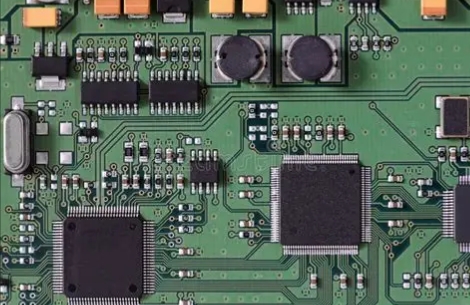
Microchip’s product portfolio—microcontrollers, analog devices, connectivity solutions including PCIe switches, and specialised components—positions it to benefit from multiple layers of the AI build-out. High-speed interconnects, power-management chips and secure embedded controllers are required not only in the large language-model training clusters but also in the broader edge and enterprise infrastructure that supports AI deployment. Management noted a doubling of PCIe Gen6 design wins sequentially, signalling growing design activity for next-generation data-center connectivity.
The results arrive against a backdrop of uneven recovery across the broader semiconductor industry. While leading-edge logic and high-bandwidth memory suppliers have reported exceptional growth tied directly to GPU and accelerator demand, many analog, microcontroller and specialty-chip companies experienced prolonged inventory digestion after the post-pandemic boom. Microchip’s numbers suggest that the recovery has broadened and that AI-related content is now flowing into a wider range of component categories.
For competitive-exam aspirants the development offers several analytical entry points. The semiconductor cycle, inventory dynamics, and the distinction between leading-edge and mature-node demand appear frequently in questions on technology and the global economy. The dual drivers of AI infrastructure and aerospace/defence spending illustrate how commercial and geopolitical forces can reinforce each other. India’s own semiconductor ambitions—under the India Semiconductor Mission, design-linked incentives, and efforts to attract fabrication and packaging investment—provide a comparative lens. Understanding which segments of the value chain (logic, memory, analog, connectivity, power) are most leveraged to AI helps candidates discuss both opportunities and constraints for domestic industry.
The guidance for continued sequential growth implies that Microchip expects the current demand environment to persist at least through the near term. Book-to-bill ratios above unity and improving factory utilisation support that view. At the same time, management has historically emphasised disciplined inventory management and long-term target models for gross and operating margins; the latest results show progress toward those targets as utilisation recovers.
The broader implication is that the AI capital-expenditure wave is no longer confined to a handful of GPU vendors and cloud hyperscalers. Component suppliers further down the bill of materials are beginning to register material revenue contributions. Whether this broadening proves durable will depend on the sustainability of AI investment cycles, the pace of enterprise adoption, and the evolution of geopolitical spending on aerospace and defence systems.
Accurate command of the headline numbers (sales, year-over-year growth, guidance ranges), the primary end-market drivers (AI data center, aerospace/defence), and the company’s positioning in connectivity and embedded control will equip aspirants to handle both factual and analytical questions on the semiconductor industry and technology-driven growth.
Frequently Asked Questions
What were Microchip Technology’s key results for the June 2026 quarter?
Net sales of $1.485 billion (up 38% year-over-year), non-GAAP EPS of $0.76, both above consensus, with strong sequential growth.
Which end markets drove the outperformance?
AI-related data centers (nearly 98% year-over-year growth), aerospace and defence (over 45% growth), plus industrial and automotive recovery.
What guidance did the company issue?
Second-quarter revenue of $1.59–1.62 billion and adjusted EPS of $0.91–0.95, both above then-prevailing analyst estimates.
Why is this relevant for exam aspirants?
It illustrates the semiconductor cycle, AI infrastructure demand, broadening of the AI supply chain beyond GPUs, aerospace spending, and comparative opportunities for India’s semiconductor ambitions.
Master Tech & Global Economy Trends
In-depth coverage of global supply chains, semiconductor geopolitics, and AI infrastructure.
Daily Current Affairs → Economy Notes →Join our official Telegram channel for instant updates: @rrbcontents