NASA Exoplanet Discovery in Beta Pictoris
JWST Unveils Super-Jupiters, Exocomets, and the Mysterious "Cat's Tail" Dust Arc
Home › Blog › Astronomy › Astrophysics & Space Science
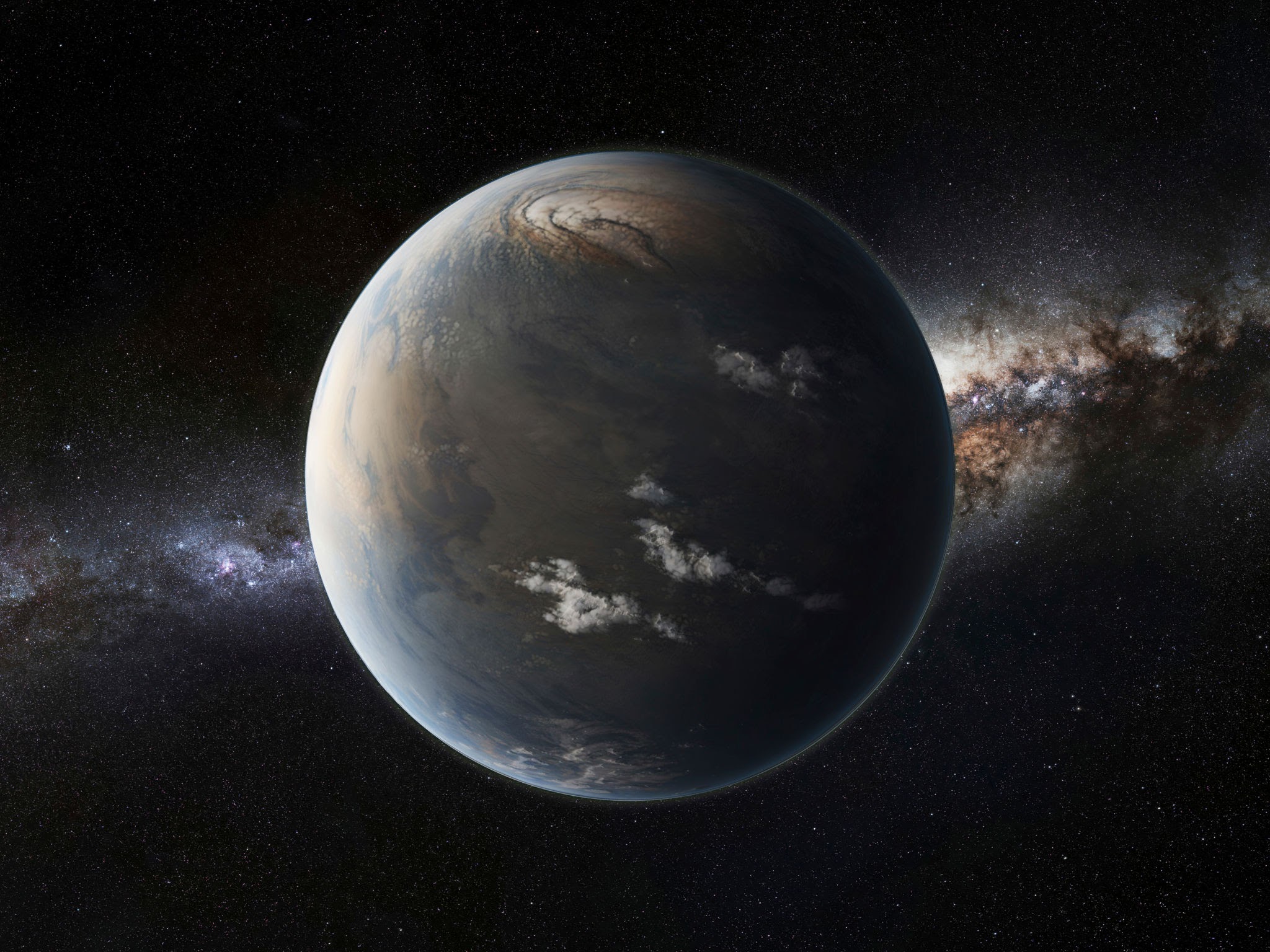
Humanity's quest to understand how planetary systems are born, evolve, and mature reached a monumental milestone with NASA’s James Webb Space Telescope (JWST) turning its powerful infrared eye toward Beta Pictoris (β Pictoris). Located approximately 63.4 light-years away in the southern constellation Pictor (The Painter’s Easel), Beta Pictoris is one of the most intensely studied star systems in modern astrophysics.
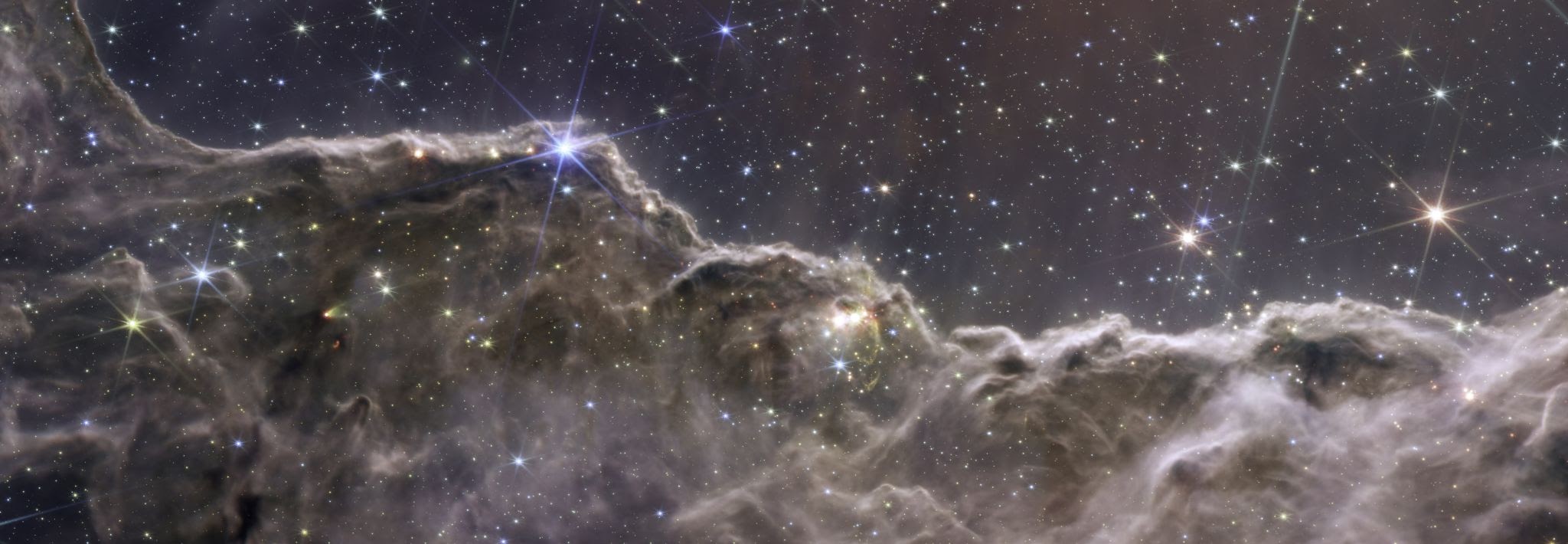
Beta Pictoris is a cosmic infant—a young, hot A-type star only 20 to 26 million years old (compared to our Sun's middle-aged 4.6 billion years). Because it is surrounded by a massive circumstellar debris disk made of gas, dust, asteroids, and comets, Beta Pictoris serves as an ideal "cosmic laboratory" for observing planet formation in real time.
| Stellar Parameter | Metric / Value |
|---|---|
| Distance from Earth | 63.4 Light-Years (19.4 Parsecs) |
| Constellation | Pictor (Southern Hemisphere) |
| Spectral Type | A6V (Main-Sequence White Star) |
| Stellar Mass | 1.75 to 1.8 Times the Mass of the Sun ($M_\odot$) |
| Stellar Radius | 1.8 Times the Radius of the Sun ($R_\odot$) |
| Luminosity | 8.7 Times the Luminosity of the Sun ($L_\odot$) |
| Estimated Age | 20 to 26 Million Years (Infant Stage) |
| Known Exoplanets | Beta Pictoris b, Beta Pictoris c |
The story of Beta Pictoris holds a legendary place in observational astronomy:
As observational technology advanced, scientists moved from imaging dust to directly finding the gas giant planets sculpting the disk:
Discovered in 2008 by Anne-Marie Lagrange using ESO's Very Large Telescope (VLT), Beta Pictoris b became one of the first exoplanets ever to be directly imaged.
Discovered in 2019 via the HARPS spectrograph (Radial Velocity) and confirmed in 2020 via VLTI GRAVITY interferometry, Beta Pictoris c weighs ~9 $M_J$ and orbits closer to the star at ~2.7 AU with a period of 3.3 Earth years (1,200 days).
JWST observed the system using its NIRCam and MIRI instruments equipped with coronagraphic masks.
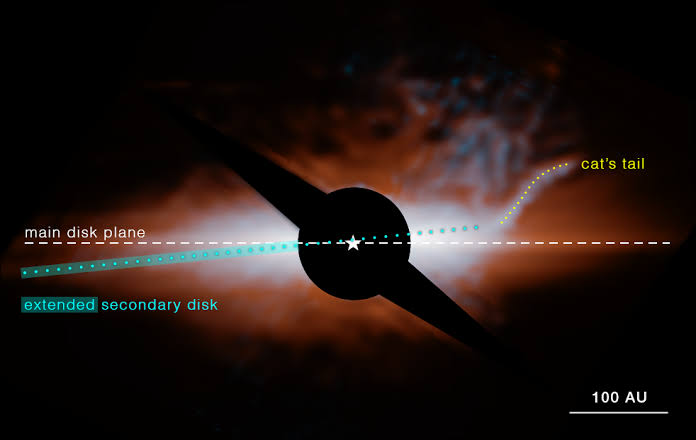
When analyzing MIRI mid-infrared images at 15.5 microns, scientists led by Isabel Rebollido discovered a sharply curved dust feature extending away from the secondary disk plane at a high angle, stretching over 100 Astronomical Units (15 billion kilometers).
Computer modeling indicates that approximately 100 years ago, two massive planetesimals or giant comets (the size of asteroid Vesta) collided at high velocity near the inner edge of the system. The impact pulverized ~100 billion metric tons of material, and intense stellar radiation pressure pushed the finest dust grains outward into the curved "Cat's Tail" shape.
High-resolution spectroscopy revealed Falling Evaporating Bodies (FEBs)—giant icy comets plunging toward the central star on eccentric orbits. NASA's TESS detected over 30 transiting exocomets whose dust tails created asymmetric light-curve dips as they crossed the star, flung inward by the gravitational slingshot of Beta Pictoris b and c.
| Detection Method | How It Works | Beta Pictoris Application |
|---|---|---|
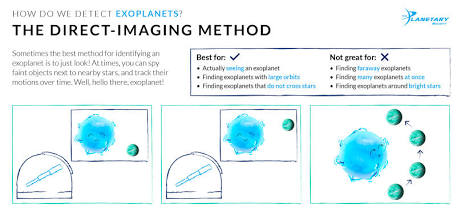
| 1. Direct Imaging | Coronagraph blocks central star glare to capture thermal/reflected light photons. | Used by VLT to directly image Beta Pictoris b. |
| 2. Radial Velocity | Measures periodic Doppler spectral shifts (red/blue) caused by stellar wobble. | Used by HARPS to discover Beta Pictoris c. |
| 3. Transit Photometry | Measures brightness dips as bodies pass directly in front of the star. | Used by TESS & Hubble to detect transiting exocomets. |
| 4. Optical Interferometry | Combines light beams from multiple telescopes for ultra-high spatial precision. | Used by VLTI GRAVITY to confirm Beta Pictoris c. |
| Parameter | Beta Pictoris b | Beta Pictoris c | Jupiter (Our Solar System) |
|---|---|---|---|
| Discovery Method | Direct Imaging (VLT, 2008) | Radial Velocity / VLTI (2019) | Optical Observation (Ancient) |
| Mass | ~8 to 12 Jupiter Masses ($M_J$) | ~9 Jupiter Masses ($M_J$) | 1.0 Jupiter Mass ($1 M_J$) |
| Orbital Distance | ~9 to 10 AU (~1.5 Billion km) | ~2.7 AU (~400 Million km) | 5.2 AU (~778 Million km) |
| Orbital Period | ~20 to 21 Earth Years | ~3.3 Earth Years (1,200 Days) | 11.86 Earth Years |
| Day Length (Rotation) | ~8 Earth Hours (25 km/s) | Not yet measured | ~9.9 Earth Hours |
| Equilibrium Temp | ~1,500 K (1,225°C) | ~1,250 K (977°C) | 128 K (-145°C) |
Studying Beta Pictoris provides a real-time "time-machine" look into how our own Solar System formed 4.5 billion years ago. Computer simulations indicate that rocky Earth-sized planets could exist in the inner habitable zone (~1.5 to 2.0 AU) of Beta Pictoris, shielded by giant gas planets that clear out dust lanes.
A) 4.2 Light-Years
B) 63.4 Light-Years
C) 500 Light-Years
D) 1,500 Light-Years
Correct Answer: B
Explanation: Beta Pictoris is located approximately 63.4 light-years (19.4 parsecs) away in the constellation Pictor.
A) 5 km/s
B) 12 km/s
C) 25 km/s (~90,000 km/h)
D) 100 km/s
Correct Answer: C
Explanation: VLT measurements revealed Beta Pictoris b rotates at 25 km/s, making its day roughly 8 Earth hours long.
A) NIRCam
B) MIRI (Mid-Infrared Instrument)
C) NIRSpec
D) FGS/NIRISS
Correct Answer: B
Explanation: MIRI observed the Cat's Tail structure at 15.5 microns wavelength, revealing fine thermal dust emissions.
A) Transit Method
B) Radial Velocity Method
C) Direct Imaging Method
D) Gravitational Microlensing
Correct Answer: C
Explanation: Direct Imaging uses a coronagraph to mask stellar glare, revealing light from orbiting planets.
A) Sun-Earth L1
B) Sun-Earth L2
C) Earth-Moon L4
D) Sun-Jupiter L5
Correct Answer: B
Explanation: JWST operates in a halo orbit around the Sun-Earth Lagrange Point 2 (L2), approximately 1.5 million km from Earth.
Beta Pictoris is located approximately 63.4 light-years (19.4 parsecs) away in the southern constellation Pictor. It is a cosmic infant star, aged only 20 to 26 million years old.
The Cat's Tail is a sharply curved, mid-infrared bright dust stream stretching over 100 AU away from the secondary disk, believed to be the debris plume of a cataclysmic asteroid collision occurring roughly 100 years ago.
Beta Pictoris b was directly imaged in 2008 using the European Southern Observatory's Very Large Telescope (VLT). In 2014, scientists measured its spin rate at 25 km/s (~90,000 km/h), revealing an 8-hour day.
Direct Imaging uses a physical mask called a coronagraph inside a telescope to block out the blinding glare of a host star, revealing faint thermal or reflected light photons from orbiting young gas giants.
Access high-yield science notes, astronomy updates, and exam preparation modules on RRBCONTENTS.
Solve PYQs → Study Notes →Join our official Telegram community for daily updates: @rrbcontents