Table of Contents
1. Key Overview and Primary Developments
Prime Minister Narendra Modi on 7 August 2026 greeted the nation on the occasion of National Handloom Day and paid tribute to the skill, creativity and dedication of India’s weavers and artisans. In a message posted on social media, he described the handloom sector as an important pillar of rural empowerment, women-led development and the vision of an Atmanirbhar Bharat.
“Today, on National Handloom Day, we celebrate India’s rich and vibrant handloom heritage. We also salute the skill, creativity and dedication of our weavers and artisans. For generations, they have preserved and enriched our traditions,” the Prime Minister said.
He reaffirmed the government’s commitment to continue supporting the handloom sector and urged citizens to share their favourite handloom products and “Get Ready With Me” (GRWM) videos using the hashtag #NationalHandloomDay to encourage those associated with the sector.
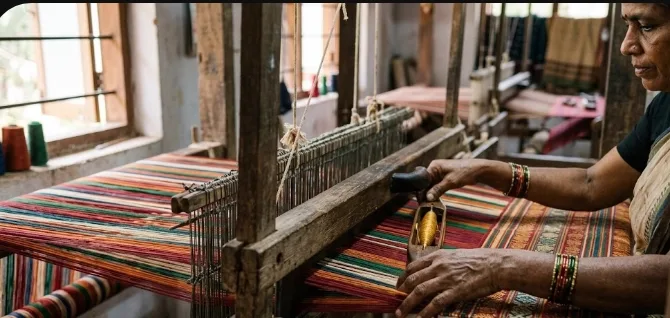
National Handloom Day: PM Modi Urges Support for Handloom Sector and Weavers
On National Handloom Day 2026, Prime Minister Narendra Modi paid tribute to India’s weavers and artisans, describing the...
Culture & Economy · Official Visual Reporting
2. Statutory Provisions and Official Statements
National Handloom Day is observed every year on 7 August to honour the handloom weaving community and to commemorate the launch of the Swadeshi Movement on the same date in 1905. The day was first celebrated in 2015. It recognises the contribution of weavers and allied workers who form a significant part of the rural and informal economy, with a large proportion of the workforce being women.
The Ministry of Textiles organised the 12th National Handloom Day function at the Rashtrapati Bhavan Cultural Centre in New Delhi. The event included the presentation of the Sant Kabir Handloom Awards and National Handloom Awards to outstanding weavers in recognition of their craftsmanship and contribution to preserving India’s handloom traditions.
The handloom sector remains an important source of livelihood in many parts of the country and plays a role in preserving traditional textile skills and designs. Government schemes and initiatives have focused on providing marketing support, credit access, skill development and design innovation to strengthen the sector.
For competitive examination aspirants the occasion is relevant under culture, economy and government schemes. Questions may cover the significance of National Handloom Day, its link with the Swadeshi Movement, the socio-economic importance of the handloom sector, the high participation of women, and the government’s stated priorities of rural empowerment and self-reliance.
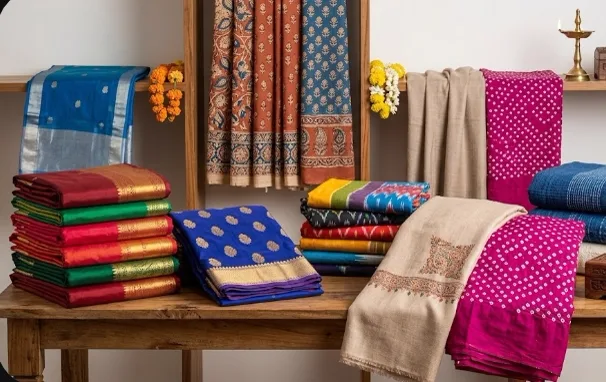
Culture & Economy Statutary Framework
Culture & Economy · Statutory Reporting
3. Socio-Economic & Strategic Implications
Key verified points from the Prime Minister’s message are:
Tribute to the skill and dedication of weavers and artisans.
Description of the handloom sector as a pillar of rural empowerment, women-led development and Atmanirbhar Bharat.
Reaffirmation of government support for the sector.
Appeal to citizens to promote handloom products on social media using #NationalHandloomDay.
These elements allow aspirants to answer both factual and value-based questions related to traditional industries and inclusive development.
The celebration of National Handloom Day serves as an annual reminder of the cultural and economic value of handloom weaving and the need to sustain the livelihoods of the weaving community. The Prime Minister’s message underlined both appreciation for the artisans and the policy commitment to strengthen the sector.
Verified Exam Reference Points
- • Date & Origin: Observed annually on 7 August to commemorate the 1905 Swadeshi Movement.
- • Socio-Economic Importance: Core pillar of rural empowerment, women-led development, and Atmanirbhar Bharat.
- • National Awards: 12th National Handloom Day hosted at Rashtrapati Bhavan presenting Sant Kabir Awards.