
The Union Education Ministry has informed the Supreme Court that a shift of the National Eligibility cum Entrance Test for Undergraduates (NEET-UG) from the traditional pen-and-paper mode to Computer-Based Testing (CBT) is under active consideration by all stakeholders. The affidavit, filed in early August 2026, marks the first detailed submission by the government in the apex court following the controversies surrounding the NEET-UG 2026 examination cycle.
The government has made it clear that no final decision has been taken yet. The ultimate approach will be decided only after the high-powered task force chaired by Infosys co-founder Nandan Nilekani submits its recommendations.
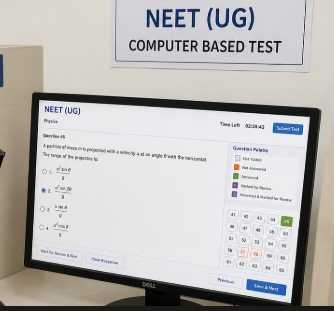
What the Centre Told the Supreme Court
In its affidavit, the Ministry stated that NEET-UG is a unique examination because of its scale and candidate profile. More than 22 lakh candidates register every year. A majority come from rural areas, and a large proportion are women. These factors, the government said, require careful evaluation before any structural change.
Two broad possibilities are currently under review:
- A single-stage computer-based examination, or
- A two-stage examination modelled on the pattern of the Joint Entrance Examination (JEE Main and Advanced).
The Ministry emphasised that any change in the design or mode of NEET-UG will be undertaken only after consultation with, and concurrence of, the Ministry of Health and Family Welfare and the National Medical Commission. Candidates will be given adequate advance notice so that the transition remains smooth and equitable.
Why NEET-UG Remains the Exception
The National Testing Agency already conducts seven of its eight major examinations in computer-based mode with multi-session and multi-day schedules. These include JEE (Main), CUET (UG), CUET (PG), UGC-NET and CSIR-NET. NEET-UG is the only major national entrance examination that continues to be held in the conventional pen-and-paper format using Optical Mark Recognition (OMR) sheets.
The continued use of the offline mode has been justified so far on grounds of accessibility and the sheer volume of candidates. However, repeated concerns over paper leaks and the integrity of the examination process have pushed the question of a technology-driven format to the centre of policy discussion.
Role of the Nandan Nilekani Task Force
A high-powered task force under the chairmanship of Nandan Nilekani has been constituted to recommend end-to-end reforms in the conduct of public examinations. The panel draws expertise from technology, examination administration and related domains. Its recommendations are expected to guide decisions not only on the mode of examination but also on broader issues of security, logistics and fairness.
The government has described both the constitution of this task force and the enactment of the Public Examinations (Prevention of Unfair Means) Act, 2026 as landmark measures aimed at preventing future paper leaks and other malpractices.
Practical Challenges of a CBT Transition
Moving an examination of NEET-UG’s scale to computer-based mode is not a simple logistical exercise. Key challenges include:
- Ensuring adequate computer infrastructure and reliable power and internet connectivity, especially in rural and remote centres.
- Managing the large number of candidates through multiple shifts while maintaining standardisation and fairness through normalisation processes.
- Addressing the digital divide so that candidates from less-resourced backgrounds are not disadvantaged.
- Training invigilators and technical staff, and establishing robust cybersecurity and contingency protocols.
Earlier indications from the National Testing Agency had suggested that conducting the examination for around 22 lakh candidates in CBT mode could require approximately 20 shifts, with careful normalisation to ensure equity across sessions.
Timeline and Candidate Communication
The Centre has assured the Supreme Court that any structural change will be accompanied by sufficient advance notice. This is intended to give students, coaching institutions and state authorities adequate time to prepare. No fixed date for implementation has been announced. While earlier statements had pointed towards a possible shift from 2027, the latest affidavit makes the Nilekani panel’s recommendations the decisive factor.
Implications for Aspirants
For the large community of NEET aspirants, the development brings both opportunities and uncertainties. A well-implemented computer-based system can reduce the risk of paper leaks, enable better question-paper security, and allow more flexible scheduling. At the same time, students will need to adapt to on-screen reading, digital answer selection, and the experience of multi-shift examinations.
Rural candidates and those with limited prior exposure to computer-based tests will require focused familiarisation support. Coaching ecosystems and state education departments will also need to adjust their preparation strategies if a two-stage or multi-session model is eventually adopted.
Broader Reform Context
The discussion on CBT for NEET-UG forms part of a larger effort to strengthen the credibility of high-stakes public examinations in India. The paper-leak controversies of recent years, the resignation of the previous Education Minister, and the legislative response through the 2026 anti-unfair-means law have created strong institutional pressure for systemic change.
The Supreme Court’s continued monitoring of the matter ensures that the process remains under judicial scrutiny, adding a layer of accountability to the executive’s decision-making.
Exam Relevance
UPSC GS Paper 2 (Governance & Education)
- Reforms in national-level entrance examinations
- Role of the National Testing Agency and specialised task forces
- Balancing technological modernisation with equity and access
- Legislative measures against examination malpractices
GS Paper 2 – Social Justice
- Impact of examination mode changes on rural and female candidates
- Digital divide and inclusive education policy
Current Affairs (SSC, State PSC, Medical Entrance Focus)
- Centre’s August 2026 affidavit before the Supreme Court
- Status of CBT consideration for NEET-UG
- Role of the Nandan Nilekani-led high-powered task force
- Distinction between single-stage and two-stage examination models
Aspirants should clearly remember that the shift is under active consideration but not yet finalised, that the Nilekani panel’s report is the key pending input, and that any change will involve consultation with the Health Ministry and the National Medical Commission along with advance notice to candidates.
The coming months will determine whether NEET-UG follows the path already taken by most other major NTA examinations or continues in its present format with enhanced security measures. For now, the official position is one of careful evaluation rather than immediate transition.
Frequently Asked Questions (FAQ)
Q1. Has the Centre decided to shift NEET-UG to computer-based testing?
No final decision has been taken. The Centre has told the Supreme Court that the shift is under active consideration by all stakeholders.
Q2. What will decide the final approach?
The final decision will be taken after considering the recommendations of the high-powered task force chaired by Nandan Nilekani.
Q3. Is a two-stage NEET-UG possible?
Yes. Both a single-stage CBT and a two-stage model similar to JEE (Main and Advanced) are under review.
Q4. Why has NEET-UG not shifted to CBT earlier?
It remains the only major NTA examination in pen-and-paper mode largely because of its very large candidate base (over 22 lakh) and the significant proportion of rural and women candidates.