Home › Blog › Governance & Education › Pralhad Joshi Education Minister
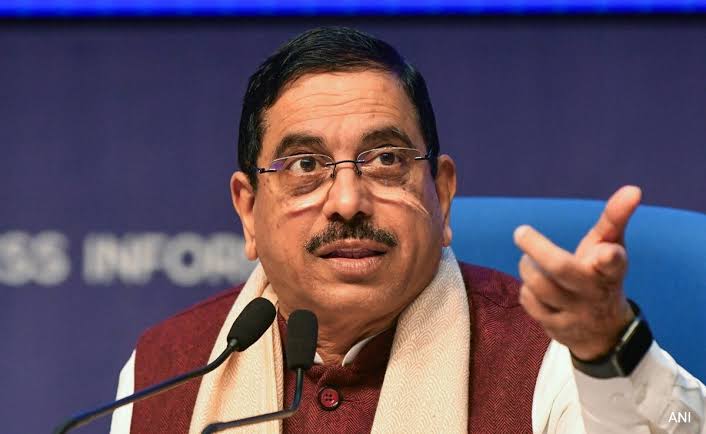
The Hot Bed of Shastri Bhawan: Challenges Facing New Education Minister Pralhad Joshi and His Blueprint for Survival
When senior Bharatiya Janata Party (BJP) leader and Union Cabinet Minister Pralhad Joshi assumed additional charge of the Ministry of Education, he stepped directly into the hottest administrative hotbed in Indian governance. The new Education Minister Pralhad Joshi faces challenges that are neither ordinary nor routine. He inherits a ministry reeling from a nationwide crisis of confidence triggered by the cancellation of the NEET-UG 2026 medical entrance examination, widespread allegations of paper leak cartels, month-long student protests at Jantar Mantar, and the dramatic resignation of his predecessor, Dharmendra Pradhan.
Managing the Education portfolio in India has always been a delicate balancing act involving federal relations, university autonomy, and curriculum policy. However, in the wake of the 2026 National Testing Agency (NTA) scandal, the ministry has transformed into a high-stakes political battlefield. Millions of student aspirants, anxious parents, academic whistleblowers, and aggressive Opposition parties are demanding immediate accountability and structural overhauls.
This deep-dive investigation analyzes the critical challenges awaiting Pralhad Joshi, evaluates the institutional weaknesses of the NTA, examines the political threat posed by decentralized student movements, and outlines a practical survival strategy for the new leadership at Shastri Bhawan.
Table of Contents
- 1. The Context of the Hot Bed: Why Dharmendra Pradhan Had to Resign
- 2. Challenge 1: Restructuring the National Testing Agency (NTA)
- 3. Challenge 2: Navigating Gen Z Politics and Non-Party Protests
- 4. Challenge 3: Implementing NEP 2020 Amid Federal Friction
- 5. Challenge 4: Legislative Delays in Higher Education Reforms
- 6. Challenge 5: Managing the Bandwidth Crisis of Triple Portfolios
- 7. The Survival Blueprint: How Pralhad Joshi Can Navigate the Crisis
- 8. Master Comparison Matrix: Key Challenges vs. Strategic Actions
- 9. High-Yield Exam Corner (For Civil Services Aspirants)
- 10. Key Takeaways / What You Need to Know
Key Takeaways / What You Need to Know
- The Shift: Pralhad Joshi assumed additional charge of the Ministry of Education on July 25–26, 2026, following Dharmendra Pradhan's resignation.
- The Cause: Dharmendra Pradhan resigned after nationwide anger over the NEET-UG 2026 paper leak, CJP protests, and Sonam Wangchuk's fast.
- Core Challenges: Rebuilding trust in the NTA, managing decentralized Gen Z student movements, overcoming NEP federal resistance, and balancing triple ministerial portfolios.
- The Blueprint: Joshi must fast-track NTA structural reforms, enforce the 2024 Anti-Cheating Act, and build direct communication channels with student communities.
1. The Context of the Hot Bed: Why Dharmendra Pradhan Had to Resign
To understand the sheer magnitude of the task before Pralhad Joshi, one must first examine the sequence of events that forced Dharmendra Pradhan—a seasoned political operator—to step down from the Union Council of Ministers on July 25, 2026.
THE NEET-UG 2026 CRISIS: CHRONOLOGY OF AN EXIT
The crisis began shortly after the May 3 examination, when academic tutors in Sikar, Rajasthan, discovered that a pre-circulated guess paper matched nearly 140 out of 180 questions in the official NEET-UG paper. The subsequent cancellation of the examination by the NTA on May 12 affected over 2.27 million students, sparking widespread protests.
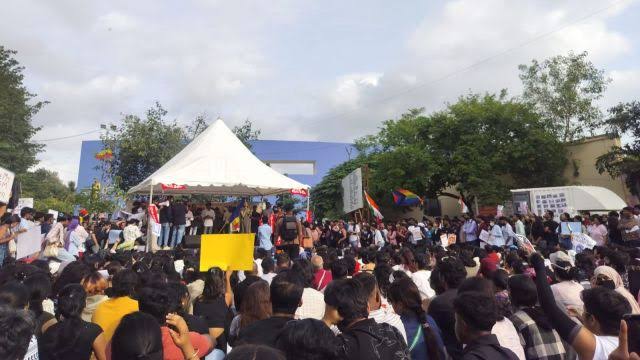
What made the situation politically unmanageable for the government was the emergence of the Cockroach Janta Party (CJP)—a non-partisan youth movement founded by digital activist Abhijeet Dipke. Combined with a 26-day hunger strike by educational reformer Sonam Wangchuk at Jantar Mantar, the student movement rejected initial government concessions and insisted on top-level ministerial accountability.
Pradhan’s exit was ultimately a strategic sacrifice by the executive to reset negotiations before the Monsoon Session of Parliament. Now, Pralhad Joshi inherits an ecosystem defined by extreme public skepticism.
2. Challenge 1: Restructuring the National Testing Agency (NTA)
The most immediate operational hurdle for Pralhad Joshi is the complete overhaul of the National Testing Agency (NTA). Established in 2017 to relieve autonomous bodies like the CBSE and AICTE from administrative testing burdens, the NTA has grown into a massive entity conducting tests for tens of millions of candidates annually across NEET, JEE, CUET, and UGC-NET.
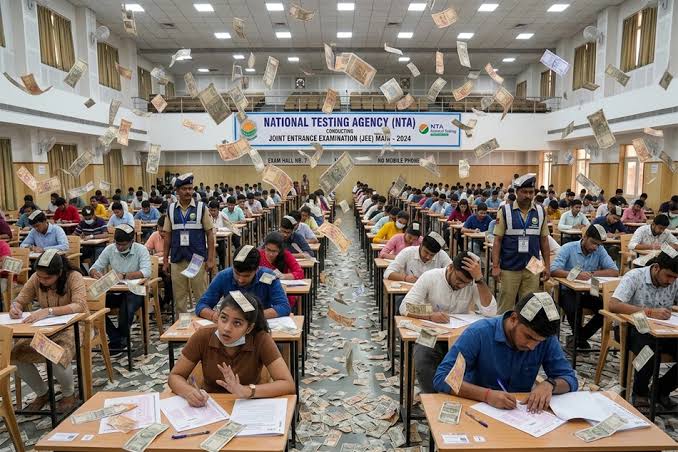
However, the agency’s reliance on outsourced private vendors, third-party computer centers, and decentralized printing presses created vulnerabilities that paper-leak cartels exploited:
A. The Outsourcing Trap and Vendor Vulnerability
- Private Test Centers: In many Tier-2 and Tier-3 cities, the NTA contracted private engineering colleges and computer labs that lacked basic security infrastructure, making physical and digital breaches easier.
- Paper Printing and Logistics: The physical supply chain—moving physical question papers from secure vaults through commercial couriers to remote exam centers—presented multiple points where organized crime cartels could intercept material.
B. Structural Reforms Required
To survive this challenge, Joshi must implement the core recommendations of the high-level expert committee led by former ISRO Chairman Dr. K. Radhakrishnan:
Key Radhakrishnan Committee Recommendations:
- Transition to Hybrid CBT Models: Phasing out physical OMR pen-and-paper formats for high-stakes exams like NEET-UG in favor of encrypted, multi-stage Computer-Based Testing (CBT).
- Mandatory Government Venue Infrastructure: Banning commercial private testing centers and restricting exam venues strictly to government-owned institutions like IITs, NITs, Central Universities, and Kendriya Vidyalayas.
- Enforcing the Anti-Cheating Act: Operationalizing fast-track courts under the newly notified Public Examinations (Prevention of Unfair Means) Act, 2024, which mandates up to 10 years of imprisonment and ₹1 Crore fines for paper-leak syndicates.
3. Challenge 2: Navigating Gen Z Politics and Non-Party Protests
Traditionally, Indian education ministers managed student unrest by negotiating with formal party-affiliated student wings like the ABVP, NSUI, or AISF. However, the 2026 NEET movement demonstrated that student activism has fundamentally changed.
A. The Ineffectiveness of Traditional Political Playbooks
The Cockroach Janta Party (CJP) operated without party banners, political funding, or central command structures. Mobilized via encrypted messaging groups, YouTube streams, and social media handles, Gen Z protesters could not be easily appeased by standard political promises or dismissed as Opposition-backed agitators.
| Traditional Student Wings | Modern Gen Z Movements (CJP Model) |
|---|---|
| Formally affiliated with national political parties. | Explicitly non-partisan; rejects mainstream political flags. |
| Hierarchical leadership negotiating behind closed doors. | Decentralized networks operating via X, Telegram, and YouTube Shorts. |
| Focus on political ideology and campus elections. | Hyper-focused on single issues: meritocracy, paper leaks, jobs. |
B. The Risk of Missteps
If Pralhad Joshi attempts to handle student grievances with heavy-handed police actions or bureaucratic evasions, he risks triggering fresh rounds of street protests. His challenge is to build direct, transparent communication channels with student representatives, educational content creators, and independent whistleblowers.
4. Challenge 3: Implementing NEP 2020 Amid Federal Friction
While examination emergencies dominate headlines, the core policy agenda of the Ministry of Education remains the nationwide rollout of the National Education Policy (NEP) 2020.
Joshi assumes office at a time when several non-BJP ruled states—most notably Tamil Nadu, Karnataka, West Bengal, and Kerala—have voiced strong opposition to key NEP directives:
| Key NEP Directive | Primary Source of State Resistance |
|---|---|
| Three-Language Formula | Opposed by southern states citing concerns over language imposition. |
| CUET-UG Universal Mandate | States argue CUET disadvantages rural students lacking coaching facilities. |
| PM-USHA Scheme Funding Linkages | Grants withheld from non-compliant states refusing to sign NEP MoUs. |
A. Language Formula and Regional Friction
Opposition-ruled southern states have strongly resisted the three-language policy, viewing it as an attempt to introduce language mandates through central educational guidelines. Navigating these regional sensitivities without diluting the core objectives of the NEP will test Joshi's political diplomacy.
B. Fund Allocation and PM-USHA Disputes
The Ministry of Education has faced criticism over holding up central funding under the Pradhan Mantri Uchchatar Shiksha Abhiyan (PM-USHA) for states that have refused to sign the standard Memorandum of Understanding (MoU) adopting NEP provisions.
Joshi must decide whether to maintain a rigid compliance stance or adopt a collaborative approach to ensure state-level university funding is not choked.
5. Challenge 4: Legislative Delays in Higher Education Reforms
For years, the Union Government has aimed to streamline India’s fragmented higher education regulatory landscape by replacing overlapping bodies—such as the University Grants Commission (UGC), All India Council for Technical Education (AICTE), and National Council for Teacher Education (NCTE)—with a single umbrella regulator: the Higher Education Commission of India (HECI).
A. The HECI Bill Stagnation
Despite being a flagship legislative promise under NEP 2020, the HECI Bill has remained stuck in draft stages due to concerns raised by state universities, private university lobbies, and academic faculties over centralized control.
Joshi, who previously served as the Union Minister for Parliamentary Affairs (2019–2024), possesses deep legislative experience. However, pushing the HECI Bill through a closely divided Parliament will require building cross-party consensus—a task made significantly harder by current political tensions surrounding national examinations.
6. Challenge 5: Managing the Bandwidth Crisis of Triple Portfolios
A unique, self-inflicted challenge facing Pralhad Joshi is administrative bandwidth.
PRALHAD JOSHI'S TRIPLE CABINET PORTFOLIOS
The Ministry of Education is a massive department comprising two full-fledged arms: the Department of School Education & Literacy and the Department of Higher Education.
Handling this ministry during a major national crisis while simultaneously managing food security buffer stocks and national green energy goals creates an intense workload. Critics have already questioned whether an "additional charge" arrangement is sufficient to resolve deep-seated structural issues in the education sector.
7. The Survival Blueprint: How Pralhad Joshi Can Navigate the Crisis
Despite the daunting landscape, Pralhad Joshi is far from defenseless. As a five-time Member of Parliament, former BJP Karnataka State President, and long-time RSS loyalist, he brings significant political experience and administrative weight to the role.
To survive in this political hotbed and successfully reform the sector, Joshi can deploy a four-part strategy:
PRALHAD JOSHI'S SURVIVAL STRATEGY
8. Master Comparison Matrix: Key Challenges vs. Strategic Actions
| Challenge Area | Primary Vulnerability | Strategic Action Required by Pralhad Joshi |
|---|---|---|
| NTA Credibility | Outsourced private test centers & paper-leak cartels. | Transition to encrypted CBTs; restrict venues to government institutes. |
| Gen Z Agitations | Decentralized, non-party digital student networks. | Establish verified Student Advisory Councils; ensure transparent dialogue. |
| NEP Federal Standoff | Resistance over language formulas & PM-USHA funding. | Deploy parliamentary diplomacy; offer flexible state implementation MoUs. |
| Higher Education Bills | Regulatory overlap (UGC/AICTE) & stalled HECI Bill. | Build cross-party legislative consensus in the House. |
| Triple Portfolio Load | Bandwidth strain across Food, Energy, and Education. | Delegate routine administration to Ministers of State; focus on core policy. |
9. High-Yield Exam Corner (For Civil Services Aspirants)
For candidates preparing for UPSC Civil Services (GS Paper 2: Governance, Executive Accountability, Education Policies):
1. Constitutional & Administrative Framework
- Article 75(2) & Ministerial Responsibility: Explores how ministers hold office during the pleasure of the President and how individual ministerial resignations (such as Dharmendra Pradhan’s) act as executive circuit breakers to preserve Cabinet accountability.
- Education in the Concurrent List: Transferred from the State List to the Concurrent List via the 42nd Constitutional Amendment Act, 1976, making educational policy a shared responsibility requiring cooperative federalism between the Centre and States.
2. Statutory Anti-Cheating Provisions
Public Examinations (Prevention of Unfair Means) Act, 2024: Provides statutory mechanisms to penalize organized paper-leak syndicates, impersonation, and computer network tampering with non-bailable offences, up to 10 years imprisonment, and ₹1 Crore fines.
Master Polity & Public Governance on RRBCONTENTS
Explore complete study materials, PYQs, and current affairs analysis for civil services preparation.
Solve Governance PYQs → Explore Polity Notes →Join our official Telegram channel: @rrbcontents