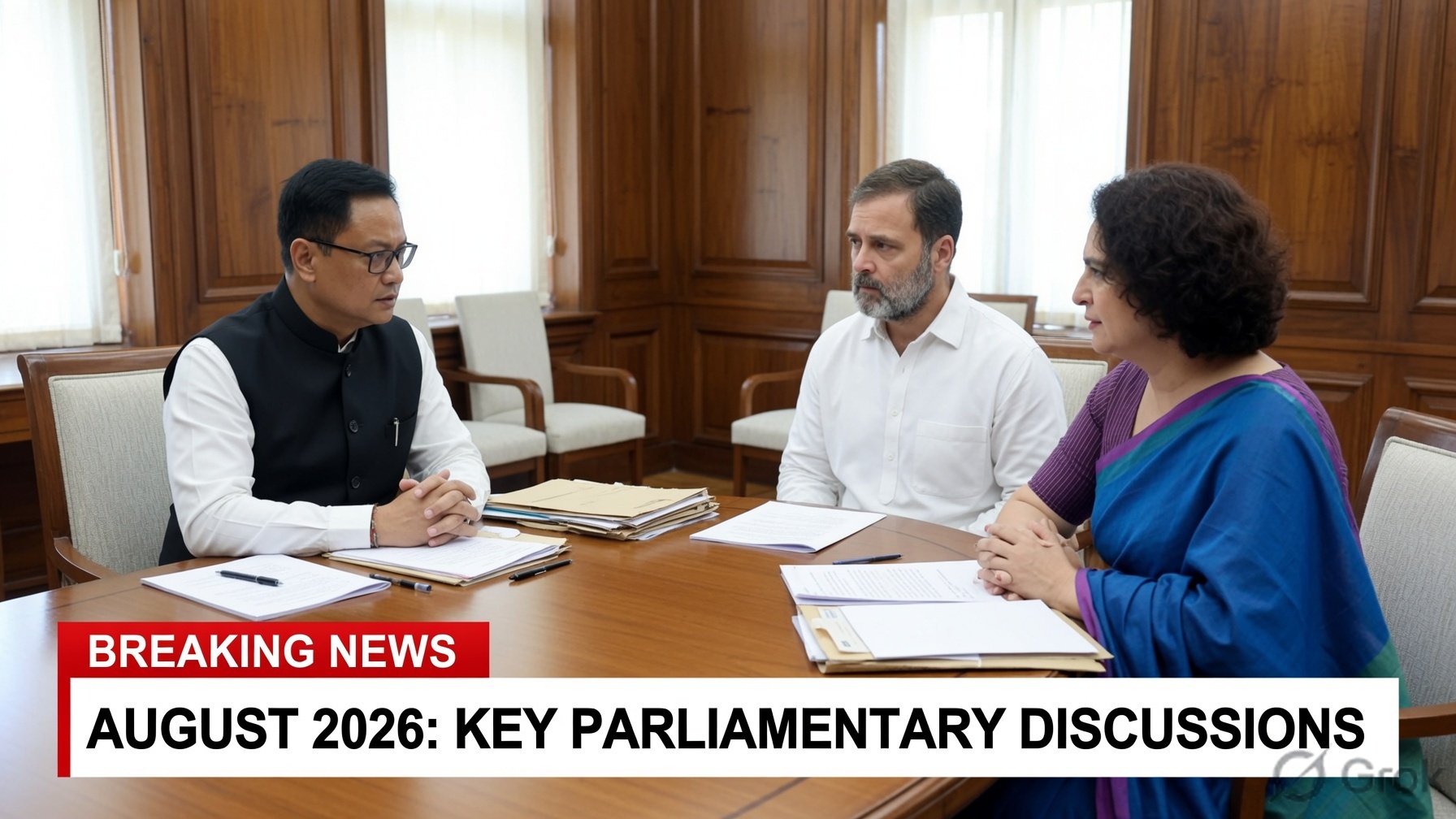
Parliamentary Affairs Minister Kiren Rijiju met Leader of the Opposition in the Lok Sabha Rahul Gandhi on 5 August 2026 in an effort to break the continuing deadlock in Parliament. The nearly 50-minute meeting took place in Gandhi’s office in the Parliament complex. Congress MP Priyanka Gandhi Vadra was present from the beginning, while Deputy Leader Gaurav Gogoi and party general secretary K.C. Venugopal joined later.
The outreach came amid persistent disruptions in the Monsoon Session, which began on 20 July and is scheduled to conclude on 13 August. Since the start of the session, the Lok Sabha has been repeatedly adjourned, with little progress on legislative business and the Question Hour remaining incomplete on most days.
Issues on the Table
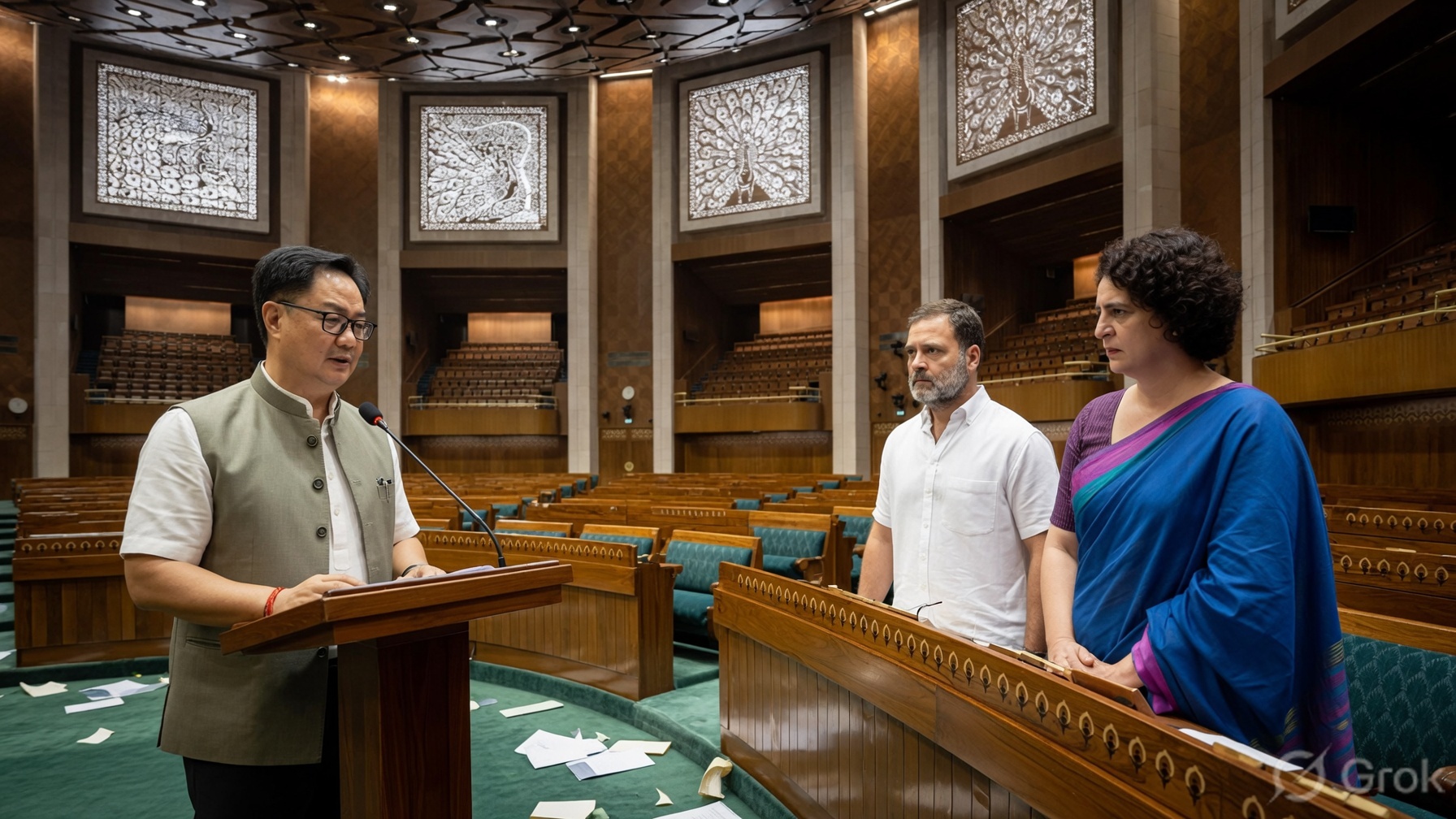
According to sources familiar with the discussion, Rijiju sought cooperation for the smooth functioning of the remaining period of the session and raised the government’s pending legislative priorities. Two items featured prominently: the proposed constitutional amendment linked to delimitation and women’s reservation, and the Foreign Contribution (Regulation) Amendment Bill, 2026 (FCRA Bill).
Rijiju later clarified that there was no proposal at present to extend the ongoing session or to convene a special session after Independence Day for the delimitation and women’s reservation legislation. The government, he indicated, was open to continued conversation even while differences persisted.
Opposition’s Position
Rahul Gandhi and the Congress leadership conveyed that there was no change in the party’s stand on delimitation. The Opposition has argued that any redrawing of constituencies at this stage could alter the political balance in a manner favourable to the ruling side. Congress leaders also made clear their strong opposition to the FCRA Amendment Bill in its present form, describing it as draconian.
The Congress side listed two non-negotiable conditions for the House to function normally: a statement by Home Minister Amit Shah on the police action against students and youth who protested on the NEET paper-leak issue on 20 July, and a discussion on the alleged theft of donations at the Ram Temple in Ayodhya. Without these, the leadership indicated, cooperation on the legislative agenda would remain difficult.
After the meeting, K.C. Venugopal told reporters that the Opposition’s position on both the delimitation exercise and the FCRA Bill remained unchanged. He emphasised that the party would not allow the passage of the FCRA legislation in its current shape.
The FCRA Amendment Bill
The Foreign Contribution (Regulation) Amendment Bill, 2026, introduced earlier in the year, has emerged as one of the most contested pieces of legislation in the current session. The Bill seeks to further tighten the regulatory framework governing the receipt and utilisation of foreign contributions by non-governmental organisations and other entities.
Key provisions that have drawn criticism include the empowerment of a designated authority to take over and, in certain circumstances, dispose of the assets of organisations whose FCRA registration is cancelled or ceases. Opposition parties, civil society groups and some religious organisations have argued that these powers are excessive and could be used to target inconvenient voices. The government has maintained that the amendments are intended to enhance transparency and prevent the misuse of foreign funds.
There have been indications that the government may be willing to address some of the concerns raised, including the absence of retrospective penal provisions. However, as of 6 August, no formal consensus had been reached, and the Bill had not been taken up for discussion amid the continuing disruptions.
Broader Context of the Logjam
The Monsoon Session has been marked by repeated confrontations. Opposition parties have raised a range of issues, including the handling of the NEET controversy, alleged irregularities related to the Ram Temple, and other governance matters. The government has accused the Opposition of obstructing parliamentary business and preventing debate on important legislation.
Five Bills have been passed with limited or no discussion during the session so far. The repeated adjournments have reduced the effective working time of both Houses and raised concerns about the productivity of the parliamentary calendar.
Rijiju’s meeting with Gandhi was the second such outreach in about ten days and was described by some government sources as a confidence-building measure. Whether it produces any tangible shift in the atmosphere will depend on the positions both sides take in the remaining days of the session.
Political and Institutional Implications
Parliamentary deadlocks are not new in Indian legislative history. They often arise when the Opposition believes that certain issues of public importance are being ignored or when the government seeks to advance contentious legislation without adequate consultation. The current impasse combines both elements: the Opposition’s demand for accountability on specific incidents and the government’s desire to move forward with the FCRA and delimitation-related legislation.
The FCRA framework itself has been a subject of debate for several years. Successive amendments have tightened registration, utilisation and reporting requirements. Supporters of stricter regulation argue that foreign funding must be transparent and aligned with national interests. Critics contend that excessive controls can shrink the space for legitimate civil society activity.
The delimitation question carries longer-term political consequences. Any significant increase in the number of Lok Sabha seats and the simultaneous implementation of women’s reservation will reshape electoral arithmetic. Regional parties and the principal Opposition have expressed reservations about the timing and the process.
Way Forward
With only about a week left in the scheduled Monsoon Session, the window for meaningful legislative work is narrow. The government has signalled that it remains open to dialogue. The Opposition has reiterated its core demands. Home Minister Amit Shah is expected to intervene when the FCRA Bill eventually comes up for discussion, according to some reports.
Whether the two sides can find a limited working arrangement that allows some legislative business to proceed, or whether the session ends with further disruptions, will become clearer in the coming days. For now, the 5 August meeting stands as the most significant formal contact between the Parliamentary Affairs Minister and the Leader of the Opposition during the current session.
Frequently Asked Questions (FAQ)
Q1. Why did Kiren Rijiju meet Rahul Gandhi on 5 August 2026?
Parliamentary Affairs Minister Kiren Rijiju met Leader of the Opposition Rahul Gandhi to seek cooperation for breaking the persistent deadlock in the Monsoon Session of Parliament.
Q2. What key issues were discussed?
The meeting focused on the proposed constitutional amendment linked to delimitation and women's reservation, as well as the Foreign Contribution (Regulation) Amendment Bill, 2026.
Q3. What were the Opposition's conditions to end the logjam?
The Congress side demanded a statement by Home Minister Amit Shah on police action against students protesting the NEET paper leak, and a discussion on alleged theft of donations at the Ram Temple in Ayodhya.