Home › Jobs & Schemes › Tribal Welfare › PM JANMAN Complete Exam Guide
PM JANMAN Yojana 2026 Complete Exam Guide
Many aspirants preparing for competitive exams struggle with tribal welfare schemes. They remember names like Vanbandhu Kalyan Yojana or Eklavya Model Residential Schools (EMRS) but get confused when a new mission with a long name appears. PM-JANMAN is one such scheme that looks complicated at first glance. The full form itself is long — Pradhan Mantri Janjati Adivasi Nyaya Maha Abhiyan.
In classrooms, I have seen students leave questions on this topic because they are not clear about PVTGs, the 11 critical interventions, or the latest progress figures. This article is written to remove that confusion completely. We will cover the background of Particularly Vulnerable Tribal Groups, the launch of the scheme, its 11 critical interventions, progress figures available till mid-2026, implementation challenges, constitutional links, and the exact points that usually come in exams. By the end, you will be able to handle any objective or descriptive question on this topic with confidence.
Table of Contents
- 1. Why Tribal Welfare Schemes Are Important for Competitive Exams
- 2. Understanding Particularly Vulnerable Tribal Groups (PVTGs)
- 3. Background and Need for a Special Mission
- 4. Launch of PM-JANMAN Yojana
- 5. Objectives and Coverage of the Scheme
- 6. Eleven Critical Interventions Explained
- 7. Progress of the Scheme till July 2026
- 8. Implementation Structure and Challenges
- 9. Link with Constitutional Provisions and Earlier Policies
- 10. Detailed Comparison Table
- 11. Must Remember Points for Quick Revision
- 12. Conclusion & Action Steps for Aspirants

Key Takeaways & Exam Highlights
- Full Form & Launch: Pradhan Mantri Janjati Adivasi Nyaya Maha Abhiyan (PM-JANMAN). Launched on November 15, 2023, by PM Narendra Modi from Khunti, Jharkhand, on Janjatiya Gaurav Divas (Birsa Munda's Jayanti).
- Financial Outlay: Total budget is ₹24,104 crore (Central share: ₹15,336 crore; State share: ₹8,768 crore).
- Target Group: 75 Particularly Vulnerable Tribal Groups (PVTGs) residing in 18 States and Andaman & Nicobar Islands (~28 lakh population in 22,000+ habitations).
- 11 Interventions across 9 Ministries: Permanent housing (4.90 lakh target @ ₹2.39 lakh unit cost), 8,000 km roads, piped water supply, 750 Mobile Medical Units, 500 hostels, off-grid solar power, and mobile towers.
1. Why Tribal Welfare Schemes Are Important for Competitive Exams
Questions on tribal issues appear regularly in SSC CGL, RRB NTPC, Banking, and especially UPSC Prelims and Mains (GS Paper 2 & GS Paper 3). Examiners test whether you know the difference between Scheduled Tribes (STs) and Particularly Vulnerable Tribal Groups (PVTGs), the special schemes meant for them, and the latest government initiatives.
PM-JANMAN is a saturation-based mission. That means the government is trying to cover every eligible household and habitation with basic facilities. Understanding this approach helps you answer both factual questions (budget, dates, numbers) and analytical questions (why targeted missions work better than broad schemes).
2. Understanding Particularly Vulnerable Tribal Groups (PVTGs)
India has more than 700 Scheduled Tribe communities listed under Article 342 of the Constitution. Out of these, 75 communities have been identified as Particularly Vulnerable Tribal Groups. These groups were earlier known as Primitive Tribal Groups (PTGs). The name was changed to PVTG in 2006 to ensure a more respectful nomenclature.
In 1973, the Dhebar Commission created Primitive Tribal Groups as a distinct category among STs who were at a lower level of development. In 1975, the Government of India identified 52 such groups, and in 1993, an additional 23 groups were added to the list, bringing the total number of PVTGs to 75.
Four Factual Criteria Used for Identification:
- Pre-agricultural level of technology: Hunting, gathering, or shifting cultivation practices.
- Stagnant or declining population: Very small demographic numbers with low growth rates or negative growth.
- Extremely low literacy: Literacy levels significantly lower than the general ST average.
- Subsistence level of economy: Minimal monetization and dependence on forest produce and basic crafts.
These communities live in remote, forested, and hilly areas across 18 States and the Union Territory of Andaman & Nicobar Islands. They number approximately 28 lakh individuals distributed across more than 22,000 habitations and villages. Prominent PVTG groups include the Birhor (Jharkhand/Chhattisgarh), Chenchu (Andhra Pradesh/Telangana), Katkari (Maharashtra), Sahariya (Madhya Pradesh/Rajasthan), Dongria Kondh (Odisha), and the Jarawa, Sentinelese, and Shompen of the Andaman & Nicobar Islands.
3. Background and Need for a Special Mission
Over the decades, the central and state governments launched several schemes for tribal development — such as the Special Central Assistance to Tribal Sub-Scheme (SCA to TSS), Grants under Article 275(1), and the Development of PVTGs scheme. However, critical infrastructure gaps remained in remote PVTG habitations.
Because PVTG habitations are small (often consisting of just 10 to 50 households) and scattered across difficult terrain, general development schemes failed to reach them. Many families still lived in makeshift kuccha huts, drank untreated stream water, had no electricity, and lacked access to basic healthcare and schooling within a reasonable walking distance.
Recognizing this historical backlog, Union Finance Minister Nirmala Sitharaman announced the Pradhan Mantri PVTG Development Mission in the Union Budget 2023-24. The mission was designed to saturate PVTG families and habitations with basic facilities within three years by converging existing schemes across nine central ministries.
4. Launch of PM-JANMAN Yojana
Prime Minister Narendra Modi formally launched the expanded mission under the name Pradhan Mantri Janjati Adivasi Nyaya Maha Abhiyan (PM-JANMAN) on 15 November 2023 from Khunti district in Jharkhand. The launch took place on Janjatiya Gaurav Divas, which marks the birth anniversary of the legendary tribal freedom fighter Bhagwan Birsa Munda.
Financial Outlay Breakdown:
The total outlay approved for PM-JANMAN is ₹24,104 crore. This is shared between the Center and the States as follows:
- Central Share: ₹15,336 crore (63.6%)
- State Share: ₹8,768 crore (36.4%)
The mission works on a multi-ministerial convergence model where nine ministries work in tandem using spatial data from the PM Gati Shakti portal.
5. Objectives and Coverage of the Scheme
The overarching objective of PM-JANMAN is to bring affirmative socio-economic transformation to PVTG households by ensuring saturation of 11 critical basic amenities. It seeks to elevate their quality of life while respecting their unique cultural heritage and traditional lifestyle.
The scheme covers 75 PVTG communities spread over 200 districts, 22,000+ habitations, and approximately 28 lakh population in 18 States (Andhra Pradesh, Bihar, Chhattisgarh, Gujarat, Jharkhand, Karnataka, Kerala, Madhya Pradesh, Maharashtra, Manipur, Odisha, Rajasthan, Tamil Nadu, Telangana, Tripura, Uttar Pradesh, Uttarakhand, West Bengal) and 1 UT (Andaman & Nicobar Islands).
6. Eleven Critical Interventions Explained
PM-JANMAN achieves saturation through 11 specific physical targets managed by 9 Nodal Central Ministries. Here is the detailed breakdown of each intervention:
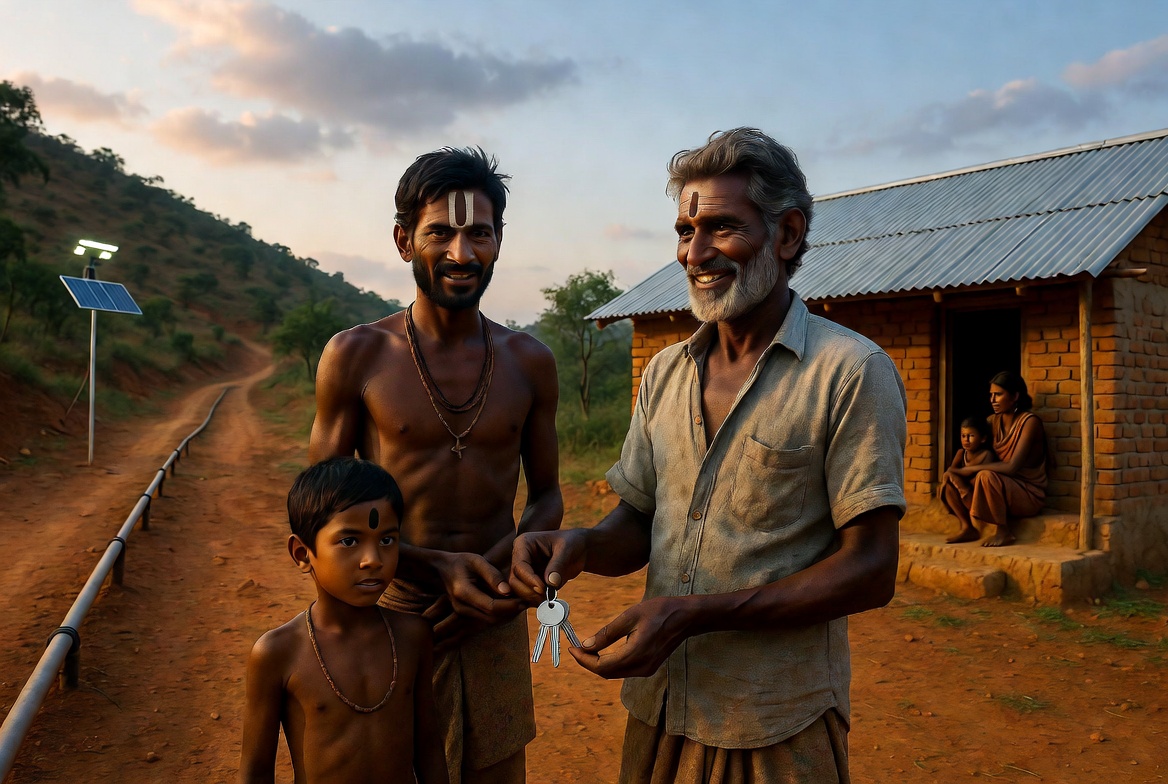
Detailed Description of Key Interventions:
- 1. Permanent Pucca Housing (Ministry of Rural Development): Target to construct 4.90 lakh pucca houses under PMAY-G norms. To account for difficult terrain transport costs, the unit cost assistance was enhanced to ₹2.39 lakh per house (compared to ₹1.20 lakh in plains and ₹1.30 lakh in hilly areas under standard PMAY-G), along with toilet construction under Swachh Bharat Mission and 90/95 days of MGNREGA labor wages.
- 2. Connecting Roads (Ministry of Rural Development): Target of 8,000 km of all-weather roads connecting habitations with populations even below 100 persons (relaxing standard PMGSY norms). Allocated cost norm is approximately ₹1 crore per km.
- 3. Functional Household Tap Connections (Ministry of Jal Shakti): Piped drinking water supply to all PVTG households under Jal Jeevan Mission. Solar-powered community water supply units for habitations where piped networks are unfeasible.
- 4. Mobile Medical Units (Ministry of Health & Family Welfare): Deployment of 750 Mobile Medical Units (MMUs) equipped with doctors, nurses, essential medicines, and diagnostic tools to conduct regular health camps in remote habitations.
- 5. Educational Hostels (Ministry of Tribal Affairs): Construction of 500 hostels for PVTG students to reduce drop-out rates and provide quality residential education.
- 6. Off-Grid Solar Electrification (Ministry of New and Renewable Energy): Provision of solar home lighting systems and solar mini-grids for isolated habitations where extending grid lines through dense forests is ecologically or geographically impossible.
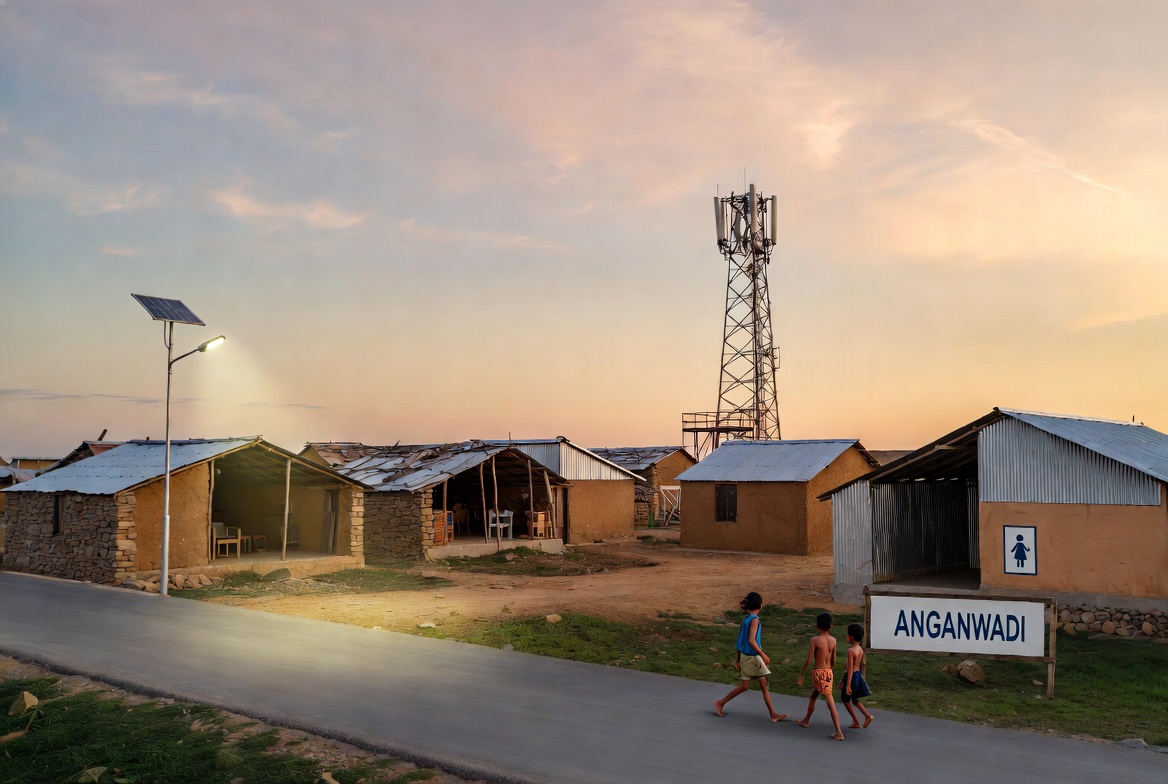
- 7. Mobile Tower Installation (Ministry of Communications): Setting up 4G/5G mobile towers in dark shadow zones to provide digital connectivity and enable Direct Benefit Transfer (DBT) verification.
- 8. Livelihood & Skill Development (Ministry of Tribal Affairs & Skill Development): Setting up Van Dhan Vikas Kendras (VDVKs) and Multipurpose Centers to train PVTG youth in forest produce harvesting, processing, and handicraft marketing.
7. Progress of the Scheme till July 2026
As per official implementation reports, parliamentary answers, and Ministry of Tribal Affairs monitoring dashboards updated up to mid-2026, the mission has achieved major physical milestones:
| Intervention Component | Approved Target | Progress Achieved (by Mid-2026) | Implementation Status |
|---|---|---|---|
| Pucca Housing (PMAY-G) | 4.90 Lakh Houses | 4.73 Lakh Sanctioned; >2.50 Lakh Completed | High Speed / On Track |
| Road Connectivity | 8,000 km | ~4,800 km Sanctioned; ~2,400 km Completed | Moderate / Terrain Challenges |
| Piped Drinking Water | All Habitations | 14,500+ Habitations Saturated | High Speed |
| Mobile Medical Units (MMUs) | 750 MMUs | 750 Operationalised across 18 States | 100% Operational Target |
| Electrification (Grid + Solar) | All Households | 1.34 Lakh+ Grid Electrified; 35,000+ Solar Covered | Near Saturation |
| Anganwadi Centres | 2,500+ AWCs | 2,250+ Functional in PVTG Habitations | High Progress |
| Student Hostels | 500 Hostels | ~120 Sanctioned / Under Construction | Slower Progress / Land Issues |
| Telecom Mobile Towers | ~3,000 Habitations | 1,200+ Towers Installed by BSNL | On Track |
8. Implementation Structure and Challenges
The Ministry of Tribal Affairs (MoTA) serves as the overall Nodal Ministry, while 9 central ministries (Rural Development, Jal Shakti, Power, MNRE, Health, Women & Child Development, Telecom, Education, and Skill Development) execute their respective components.
Identification of beneficiaries was conducted via door-to-door physical baseline surveys utilizing the PM Gati Shakti Mobile App, geospatial mapping, and Aadhaar-based saturation camps.
Key Challenges Faced during Ground Implementation:
- Geographical Inaccessibility: Reaching isolated hilly habitations in Arunachal Pradesh, Manipur, and Andaman Islands makes transportation of building materials extremely difficult.
- Land Availability & Forest Clearance: Constructing roads and hostels requires Forest Rights Act (FRA) clearances and non-forest land allocation.
- Contractor Shortage: Working in tiny scattered habitations yields small contract sizes, leading to poor contractor bidding response in remote districts.
- Literacy & Identity Documentation: Many PVTG elders lacked Aadhaar cards, bank accounts, or caste certificates, requiring dedicated mobile documentation camps before sanctioning houses.
9. Link with Constitutional Provisions and Earlier Policies
For UPSC and State PSC exams, linking current affairs schemes with constitutional articles is essential for writing high-scoring Mains answers:
- Article 46 (Directive Principles of State Policy): Directs the State to promote with special care the educational and economic interests of the weaker sections of the people, and in particular, of the Scheduled Castes and the Scheduled Tribes, and to protect them from social injustice and all forms of exploitation.
- Article 275(1) First Proviso: Mandates special grants-in-aid out of the Consolidated Fund of India to States for promoting the welfare of Scheduled Tribes or raising the level of administration of Scheduled Areas.
- Article 342: Grants power to the President to specify the tribes or tribal communities deemed to be Scheduled Tribes in relation to a State or Union Territory.
- Fifth & Sixth Schedules: Special administrative provisions for Scheduled Areas in 10 states (5th Schedule) and Tribal Areas in Assam, Meghalaya, Tripura, and Mizoram (6th Schedule).
- PESA Act, 1996: Panchayats (Extension to Scheduled Areas) Act empowers Gram Sabhas in Scheduled Areas to safeguard community resources and approve development plans.
10. Detailed Comparison Table
Understand how PM-JANMAN differs from standard ST schemes:
| Feature / Parameter | General ST Development Schemes (SCA to TSS / Article 275) | PM-JANMAN Yojana (2023–2026) |
|---|---|---|
| Target Group | All Scheduled Tribes (~10.4 Crore population) | 75 PVTG Communities (~28 Lakh population) |
| Approach | Scheme-based grant allocations to states | Time-bound multi-ministerial Saturation Mission |
| Financial Outlay | Annual budget allocations | Dedicated ₹24,104 Crore outlay |
| PMAY-G Housing Assistance | Standard ₹1.20 Lakh / ₹1.30 Lakh unit cost | Enhanced ₹2.39 Lakh unit cost (Terrain adjusting) |
| Road Norms | PMGSY population threshold ≥ 250 / 500 | Relaxed threshold (Habitations < 100 population covered) |
| Nodal Portal | Ministry-specific portals | Geospatial mapping on PM Gati Shakti Portal |
11. Must Remember Points for Quick Revision
Bullet Points for Exam Revision:
- Launch Date: 15 November 2023 (Janjatiya Gaurav Divas / Birsa Munda Jayanti) from Khunti, Jharkhand.
- Full Form: Pradhan Mantri Janjati Adivasi Nyaya Maha Abhiyan.
- Total Outlay: ₹24,104 crore (Central share: ₹15,336 crore, State share: ₹8,768 crore).
- Target Coverage: 75 PVTGs across 18 States and Andaman & Nicobar Islands (~28 lakh population, 22,000+ habitations).
- 11 Interventions: Housing (4.90 lakh target), Roads (8,000 km), Water (JJM), Health (750 MMUs), Hostels (500), Electrification (Grid + Solar), Telecom (Mobile towers), AWCs, VDVKs.
- Enhanced Unit Cost: Housing unit assistance enhanced to ₹2.39 lakh per house.
- Nodal Ministry: Ministry of Tribal Affairs (in convergence with 8 line ministries).
12. Conclusion & Action Steps for Aspirants
PM-JANMAN represents one of the most targeted and compassionate governance missions launched in independent India. It shifts the paradigm from generic tribal welfare to absolute saturation of basic human rights for the most vulnerable indigenous communities.
For competitive exam candidates, this scheme bridges governance, polity, economics, and human geography. Do not merely memorize the outlay. Understand why PVTGs require specialized intervention, how spatial mapping through PM Gati Shakti accelerates delivery, and how multi-ministerial convergence operates.
Open your study notebook now and write down the full form, launch date, 75 PVTG count, ₹24,104 crore outlay, and the 5 key physical targets. Revisit this note twice before your exam!
Frequently Asked Questions (Exam FAQ)
What is the full form and budget outlay of PM-JANMAN?
PM-JANMAN stands for Pradhan Mantri Janjati Adivasi Nyaya Maha Abhiyan. Launched on November 15, 2023, from Khunti, Jharkhand, it has a total outlay of Rs 24,104 crore (Central share: Rs 15,336 crore, State share: Rs 8,768 crore).
How many PVTG communities and people are covered under PM-JANMAN?
It covers 75 Particularly Vulnerable Tribal Groups (PVTGs) across 18 States and Andaman & Nicobar Islands, benefiting ~28 lakh people living in over 22,000 habitations.
What are the 11 critical interventions of PM-JANMAN?
The 11 interventions cover pucca housing (4.90 lakh homes), 8,000 km road connectivity, Jal Jeevan piped water, off-grid solar power, mobile medical units (750 MMUs), 500 student hostels, Anganwadi centers, VDVKs, and mobile tower installation.
Sources: Ministry of Tribal Affairs, Press Information Bureau (PIB) Releases, Parliamentary Questions (Lok Sabha/Rajya Sabha).
NEEDS DOUBLE-CHECK: none
Master Government Schemes & Polity on RRBCONTENTS
Practice PYQs, read scheme notes, and explore job exam updates.
Solve Govt Schemes PYQs → Explore Govt Jobs →Join our official Telegram channel: @rrbcontents