 RRB
RRB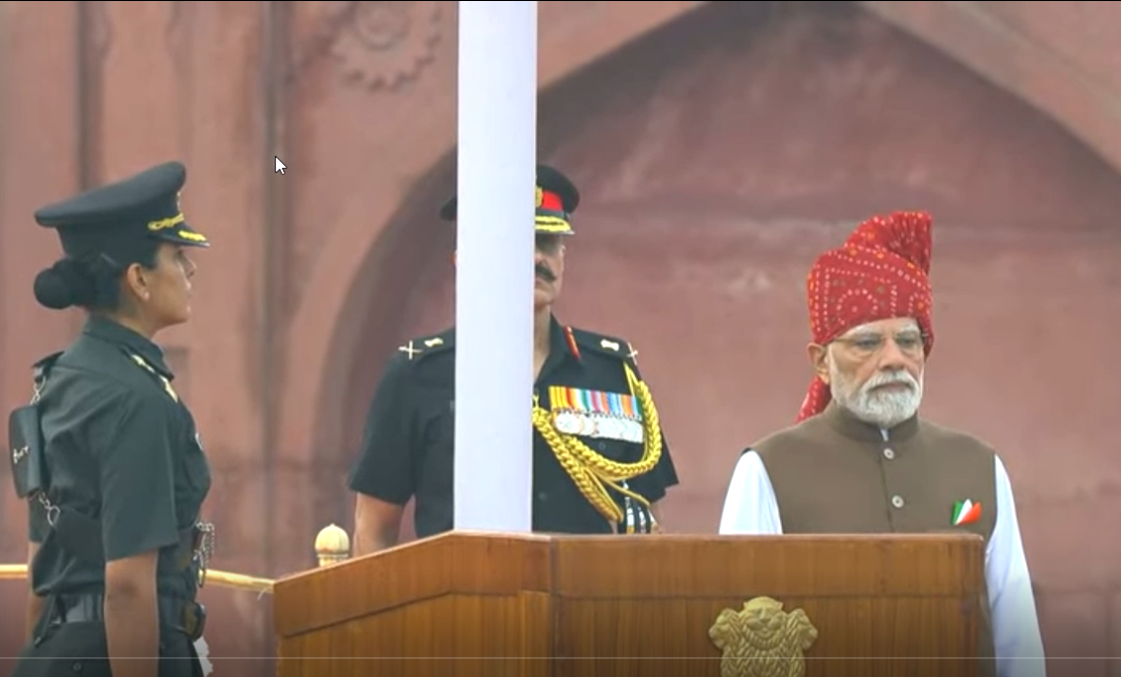
India is celebrating its 80th Independence Day today. Prime Minister Narendra Modi will hoist the national flag from the ramparts of the Red Fort and address the nation. For the first time in the history of the official ceremony, the national song Vande Mataram will be rendered from the same historic site. The Defence Ministry has confirmed that the decision was taken to mark 150 years of Vande Mataram. The song, written by Bankim Chandra Chattopadhyay, inspired generations during the freedom struggle. This year it has been given a formal place in the main programme at the Red Fort.
Sequence of the ceremony
The Prime Minister will be received at the Red Fort by Defence Minister Rajnath Singh, Minister of State for Defence Sanjay Seth and Defence Secretary Rajesh Kumar Singh. He will inspect the Guard of Honour, which includes personnel from the Army, Navy, Air Force and Delhi Police. After the inspection, Modi will move to the ramparts. Captain Sonia Singh Chauhan will assist him in unfurling the national flag. This is the first time a woman officer has been assigned this role in the main ceremony. The flag hoisting will be synchronised with a 21-gun salute fired by the 1721 Field Battery using indigenous 105 mm light field guns. Once the flag is unfurled, the Army band will play Vande Mataram. Everyone present will stand and join in the singing. The national anthem will follow. After the Prime Minister’s address, around 2,500 NCC cadets and My Bharat volunteers will sing Vande Mataram again, this time from Gyanpath opposite the ramparts, where they will form the words of the song.
Why Vande Mataram this year
Defence Secretary Rajesh Kumar Singh had explained the new sequence at a press briefing earlier this month. He said the Prime Minister would arrive on the rampart, Vande Mataram would be played while everyone remained standing, and only then would the flag be unfurled and the national anthem sung. The change coincides with a recent legal update. Parliament has amended the Prevention of Insults to National Honour Act to give Vande Mataram the same protection as the national anthem. Intentional disruption of the national song is now a punishable offence. The full version of the song was also played before and after President Droupadi Murmu’s address to the nation on the eve of Independence Day.
Special guests and the focus on youth

About 5,000 special guests have been invited to the Red Fort this year. The list is deliberately broad. It includes women entrepreneurs under the PM Mudra Yojana, street vendors covered by PM SVANidhi, artisans from the PM Vishwakarma scheme, high-performing My Bharat volunteers, beneficiaries of the Pradhan Mantri Awas Yojana, and International Yoga Day volunteers. More than 1,500 people from different states and Union Territories will attend in traditional attire. Nineteen students who won medals at the 2026 International Olympiads in physics, chemistry, biology and mathematics have also been invited and will be seated on the ramparts. The government has described the theme of this year’s celebrations as “Yuva Shakti for Viksit Bharat@2047”. Officials say the presence of young achievers and volunteers is meant to underline the role of the next generation in the country’s long-term goals.
Aerial display and other arrangements

Two Mi-17 helicopters of the Indian Air Force will shower flower petals over the gathering immediately after the flag is unfurled. One helicopter will carry the national flag and the other a banner marking 150 years of Vande Mataram. View cutters installed around the venue will display themes related to India’s progress in space and nuclear technology and the vision of a developed India by 2047. Floral decorations have also been designed around the words of the national song.
Security and public arrangements
Security in and around the Red Fort has been tightened. Multiple layers of checking are in place. Traffic restrictions have been imposed on several roads in central Delhi. The ceremony will be telecast live from early morning on Doordarshan and major digital platforms. For the first time, the Prime Minister’s speech will be translated in real time into 22 Indian languages through the Bhashini platform. Similar flag-hoisting ceremonies and cultural programmes are being held across state capitals, district headquarters, schools and government offices. Band performances have been organised at more than 300 locations to encourage public participation.
A ceremony with new elements
The Red Fort has been the centre of Independence Day celebrations since 1947. The basic structure of the event has remained largely unchanged for decades. This year the inclusion of Vande Mataram, the indigenous gun salute, the wider guest list and the emphasis on young participants mark a clear shift in tone. Officials involved in the planning say the changes were deliberate. They wanted the ceremony to reflect both the historical weight of the national song and the demographic reality of a country where a large part of the population is young. The presence of ordinary citizens among the special guests is another attempt to move the event beyond a purely formal gathering of dignitaries. As the Prime Minister prepares to address the nation from the ramparts, the focus remains on the two themes chosen for the day: the 150-year journey of Vande Mataram and the role of youth in the decades ahead. The first public singing of the national song from the Red Fort will be the moment most people remember from this year’s ceremony.