Home › Blog › The Art and Science of the AI Whisperer: A Deep Dive into the World of Prompt Engineering and AI Specialization
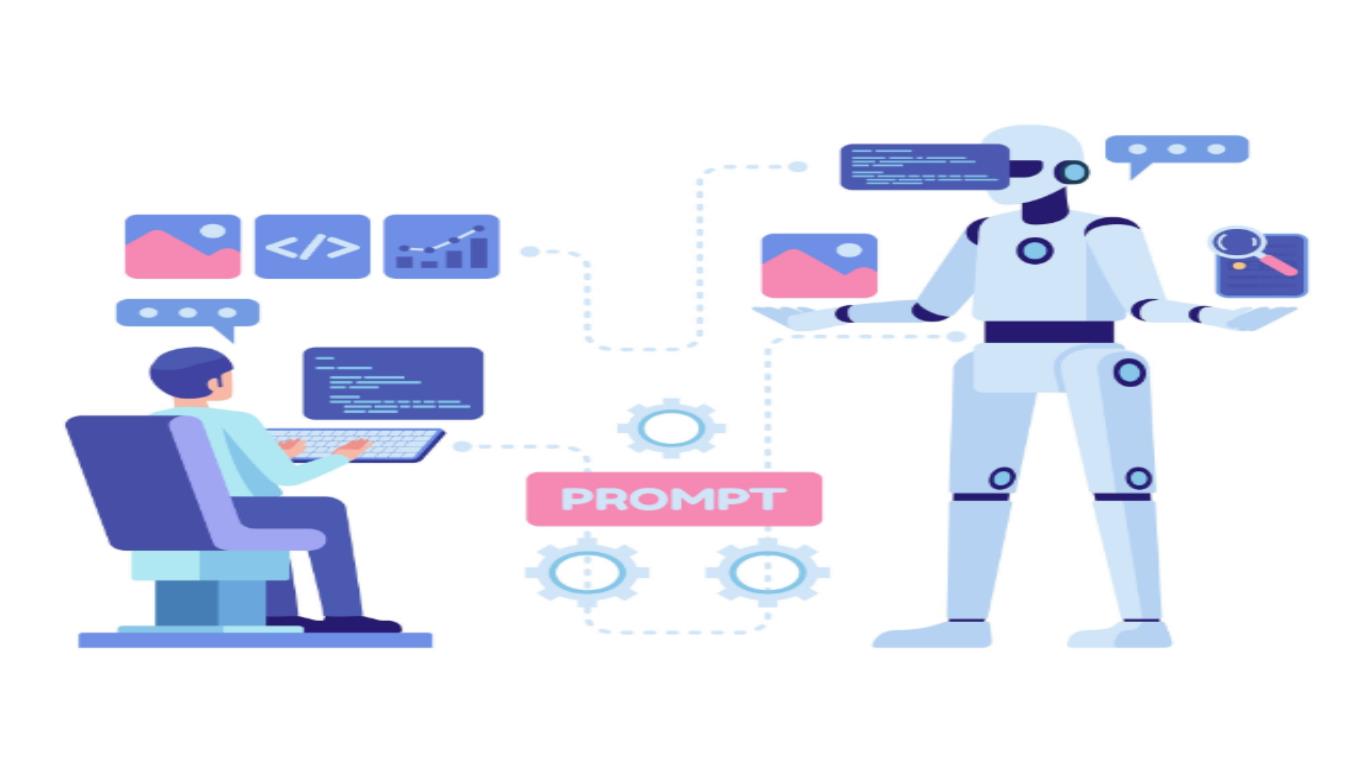
The Art and Science of the AI Whisperer: A Deep Dive into the World of Prompt Engineering and AI Specialization
If you had asked a traditional software engineer what a "Prompt Engineer" was a few years ago, you likely would have received a polite chuckle or a raised eyebrow. Fast forward to today, and the landscape of technology, enterprise operations, and creative industries has undergone a seismic transformation. What started as internet folklore—people typing creative sentences into early iterations of generative models to produce fantasy artwork or rhyming poems—has matured into one of the most vital, strategic, and high-impact disciplines of the modern digital era.
We are no longer just building software with rigid, line-by-line code. We are interacting with non-deterministic intelligence. Large Language Models (LLMs), multimodal foundation systems, and autonomous agent workflows do not execute traditional logic step-by-step. Instead, they interpret natural language, infer context, synthesize vast knowledge bases, and probability-map their responses.
This fundamental shift from deterministic programming (where Input A always yields Output B) to probabilistic orchestration (where output relies on nuance, framing, and context) gave birth to the Prompt Engineer and AI Specialist.
Whether you are a developer looking to transition your career, a business leader striving to deploy enterprise-grade generative AI, or a curious professional wondering how to stay relevant in an automated world, this comprehensive guide explores the reality, techniques, career trajectories, and future of AI specialization.

1. Demystifying the Role: What Does an AI Specialist Actually Do?
In enterprise settings, writing the initial prompt text is only about 10% of the job. The remaining 90% involves system architecture, context engineering, automated evaluation metrics, guardrailing, and bridging the gap between raw machine intelligence and real-world business systems.
Core AI Specialist Responsibilities
1. Context Engineering & RAG: Designing vector retrieval pipelines to prevent hallucination in large context windows.
2. System Prompt & Persona Formulation: Crafting foundational system instructions governing tone, JSON schemas, and safety.
3. Evals & Benchmarking: Running automated test suites assessing accuracy, bias, and edge-cases.
4. Cost-Latency Optimization: Balancing 8B open-source models vs frontier closed models for API token efficiency.
2. Under the Hood: Key Prompting Techniques and Frameworks
- A. Zero-Shot vs Few-Shot Prompting: Providing 2-5 high-quality input-output examples in context to enforce strict schema adherence.
- B. Chain-of-Thought (CoT) Reasoning: Instructing models to output step-by-step reasoning inside tags (e.g.
<thinking>...</thinking>) before returning final answers. - C. ReAct (Reasoning + Acting) Framework: Guiding autonomous agents through Thought → Action (Tool Call) → Observation → Final Answer loops.

3. The Anatomy of an Enterprise-Grade System Prompt
System Prompt Architecture Example
[SYSTEM ROLE] → [TASK] → [CONSTRAINTS & RULES] → [EVALUATION CATEGORIES] → [OUTPUT SCHEMA (JSON)] → [INPUT DATA].
Why it succeeds: Eliminates ambiguity, enforces deterministic JSON formatting, and guarantees seamless API integration.
4. Real-World Applications Across Industries
| Industry | Application | Role of the AI Specialist |
|---|---|---|
| Healthcare | Patient Intake & Chart Summarization | Designs prompts extracting medical metrics from doctor notes with 0% hallucination tolerance. |
| Finance & Banking | Automated Financial Reporting | Builds RAG pipelines scanning quarterly filings for standardized risk metrics. |
| Legal | Contract Analysis & E-Discovery | Engineers strict JSON-output prompts flagging liability clauses in vendor contracts. |
| Customer Support | Autonomous Support Agents | Develops multi-turn conversational system prompts with de-escalation protocols. |
5. Common Pitfalls and How to Overcome Them
- Pitfall 1: Over-Prompting ("Kitchen Sink" Trap): Overwhelming model attention with dozens of conflicting instructions. Solution: Modular chained prompts.
- Pitfall 2: Neglecting Edge Cases: Testing on 3 perfect inputs. Solution: Adversarial red-teaming (jailbreaks, base64 encoding, blank inputs).
- Pitfall 3: Hardcoding Dynamic Data: Embedding static facts. Solution: Dynamic RAG injection at runtime.
Q: Do I need a Computer Science degree to become a Prompt Engineer?
A: While Python scripting and API integration skills are essential, top prompt engineers excel due to linguistic precision, critical thinking, and adversarial problem-solving skills across multidisciplinary domains.
Conclusion: Becoming the Bridge Between Human Intent and Machine Action
Generative AI has unlocked capabilities that were confined to science fiction just a decade ago. However, raw artificial intelligence, no matter how powerful, remains inert without clear human direction.
The Prompt Engineer and AI Specialist is not merely a technician typing words into a screen; they are the strategic interpreter, the systems designer, and the ethical guardrail. By mastering the art of translating complex human goals into precise machine instructions, AI specialists hold the key to unlocking the true, practical potential of artificial intelligence across every domain of human endeavor.
Ready to Build Your AI & Tech Career in 2026?
Explore comprehensive technical study guides, PYQs, and career intelligence resources on RRBCONTENTS.
Browse Study Guides → View Latest Jobs →Join our official Telegram channel for instant updates: @rrbcontents