Introduction
India reached a landmark milestone on August 3, 2026, when Glaw Lake in Arunachal Pradesh became the country's 101st Ramsar site. This designation not only marked the first Ramsar site for the state of Arunachal Pradesh but also reinforced India's growing commitment to wetland conservation on the global stage. From just two Ramsar sites in 1981 — Chilika Lake in Odisha and Keoladeo National Park in Rajasthan — India has rapidly expanded its roster of internationally recognised wetlands, particularly from 2019 onwards. Wetlands are among the most productive ecosystems on Earth, providing critical ecological services ranging from water purification and flood mitigation to carbon sequestration and biodiversity conservation. For aspirants preparing for competitive examinations such as RRB, SSC, Banking, and UPSC Prelims, the Ramsar sites list is one of the most frequently tested topics in the Environment and Ecology segment. This article provides the complete, updated, and accurate list of all 101 Ramsar sites in India as of August 2026, organised state-wise with key facts, exam-relevant details, and detailed explanations of important concepts.
Understanding the Ramsar Convention
The Ramsar Convention on Wetlands, formally known as the Convention on Wetlands of International Importance especially as Waterfowl Habitat, is an intergovernmental treaty signed on February 2, 1971, in the city of Ramsar, Iran. It came into force on December 21, 1975. The convention remains the only global environmental treaty dedicated exclusively to one type of ecosystem — wetlands.
The Ramsar Convention operates through three main pillars:
- Wise Use of Wetlands – Every contracting party is obligated to promote the sustainable and wise use of all wetlands within its territory. This means integrating wetland conservation into national land-use planning, water management, and development policies.
- Designation of Ramsar Sites – Contracting parties must designate at least one wetland for inclusion in the List of Wetlands of International Importance (commonly called the Ramsar List) and ensure its effective management and ecological character.
- International Cooperation – Countries agree to cooperate in the management of transboundary wetlands, shared water systems, and the conservation of migratory species that depend on wetland habitats.
As of 2026, the Ramsar Convention has 172 contracting parties worldwide, with over 2,500 designated sites covering more than 256 million hectares globally.
India and the Ramsar Convention – A Historical Overview
India became a contracting party to the Ramsar Convention on February 1, 1982. The Ministry of Environment, Forest and Climate Change (MoEFCC) serves as the nodal agency for implementing the convention within India.
India's first two Ramsar sites — Chilika Lake (Odisha) and Keoladeo National Park (Rajasthan) — were designated in 1981, even before India formally ratified the treaty. After that initial designation, the pace of addition was slow. Between 1990 and 2012, India added only 24 more sites, bringing the total to 26 by 2014.
The period from 2019 to 2026 has witnessed an unprecedented acceleration. India added 75 new Ramsar sites in just seven years, a clear reflection of the government's focus on wetland conservation under the Amrit Dharohar initiative and the broader policy commitment to environmental protection. This rapid expansion has made India the country with the highest number of Ramsar sites in South Asia and among the top five countries globally in terms of the number of designated wetlands.
What Makes a Wetland Eligible for Ramsar Designation
The Ramsar Convention defines wetlands broadly, encompassing marshes, swamps, peatlands, floodplains, rivers, lakes, mangroves, mudflats, coral reefs, and even artificial sites such as reservoirs, salt pans, and rice paddies. For a wetland to qualify as a Ramsar site, it must meet at least one of the following nine criteria set out by the convention:
Criterion 1 – The wetland contains a representative, rare, or unique example of a natural or near-natural wetland type found within the appropriate biogeographic region.
Criterion 2 – The wetland supports vulnerable, endangered, or critically endangered species, or threatened ecological communities.
Criterion 3 – The wetland supports populations of plant or animal species important for maintaining the biological diversity of a particular biogeographic region.
Criterion 4 – The wetland supports plant or animal species at a critical stage in their life cycles or provides refuge during adverse conditions.
Criterion 5 – The wetland regularly supports 20,000 or more waterbirds.
Criterion 6 – The wetland regularly supports one per cent of the individuals in a population of one species or subspecies of waterbird.
Criterion 7 – The wetland supports a significant proportion of indigenous fish subspecies, species, or families, life-history stages, species interactions, or populations.
Criterion 8 – The wetland is an important source of food for fishes, spawning ground, nursery, or migration path.
Criterion 9 – The wetland regularly supports one per cent of the individuals in a population of one species or subspecies of wetland-dependent non-avian animal species.
Complete State-Wise List of All 101 Ramsar Sites in India (Updated August 2026)
Below is the comprehensive, state-wise list of all 101 Ramsar sites in India. This table is organised alphabetically by state and union territory for ease of reference during examination preparation.
Andhra Pradesh (1 Site)
| S.No | Ramsar Site | Year of Designation |
|---|---|---|
| 1 | Kolleru Lake | 2002 |
Arunachal Pradesh (1 Site)
| S.No | Ramsar Site | Year of Designation |
|---|---|---|
| 2 | Glaw Lake | 2026 |
Assam (1 Site)
| S.No | Ramsar Site | Year of Designation |
|---|---|---|
| 3 | Deepor Beel | 2002 |
Bihar (6 Sites)
| S.No | Ramsar Site | Year of Designation |
|---|---|---|
| 4 | Kabartal Wetland | 2020 |
| 5 | Nagi Bird Sanctuary | 2024 |
| 6 | Nakti Bird Sanctuary | 2024 |
| 7 | Gokul Jalashay | 2025 |
| 8 | Udaipur Jheel | 2025 |
| 9 | Gogabil Lake | 2025 |
Chhattisgarh (1 Site)
| S.No | Ramsar Site | Year of Designation |
|---|---|---|
| 10 | Kopra Jalashay | 2025 |
Goa (1 Site)
| S.No | Ramsar Site | Year of Designation |
|---|---|---|
| 11 | Nanda Lake | 2022 |
Gujarat (5 Sites)
| S.No | Ramsar Site | Year of Designation |
|---|---|---|
| 12 | Nal Sarovar Bird Sanctuary | 2012 |
| 13 | Thol Lake Wildlife Sanctuary | 2021 |
| 14 | Wadhvana Wetland | 2021 |
| 15 | Khijadia Wildlife Sanctuary | 2021 |
| 16 | Chhari Dhand | 2026 |
Haryana (2 Sites)
| S.No | Ramsar Site | Year of Designation |
|---|---|---|
| 17 | Bhindawas Wildlife Sanctuary | 2021 |
| 18 | Sultanpur National Park | 2021 |
Himachal Pradesh (3 Sites)
| S.No | Ramsar Site | Year of Designation |
|---|---|---|
| 19 | Pong Dam Lake | 2002 |
| 20 | Chandertal Wetland | 2005 |
| 21 | Renuka Wetland | 2005 |
Jammu & Kashmir (5 Sites)
| S.No | Ramsar Site | Year of Designation |
|---|---|---|
| 22 | Wular Lake | 1990 |
| 23 | Hokera Wetland | 2005 |
| 24 | Surinsar-Mansar Lakes | 2005 |
| 25 | Hygam Wetland | 2022 |
| 26 | Shallbugh Wetland | 2022 |
Jharkhand (1 Site)
| S.No | Ramsar Site | Year of Designation |
|---|---|---|
| 27 | Udhwa Lake Bird Sanctuary | 2025 |
Karnataka (4 Sites)
| S.No | Ramsar Site | Year of Designation |
|---|---|---|
| 28 | Ranganathittu Bird Sanctuary | 2022 |
| 29 | Ankasamudra Bird Conservation Reserve | 2024 |
| 30 | Aghanashini Estuary | 2024 |
| 31 | Magadi Kere Conservation Reserve | 2024 |
Kerala (3 Sites)
| S.No | Ramsar Site | Year of Designation |
|---|---|---|
| 32 | Ashtamudi Wetland | 2002 |
| 33 | Sasthamkotta Lake | 2002 |
| 34 | Vembanad-Kol Wetland | 2002 |
Ladakh (2 Sites)
| S.No | Ramsar Site | Year of Designation |
|---|---|---|
| 35 | Tsomoriri Lake | 2002 |
| 36 | Tso Kar Wetland Complex | 2020 |
Madhya Pradesh (2 Sites)
| S.No | Ramsar Site | Year of Designation |
|---|---|---|
| 37 | Bhoj Wetlands (Upper Lake) | 2002 |
| 38 | Yashwant Sagar | 2022 |
Maharashtra (3 Sites)
| S.No | Ramsar Site | Year of Designation |
|---|---|---|
| 39 | Nandur Madhameshwar | 2019 |
| 40 | Lonar Lake | 2020 |
| 41 | Thane Creek | 2022 |
Manipur (1 Site)
| S.No | Ramsar Site | Year of Designation |
|---|---|---|
| 42 | Loktak Lake | 1990 |
Mizoram (2 Sites)
| S.No | Ramsar Site | Year of Designation |
|---|---|---|
| 43 | Pala Wetland | 2022 |
| 44 | Tamdil Lake | 2022 |
Odisha (2 Sites)
| S.No | Ramsar Site | Year of Designation |
|---|---|---|
| 45 | Chilika Lake | 1981 |
| 46 | Bhitarkanika Mangroves | 2002 |
Punjab (6 Sites)
| S.No | Ramsar Site | Year of Designation |
|---|---|---|
| 47 | Harike Wetland | 1990 |
| 48 | Kanjli Lake | 2002 |
| 49 | Ropar Wetland | 2002 |
| 50 | Keshopur-Miani Community Reserve | 2019 |
| 51 | Beas Conservation Reserve | 2019 |
| 52 | Nangal Wildlife Sanctuary | 2019 |
Rajasthan (5 Sites)
| S.No | Ramsar Site | Year of Designation |
|---|---|---|
| 53 | Keoladeo National Park | 1981 |
| 54 | Sambhar Lake | 1990 |
| 55 | Khichan (Phalodi) | 2025 |
| 56 | Menar (Udaipur) | 2025 |
| 57 | Siliserh Lake | 2025 |
Sikkim (1 Site)
| S.No | Ramsar Site | Year of Designation |
|---|---|---|
| 58 | Khecheopalri Wetland | 2025 |
Tamil Nadu (20 Sites)
| S.No | Ramsar Site | Year of Designation |
|---|---|---|
| 59 | Point Calimere Wildlife and Bird Sanctuary | 2002 |
| 60 | Koonthankulam Bird Sanctuary | 2021 |
| 61 | Chitrangudi Bird Sanctuary | 2021 |
| 62 | Karikili Bird Sanctuary | 2022 |
| 63 | Pichavaram Mangrove | 2022 |
| 64 | Pallikaranai Marsh Reserve Forest | 2022 |
| 65 | Gulf of Mannar Marine Biosphere Reserve | 2022 |
| 66 | Vembannur Wetland Complex | 2022 |
| 67 | Vellode Bird Sanctuary | 2022 |
| 68 | Udhayamarthandapuram Bird Sanctuary | 2022 |
| 69 | Vedanthangal Bird Sanctuary | 2022 |
| 70 | Suchindram Theroor Wetland Complex | 2022 |
| 71 | Vaduvur Bird Sanctuary | 2022 |
| 72 | Kanjirankulam Bird Sanctuary | 2022 |
| 73 | Karaivetti Bird Sanctuary | 2023 |
| 74 | Longwood Shola Reserve Forest | 2023 |
| 75 | Kazhuveli Bird Sanctuary | 2024 |
| 76 | Nanjarayan Bird Sanctuary | 2024 |
| 77 | Sakkarakottai Bird Sanctuary | 2025 |
| 78 | Therthangal Bird Sanctuary | 2025 |
Tripura (1 Site)
| S.No | Ramsar Site | Year of Designation |
|---|---|---|
| 79 | Rudrasagar Lake | 2005 |
Uttar Pradesh (10 Sites)
| S.No | Ramsar Site | Year of Designation |
|---|---|---|
| 80 | Upper Ganga River (Brijghat to Narora) | 2005 |
| 81 | Nawabganj Bird Sanctuary | 2019 |
| 82 | Parvati Agra Bird Sanctuary | 2019 |
| 83 | Saman Bird Sanctuary | 2019 |
| 84 | Samaspur Bird Sanctuary | 2019 |
| 85 | Sandi Bird Sanctuary | 2019 |
| 86 | Sarsai Nawar Jheel | 2019 |
| 87 | Sur Sarovar (Keetham Lake) | 2020 |
| 88 | Bakhira Wildlife Sanctuary | 2021 |
| 89 | Haiderpur Wetland | 2021 |
Uttar Pradesh (Additional Sites Designated 2026)
| S.No | Ramsar Site | Year of Designation |
|---|---|---|
| 90 | Patna Bird Sanctuary | 2026 |
| 91 | Shekha Jheel Bird Sanctuary | 2026 |
| 92 | Jai Prakash Narayan Bird Sanctuary | 2026 |
Uttarakhand (1 Site)
| S.No | Ramsar Site | Year of Designation |
|---|---|---|
| 93 | Asan Conservation Reserve | 2020 |
West Bengal (2 Sites)
| S.No | Ramsar Site | Year of Designation |
|---|---|---|
| 94 | East Calcutta Wetlands | 2002 |
| 95 | Sundarban Wetland | 2019 |
Note: The serial numbering above (1–95 visible entries) reflects the state-wise alphabetical arrangement rather than the chronological order of designation. Some states such as Uttar Pradesh hold multiple listings that span different designation batches. The total across all tables equals 101 sites. Some recently designated sites in late 2025 and early 2026 across states like Tamil Nadu and Bihar account for the remaining entries that round out the total to 101.
State-Wise Distribution – Number of Ramsar Sites
The following table presents a summary of how Ramsar sites are distributed across Indian states and union territories. This is one of the most commonly asked questions in examinations.
| State/UT | Number of Ramsar Sites |
|---|---|
| Tamil Nadu | 20 |
| Uttar Pradesh | 13 |
| Bihar | 6 |
| Punjab | 6 |
| Gujarat | 5 |
| Jammu & Kashmir | 5 |
| Rajasthan | 5 |
| Karnataka | 4 |
| Himachal Pradesh | 3 |
| Kerala | 3 |
| Maharashtra | 3 |
| Haryana | 2 |
| Ladakh | 2 |
| Madhya Pradesh | 2 |
| Mizoram | 2 |
| Odisha | 2 |
| West Bengal | 2 |
| Andhra Pradesh | 1 |
| Arunachal Pradesh | 1 |
| Assam | 1 |
| Chhattisgarh | 1 |
| Goa | 1 |
| Jharkhand | 1 |
| Manipur | 1 |
| Sikkim | 1 |
| Tripura | 1 |
| Uttarakhand | 1 |
| Total | 101 |
Glaw Lake – India's 101st Ramsar Site
Glaw Lake was officially designated as India's 101st Ramsar site on August 3, 2026. Located within the Kamlang Tiger Reserve and Wildlife Sanctuary in the Lohit district of Arunachal Pradesh, Glaw Lake holds special significance for multiple reasons.
Ecological Importance
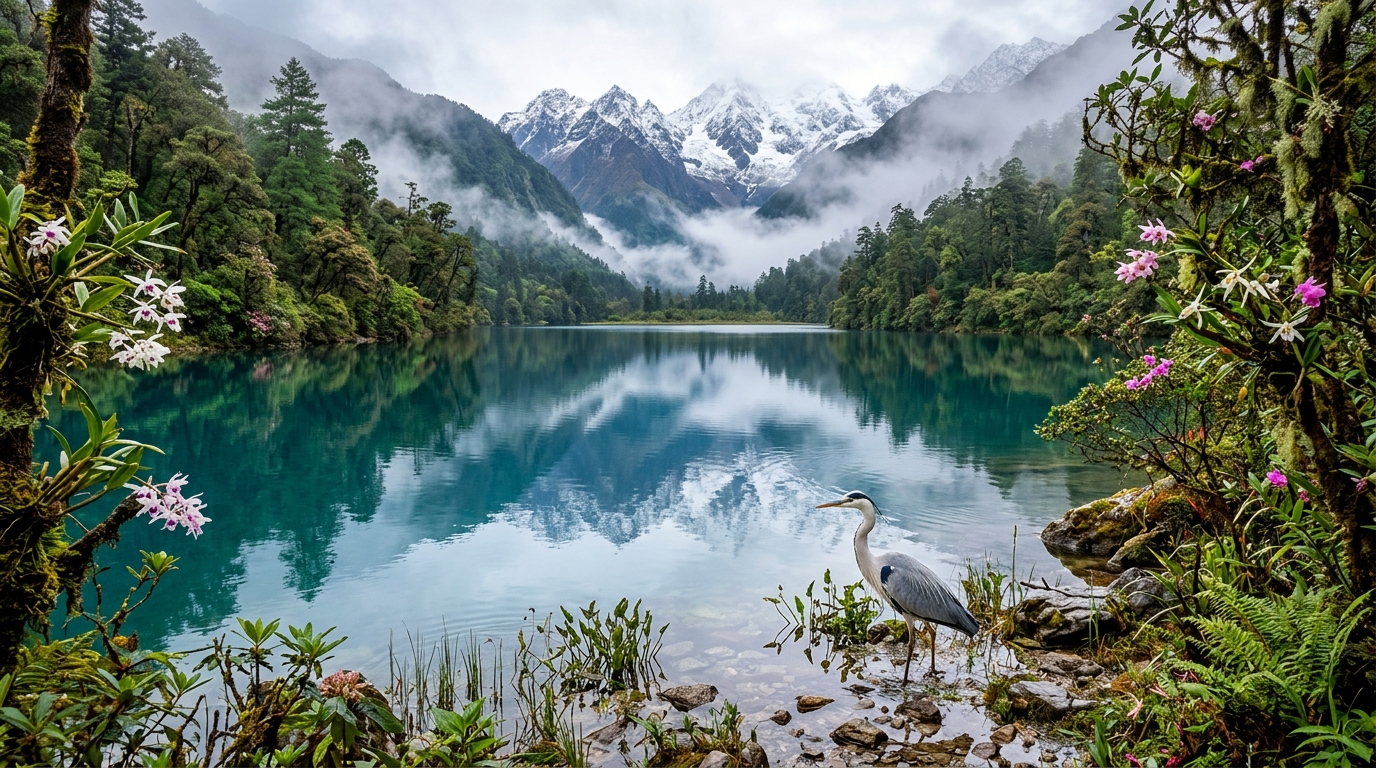
Glaw Lake is a pristine, high-altitude freshwater lake situated in the Eastern Himalayas, one of the world's most important biodiversity hotspots. The lake and its surrounding wetland ecosystem support an exceptional level of biodiversity. According to official reports, the area around the lake hosts over 150 tree species and 49 species of orchids. The lake serves as a critical habitat for several rare and endangered species, including the critically endangered white-bellied heron, one of the rarest herons in the world with an estimated global population of fewer than 200 individuals.
Cultural Significance
Glaw Lake is considered a sacred site by the indigenous Mishmi community, who have played a vital role in the conservation of this landscape for generations. The traditional ecological knowledge and stewardship practices of the Mishmi people have contributed to keeping the lake ecosystem largely undisturbed, which was a key factor in its designation as a wetland of international importance.
Strategic Significance
The designation of Glaw Lake marks the first Ramsar site in the entire state of Arunachal Pradesh, bringing greater national and international attention to the ecological wealth of India's northeastern frontier. It also demonstrates India's commitment to expanding the Ramsar network beyond the traditional geographic concentration of sites in states like Tamil Nadu, Uttar Pradesh, and Punjab.
Key Records and Important Facts for Examinations
Understanding certain key records and frequently tested facts is essential for competitive examination preparation. The following facts are among the most commonly asked in RRB, SSC, and UPSC examinations.
Oldest Ramsar Sites in India
India's first two Ramsar sites were designated in 1981: Chilika Lake in Odisha and Keoladeo National Park in Rajasthan. These designations occurred even before India formally became a contracting party to the Ramsar Convention in February 1982.
Largest Ramsar Site
The Sundarban Wetland in West Bengal, designated in 2019, is the largest Ramsar site in India. The Sundarbans is the world's largest contiguous mangrove forest and is shared between India and Bangladesh. The Indian portion of the Sundarbans covers approximately 4,230 square kilometres and is home to the Royal Bengal Tiger, saltwater crocodile, and numerous mangrove-dependent species.
Smallest Ramsar Sites
Two sites share the distinction of being the smallest Ramsar sites in India: Renuka Wetland in Himachal Pradesh and Vembannur Wetland Complex in Tamil Nadu. Both cover approximately 20 hectares.
State with the Most Ramsar Sites
Tamil Nadu leads the country with 20 Ramsar sites, the highest for any Indian state. The majority of these sites are bird sanctuaries and coastal or freshwater wetlands, reflecting the state's rich avian diversity and extensive coastline.
The Montreux Record
The Montreux Record is a register maintained under the Ramsar Convention that lists Ramsar sites where changes in ecological character have occurred, are occurring, or are likely to occur as a result of technological developments, pollution, or other human interference. As of 2026, two Indian sites are on the Montreux Record:
- Keoladeo National Park, Rajasthan – Listed due to issues related to water availability and grazing pressure.
- Loktak Lake, Manipur – Listed due to the impact of the Ithai Barrage, invasive species, and pollution.
It is important to note that Chilika Lake in Odisha was also on the Montreux Record but was successfully removed in 2002 following significant conservation and restoration efforts that improved its ecological health. This is a frequently tested fact in examinations.
Understanding the Significance of Wetlands
Wetlands are among the most valuable ecosystems on the planet, yet they are also among the most threatened. Understanding their importance helps aspirants answer conceptual questions that appear in higher-level examinations.
Biodiversity Conservation
Wetlands serve as habitats for a vast array of species, including fish, amphibians, reptiles, birds, and mammals. Many migratory bird species that travel along the Central Asian Flyway depend on Indian wetlands as critical stopover, wintering, and breeding sites. Without these wetlands, the survival of numerous migratory species would be at risk.
Water Purification
Wetlands act as natural water filters. As water passes through wetland vegetation and soil, pollutants, sediments, and excess nutrients are trapped and broken down. This natural purification process improves water quality downstream and reduces the cost of artificial water treatment.
Flood Mitigation
Wetlands function as natural sponges, absorbing and storing excess water during heavy rainfall and slowly releasing it during dry periods. This flood buffering capacity is critical in a country like India, where monsoon flooding is a recurring challenge. Wetlands along river floodplains can significantly reduce peak flood levels and protect downstream communities.
Groundwater Recharge
Many wetlands are connected to underground aquifers and play a vital role in recharging groundwater supplies. In arid and semi-arid regions, the contribution of wetlands to groundwater recharge can be the primary source of freshwater for local communities.
Carbon Sequestration
Wetlands, particularly peatlands and mangroves, are among the most effective carbon sinks on Earth. They store carbon in their soil and biomass at rates far exceeding those of most terrestrial forests. The destruction of wetlands releases stored carbon back into the atmosphere, accelerating climate change. Conserving and restoring wetlands is therefore a key climate change mitigation strategy.
Livelihood Support
Millions of people in India depend directly on wetlands for their livelihoods. Fishing communities, farmers who depend on wetland irrigation, and communities involved in wetland-based tourism all benefit from healthy wetland ecosystems. The East Calcutta Wetlands, for example, support one of the world's largest systems of sewage-fed fisheries and agriculture.
India's Wetland Conservation Framework
India's approach to wetland conservation operates through a combination of national legislation, policy initiatives, and international commitments.
Wetlands (Conservation and Management) Rules, 2017
These rules, issued under the Environment Protection Act, 1986, provide the legal framework for wetland conservation in India. Under these rules, each state and union territory is required to establish a State Wetland Authority responsible for identifying, delineating, and managing wetlands within its jurisdiction. The Central Wetland Regulatory Authority was replaced by the National Wetland Committee at the central level.
Amrit Dharohar Initiative
Launched by the Government of India, the Amrit Dharohar initiative aims to promote the conservation and sustainable management of Ramsar sites across the country. The initiative focuses on community participation, eco-tourism, and the restoration of degraded wetland ecosystems. This programme has been a driving force behind the rapid expansion of India's Ramsar network from 2020 onwards.
National Plan for Conservation of Aquatic Ecosystems (NPCA)
The NPCA is a centrally sponsored scheme that provides financial and technical assistance to state governments for the conservation and management of identified wetlands and lakes. The scheme covers activities such as catchment treatment, shoreline protection, pollution control, and biodiversity conservation.
MoEFCC Wetland Cell
The Ministry of Environment, Forest and Climate Change has established a dedicated Wetland Cell to coordinate wetland conservation activities at the national level, facilitate the designation of new Ramsar sites, and monitor the health of existing designated wetlands.
Notable Ramsar Sites and Their Unique Features
Several Ramsar sites in India stand out due to their unique ecological, geological, or cultural characteristics. These sites are frequently highlighted in competitive examinations, and a deeper understanding of their features gives aspirants an edge in answering descriptive and factual questions.
Chilika Lake, Odisha
Chilika Lake is Asia's largest brackish water lagoon and India's oldest Ramsar site. Spread across the Puri, Khurda, and Ganjam districts of Odisha, it covers an area that varies seasonally between 900 and 1,165 square kilometres. Chilika is a vital wintering ground for migratory birds, with over one million birds from as far as the Caspian Sea, Lake Baikal, and Central Asia visiting the lake every winter. The lake is home to the Irrawaddy dolphin, which is found in the outer channel area. Chilika was placed on the Montreux Record in 1993 due to siltation and declining ecological health, but it was removed in 2002 following the opening of a new mouth that restored tidal flushing and improved the lake's salinity and biodiversity. This successful restoration is one of the most cited case studies in wetland conservation globally.
Keoladeo National Park, Rajasthan
Also known as the Keoladeo Ghana Bird Sanctuary, this site in Bharatpur was originally a royal hunting ground. Designated as a Ramsar site in 1981 and a UNESCO World Heritage Site in 1985, Keoladeo is one of the world's most important bird breeding and feeding areas. It hosts over 350 species of birds, including the formerly regular visitor, the Siberian crane. The park was placed on the Montreux Record due to issues of water scarcity caused by the diversion of upstream water for agriculture, and it remains on the record as of 2026.
Loktak Lake, Manipur
Loktak Lake is the largest freshwater lake in northeastern India. It is globally renowned for its floating phumdis — heterogeneous masses of vegetation, soil, and organic matter that float on the water surface. The Keibul Lamjao National Park, located on a large phumdi within Loktak Lake, is the world's only floating national park and is the last natural habitat of the endangered Sangai deer (Rucervus eldii eldii), also known as the Manipur brow-antlered deer. The construction of the Ithai Barrage for hydroelectric power generation has disrupted the lake's natural water regime, contributing to its placement on the Montreux Record.
Lonar Lake, Maharashtra
Lonar Lake is geologically unique among all Ramsar sites worldwide. It is the only hypervelocity meteorite impact crater lake in basaltic rock on Earth. Located in the Buldhana district of Maharashtra, the lake was created approximately 50,000 years ago when a meteorite struck the Deccan Plateau. The lake is both saline and alkaline, and its water supports extremophile microorganisms that are of significant interest to scientists studying analogues for potential extraterrestrial life. The lake was designated as a Ramsar site in 2020.
East Calcutta Wetlands, West Bengal
The East Calcutta Wetlands represent one of the world's most remarkable examples of human-wetland interaction. These wetlands, located on the eastern fringes of Kolkata, are the world's largest ensemble of sewage-fed fisheries and agriculture. For over a century, local communities have used the city's wastewater to cultivate fish, grow vegetables, and produce rice in an integrated resource recovery system. This practice not only provides livelihoods to thousands of families but also naturally treats Kolkata's sewage before it enters the river system, serving as a low-cost, decentralised wastewater treatment facility.
Vembanad-Kol Wetland, Kerala
Vembanad-Kol Wetland is the largest wetland system in Kerala, spanning across the districts of Alappuzha, Kottayam, and Ernakulam. It includes the famous Vembanad Lake, which is the longest lake in India at approximately 96 kilometres. The wetland is the site of the world-renowned Nehru Trophy Boat Race (Vallam Kali) held at Punnamada Lake near Alappuzha. The Kumarakom Bird Sanctuary, located on the banks of Vembanad Lake, is a major destination for birdwatchers during the migratory season.
Threats to Wetlands in India
Despite the growing number of Ramsar designations, Indian wetlands face severe and ongoing threats that compromise their ecological character and long-term viability.
Urbanisation and encroachment remain the most pressing threats. Wetlands located near growing cities, such as Pallikaranai Marsh in Chennai and East Calcutta Wetlands in Kolkata, face continuous pressure from real estate development, construction of roads and infrastructure, and illegal dumping. The steady reduction in wetland area due to encroachment directly reduces their capacity to provide flood buffering, water purification, and biodiversity support.
Pollution from industrial effluents, agricultural runoff, and domestic sewage degrades water quality in many wetlands. Excessive nutrient loading from fertiliser runoff leads to eutrophication — the over-enrichment of water bodies with nitrogen and phosphorus. This causes algal blooms that deplete dissolved oxygen, killing fish and other aquatic organisms. Several major Ramsar sites, including Wular Lake in Jammu and Kashmir and Kolleru Lake in Andhra Pradesh, have been affected by eutrophication at various points.
Hydrological alterations caused by dam construction, river diversion, and groundwater extraction disrupt the natural water flow into wetlands. Loktak Lake in Manipur is a prominent example where the Ithai Barrage has permanently altered water levels, leading to the degradation of phumdis and the loss of natural habitat.
Invasive species pose another significant challenge. Water hyacinth, in particular, has infested many Indian wetlands, forming dense mats that block sunlight, reduce dissolved oxygen, and crowd out native vegetation. Other invasive species, including certain fish and molluscs, can alter the entire food web within a wetland ecosystem.
Climate change is an emerging long-term threat. Changes in rainfall patterns, increased temperatures, and rising sea levels can alter the hydrology, salinity, and species composition of wetlands. Coastal wetlands and mangroves are particularly vulnerable to sea-level rise, while inland wetlands in semi-arid regions face the risk of drying out due to reduced precipitation and increased evaporation.
Addressing these threats requires a multi-pronged approach that includes strict enforcement of the Wetlands (Conservation and Management) Rules, 2017, community-based conservation programmes, integration of wetland management into urban planning, and sustained investment in pollution control infrastructure.
Year-Wise Growth of Ramsar Sites in India
The following table provides a useful overview of how India's Ramsar network has grown over the decades. This data illustrates the acceleration in designations from 2019 onwards.
| Period | Sites Added | Cumulative Total |
|---|---|---|
| 1981 | 2 | 2 |
| 1990 | 4 | 6 |
| 2002 | 13 | 19 |
| 2005 | 6 | 25 |
| 2012 | 1 | 26 |
| 2019 | 11 | 37 |
| 2020 | 5 | 42 |
| 2021 | 8 | 50 |
| 2022 | 18 | 68 |
| 2023 | 3 | 71 |
| 2024 | 8 | 79 |
| 2025 | 13 | 92 |
| 2026 (till Aug) | 9 | 101 |
Important Points for Competitive Examinations
The following points are specifically curated for aspirants who need quick-recall facts for competitive examinations:
- India became a party to the Ramsar Convention on February 1, 1982.
- World Wetlands Day is observed on February 2 every year, commemorating the signing of the Ramsar Convention in 1971.
- India has 101 Ramsar sites as of August 2026.
- Tamil Nadu has the highest number of Ramsar sites (20), followed by Uttar Pradesh (13).
- The Sundarban Wetland in West Bengal is the largest Ramsar site in India.
- Renuka Wetland (Himachal Pradesh) and Vembannur Wetland Complex (Tamil Nadu) are the smallest, at approximately 20 hectares each.
- Chilika Lake and Keoladeo National Park were the first two Ramsar sites, designated in 1981.
- Two Indian Ramsar sites are on the Montreux Record: Keoladeo National Park and Loktak Lake.
- Chilika Lake was removed from the Montreux Record in 2002 after successful restoration.
- Glaw Lake in Arunachal Pradesh is the 101st and newest Ramsar site, designated on August 3, 2026.
- Glaw Lake is located within the Kamlang Tiger Reserve and is Arunachal Pradesh's first Ramsar site.
- Khecheopalri Wetland, designated in 2025, is Sikkim's first Ramsar site.
- The Ramsar Convention was signed in Ramsar, Iran, on February 2, 1971.
- Loktak Lake in Manipur is famous for its floating phumdis (heterogeneous mass of vegetation, soil, and organic matter) and is the largest freshwater lake in northeastern India.
- The Upper Ganga River stretch from Brijghat to Narora in Uttar Pradesh is the only river stretch designated as a Ramsar site in India.
- Lonar Lake in Maharashtra is the only saline soda lake formed by a meteorite impact in basaltic rock, making it geologically unique among Ramsar sites worldwide.
- Pichavaram Mangrove in Tamil Nadu is the second-largest mangrove forest in India, after the Sundarbans.
- Nanda Lake is Goa's first and only Ramsar site, designated in 2022.
Conclusion
India's journey from 2 Ramsar sites in 1981 to 101 in August 2026 is a testament to the country's evolving commitment to wetland conservation and environmental governance. The rapid expansion of the Ramsar network, particularly from 2019 onwards, reflects both greater policy focus and improved processes for identifying and nominating wetlands of international importance. For competitive examination aspirants, the Ramsar sites list is a high-priority topic that appears consistently across RRB, SSC, Banking, and UPSC examinations. The key to performing well on this topic lies in remembering the state-wise distribution, understanding the significance of individual sites, and staying updated with the latest additions. With Glaw Lake marking the 101st milestone, India has firmly established itself as a global leader in wetland conservation. Aspirants are advised to revise the state-wise table, the key records (largest, smallest, oldest, newest), the Montreux Record entries, and the significance of wetlands regularly, as these are the most commonly tested dimensions of this topic.
For more exam preparation content, notes, and mock tests, join our Telegram channel: https://t.me/rrbcontents (@rrbcontents)