Home › Blog › How Vishnu's Gatekeeper Became Shiva's Devotee: Ravana's Story
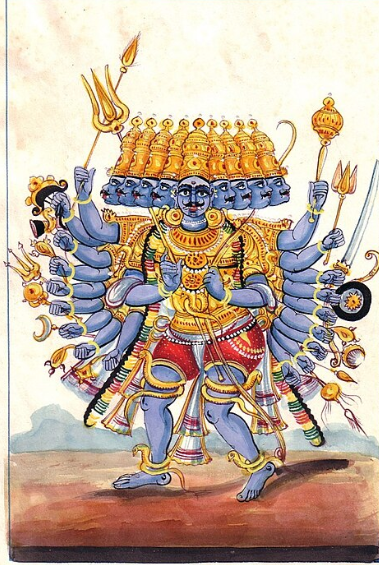
How Vishnu's Gatekeeper Became Shiva's Devotee: The Secret of Ravana's Previous Life
हिंदी में पढ़ें: इस खबर को हिंदी में पढ़ें
In Hindu mythology, the character of Ravana has always possessed a dual nature. On one hand, he was the glorious king of Lanka, a master of the four Vedas, and a mighty warrior. On the other hand, he stood as the ultimate symbol of arrogance and unrighteousness (adharma). Yet, the most frequently debated aspect of his life remains his intense devotion to Lord Shiva. People often ask: if Ravana was a trusted servant of Lord Vishnu in his previous life, how did he become such a passionate devotee of Lord Shiva in this birth?
The clear answer to this question lies within the Srimad Bhagavata Purana. The story is simple yet profound, interweaving devotion, a celestial curse, and divine cosmic play (leela).
Jaya and Vijaya: The Gatekeepers of Vaikuntha
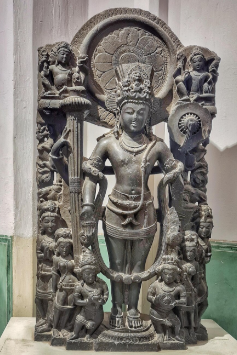
According to the Bhagavata Purana, Ravana and his brother Kumbhakarna were originally Jaya and Vijaya, the two gatekeepers of Lord Vishnu's heavenly abode, Vaikuntha. They were ardent devotees and trusted guardians of Lord Vishnu. One day, the Sanakadi Kumaras—four revered sage brothers who appeared as young children—arrived at Vaikuntha to see Lord Vishnu. Failing to recognize their supreme spiritual stature, Jaya and Vijaya barred their entry at the gates. Taking this as an insult, the sages cursed both gatekeepers to be born as demons (rakshasas) on Earth for three consecutive lifetimes.
The Cosmic Curse of Three Lifetimes and Divine Avatars
Lord Vishnu understood the situation and offered Jaya and Vijaya two choices: either live seven lifetimes on Earth as His faithful devotees, or take three lifetimes as His fierce enemies to return quickly to Vaikuntha. Driven by their desire to reunite with Lord Vishnu as quickly as possible, both chose the shorter path of three lifetimes as His adversaries.
Their three demonic incarnations occurred as follows:
- First Birth (Satya Yuga): As Hiranyaksha and Hiranyakashipu, slain by Lord Vishnu's Varaha (boar) and Narasimha (half-man, half-lion) avatars.
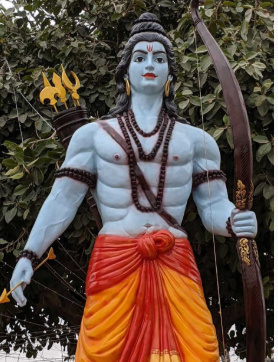
- Second Birth (Treta Yuga): As Ravana and Kumbhakarna, slain by Lord Rama.
- Third Birth (Dvapara Yuga): As Shishupala and Dantavakra, slain by Lord Krishna.
In every single birth, their earthly demise occurred exclusively at the hands of an avatar of Lord Vishnu.
Ravana's Demonic Birth and the Beginning of Shiva Worship
In his second incarnation, Jaya was born as Ravana, the son of the revered sage Vishrava and the demoness Kaikesi. Inheriting a Brahmin lineage from his father and a Rakshasa lineage from his mother, Ravana possessed immense intellectual brilliant alongside demonic ambition. From childhood, he excelled in the Vedas, scriptures, music, and astrology. However, he was also consumed by an intense craving for power, domain, and glory.
To acquire supreme power, Ravana embarked on severe austerities. He first obtained a boon from Lord Brahma ensuring he could not be killed by gods, celestial beings, or demons. Subsequently, he began his rigorous worship of Lord Shiva. According to sacred tradition, he performed penance for years, cutting off his ten heads one by one as sacred offerings to Shiva. When he prepared to sever his tenth head, Lord Shiva appeared, restored his heads, and granted him extraordinary boons.
The Lifting of Mount Kailash and the Shiva Tandava Stotram
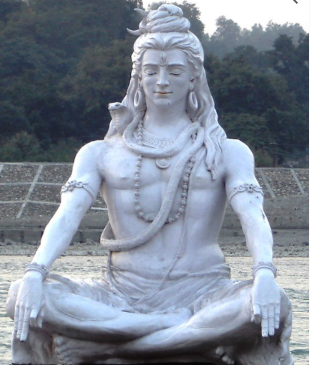
The most celebrated episode of Ravana's devotion centers on Mount Kailash. Overwhelmed by pride in his strength, Ravana resolved to lift Mount Kailash and carry Shiva's sacred abode back to Lanka. As he began lifting the mountain, Lord Shiva gently pressed down on Kailash with his big toe, trapping Ravana's hands under its immense weight.
Writhing in excruciating pain, Ravana immediately began chanting a poetic and powerful hymn praising Lord Shiva right at that moment. That divine hymn is revered today as the famous Shiva Tandava Stotram. Touched by his profound poetic brilliance and devotion, Shiva freed Ravana's hands and bestowed upon him the invincible divine sword, Chandrahas.
Vishnu's Servant vs. Shiva's Devotee: Resolving the Apparent Paradox
Being a servant of Lord Vishnu in a past life and a supreme devotee of Lord Shiva in the present life is not a contradiction. Due to the sage's curse, Ravana acquired a demonic birth governed by Rajasic and Tamasic qualities. Under the influence of these attributes, he sought out Shiva to gain unparalleled physical and magical strength. His devotion was genuine, yet heavily tainted by personal ego.
Shiva's blessings granted him immense power, making him the conqueror of the three worlds. However, that very strength ultimately caused his downfall. Being slain by Lord Rama fulfilled his second curse, paving his path to return to Vaikuntha.
This exemplifies the nature of divine cosmic play (leela). Even while acting as Vishnu's enemy, Ravana was serving Vishnu's grand cosmic plan. Scholars point out that Ravana's devotion to Shiva and his enmity toward Lord Rama were dual aspects of a single divine design.
Differences Between Valmiki Ramayana and the Puranas
In Maharishi Valmiki's original Ramayana, the elaboration of Ravana's Shiva devotion is minimal; he is primarily portrayed as a powerful king who secured boons from Lord Brahma. The detailed narratives of Mount Kailash and the Shiva Tandava Stotram appear more prominently in later Puranas, Shaiva literature, and oral traditions. Goswami Tulsidas's Ramcharitmanas also mentions a slightly different backstory for Ravana's prior birth, but the Jaya-Vijaya story from the Bhagavata Purana remains the most widely recognized.
Both traditions emphasize a single fundamental truth: Ravana reached extraordinary heights of knowledge and spiritual penance, yet ego pushed him toward unrighteousness (adharma). Despite being a great Shiva devotee, he committed the unpardonable act of abducting Sita. This remains the ultimate lesson of his character.
The Modern Significance of Ravana's Story
This narrative is more than an ancient story—it demonstrates that when devotion is clouded by ego, the outcome is inevitably destructive. Ravana received power from Lord Shiva but used it against righteousness. Lord Rama also worshiped Lord Shiva, but did so with humility and adherence to moral boundaries (maryada). Both were devotees of Shiva, yet their fates were opposite.
Today, when scholars reflect on Ravana's devotion to Shiva, they remember his scholarship and musical genius. The Shiva Tandava Stotram continues to be chanted in temples across the globe. However, the tale reminds us that true devotion must be free of vanity.
Ravana's life also teaches that past-life virtues do not automatically safeguard present actions; current deeds and ego shape new karma. Jaya and Vijaya were pure guardians in Vaikuntha, whereas Ravana became an arrogant king in Lanka. The eternal message of the Puranas remains clear: Devotion, knowledge, and strength are futile without Dharma. Ravana possessed all three, yet lacked righteousness—leading to his ultimate end at the hands of Lord Rama.