Home › Blog › Social Movements › Sonam Wangchuk Fast Break
"Do I Need a Character Certificate After 26 Days Without Food?" — Sonam Wangchuk Hits Back at Opposition Criticism Over Ending His Hunger Strike
Track Ministry of Education, State Welfare & Academic Leadership vacancies on RRBCONTENTS Jobs Portal.
Key Takeaways & Summary
- Explosive Rebuttal: Wangchuk released a 22-minute video address asking critics if he needed a "character certificate after 26 days of starvation."
- Three Written Guarantees: Fast broken on binding undertakings: unconditional police FIR immunity for student marchers, financial aid framework for suicide victims' families, and a floor debate in Parliament on exam integrity.
- Hospital ICU Restrictions: Clarified that CJP student leaders were absent from the Medanta ICU ward due to strict medical isolation and police clearances, though consulted continuously by phone.
- Cross-Party Appeal: Fast was ended following formal written appeals signed by 65 Members of Parliament across NDA, Congress, AAP, and regional parties.
Table of Contents
- 1. The Political Storm: Why Opposition Leaders Attacked Sonam Wangchuk
- 2. "Do I Need a Character Certificate?" — Dissecting Wangchuk’s Explosive Rebuttal
- 3. Dissecting the Written Guarantees: What Was Actually Achieved?
- 4. The De-Escalation Imperative: Preventing Nationwide Youth Violence
- 5. The Role of Cross-Party Appeals: Neutralizing the Partisan Divide
- 6. Comprehensive Comparative Matrix: Opposition Claims vs. Wangchuk's Facts
- 7. High-Yield Exam Corner for Competitive Aspirants
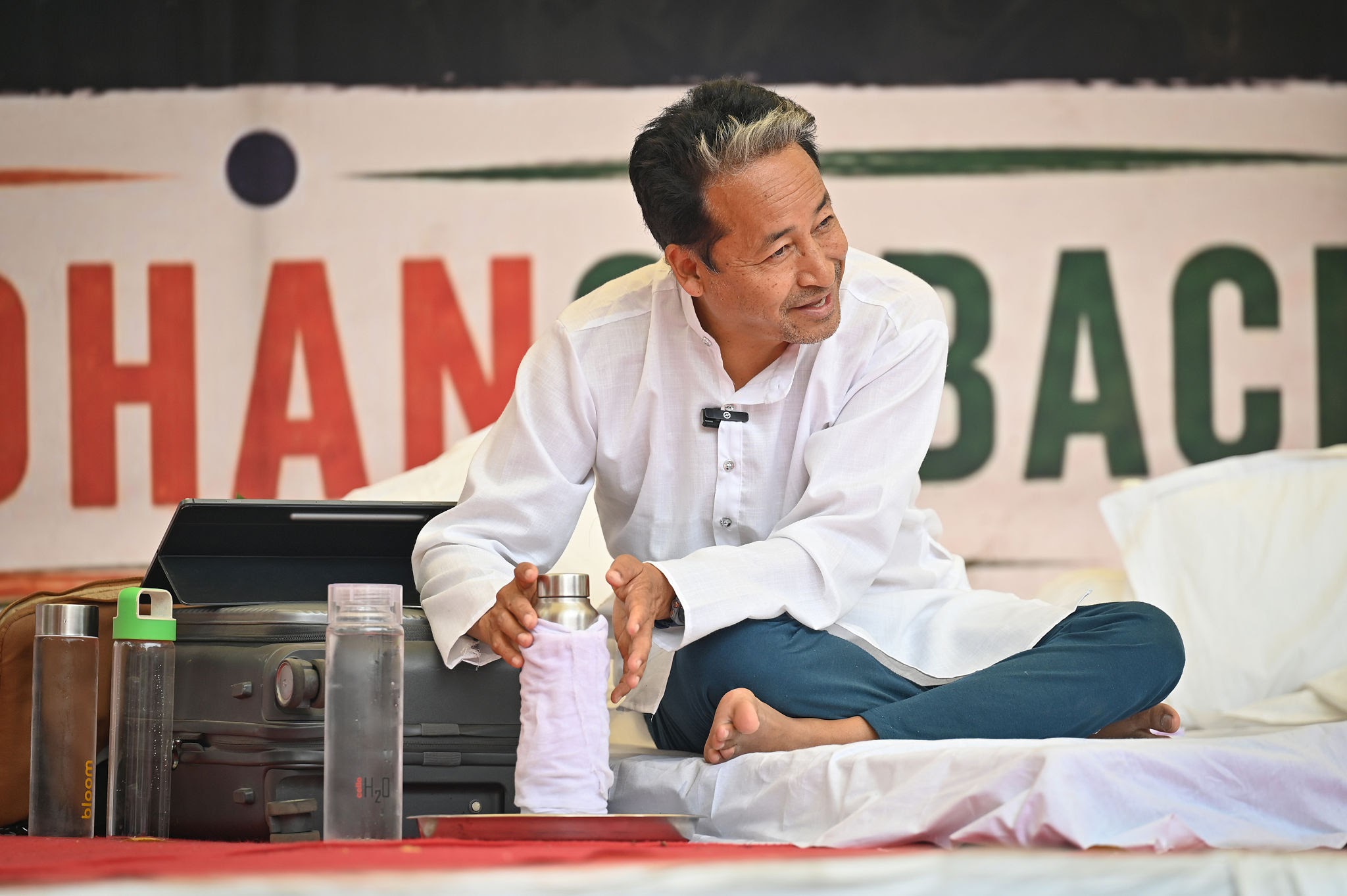
In politics, even the most profound acts of personal sacrifice can become battlegrounds for partisan warfare. For 26 grueling days under the blistering summer sun of New Delhi, 59-year-old educational reformer, innovator, and Ramon Magsaysay Award laureate Sonam Wangchuk survived on nothing but water and salt. His hunger strike—launched at Jantar Mantar in solidarity with millions of young students protesting against paper leaks in national competitive examinations like NEET-UG—became the moral beating heart of a nationwide movement.
Yet, when Wangchuk finally broke his fast shortly after midnight on Friday, July 24, 2026, inside an intensive care room at Medanta Hospital in Gurugram by accepting a bowl of soup from Union Health Minister J.P. Nadda and Minister of State in the Prime Minister’s Office Dr. Jitendra Singh, a sudden wave of political criticism erupted from Opposition benches.
Leaders from the Indian National Congress, the Aam Aadmi Party (AAP), and several allied Opposition student bodies accused Wangchuk of "striking a secret deal" with the ruling establishment. They questioned why no student leaders from the Cockroach Janta Party (CJP) were present in the hospital room during the fast-breaking ceremony, alleging that the event was orchestrated as a high-visibility public relations victory for the central government.
Refusing to allow his moral integrity to be questioned, Wangchuk released an explosive, emotional 22-minute video address alongside a series of detailed social media posts. Asking his critics directly whether he needed a "character certificate after enduring 26 days of starvation," Wangchuk unveiled the inside story of the negotiations, the hard-won written concessions secured from the Union Cabinet, the cross-party appeals from 65 Members of Parliament, and his overriding desire to prevent nationwide street violence between students and security forces.
1. The Political Storm: Why Opposition Leaders Attacked Sonam Wangchuk
THE THREE OPPOSITION CHARGES AGAINST WANGCHUK
- 1. The "Secret Deal" Allegation: Opposition leaders claimed Wangchuk compromised the student movement by meeting ministers without student representatives present.
- 2. The Unfulfilled Resignation Demand: Critics pointed out that Union Education Minister Dharmendra Pradhan remained in office despite the CJP's core demand for his removal.
- 3. The Optics of a "Government PR Victory": Alleged that late-night hospital photos were used by the Centre to defuse the nationwide Friday protest call without systemic change.
A. The "Secret Compromise" Narrative
Within hours of the late-night photographs reaching social media feeds, Opposition spokespersons began questioning the circumstances of the fast-breaking ceremony. Congress leaders and online commentators pointed out that while Wangchuk was surrounded by top ruling party figures and senior bureaucrats, prominent youth leaders from the Cockroach Janta Party (CJP)—such as founder Abhijeet Dipke and spokespersons Ashutosh Ranka and Saurav Das—were notably absent from the hospital room.
This absence allowed political opponents to frame the event as an isolated administrative compromise. Critics argued that by breaking his fast in the presence of senior Cabinet ministers, Wangchuk had handed the government a major public relations victory that effectively defused the momentum of a planned nationwide shutdown and protest march on Friday, July 24.
B. The Unresolved Political Resignation
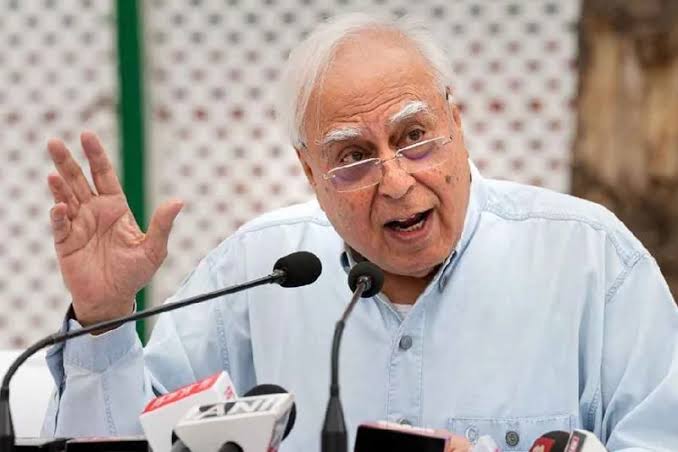
Leader of the Opposition Rahul Gandhi and senior advocate Kapil Sibal highlighted that the central demand driving the CJP movement—the immediate resignation or removal of Union Education Minister Dharmendra Pradhan—had not been granted.
Rahul Gandhi tweeted sharply following Prime Minister Narendra Modi’s midnight video address and Wangchuk’s fast-ending ceremony:
"Mr. Modi, the youth of India are demanding accountability and the resignation of Education Minister Dharmendra Pradhan. Do not hide behind late-night videos or photo-ops in hospital rooms. True justice for students requires removing those responsible for systemic failures."
Opponents argued that by ending his hunger strike while Dharmendra Pradhan remained in office, Wangchuk had accepted "incremental administrative crumbs" instead of holding the political leadership accountable.
2. "Do I Need a Character Certificate?" — Dissecting Wangchuk’s Explosive Rebuttal
Visibly exhausted, having lost over 11 kilograms of body weight and suffering from elevated ketone levels, Sonam Wangchuk recorded a deeply personal, 22-minute video message from his recovery ward at Medanta Hospital.
A. Confronting the Armchair Critics
"AFTER 26 DAYS OF HUNGER, DO I NEED TO PROVE MY SINCERITY? Do I need a character certificate from armchair politicians who have never missed a single meal in their lives? For nearly a month, I lay under the Delhi sun without a grain of food, watching my body break down day by day for the future of this nation's children. To suggest that I sat without food for 26 days just to play a political game or strike a personal deal is not just foolish—it is deeply insulting to the spirit of Satyagraha."
B. Explaining the Hospital Scene: Why Students Were Not Present
Addressing the specific charge regarding the absence of CJP student leaders in his hospital room, Wangchuk revealed the restrictive medical and security protocols governing his stay at Medanta Hospital:
- ICU Medical Restrictions: Following his transfer from Safdarjung Hospital under Delhi High Court directives, doctors placed Wangchuk under strict isolation rules due to severe dehydration, low blood pressure, and high vulnerability to secondary infections.
- Strict Security Clearances: The Special Cell of Delhi Police and hospital security restricted entry to the ICU ward to primary medical staff, immediate family members (his wife Gitanjali Angmo), and designated government negotiators possessing official clearance.
- Continuous Consultation: Wangchuk clarified that while student leaders were not physically present inside the sterile ICU room at 12:15 AM, his team remained in constant phone and messaging contact with CJP representatives outside the facility throughout the negotiation process.
3. Dissecting the Written Guarantees: What Was Actually Achieved?
The central argument in Sonam Wangchuk’s counter-defense was that his hunger strike was not broken on vague verbal promises, but on hard-won, legally binding written commitments signed and delivered by senior representatives of the Union Government.
THE THREE BINDING WRITTEN CONCESSIONS
- 1. Complete Immunity From Police FIRs: Written guarantee from the Ministry of Home Affairs that no criminal FIRs, police cases, or legal actions will target peaceful students who participated in the Janpath / Parliament Street marches.
- 2. Compensation Framework for Deceased Aspirants' Families: Formal agreement to establish a central assistance framework providing financial support and state aid to families of students who died by suicide amid paper-leak stress.
- 3. Mandatory Floor Debate in Parliament on Exam Integrity: Written undertaking by Union Ministers that Parliament will conduct a dedicated, structured debate on NTA overhauls and testing rules.
A. Protection of Student Careers: The FIR Immunity Guarantee
Following the violent clashes along Janpath on July 20, Delhi Police registered multiple broad First Information Reports (FIRs) citing rioting, obstruction of public servants, and damage to public property. For thousands of young civil services and medical aspirants, these open-ended FIRs represented an existential threat to their future careers, as a police record automatically disqualifies a candidate from government employment.
During hospital negotiations, Wangchuk made unconditional legal immunity for student protesters his non-negotiable first priority.
The written commitment delivered by Union Minister J.P. Nadda explicitly stated that peaceful student demonstrators who participated in the Jantar Mantar sit-ins or the march toward Parliament would not face criminal prosecution, police verification blocks, or retroactive FIR targeting.
B. State Recognition and Compensation for Suicide Victims
The repeated cancellation and delays of national entrance examinations caused severe psychological trauma among young aspirants, leading to tragic student suicides in major coaching hubs like Kota, Patna, and Hyderabad. Under the negotiated agreement, the Union Government formally committed to creating a dedicated support framework to extend financial compensation and rehabilitation assistance to the grieving families of deceased students.
C. Institutionalizing Parliamentary Accountability
While political opponents focused solely on individual ministerial resignations, Wangchuk argued that true systemic reform requires institutional accountability.
4. The De-Escalation Imperative: Preventing Nationwide Youth Violence
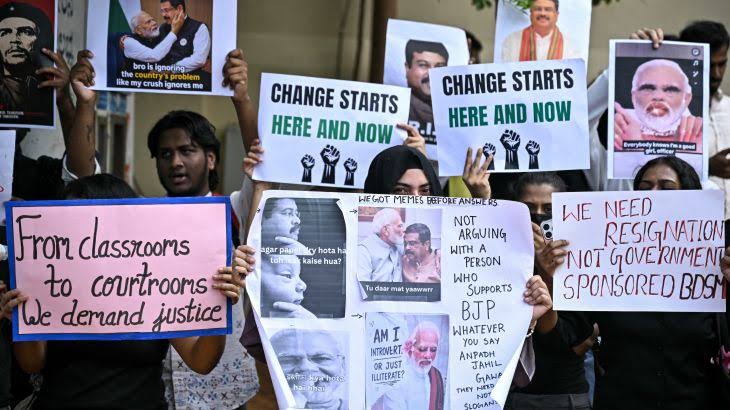
Beyond policy concessions, the most compelling argument presented by Sonam Wangchuk was his ethical duty to prevent widespread street violence and potential loss of life.
Following the clashes on Janpath that left over 180 individuals injured, intelligence reports and social media monitoring indicated that emotions among youth organizations were reaching a dangerous tipping point. Student unions across several states had called for a nationwide shutdown and mass rallies on Friday, July 24.
As a lifelong practitioner of non-violent resistance (Satyagraha), Wangchuk realized that if his deteriorating medical condition triggered mass riots on Friday resulting in student deaths or police firing, the moral high ground of the entire education movement would be destroyed.
| GANDHIAN SATYAGRAHA (WANGCHUK) | DESTRUCTIVE ESCALATION (POLITICAL MOBS) |
|---|---|
| • Goal: Awaken state conscience and secure concrete reforms. • Method: Non-violent personal suffering and moral pressure. • Tactical Flexibility: Accepts binding written guarantees. • Priority: Saving lives and protecting student careers. |
• Goal: Maximize political disruption and force executive collapse. • Method: Street confrontation, barricade breaches, and riots. • Tactical Rigidity: Rejects all concessions until absolute victory. • Priority: Exploiting martyrs for electoral narrative advantage. |
5. The Role of Cross-Party Appeals: Neutralizing the Partisan Divide
THE CROSS-PARTY APPEAL FACTOR
- Total Signatories: 65 Members of Parliament.
- Political Representation: Includes MPs from NDA coalition partners, Congress, AAP, regional parties, and independent lawmakers.
- The Joint Message: Appealed to Wangchuk to preserve his life, noting that his 26-day fast had already succeeded in forcing national policy action on examination security and paper-leak legislation.
Wangchuk pointed out that prominent Opposition lawmakers had personally visited him at Jantar Mantar and Medanta Hospital, urging him to end his strike before his health suffered permanent organ damage.
6. Comprehensive Comparative Matrix: Opposition Claims vs. Wangchuk's Facts
| Dimension / Issue | Opposition Criticism | Sonam Wangchuk's Official Response | Verified Legal & Operational Status |
|---|---|---|---|
| Negotiation Nature | Alleged a "secret deal" struck behind closed doors with central ministers. | Rejects allegation; produced binding written guarantees signed by the Centre. | Written commitments delivered by Union Cabinet ministers on official stationery. |
| Presence of Students | Questioned why CJP student leaders were absent from the Medanta ICU room. | Cited strict ICU infection controls & police security clearances; student leaders consulted via phone. | Medanta ICU restricted entry to family and designated negotiators under High Court supervision. |
| Ministerial Resignation | Criticized ending the fast while Education Minister Dharmendra Pradhan stayed in office. | Argued institutional reforms (laws, fast-track courts, FIR immunity) matter more than individual exits. | Government instituted fast-track courts & replaced Higher Education Secretary Vineet Joshi. |
| Student FIR Immunity | Claimed the government offered no real concessions to student marchers. | Secured written guarantee from Ministry of Home Affairs protecting student marchers from FIRs. | Binding undertaking provided that peaceful protesters will not face criminal charges. |
| Motivation for Ending Fast | Alleged Wangchuk gave in to government public relations pressure. | Cited prevention of nationwide youth violence and written appeals from 65 cross-party MPs. | Joint appeal signed by 65 MPs across NDA, Congress, AAP, and regional parties. |
| Timing of Announcement | Claimed late-night timing (12:15 AM) was designed to defuse Friday's protest call. | Explained that negotiations concluded late following PM Modi's 11:52 PM national video address. | PM Modi released video at 11:52 PM; Ministers arrived at Medanta at 12:15 AM. |
7. High-Yield Exam Corner for Competitive Aspirants (UPSC, State PSCs, SSC & Banking)
GS Paper 2 & GS Paper 4 Revision Notes
- Role of Pressure Groups: Analyzing how non-violent civil society movements utilize Article 19(1)(a) & 19(1)(b) to force administrative accountability.
- Ethics of Fasting (Satyagraha): Evaluating Gandhian principles of Satyagraha vs Duragraha and tactical flexibility to prevent street violence.
- Parliamentary Accountability: Understanding minister undertakings and floor debate rules under Lok Sabha procedures.
Master Ethics & Public Policy Preparation
Explore free study notes, civil society breakdowns, and ethics case studies on RRBCONTENTS.
Solve Ethics PYQs → Check Education Jobs →Join our official Telegram community: @rrbcontents