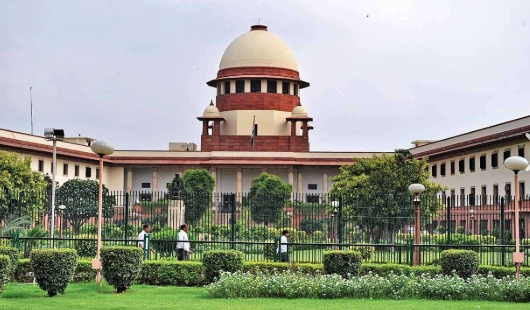
Supreme Court Directs Centre to Frame SOPs Against Digital Arrest Scams
On 4 August 2026, the Supreme Court of India issued a fresh set of nationwide directions aimed at strengthening the institutional response to “digital arrest” scams. A bench comprising Chief Justice of India Surya Kant, Justice Joymalya Bagchi and Justice V. Mohana passed the orders in a suo motu matter concerning victims of digital arrest related to forged documents.
The Court directed the Reserve Bank of India to prepare and circulate a Standard Operating Procedure (SOP) for dealing with mule accounts and accounts linked to cyber-enabled fraud within four weeks. It also asked all States and Union Territories to operationalise grievance redressal and money restoration mechanisms, notify State Cyber Crime Coordination Centres, and adopt the e-Zero FIR system in consultation with the Indian Cyber Crime Coordination Centre (I4C).
The Inter-Departmental Committee set up by the Centre was directed to examine a shared liability and victim compensation framework. The Court noted that while complaints relating to digital arrest scams had declined significantly, continued monitoring and faster implementation of existing mechanisms remained essential.
For competitive exam aspirants preparing for UPSC, SSC, RRB, Bank and State PSC examinations, this development is important under topics of cybercrime, judicial interventions in governance, role of the RBI, and citizen protection against financial fraud.
What Are Digital Arrest Scams?
Digital arrest scams typically involve fraudsters impersonating police officers, CBI officials, court officials or other authorities. Victims are told that a case or warrant has been issued against them and are pressured into transferring money or sharing sensitive information under the threat of immediate arrest. These scams often use forged documents, video calls and spoofed identities.
Mule accounts — bank accounts used to receive and transfer the proceeds of such fraud — play a central role in moving the money quickly out of the victim’s reach.
Key Directions Issued by the Supreme Court
The principal directions issued on 4 August 2026 include:
The RBI shall, within four weeks, prepare and circulate an SOP for dealing with mule accounts and accounts linked to money laundering and cyber-enabled fraud. A copy of the SOP is to be furnished to the Registrar General of every High Court.
The SOP must incorporate a grievance redressal mechanism, a money restoration module and measures for public awareness.
All States and Union Territories must operationalise the Grievance Redressal Module and Money Restoration Module under the Ministry of Home Affairs SOP dated 2 January 2026.
States that have not yet notified State Cyber Crime Coordination Centres must do so within four weeks.
States and UTs must adopt the e-Zero FIR mechanism in consultation with I4C.
The Inter-Departmental Committee is to examine a shared liability and victim compensation framework.
Registrars General of High Courts are to bring the grievance redressal mechanism to the notice of courts dealing with freezing of bank accounts in cyber fraud cases.
The Court emphasised that while the mechanisms already put in place require wider adoption, faster disposal and continued follow-up, the decline in complaints was encouraging.
Progress Recorded by the Court
According to the status report of the Indian Cyber Crime Coordination Centre, complaints relating to digital arrest scams received on the National Cyber Crime Reporting Portal had declined from 1,23,672 in 2024 to 58,249 in 2025, and further to 16,377 till 30 June 2026.
The Money Restoration Mechanism Portal has 57 participating banks covering all 36 States and Union Territories, with restoration completed in 36,290 cases involving an aggregate amount of ₹18.05 crore. A data-sharing MoU between the Reserve Bank Innovation Hub and I4C was executed in May 2026.
Significance of the Directions
The orders seek to address systemic gaps at multiple levels — banking systems (through the RBI SOP on mule accounts), police and cyber investigation (through State Cyber Crime Coordination Centres and e-Zero FIR), victim support (grievance redressal and money restoration), and longer-term policy (shared liability and compensation).
By involving High Court Registrars General, the Court has also sought to ensure that judicial processes dealing with frozen bank accounts are informed about the available administrative mechanisms, so that victims can obtain faster relief.
Relevance for Competitive Exam Aspirants
This judgment is relevant across several examinations.
In the UPSC Civil Services Examination, it can be linked to cyber security, judicial activism, cooperative federalism in law enforcement, the role of regulatory bodies such as the RBI, and the protection of citizens from organised financial crime.
For SSC, RRB and Bank examinations, the key facts — the date of the order, the specific directions to the RBI and States, the decline in complaints, and the amount restored — are useful for current affairs questions. Understanding the concept of mule accounts and e-Zero FIR adds conceptual clarity.
The issue also illustrates the importance of inter-agency coordination among the judiciary, the central government, the RBI, State police and cyber agencies.
Current Status and Way Forward
The Supreme Court has set clear timelines — primarily four weeks — for the RBI and the States to act on the directions. The next status report is expected to provide State-wise and bank-wise details of grievances registered and disposed of, as well as the amounts restored.
Public awareness remains a critical component. The Court has asked authorities to undertake extensive awareness programmes on the prevention of digital arrest scams and the available redressal mechanisms.
The continued decline in reported complaints suggests that earlier measures have had a positive impact. The fresh directions aim to consolidate those gains and close remaining gaps in prevention, investigation and victim compensation.
Frequently Asked Questions
1. What did the Supreme Court direct on 4 August 2026 regarding digital arrest scams?
It directed the RBI to frame an SOP on mule accounts within four weeks and asked States to operationalise grievance redressal, money restoration and State Cyber Crime Coordination Centres.
2. What is a mule account?
A bank account used to receive, transfer or layer the proceeds of cyber fraud or money laundering on behalf of another person.
3. Have complaints of digital arrest scams reduced?
Yes. Complaints fell from 1,23,672 in 2024 to 58,249 in 2025 and further to 16,377 till 30 June 2026.
4. How much money has been restored so far?
Restoration has been completed in 36,290 cases involving ₹18.05 crore.
5. What is the e-Zero FIR mechanism?
It allows the registration of an FIR electronically for cyber crimes, facilitating faster initiation of investigation across jurisdictions.
6. Why is this important for exam aspirants?
It covers cybercrime, judicial directions, role of RBI and inter-agency coordination — key themes in current affairs and governance.