SC Notice to Speaker Om Birla on Shiv Sena UBT Merger
Supreme Court Seeks Response from Lok Sabha Speaker on Challenge to 6 MPs Merging with Shinde Faction
Home › Blog › Indian Polity › Constitutional Law
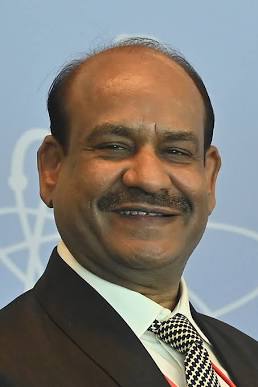
In a landmark constitutional development impacting parliamentary democracy and the interpretation of India’s Anti-Defection Law, a two-judge Bench of the Supreme Court of India issued formal notices to Lok Sabha Speaker Om Birla, the Lok Sabha Secretariat, and six rebel Members of Parliament (MPs). The notice follows a writ petition filed by Shiv Sena (Uddhav Balasaheb Thackeray - UBT) parliamentary party leader Arvind Ganpat Sawant.
The petition challenges a controversial circular issued by the Lok Sabha Secretariat on July 18, 2026, which officially recognized the "merger" of six Shiv Sena (UBT) Lok Sabha MPs with the Eknath Shinde-led Shiv Sena.
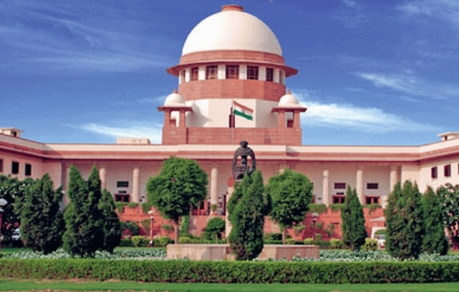
The controversy erupted on the eve of the Monsoon Session of Parliament. On July 18, 2026, the Joint Secretary of the Lok Sabha Secretariat issued an official circular notifying a revised party position in the Lower House. The circular reflected the change in affiliation of six out of nine Lok Sabha MPs elected on the flaming torch symbol of Shiv Sena (UBT) during the 2024 General Elections:
When the matter came up before the Supreme Court Bench on July 22, 2026, intense legal arguments were exchanged between Senior Advocates representing both factions:
| Shiv Sena (UBT) Petitioner Arguments | Shinde Faction Respondent Arguments |
|---|---|
| No merger of parent political party took place; 6 MPs cannot merge unilaterally. | 2/3rd legislature party majority (6 out of 9 MPs = 66.6%) fully satisfied. |
| Bypasses Subhash Desai (2023) ruling separating political party from legislature group. | ECI recognized Shinde faction as the real "Shiv Sena" holding the official symbol. |
| Communicated via administrative circular without a formal quasi-judicial Speaker order. | Speaker exercises constitutional authority; administrative allocation should not be stayed pre-hearing. |
After hearing preliminary submissions, the Bench of Justice P.S. Narasimha and Justice Alok Aradhe delivered its procedural direction:
The legal debate hinges on the interpretation of Paragraph 4 of the Tenth Schedule (inserted by the 52nd Amendment Act, 1985, and modified by the 91st Amendment Act, 2003):
The apex court will determine whether a "legislature party" can independently declare a merger without organizational consent from the "original political party."
| Political Entity | 2024 Election Strength | Revised Strength (Post-July 18 Circular) | Net Change |
|---|---|---|---|
| Shiv Sena (UBT) | 9 Seats | 3 Seats | -6 Seats |
| Shiv Sena (Eknath Shinde) | 7 Seats | 13 Seats | +6 Seats |
| BJP | 240 Seats | 240 Seats | No Change |
| INC | 99 Seats | 99 Seats | No Change |
The hearing will draw heavily on landmark Indian constitutional jurisprudence:
A) Eighth Schedule
B) Ninth Schedule
C) Tenth Schedule
D) Eleventh Schedule
Correct Answer: C
Explanation: The Tenth Schedule was added by the 52nd Constitutional Amendment Act, 1985, to regulate anti-defection.
A) One-third (1/3rd)
B) Half (1/2)
C) Two-thirds (2/3rd)
D) Three-fourths (3/4th)
Correct Answer: C
Explanation: Under Paragraph 4, at least two-thirds (66.6%) of legislature party members must agree to a merger to avoid disqualification.
A) 44th Amendment Act
B) 86th Amendment Act
C) 91st Amendment Act, 2003
D) 103rd Amendment Act
Correct Answer: C
Explanation: The 91st Amendment Act, 2003, repealed Paragraph 3, so a simple 'split' no longer protects against defection.
A) Kesavananda Bharati case
B) Kihoto Hollohan v. Zachillhu
C) Maneka Gandhi case
D) SR Bommai case
Correct Answer: B
Explanation: Kihoto Hollohan (1992) established that Speaker decisions under the Tenth Schedule are subject to judicial review.
A) Nabam Rebia case
B) Subhash Desai v. Principal Secretary, Maharashtra
C) Rameshwar Prasad case
D) Indira Gandhi v. Raj Narain
Correct Answer: B
Explanation: The Constitution Bench in Subhash Desai (2023) held that political party authority supersedes legislature party decisions.
The Supreme Court issued notice on a writ petition filed by Shiv Sena (UBT) challenging a Lok Sabha Secretariat circular that recognized the 'merger' of six Shiv Sena (UBT) Lok Sabha MPs with the Eknath Shinde-led Shiv Sena.
No, a two-judge Bench comprising Justice P.S. Narasimha and Justice Alok Aradhe declined to grant an interim stay, holding that complex constitutional questions require a complete counter-affidavit from the Speaker's office.
The petitioner argues that a valid merger requires a two-step process: the original political party must first merge with another party, and then at least 2/3rd of the legislature party must agree. Six individual MPs cannot declare an independent merger without organizational consent.
Shiv Sena (UBT) was reduced from 9 MPs down to 3 MPs, while the Eknath Shinde-led Shiv Sena expanded from 7 MPs to 13 MPs.
Explore updated study guides, landmark judgment analyses, and PYQ solutions for competitive legal exams.
Solve PYQs → Study Notes →Join our official Telegram community for daily updates: @rrbcontents