Home › Blog › Thailand School Shooting at Debsirin Nonthaburi
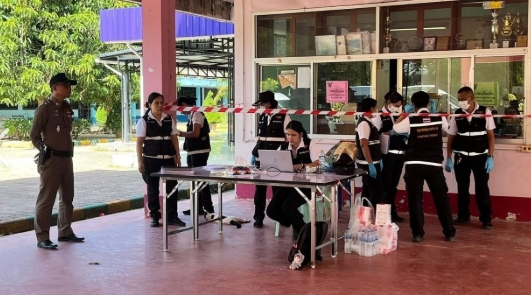
Thailand School Shooting at Debsirin Nonthaburi: Eight Dead Including Perpetrator’s Grandparents – Current Affairs Analysis for Exams
On the morning of 7 August 2026, gunfire at Debsirin Nonthaburi School in Bang Kruai district, Nonthaburi province, on the northwestern outskirts of Bangkok, left multiple people dead and dozens injured. Thai police later confirmed that the perpetrator was a 14-year-old student of the school. Before arriving at the campus he had killed his grandparents at their home. The teenager died at the scene. The incident has been described by authorities and media as Thailand’s deadliest mass shooting since the 2022 Nong Bua Lamphu attack.
The sequence began in the early hours at a residence in Bang Bua Thong district. Police stated that the boy obtained a legally registered 9 mm pistol belonging to his grandfather and used it against the elderly couple. He then travelled roughly 18 kilometres to the school, where classes were under way. Reports indicate he opened fire inside school buildings, targeting teachers and staff. Students and remaining staff barricaded classrooms, switched off lights and sought cover. Emergency services and police responded rapidly; the situation was declared under control by mid-morning.
Updated official tallies placed the death toll at eight, including the perpetrator and his grandparents. At least two dozen people were wounded, some critically. Thai Prime Minister Anutin Charnvirakul visited the area and stated that the teenager had been under stress related to his studies. The Prime Minister also indicated that the government would move to tighten restrictions on the public carrying of firearms. Thailand has one of the highest rates of civilian gun ownership in Southeast Asia, and previous mass-casualty incidents have repeatedly prompted calls for stronger controls.
Investigators recovered the weapon and additional ammunition. Digital examination of the perpetrator’s devices reportedly showed that he had viewed footage of earlier mass shootings in the days preceding the attack. Police continue to examine possible motives, family circumstances and any warning signs that may have been missed. The boy’s father later told media that he had been unaware of any specific plan and that his son’s academic results had been satisfactory.
The choice of a school as the second target has intensified public discussion about student mental health, access to firearms inside households, and the adequacy of school security protocols. Debsirin Nonthaburi is a well-known secondary school with several thousand students. The presence of a legally owned handgun in the home of the perpetrator’s grandparents has focused attention on storage requirements and the ease with which a minor could obtain the weapon.
In the immediate aftermath, Thai authorities coordinated medical care for the wounded, supported families of the deceased, and increased visible security at other educational institutions in the Bangkok metropolitan region. Civil-society organisations and parent groups called for both stricter gun legislation and expanded counselling resources in schools. Opposition voices and some security analysts noted that earlier reform proposals after previous incidents had not produced comprehensive legislative change.
For competitive-exam aspirants the event intersects several recurring themes. Questions on internal security and social issues frequently examine the causes and responses to mass violence, the balance between individual rights and public safety in firearm regulation, and the role of mental-health support systems. Comparative questions may ask candidates to contrast Thailand’s civilian gun-ownership patterns and regulatory framework with those of other countries in Asia or with high-profile cases elsewhere. The rapid official response, the public statements by the Prime Minister, and the renewed legislative discussion also illustrate how a single traumatic incident can reopen policy debates that had remained unresolved.
Regionally, the shooting adds to a short list of high-casualty attacks in Thailand in recent years. The 2022 Nong Bua Lamphu massacre, which claimed 38 lives, remains the deadliest. Each successive incident has produced temporary increases in political attention to gun laws, followed by limited structural reform. Analysts point to the combination of relatively accessible firearms, social stressors, and gaps in early-intervention mental-health services as contributing factors that successive governments have struggled to address comprehensively.
International coverage has highlighted the human cost and the particular horror of a minor both as perpetrator and as a student attacking his own school. Diplomatic and consular channels have monitored the situation for any impact on foreign nationals, though the victims appear to have been Thai. The episode has also been referenced in broader discussions about youth violence and the circulation of graphic material online.
As investigations continue, Thai police are expected to release further details on the timeline, the precise number and identities of the victims, and any prior contact the family or school may have had with social or psychological services. The legislative proposals announced by the Prime Minister will be watched for concrete drafting and parliamentary progress. For the families of those killed and injured, the immediate priorities remain medical care, counselling and the practical aftermath of sudden loss.
In the classroom and examination hall the Nonthaburi shooting of 7 August 2026 serves as a contemporary case study of how societies respond to sudden, high-impact violence involving minors and educational institutions. Aspirants should be able to summarise the basic facts accurately, place the event in the context of Thailand’s recent history of mass shootings, outline the policy questions it has reopened, and discuss the challenges of balancing security, mental health and firearm regulation. Precise knowledge of the location, the approximate casualty figures, the age of the perpetrator, and the official statements issued in the first 24 hours will equip candidates to handle both short factual questions and longer analytical ones.
Frequently Asked Questions
What happened at Debsirin Nonthaburi School on 7 August 2026?
A 14-year-old student killed his grandparents at home, then opened fire at the school, resulting in a total of eight deaths including the perpetrator. Multiple people were injured.
How have Thai authorities responded?
Police secured the scene, the Prime Minister visited and announced plans to tighten rules on public carrying of firearms, and support has been provided to victims’ families and the injured.
Why is this incident significant in Thai context?
It is the deadliest mass shooting in Thailand since the 2022 Nong Bua Lamphu attack and has renewed debate on firearm regulation and student mental-health support.
What exam relevance does the event have?
It relates to internal security, social issues, comparative gun-control policies, mental-health systems and governmental crisis response – topics that appear in current-affairs and GS papers for UPSC, SSC and similar examinations.
Prepare for Current Affairs & Internal Security
Comprehensive coverage of international developments, social issues, and security policy.
Daily Current Affairs → All Exams →Join our official Telegram channel for instant updates: @rrbcontents