Home › Blog › Todd Blanche Confirmed as US Attorney General

Todd Blanche Confirmed as US Attorney General in 50-49 Senate Vote Amid Republican Defections – Key Analysis for Exams
In the early hours of 8 August 2026 the United States Senate confirmed Todd Blanche as Attorney General by a vote of 50 to 49. The margin was the narrowest possible under ordinary circumstances. Two Republican senators, Susan Collins of Maine and Lisa Murkowski of Alaska, voted against the nomination. The outcome capped a contentious confirmation process that tested party discipline and revived long-standing debates about the independence of the Department of Justice.
Blanche, a former federal prosecutor who later served as personal counsel to Donald Trump in several high-profile criminal matters, had been nominated to lead the Justice Department after earlier service in the administration. Supporters emphasised his prosecutorial experience and familiarity with the department’s operations. Critics, including the dissenting Republicans and virtually all Democrats, raised concerns about the appearance of loyalty to the President over institutional independence. The Judiciary Committee had advanced the nomination on a party-line vote days earlier.
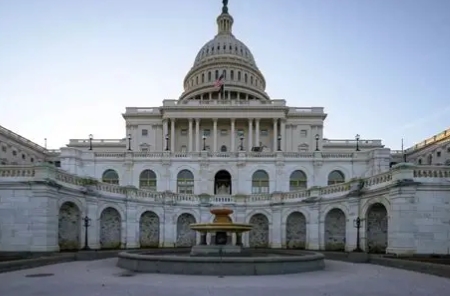
The confirmation vote itself required an all-night session. Procedural manoeuvres and the need to keep the Senate in session on other business prolonged the process into Saturday morning. When the final tally was announced, Blanche became the second confirmed Attorney General of the current Trump term. The razor-thin result immediately became a political marker: a demonstration both of the administration’s ability to secure its preferred nominee and of the limits of that ability when moderate Republicans withhold support.
The office of Attorney General occupies a unique position in the American constitutional system. The incumbent heads the Department of Justice, supervises federal law enforcement, advises the President on legal questions, and represents the United States in major litigation. At the same time the Attorney General is expected to exercise independent judgment in criminal charging decisions and in the enforcement of civil rights and other statutes. That dual role has produced recurring tension whenever a nominee is closely identified with the President’s personal or political interests. Blanche’s prior representation of Trump in criminal proceedings made the tension unusually visible.
Senate Republicans who supported the nomination argued that the President is entitled to an Attorney General who shares his policy priorities and that Blanche’s experience qualified him for the post. Those who opposed him within the party cited the need to preserve public confidence in the impartial administration of justice. The two Republican “no” votes were consistent with earlier patterns in which Collins and Murkowski have broken with the majority of their caucus on issues involving institutional norms or high-stakes nominations.
For competitive-exam aspirants the episode supplies a concrete case study in several areas of the American polity syllabus. First, it illustrates the Senate’s advice-and-consent function under Article II of the Constitution and the practical politics of confirmation votes when the majority is slim. Second, it highlights the structural tension between presidential control of the executive branch and the expectation of prosecutorial independence. Third, it demonstrates how individual senators can influence outcomes even within a polarised chamber. Fourth, it invites comparison with systems in which the head of public prosecutions is more fully insulated from the elected executive.
The narrow margin also carries implications for the early months of Blanche’s tenure. An Attorney General confirmed by a single vote enters office with a clear signal of residual scepticism from parts of the President’s own party. That reality may affect both internal department dynamics and external perceptions of the department’s decision-making. Major charging decisions, civil-rights enforcement priorities, and responses to high-profile investigations will be scrutinised through the lens of the confirmation fight.
Historically, several Attorneys General have faced similar questions about independence. The office has evolved through statute, custom and occasional crisis. The current confirmation adds another data point to that evolution. Whether Blanche’s leadership ultimately reinforces or erodes public trust will depend on the concrete decisions taken in the months ahead rather than on the vote margin itself. Yet the margin remains a useful indicator of the political environment in which those decisions will be made.
The Senate’s action on 8 August 2026 therefore closes one chapter—the formal confirmation—and opens another: the practical test of how an Attorney General with unusually close prior ties to the President will navigate the institutional expectations of the office. Accurate knowledge of the vote tally, the identity of the dissenting Republicans, Blanche’s professional background, and the constitutional role of the Attorney General will equip aspirants to handle both short-answer and analytical questions on this development.
Frequently Asked Questions
What was the final Senate vote confirming Todd Blanche as Attorney General?
The Senate confirmed Todd Blanche by a vote of 50 to 49 on 8 August 2026.
Which Republican senators voted against the nomination?
Senators Susan Collins of Maine and Lisa Murkowski of Alaska were among the Republicans who voted no.
What is Todd Blanche’s professional background relevant to the nomination?
Blanche is a former federal prosecutor who later served as personal counsel to President Trump in several criminal matters before joining the administration.
Why is this confirmation relevant for competitive exam aspirants?
It illustrates the Senate’s advice-and-consent power, the tension between presidential control and DOJ independence, party discipline in narrow majorities, and comparative questions about the insulation of public prosecutors—core topics in polity and constitutional law.
Master Comparative Polity & Governance
In-depth coverage of constitutional appointments, advice and consent powers, and executive branch oversight.
Daily Current Affairs → All Exams →Join our official Telegram channel for instant updates: @rrbcontents