Introduction
India's rich historical, cultural, and natural heritage is recognized globally through its inclusion in the UNESCO World Heritage list. Managed by the United Nations Educational, Scientific and Cultural Organization (UNESCO), World Heritage Site status is awarded to places of outstanding universal value to humanity. As of 2026, India is home to 45 officially designated UNESCO World Heritage Sites, placing it among the top countries globally in terms of heritage density. These sites encompass ancient cave temples, magnificent medieval forts, exquisite stone carvings, pristine national parks, high-altitude mountain ecosystems, and unique cultural landscapes.
For competitive examination aspirants preparing for RRB, SSC, Banking, and UPSC Prelims, UNESCO World Heritage Sites form a crucial topic within Indian Art and Culture, Geography, and Environment sections. Questions regularly test candidates on the location, year of inscription, architectural style, ruling dynasties, ecological features, and recent additions to the list. This article provides a comprehensive, state-wise, and category-wise analysis of all UNESCO World Heritage Sites in India updated for 2026, complete with key historical, architectural, and environmental facts.
Understanding UNESCO World Heritage Sites and Selection Criteria
The UNESCO World Heritage convention was adopted in 1972 to identify, protect, and preserve cultural and natural heritage around the world considered to be of outstanding value to humanity. India ratified the convention in 1977, allowing its cultural and natural landmarks to be nominated for World Heritage status.
Categories of World Heritage Sites
UNESCO classifies sites into three main categories:
- Cultural Heritage Sites: Monuments, groups of buildings, archaeological sites, and historic urban landscapes that possess outstanding historical, artistic, architectural, or anthropological value.
- Natural Heritage Sites: Outstanding physical, biological, or geological formations, threatened habitats, or areas of exceptional natural beauty and ecological significance.
- Mixed Heritage Sites: Places that satisfy the criteria for both cultural and natural heritage, demonstrating a unique interaction between human culture and the natural environment.
Selection Criteria
To be included on the World Heritage List, sites must meet at least one of ten selection criteria. Criteria (i) through (vi) apply to cultural sites, while criteria (vii) through (x) apply to natural sites. A site of outstanding universal value may satisfy multiple criteria simultaneously.
- Criterion (i): Represents a masterpiece of human creative genius.
- Criterion (ii): Exhibits an important interchange of human values over a span of time or within a cultural area.
- Criterion (iii): Bears a unique or exceptional testimony to a cultural tradition or civilization.
- Criterion (iv): Is an outstanding example of a type of building, architectural ensemble, or landscape.
- Criterion (v): Is an outstanding example of traditional human settlement or land-use.
- Criterion (vi): Is directly or tangibly associated with events, living traditions, ideas, or beliefs of outstanding universal significance.
- Criterion (vii): Contains superlative natural phenomena or areas of exceptional natural beauty.
- Criterion (viii): Is an outstanding example representing major stages of Earth's history.
- Criterion (ix): Represents outstanding ecological and biological processes in evolution.
- Criterion (x): Contains the most important and significant natural habitats for in-situ conservation of biological diversity.
Category-Wise Summary of UNESCO Sites in India (2026)
| Category | Number of Sites | Examples |
|---|---|---|
| Cultural Sites | 35 | Taj Mahal, Red Fort, Ajanta Caves, Chola Temples, Moidams |
| Natural Sites | 7 | Kaziranga, Manas, Sundarbans, Nanda Devi, Western Ghats |
| Mixed Sites | 1 | Khangchendzonga National Park |
| Total Sites | 45 | Distributed across 20+ States and Union Territories |
Complete Detailed Table of All UNESCO World Heritage Sites in India
The following master table lists all UNESCO World Heritage Sites in India, organised chronologically by year of inscription, along with their location, category, and key distinguishing features.
| S.No | Site Name | State/UT | Year | Category | Key Distinguishing Feature / Significance |
|---|---|---|---|---|---|
| 1 | Ajanta Caves | Maharashtra | 1983 | Cultural | 30 rock-cut Buddhist cave monuments featuring famous Jataka paintings and sculptures (2nd century BCE to 5th century CE). |
| 2 | Ellora Caves | Maharashtra | 1983 | Cultural | 34 rock-cut caves representing Buddhism, Hinduism, and Jainism. Houses Kailash Temple (Cave 16), the world's largest monolithic rock structure. |
| 3 | Agra Fort | Uttar Pradesh | 1983 | Cultural | 16th-century Mughal red sandstone fortress built by Emperor Akbar; main seat of Mughal government until 1638. |
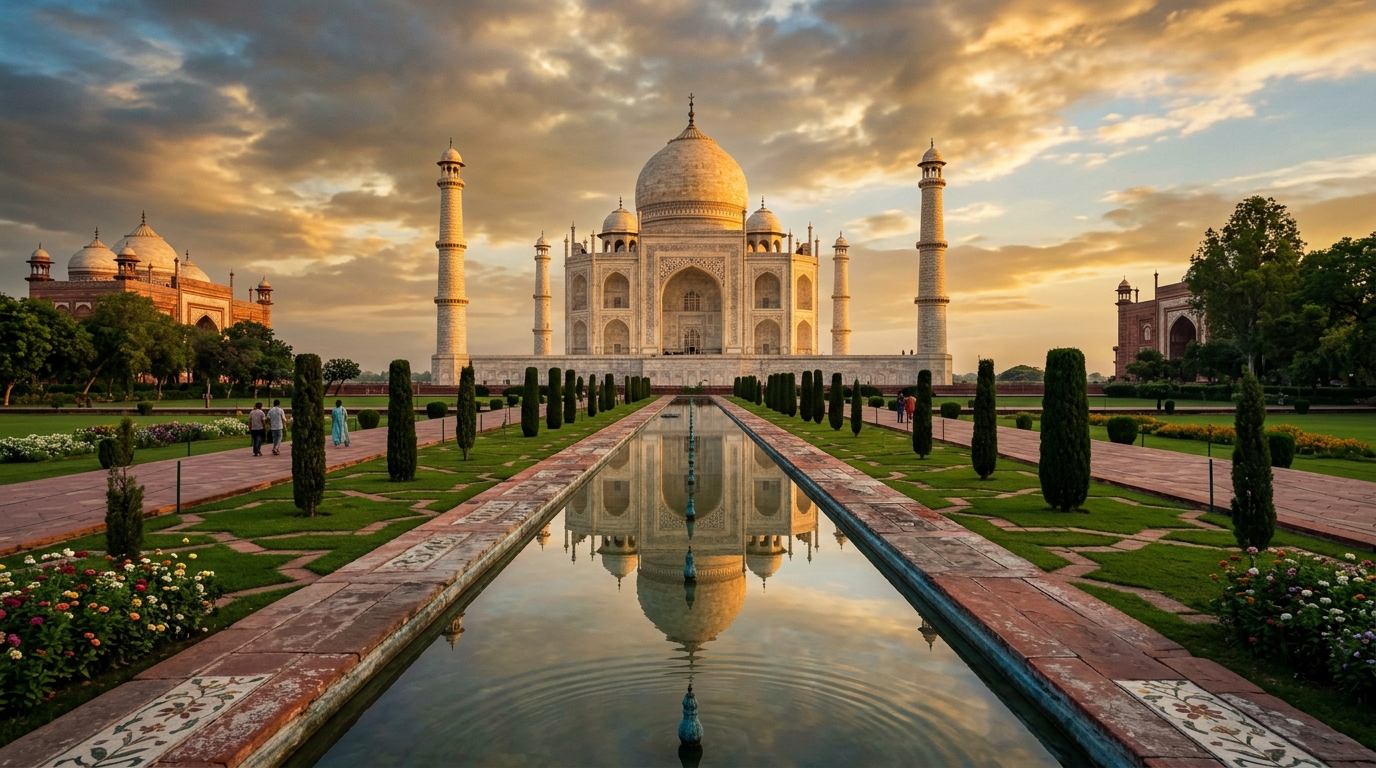
| 4 | Taj Mahal | Uttar Pradesh | 1983 | Cultural | White marble mausoleum built by Shah Jahan for Mumtaz Mahal; pinnacle of Mughal architecture and UNESCO icon. |
| 5 | Sun Temple, Konark | Odisha | 1984 | Cultural | 13th-century stone temple built by King Narasimhadeva I of Eastern Ganga dynasty, shaped as a giant stone chariot of Surya with 24 carved wheels. |
| 6 | Group of Monuments at Mahabalipuram | Tamil Nadu | 1984 | Cultural | 7th-8th century Pallava dynasty rock-cut relief sculptures, Shore Temple, Pancha Rathas, and Arjuna's Penance. |
| 7 | Kaziranga National Park | Assam | 1985 | Natural | Floodplains of Brahmaputra River; shelters two-thirds of the world's Great Indian One-horned Rhinoceros population. |
| 8 | Manas Wildlife Sanctuary | Assam | 1985 | Natural | Biodiversity hotspot along Eastern Himalayan foothills; home to Assam roofed turtle, hispid hare, golden langur, and wild water buffalo. |
| 9 | Keoladeo National Park (Bharatpur) | Rajasthan | 1985 | Natural | Man-made wetland avian sanctuary; major wintering site for thousands of migratory birds, including aquatic species. |
| 10 | Churches and Convents of Goa | Goa | 1986 | Cultural | 16th-18th century Portuguese colonial religious architecture, including Basilica of Bom Jesus containing the mortal remains of St. Francis Xavier. |
| 11 | Khajuraho Group of Monuments | Madhya Pradesh | 1986 | Cultural | 9th-11th century Chandela dynasty temples known for Nagara-style architectural grandeur and expressive sensual sculptures. |
| 12 | Group of Monuments at Hampi | Karnataka | 1986 | Cultural | Capital of the Vijayanagara Empire (14th-16th century); vast ruins along Tungabhadra River including Virupaksha Temple and Stone Chariot. |
| 13 | Fatehpur Sikri | Uttar Pradesh | 1986 | Cultural | Short-lived capital of Mughal Empire built by Akbar in red sandstone; includes Buland Darwaza, Panch Mahal, and Salim Chishti Dargah. |
| 14 | Group of Monuments at Pattadakal | Karnataka | 1987 | Cultural | 7th-8th century Chalukya dynasty temple complex showcasing harmonious blend of North Indian (Nagara) and South Indian (Dravida) styles. |
| 15 | Elephanta Caves | Maharashtra | 1987 | Cultural | Island cave network in Mumbai harbor dedicated to Lord Shiva; features the famous 20-foot monolithic Trimurti (Maheshmurti) sculpture. |
| 16 | Great Living Chola Temples | Tamil Nadu | 1987 (Ext. 2004) | Cultural | Masterpieces of Dravidian architecture built by Chola Kings: Brihadisvara Temple (Thanjavur), Gangaikonda Cholapuram, and Airavatesvara Temple (Darasuram). |
| 17 | Sundarbans National Park | West Bengal | 1987 | Natural | World's largest estuarine mangrove forest; unique ecosystem sheltering the Royal Bengal Tiger adapted to swimming in saltwater. |
| 18 | Nanda Devi and Valley of Flowers National Parks | Uttarakhand | 1988 (Ext. 2005) | Natural | High-altitude Western Himalayan sanctuaries known for endemic alpine flora, rare fauna (snow leopard, blue sheep), and scenic peaks. |
| 19 | Buddhist Monuments at Sanchi | Madhya Pradesh | 1989 | Cultural | Oldest surviving stone structures in India; Great Stupa commissioned by Emperor Ashoka in 3rd century BCE with elaborate carved Toranas. |
| 20 | Humayun's Tomb, Delhi | Delhi | 1993 | Cultural | Built in 1570 by Bega Begum; first garden-tomb on the Indian subcontinent that inspired the architectural design of the Taj Mahal. |
| 21 | Qutb Minar and its Monuments, Delhi | Delhi | 1993 | Cultural | 73-metre red sandstone minaret started by Qutb-ud-din Aibak in 1192; complex includes Alai Darwaza, Quwwat-ul-Islam Mosque, and 4th-century Iron Pillar. |
| 22 | Mountain Railways of India | WB / TN / HP | 1999 (Ext. 2005, 2008) | Cultural | Three narrow-gauge mountain lines: Darjeeling Himalayan Railway (1881), Nilgiri Mountain Railway (1908), and Kalka-Shimla Railway (1903). |
| 23 | Mahabodhi Temple Complex at Bodh Gaya | Bihar | 2002 | Cultural | One of the four holy sites related to Lord Buddha's life; marks the exact location under the Bodhi Tree where Prince Siddhartha attained Enlightenment. |
| 24 | Rock Shelters of Bhimbetka | Madhya Pradesh | 2003 | Cultural | Over 750 rock shelters spanning Paleolithic to Mesolithic ages; features rock paintings illustrating early human life, hunting, and tribal rituals. |
| 25 | Chhatrapati Shivaji Maharaj Terminus (formerly Victoria Terminus) | Maharashtra | 2004 | Cultural | Designed by F.W. Stevens; outstanding example of Victorian Gothic Revival architecture blended with traditional Indian themes in Mumbai. |
| 26 | Champaner-Pavagadh Archaeological Park | Gujarat | 2004 | Cultural | Pre-Mughal Islamic city and Hindu fortress complex; includes prehistoric sites, Solanki-style fortifications, and Jama Masjid. |
| 27 | Red Fort Complex | Delhi | 2007 | Cultural | Octagonal red sandstone fort complex built by Shah Jahan in 1648; seat of Mughal power symbolizing Indian sovereignty and independence celebrations. |
| 28 | The Jantar Mantar, Jaipur | Rajasthan | 2010 | Cultural | Astronomical observatory built by Maharaja Sawai Jai Singh II in 1734; features world's largest stone sundial (Vrihat Samrat Yantra). |
| 29 | Western Ghats | MH / GA / KA / KL / TN | 2012 | Natural | Geomorphic feature older than the Himalayas; one of the world's eight "hottest hotspots" of biological diversity, spanning 39 protected areas across 5 states. |
| 30 | Hill Forts of Rajasthan | Rajasthan | 2013 | Cultural | Six majestic fortresses: Chittorgarh, Kumbhalgarh, Ranthambore, Gagron, Amber (Jaipur), and Jaisalmer; exemplary Rajput military architecture. |
| 31 | Rani-ki-Vav (The Queen's Stepwell) | Gujarat | 2014 | Cultural | 11th-century subterranean stepwell on the banks of Saraswati River built by Queen Udayamati in memory of King Bhimdev I; Maru-Gurjara style with 500+ major sculptures. |
| 32 | Great Himalayan National Park Conservation Area | Himachal Pradesh | 2014 | Natural | Located in Kullu region; high-altitude alpine ecosystem providing habitat to threatened species including snow leopard, Himalayan musk deer, and tragopan. |
| 33 | Archaeological Site of Nalanda Mahavihara | Bihar | 2016 | Cultural | Ancient monastic residential university active from 5th to 12th century CE; prominent center of Buddhist learning under Gupta and Pala dynasties. |
| 34 | Khangchendzonga National Park | Sikkim | 2016 | Mixed | India's only Mixed site; surrounds Mount Khangchendzonga (3rd highest peak globally); holds deep sacred cultural significance for Lepcha and Tibetan communities. |
| 35 | The Architectural Work of Le Corbusier | Chandigarh | 2016 | Cultural | Complex of Capitol Buildings in Chandigarh designed by Swiss-French architect Le Corbusier; masterpiece of modern architectural movement. |
| 36 | Historic City of Ahmadabad | Gujarat | 2017 | Cultural | Walled city founded by Sultan Ahmad Shah in 1411; famous for timber-framed traditional urban housing (Pols), stepwells, and Indo-Islamic mosques. |
| 37 | Victorian Gothic and Art Deco Ensembles of Mumbai | Maharashtra | 2018 | Cultural | Urban ensemble around Oval Maidan in South Mumbai showcasing 19th-century Victorian Neo-Gothic buildings alongside 20th-century Art Deco seafront structures. |
| 38 | Jaipur City, Rajasthan | Rajasthan | 2019 | Cultural | Grid-plan historic city founded by Sawai Jai Singh II in 1727; famous for pink-painted facades, traditional bazaars, craft traditions, and Urban Planning. |
| 39 | Kakatiya Rudreshwara (Ramappa) Temple | Telangana | 2021 | Cultural | 13th-century Kakatiya dynasty sandstone temple at Palampet; famous for floating bricks lightweight structure, carved granite pillars, and sandbox foundation technique. |
| 40 | Dholavira: a Harappan City | Gujarat | 2021 | Cultural | Major Harappan urban settlement in Rann of Kutch; renowned for sophisticated water management system, stone masonry, stadium, and bilingual signboards. |
| 41 | Santiniketan | West Bengal | 2023 | Cultural | Residential school and center of arts founded by Maharshi Debendranath Tagore and expanded by Nobel laureate Rabindranath Tagore into Visva-Bharati University. |
| 42 | Sacred Ensembles of the Hoysalas | Karnataka | 2023 | Cultural | 12th-13th century star-shaped soapstone temples at Belur (Chennakeshava), Halebidu (Hoysaleswara), and Somnathpura (Keshava) showcasing intricate carvings. |
| 43 | Moidams – the Mound-Burial System of the Ahom Dynasty | Assam | 2024 | Cultural | Royal burial mounds (tumuli) of the Ahom Kings at Charaideo; earthen pyramids holding vaults of Ahom royalty spanning 600 years of reign. |
| 44 | Maratha Military Landscapes of India | Maharashtra, Tamil Nadu | 2025 | Cultural | Serial nomination of 12 fortifications (including Raigad, Rajgad, and Gingee forts) showcasing the Maratha Empire's distinctive military and fortification strategy. |
| 45 | Sarnath | Uttar Pradesh | 2026 | Cultural | Sacred Buddhist site near Varanasi where Gautama Buddha delivered his first sermon after attaining enlightenment, marking the origin of the spread of Buddhism. |
Deep Dive into India's 7 Natural UNESCO World Heritage Sites
Natural sites are frequently tested in competitive examinations because of their environmental and geographical relevance. India boasts 7 natural UNESCO sites covering diverse ecosystems.
1. Kaziranga National Park (Assam, 1985)
Situated in the floodplains of the Brahmaputra River, Kaziranga is home to the world's largest population of the Great Indian One-horned Rhinoceros (Rhinoceros unicornis). It also harbors high densities of tigers, Asian elephants, wild water buffaloes, and swamp deer (barasingha). The park's landscape consists of dense tall elephant grass, marshlands, and tropical moist broadleaf forests.
2. Manas Wildlife Sanctuary (Assam, 1985)
Located along the foothills of the Bhutan Himalayas, Manas is contiguous with the Royal Manas National Park in Bhutan. It is a biosphere reserve, Project Tiger reserve, and elephant reserve. Manas is famous for endemic and endangered species such as the Assam roofed turtle, hispid hare, golden langur, and pygmy hog.
3. Keoladeo National Park (Rajasthan, 1985)
Formerly known as Bharatpur Bird Sanctuary, Keoladeo is a man-made and man-managed wetland. It serves as a major wintering ground for palaearctic migratory waterfowl, hosting over 370 species of birds. Historically, it was the only known wintering site in India for the critically endangered Siberian Crane.
4. Sundarbans National Park (West Bengal, 1987)
Forming part of the world's largest delta at the mouth of the Ganges, Brahmaputra, and Meghna rivers, the Sundarbans contains the largest contiguous mangrove forest in the world. It is renowned for its population of Royal Bengal Tigers, which have adapted to a unique amphibious lifestyle in saltwater tidal mangrove habitats.
5. Nanda Devi and Valley of Flowers National Parks (Uttarakhand, 1988/2005)
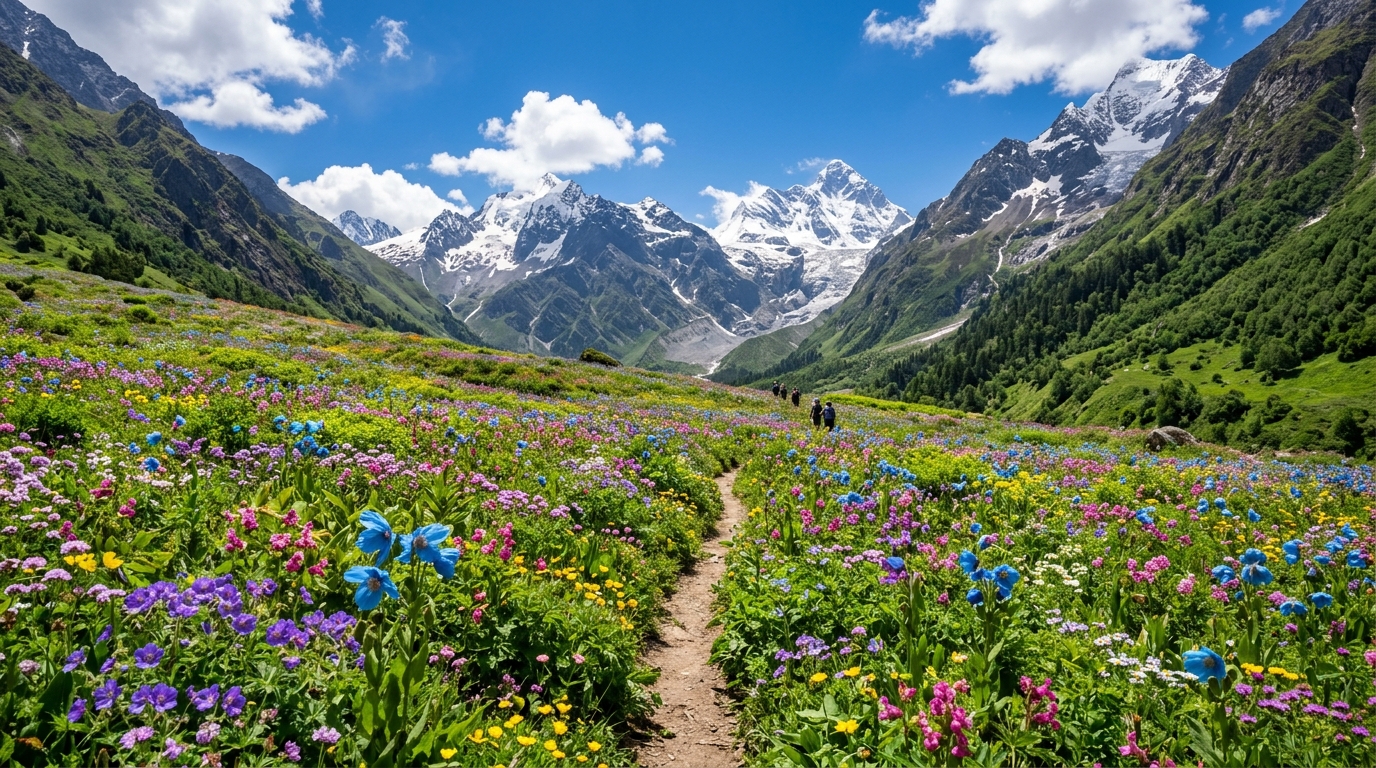
This property comprises two distinct high-altitude zones in the Garhwal Himalayas. Nanda Devi National Park surrounds India's second-highest peak (Nanda Devi, 7,817 m), providing an undisturbed wilderness habitat. The adjacent Valley of Flowers is famed for its carpet of endemic alpine flowers and spectacular scenic landscape. Endangered mammals include the snow leopard, Himalayan musk deer, and blue sheep.
6. Western Ghats (Multistate: MH, GA, KA, KL, TN, 2012)
Older than the Himalayan mountains, the Western Ghats represent a mountain chain running parallel to India's western coast. Inscribed as a series of 39 individual protected areas across five states, the Western Ghats form one of the world's eight "hottest hotspots" of biological diversity. The range mediates the Indian monsoon climate and shelters thousands of endemic plant, amphibian, reptile, bird, and mammal species.
7. Great Himalayan National Park Conservation Area (Himachal Pradesh, 2014)
Located in the Kullu district, this park is characterized by high alpine peaks, alpine meadows, and riverine forests. It lies at the junction of the Indomalayan and Palaearctic biogeographical realms, making it a critical hub for high-altitude biodiversity conservation.
India's Only Mixed Heritage Site: Khangchendzonga National Park
Khangchendzonga National Park (Sikkim), inscribed in 2016, holds the distinction of being India's first and only UNESCO Mixed World Heritage Site.
Cultural Significance: The park includes Mount Khangchendzonga (8,586 m), the third-highest mountain peak in the world, which is worshipped as a guardian deity by the indigenous Lepcha and Bhutia communities. The landscape is deeply interwoven with sacred Buddhist texts, traditional folk stories, and sacred pilgrimage routes (Mayel Lyang).
Natural Significance: The park covers nearly 25 per cent of Sikkim's total geographical area, exhibiting an extraordinary altitudinal range from 1,220 metres to 8,586 metres within a compact geographic boundary. It harbors glaciers (including the famous Zemu Glacier), high-altitude lakes, alpine meadows, and dense temperate forests, providing sanctuary to musk deer, snow leopards, red pandas, and Himalayan tahr.
Detailed Analysis of Recent Inscriptions (2021–2024)
Recent UNESCO inscriptions are high-yield current affairs topics for competitive exams.
Kakatiya Rudreshwara (Ramappa) Temple, Telangana (2021)
Located at Palampet in Mulugu district, the Ramappa Temple was constructed in 1213 CE under the reign of the Kakatiya King Ganapati Deva by his general Recharla Rudra. The temple is unique because it is named after its chief sculptor, Ramappa, rather than the presiding deity. Built using sandbox technology to absorb earthquake shocks, the temple features lightweight "floating bricks" that float on water, intricately carved granite pillars, and carved dolerite bracket sculptures of dancing maidens (Madanikas).
Dholavira: A Harappan City, Gujarat (2021)
Located on Khadir Bet island in the Rann of Kutch, Dholavira is one of the most prominent urban settlements of the Indus Valley Civilization (c. 3000 BCE – 1500 BCE). It is distinguished by its sophisticated tri-partite urban planning (Citadel, Middle Town, Lower Town), extensive stone masonry fortifications, large open stadium, multi-reservoir water harvesting system, and the famous ten-signboard wooden inscription in the Harappan script.
Santiniketan, West Bengal (2023)
Established originally as an ashram in 1863 by Maharshi Debendranath Tagore, Santiniketan was expanded by his son, Nobel laureate Rabindranath Tagore, into a revolutionary open-air learning center and international university (Visva-Bharati). Built on principles of pan-Asianism, humanism, and harmony with nature, Santiniketan rejected rigid British colonial architecture in favor of traditional Indian and pan-Asian revivalist design styles, featuring open-air classrooms and murals by artists like Nandalal Bose and Ramkinkar Baij.
Sacred Ensembles of the Hoysalas, Karnataka (2023)
This serial cultural nomination includes three magnificent 12th-13th century soapstone temple complexes: the Chennakeshava Temple at Belur, the Hoysaleswara Temple at Halebidu, and the Keshava Temple at Somanathapura. Built during the peak of the Hoysala Empire, these temples are celebrated for their distinctive star-shaped (stellate) ground plans, elevated ornamental plinths (Jagati), and microscopic soapstone relief sculptures depicting mythological narratives, musicians, dancers, and fauna.
Moidams – The Mound-Burial System of the Ahom Dynasty, Assam (2024)
Inscribed at the 46th session of the World Heritage Committee in 2024, the Moidams of Charaideo represent the royal burial mounds of the Ahom dynasty, which ruled Assam for nearly 600 years (1228–1826 CE). Resembling earthen pyramids or tumuli, Moidams consist of vaulted underground brick and stone chambers covered by hemispherical earthen mounds, topped by small shrines (Chow-Chali). They reflect the Ahom ancestral worship traditions, funerary rites, and architectural skills. Charaideo was the first capital established by Chaolung Sukaphaa, the founder of the Ahom kingdom.
Architectural Styles represented in India's Cultural UNESCO Sites
Understanding the architectural styles of UNESCO sites helps candidates solve multi-statement polity and history questions.
| Architectural Style | Description & Influences | Representative UNESCO Sites |
|---|---|---|
| Rock-Cut Cave Architecture | Excavated directly from live rock cliffs; Buddhist, Hindu, and Jain themes. | Ajanta Caves, Ellora Caves, Elephanta Caves, Bhimbetka Rock Shelters |
| Nagara Style (North Indian Temple) | Curvilinear tower (Shikhara), square sanctum (Garbhagriha), raised platform. | Sun Temple Konark, Khajuraho Group of Monuments |
| Dravida Style (South Indian Temple) | Pyramidal stepped tower (Vimana), pillared halls (Mandapa), majestic gateway towers (Gopuram). | Great Living Chola Temples, Group of Monuments at Mahabalipuram |
| Vesara / Chalukya & Hoysala Style | Hybrid style blending Nagara and Dravida elements; star-shaped ground plans. | Pattadakal Group of Monuments, Sacred Ensembles of the Hoysalas, Ramappa Temple |
| Mughal Imperial Architecture | Symmetrical domes, red sandstone, white marble inlay (Pietra Dura), charbagh gardens. | Taj Mahal, Agra Fort, Fatehpur Sikri, Humayun's Tomb, Red Fort Delhi |
| Indo-Islamic & Sultanate Style | Arch, dome, minarets, intricate geometric patterns, stone latticework (Jali). | Qutb Minar Complex, Historic City of Ahmadabad, Champaner-Pavagadh |
| Colonial & European Hybrid | Victorian Gothic Revival, Art Deco, Portuguese Manueline, Modernist steel and concrete. | Churches of Goa, Chhatrapati Shivaji Maharaj Terminus, Victorian & Art Deco Ensembles Mumbai, Le Corbusier Capital Complex |
State-Wise Distribution of UNESCO World Heritage Sites in India
| State / Union Territory | Total UNESCO Sites | Name of Sites |
|---|---|---|
| Maharashtra | 5 | Ajanta Caves, Ellora Caves, Elephanta Caves, Chhatrapati Shivaji Maharaj Terminus, Victorian and Art Deco Ensembles of Mumbai |
| Gujarat | 4 | Champaner-Pavagadh, Rani-ki-Vav, Historic City of Ahmadabad, Dholavira |
| Rajasthan | 4 | Keoladeo National Park, Jantar Mantar (Jaipur), Hill Forts of Rajasthan (6 forts), Jaipur City |
| Uttar Pradesh | 3 | Agra Fort, Taj Mahal, Fatehpur Sikri |
| Delhi (UT) | 3 | Humayun's Tomb, Qutb Minar Complex, Red Fort Complex |
| Madhya Pradesh | 3 | Khajuraho Group of Monuments, Buddhist Monuments at Sanchi, Rock Shelters of Bhimbetka |
| Tamil Nadu | 3 | Group of Monuments at Mahabalipuram, Great Living Chola Temples, Mountain Railways (Nilgiri) |
| Karnataka | 3 | Group of Monuments at Hampi, Group of Monuments at Pattadakal, Sacred Ensembles of the Hoysalas |
| Assam | 3 | Kaziranga National Park, Manas Wildlife Sanctuary, Moidams of Charaideo |
| West Bengal | 2 | Sundarbans National Park, Santiniketan |
| Bihar | 2 | Mahabodhi Temple Complex at Bodh Gaya, Archaeological Site of Nalanda Mahavihara |
| Uttarakhand | 1 | Nanda Devi and Valley of Flowers National Parks |
| Himachal Pradesh | 2 | Great Himalayan National Park, Mountain Railways (Kalka-Shimla) |
| Odisha | 1 | Sun Temple, Konark |
| Goa | 1 | Churches and Convents of Goa |
| Sikkim | 1 | Khangchendzonga National Park (Mixed) |
| Telangana | 1 | Kakatiya Rudreshwara (Ramappa) Temple |
| Chandigarh (UT) | 1 | The Architectural Work of Le Corbusier |
| Multi-State Property | 1 | Western Ghats (across MH, GA, KA, KL, TN) |
UNESCO Tentative List – India's Future Nominations
Before a site can be inscribed as a World Heritage Site, it must first remain on a country's UNESCO Tentative List for at least one year. India maintains a rich Tentative List of over 50 properties nominated by the Archaeological Survey of India (ASI) and state governments.
Prominent Sites currently on India's UNESCO Tentative List include:
- River Island of Majuli (Assam) – World's largest inhabited river island in the Brahmaputra River; center of Neo-Vaishnavite Sattras founded by Srimanta Sankardeva.
- Temples at Bishnupur (West Bengal) – 17th-18th century Malla dynasty terracotta brick temples showcasing intricate narrative panels.
- Mandu Historic Ensemble (Madhya Pradesh) – Afghan architecture hilltop fortress city featuring Jahaz Mahal and Hindola Mahal.
- Chettinad Village Clusters (Tamil Nadu) – Palatial merchant mansions featuring teakwood, Italian marble, and distinctive vernacular architecture.
- Iconic Saree Weaving Clusters of India – Traditional textile heritage including Kanchipuram, Banaras, Chanderi, and Paithani weaving hubs.
- Cold Desert Cultural Landscape of Ladakh – High-altitude Buddhist monasteries (Hemis, Thiksey, Diskit) and traditional socio-ecological adaptation.
- Geological Heritage of Great Rann of Kutch – Salt marsh ecosystem and geological stratigraphy.
- Sacred Garden of Lumbini and Associated Sites (Cross-border / Related context).
Preservation, Legal Framework, and Heritage Governance in India
The protection of UNESCO World Heritage Sites in India operates through a multi-tiered legal and institutional mechanism:
- Ancient Monuments and Archaeological Sites and Remains Act (AMASR Act), 1958: Governs all cultural monuments of national importance. It provides for prohibited areas (100 metres around protected monuments) and regulated areas (200 metres beyond prohibited zone) where construction and mining activities are strictly controlled. The National Monuments Authority (NMA) oversees permissions in regulated zones.
- Wildlife Protection Act, 1972: Provides legal protection to all natural World Heritage Sites designated as National Parks or Wildlife Sanctuaries.
- Environment Protection Act, 1986: Regulates Eco-Sensitive Zones (ESZ) declared around natural heritage sites and coastal regulation zones (CRZ).
- Archaeological Survey of India (ASI): Functioning under the Ministry of Culture, ASI is the primary national agency responsible for archaeological research, conservation, and physical maintenance of cultural heritage sites.
- National Conservation Strategy: Mandates integrated management plans, heritage impact assessments, and eco-tourism guidelines for all recognized World Heritage properties.
International Conventions and Financial Assistance Mechanisms
World Heritage designation grants sites access to international emergency assistance under the World Heritage Fund. This fund, established under the 1972 Convention, allocates financial and technical assistance to state parties for the conservation, restoration, and risk management of listed sites. For instance, following severe flooding or seismic events, international expert missions and emergency grants can be deployed to assist national heritage agencies like the ASI and State Forest Departments.
Moreover, international recognition acts as a catalyst for sustainable tourism, generating local economic opportunities while fostering international partnerships for scientific conservation. The World Heritage Centre also monitors site integrity through Periodic Reporting mechanisms, ensuring that threats such as uncontrolled urbanization, industrial pollution, and climate change impacts are identified and mitigated proactively.
Key Records and Exam-Oriented Quick-Recall Facts
- India has 45 UNESCO World Heritage Sites (37 Cultural, 7 Natural, 1 Mixed) as of 2026.
- The first sites inscribed in India were Ajanta Caves, Ellora Caves, Agra Fort, and Taj Mahal (all in 1983).
- The latest site inscribed in India is Sarnath, Uttar Pradesh (2026), the sacred Buddhist site of Buddha's first sermon; the Maratha Military Landscapes of India (2025) preceded it.
- Khangchendzonga National Park in Sikkim is India's only Mixed World Heritage Site (inscribed in 2016).
- Maharashtra has the highest number of UNESCO World Heritage Sites among Indian states (5 individual sites + Western Ghats).
- Ellora Cave 16 (Kailash Temple) is the world's largest monolithic rock-cut structure, carved top-down from a single basalt cliff.
- Mountain Railways of India includes three narrow-gauge railways: Darjeeling (WB), Nilgiri (TN), and Kalka-Shimla (HP).
- Kakatiya Ramappa Temple (Telangana) is the only temple in India named after its architect/sculptor rather than the deity.
- Ramappa Temple features floating bricks made of lightweight porous clay and sandbox foundation technology for earthquake resistance.
- Rani-ki-Vav in Patan, Gujarat, is an 11th-century inverted subterranean stepwell shaped like an inverted temple dedicated to Lord Vishnu.
- Dholavira in Gujarat is the first site of the Indus Valley Civilization in India to receive UNESCO World Heritage status.
- Santiniketan (West Bengal), founded by Maharshi Debendranath Tagore and expanded by Rabindranath Tagore, became the 41st UNESCO site in 2023.
- The Sacred Ensembles of the Hoysalas (Belur, Halebidu, Somanathapura) in Karnataka became the 42nd UNESCO site in 2023.
- Moidams of Charaideo (Assam) are medieval earthen pyramid burial mounds of Ahom kings, earning Assam its 3rd UNESCO status.
- Western Ghats span across 5 states (Maharashtra, Goa, Karnataka, Kerala, Tamil Nadu) and include 39 protected individual sites.
- Great Living Chola Temples include Brihadisvara Temple at Thanjavur, Gangaikonda Cholapuram, and Airavatesvara Temple at Darasuram.
- Sundarbans National Park is the only mangrove forest habitat in the world inhabited by tigers.
- Keoladeo National Park in Rajasthan is a man-made bird sanctuary famous as a wintering site for migratory birds.
- Ahmedabad (2017) was the first Indian city to be designated a UNESCO World Heritage City, followed by Jaipur (2019).
- The Jantar Mantar in Jaipur houses the world's largest stone sundial, called the Vrihat Samrat Yantra.
- Archaeological Survey of India (ASI), founded in 1861 by Alexander Cunningham, is the Nodal agency for cultural site preservation in India.
- The AMASR Act 1958 mandates a 100-meter prohibited zone and a 200-meter regulated zone around protected monuments.
Conclusion
India's 45 UNESCO World Heritage Sites showcase the nation's unparalleled cultural diversity, architectural brilliance, and rich natural ecosystems. From the prehistoric rock paintings of Bhimbetka to the modern urban grid of Chandigarh, from the estuarine mangroves of Sundarbans to the high peaks of Khangchendzonga, these sites represent millennia of human ingenuity and natural evolution. For competitive examination candidates, mastering UNESCO World Heritage Sites requires a clear understanding of the category classifications, chronological inscriptions, state-wise geography, and unique architectural or biological features. Utilizing structured tables, quick-recall facts, and recent current affairs updates will ensure maximum scoring potential across General Studies papers.
For more exam preparation content, notes, and mock tests, join our Telegram channel: https://t.me/rrbcontents (@rrbcontents)