Home › Blog › US Interceptor Missile Shortage Sparks Debate
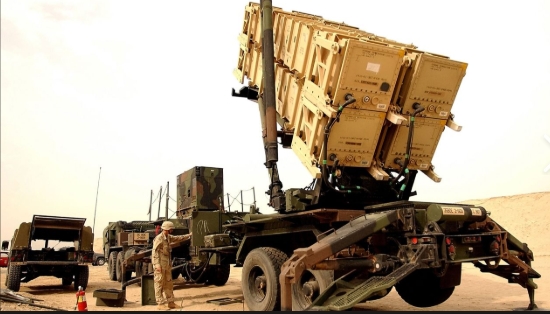
US Interceptor Missile Shortage Sparks Debate: Leaked Assessments Highlight Depleted Patriot and THAAD Stocks Amid Global Conflicts – Exam Analysis
A series of assessments circulating in Washington in early August 2026 has focused attention on the state of American interceptor missile inventories. Analyses from think tanks and reporting based on official sources describe significant depletion of key air-defence systems after months of high-intensity operations linked to the conflict with Iran, layered on top of earlier commitments in Europe. The resulting debate centres on whether current stockpiles are adequate for simultaneous or sequential contingencies and how quickly industrial capacity can restore them.
Public statements from administration officials have pushed back against the most alarming characterisations. Pentagon and White House voices have contested specific percentage figures that appeared in media reports and have emphasised ongoing production increases and supplemental funding requests. At the same time, independent analyses from the Center for Strategic and International Studies and the Heritage Foundation have presented estimates showing substantial drawdowns in Patriot and Terminal High Altitude Area Defense (THAAD) interceptors relative to pre-conflict levels. These studies also note that offensive long-range systems such as ATACMS and certain cruise missiles have seen heavy expenditure.
The core difficulty is structural. Interceptor missiles are complex, expensive and produced on lines that cannot be expanded overnight. Even with multi-year contracts and investment in solid-rocket motors and seeker components, returning inventories to preferred levels is projected to take several years. Production rates for PAC-3 variants and THAAD interceptors remain constrained by specialised suppliers, skilled labour and testing capacity. Prior transfers to partners and allies had already reduced the buffer available when the Middle East operations intensified.
In practical terms the shortage raises questions about the density of air and missile defence that can be sustained around US forces, forward bases and key partners. A high volume of incoming ballistic or cruise missiles can rapidly consume interceptors even when engagement success rates are high. Low remaining stocks therefore affect both the willingness to enter or prolong certain types of engagement and the residual capacity available for other theatres, particularly the Indo-Pacific. Analysts have repeatedly warned that a major contingency involving China would place extreme demands on precisely the same classes of interceptors.
The administration has responded with expanded procurement authorities, multi-year contracts valued in the tens of billions of dollars, and efforts to accelerate solid-rocket-motor production. Industry partners have announced capacity expansions, yet the lag between contract signature and delivered missiles remains measured in years rather than months. Supplemental budget requests for fiscal 2027 reflect recognition of the gap. Critics argue that the industrial base was allowed to atrophy during periods of lower demand and that surge capacity was never adequately funded or exercised.
For Indian competitive-exam aspirants the issue connects several strands of the international relations and security syllabus. First, it illustrates the concept of the defence industrial base and the difficulty of reconstituting specialised production under time pressure. Second, it highlights the problem of simultaneous or sequential contingencies—how a major power manages munitions consumption across multiple theatres. Third, it raises questions about burden-sharing and the sustainability of extended deterrence commitments to allies. Fourth, it provides a concrete example of the interaction between technology, industrial capacity and strategy.
India itself operates a mix of indigenous and imported air-defence systems and is expanding its own interceptor and missile production under the Atmanirbhar Bharat framework. The American experience offers comparative lessons on the importance of surge capacity, supply-chain resilience for critical components, and the need to maintain adequate war reserves even in peacetime. Discussions of India’s partnerships with the United States in the Indo-Pacific context also gain a practical dimension when the partner’s own stockpile constraints become visible.
The debate in Washington is not purely technical. It carries implications for force posture, crisis decision-making and the credibility of extended deterrence. If interceptors are scarce, commanders and political leaders must weigh the risk of rapid depletion against the requirements of any given operation. That calculation affects signalling, escalation management and the willingness of partners to rely on American systems in a crisis. Some observers argue that the current shortfalls will accelerate efforts by allies to develop or expand their own interceptor production and to explore lower-cost counter-drone and counter-missile solutions.
Production of the most advanced interceptors cannot be treated as a simple budget line. It depends on a limited number of specialised facilities, secure supply chains for energetics and electronics, and a workforce with scarce skills. Efforts to dual-source components or to expand existing lines face long lead times for qualification and certification. The multi-year contracts now in place are intended to give industry the predictability needed to invest, yet the physical output will arrive only gradually.
In the near term the practical effect is a more constrained set of options for policymakers. Operations that consume large numbers of interceptors must be weighed against residual capacity for other contingencies. Diplomatic efforts to manage or terminate high-consumption conflicts gain additional urgency when munitions accounts are under pressure. At the same time, the public discussion of shortfalls can itself influence adversary calculations, either by encouraging probing behaviour or by demonstrating resolve to rebuild capacity.
The leaked or reported assessments of August 2026 have therefore done more than quantify remaining stocks. They have forced a broader conversation about the assumptions underlying American military planning: the expected duration and intensity of future conflicts, the reliability of industrial surge, and the degree to which allies can share the burden of high-end air and missile defence. For students of strategy and security these are enduring questions. The current episode simply renders them concrete and urgent.
Accurate understanding of the systems involved (Patriot PAC-3, THAAD, associated radars and command networks), the approximate scale of reported drawdowns, the industrial constraints, and the multi-theatre implications will equip aspirants to handle both factual and analytical questions on contemporary defence and geopolitics.
Frequently Asked Questions
What systems are most affected by the reported US interceptor shortage?
Analyses focus on Patriot PAC-3 interceptors and THAAD interceptors, with significant drawdowns also noted for certain offensive long-range missiles.
Why can’t the United States quickly replenish interceptor stocks?
Production involves complex, specialised components, limited supplier capacity, long lead times for qualification, and constraints on skilled labour and testing infrastructure. Even expanded contracts deliver missiles only over several years.
How does the shortage affect multi-theatre readiness?
Heavy consumption in one theatre reduces the residual capacity available for other potential contingencies, particularly high-intensity scenarios in the Indo-Pacific, thereby constraining options and affecting deterrence calculations.
Why is this relevant for Indian exam aspirants?
It illustrates defence industrial-base challenges, simultaneous contingency planning, extended deterrence, and comparative lessons for India’s own missile and air-defence production efforts under Atmanirbhar Bharat.
Master Defence & Strategic Studies
In-depth coverage of global missile systems, air defense technologies, and defense industrial base dynamics.
Daily Current Affairs → All Exams →Join our official Telegram channel for instant updates: @rrbcontents