Home › Blog › Global Defence & Geopolitics › US Navy Air Power
Sky Superiority at Sea: How US Navy Air Power Outmatches Major National Air Forces
Key Takeaways & Summary
- World's #2 Aviation Fleet: The US Navy operates ~2,400+ active aircraft alone. Combined with the US Marine Corps (~1,300 aircraft), its ~3,700 aircraft fleet outmatches the total air force sizes of China (PLAAF ~2,500) and India (IAF ~1,700).
- Carrier Strike Group (CSG) Architecture: Operates 11 nuclear-powered supercarriers. A single Carrier Air Wing (CVW) deploys 60–75 advanced aircraft including F/A-18s, F-35Cs, EA-18G Growlers, and E-2D Hawkeyes.
- Red Sea Combat Operations: Successfully neutralized anti-ship ballistic missiles (ASBMs), cruise missiles, and drone swarms in the most intense high-threat naval air combat campaign since World War II.
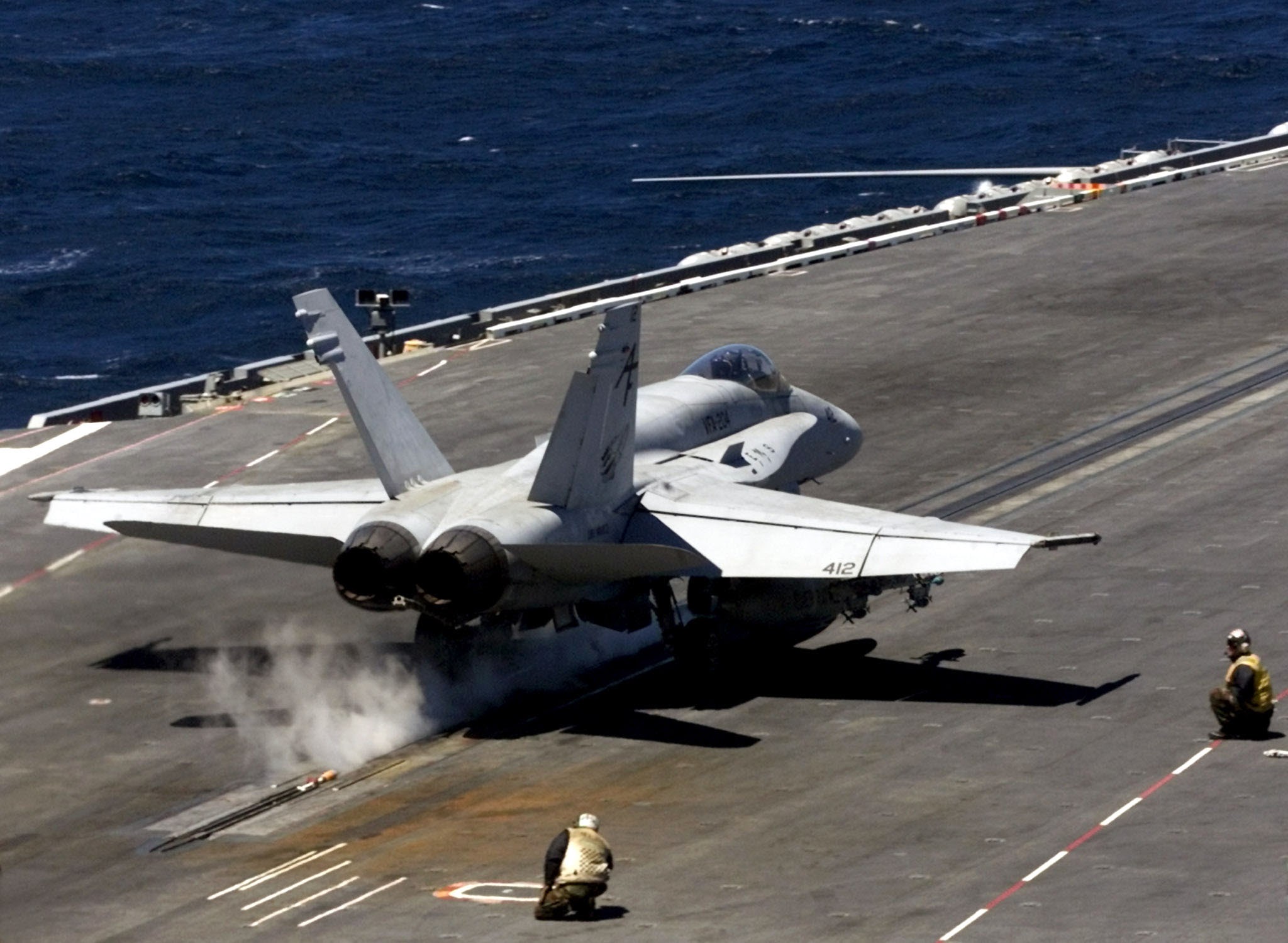
- CATOBAR Engineering Superiority: Catapult Assisted Take-Off allows naval jets to launch at maximum gross weight with full weapons payloads and fuel, unlike STOBAR ski-jump systems used by India and China.
Table of Contents
- 1. Comparing Fleet Numbers: US Navy Aviation vs. PLAAF and IAF
- 2. Carrier Air Wings (CVW): Mobile Airbases With Sovereign Authority
- 3. The World-Shocking Operation: Red Sea Air Combat Campaign
- 4. Engineering Dominance: Why Naval Aircraft Are Built Different
- 5. Comparative Strategic Analysis: US Navy vs. China & India
- 6. Exam Relevance & UPSC Defense Notes
1. Comparing Fleet Numbers: US Navy Aviation vs. PLAAF and IAF
In modern military aviation, a famous adage frequently circulates among defense analysts: "The second-largest air force in the world is the United States Navy." Far from being mere hyperbole, this statement reflects a concrete operational reality. The US Navy operates an armada of carrier-based stealth fighters, electronic warfare jets, airborne early warning aircraft, and multi-mission helicopters that exceeds the total combat aircraft inventories of major sovereign nations, including the Indian Air Force (IAF) and rivals the operational capacity of the People’s Liberation Army Air Force (PLAAF) of China.
Fleet Comparison Matrix: US Navy vs. China & India
| Metric / Dimension | US Navy Aviation (USN + USMC) | China (PLAAF + PLANAF) | Indian Air Force (IAF) |
|---|---|---|---|
| Total Active Aircraft | ~3,700+ | ~3,300+ Combined | ~1,700+ |
| Primary Carrier Fighters | F/A-18E/F Super Hornet, F-35C | J-15 Flying Shark, J-35 | Rafale M, MiG-29K (Indian Navy) |
| 5th Gen Stealth Fighters | ~200+ F-35C & F-35B in service | ~250+ J-20 (Land-based) | 0 Active (AMCA in development) |
| Airborne Early Warning (AEW&C) | E-2D Advanced Hawkeye (Carrier-capable) | KJ-500, KJ-2000, JL-3 | Netra AEW&C, IL-76 Phalcon |
| Dedicated EW Attack Aircraft | EA-18G Growler | J-16D | Limited pod-based EW |
| Global Expeditionary Reach | 100% Mobile (Global Oceans) | Primarily Regional / Coastal | Primarily Border / Regional |
2. Carrier Air Wings (CVW): Mobile Airbases With Sovereign Authority
The true strength of US Navy air power lies not just in raw numbers, but in its operational deployment mechanism. Land-based air forces require diplomatic permissions, overflight rights, and vulnerable stationary airfields in foreign nations. The US Navy projects its air power via Carrier Strike Groups (CSGs).
The Anatomy of a Modern Carrier Air Wing
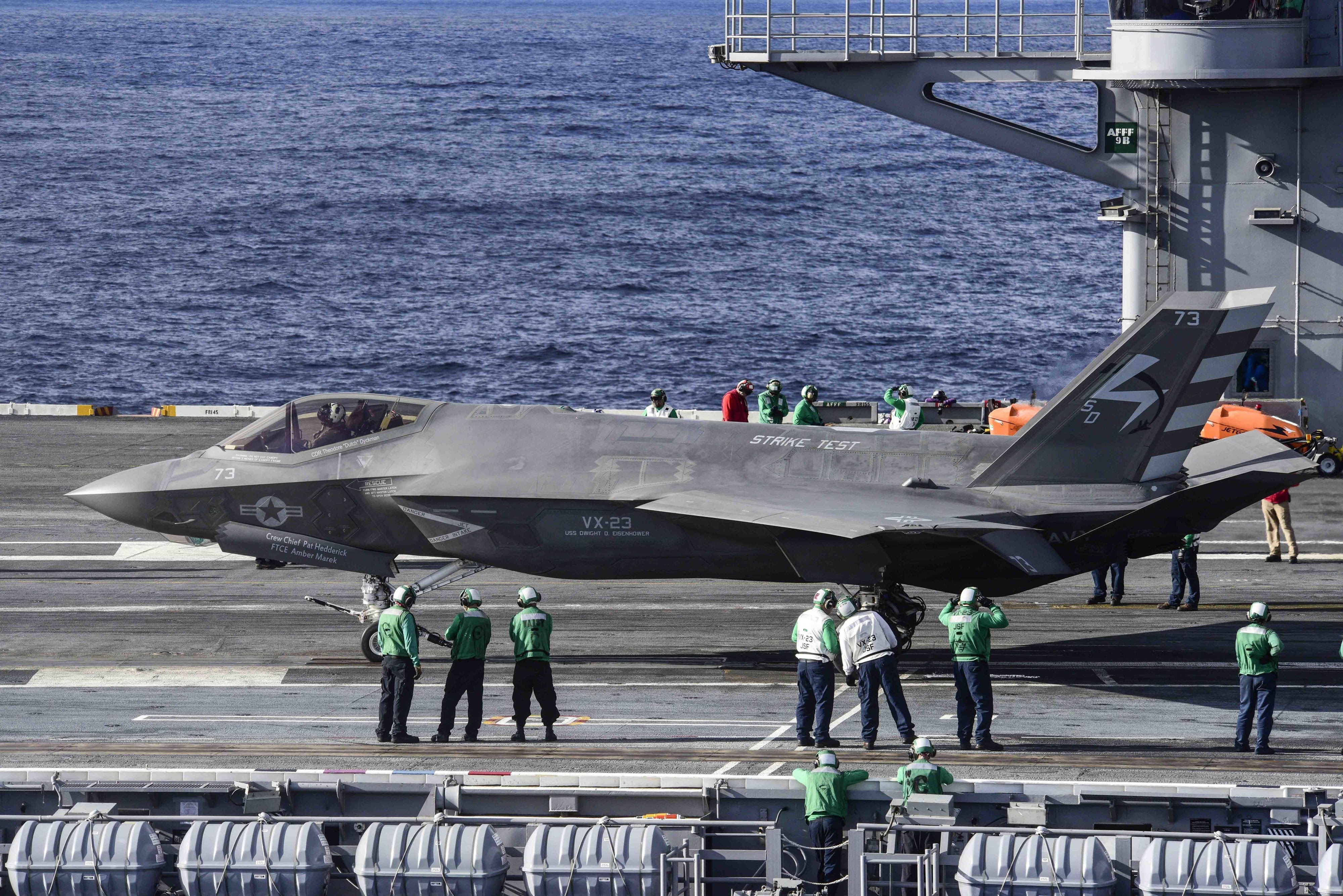
Each of the US Navy’s 11 active nuclear-powered supercarriers (Nimitz-class and Gerald R. Ford-class) deploys a standardized Carrier Air Wing (CVW) consisting of 60 to 75 aircraft:
- Strike Fighter Squadrons (VFA): 44x F/A-18E/F Super Hornets and F-35C Lightning II stealth fighters assigned to air superiority and deep precision strike.
- Electronic Attack Squadron (VAQ): 5x EA-18G Growlers providing airborne electronic attack, radar jamming, and suppression of enemy air defenses (SEAD).
- Carrier Airborne Early Warning Squadron (VAW): 4x to 5x E-2D Advanced Hawkeye aircraft providing continuous 360-degree radar surveillance and battle management.
- Helicopter Squadrons (HSM/HSC): 11x MH-60R and MH-60S Seahawk helicopters handling anti-submarine warfare (ASW) and search and rescue (SAR).
- Fleet Logistics (VRC/VRM): CMV-22B Ospreys transporting personnel and supplies directly to the flight deck at sea.
3. The World-Shocking Operation: Red Sea Air Combat Campaign
While military analysts have long debated US Navy capabilities on paper, recent real-world combat operations in the Red Sea, Bab-el-Mandeb Strait, and Gulf of Aden demonstrated its power under fire. Beginning in late 2023 and continuing through sustained combat operations, US Navy Carrier Strike Groups engaged in the most sustained high-intensity naval air defense campaign since 1945.
Neutralizing Ballistic Missiles and Drone Swarms
The Red Sea conflict represented the first time in human history that a naval fleet faced operational anti-ship ballistic missiles (ASBMs), anti-ship cruise missiles (ASCMs), and loitering attack drone swarms simultaneously in combat conditions.
- F/A-18 Super Hornets flying continuous combat air patrols (CAP) scored dozens of air-to-air kills against incoming kamikaze attack drones and cruise missiles.
- E-2D Advanced Hawkeyes orbited high above the operational zone, passing real-time fire-control data via Naval Integrated Fire Control-Counter Air (NIFC-CA) directly to destroyers.
- Guided-Missile Destroyers launched Standard Missile-2 (SM-2), SM-3, and SM-6 interceptors, destroying exo-atmospheric anti-ship ballistic missiles traveling at hypersonic speeds.
4. Engineering Dominance: Why Naval Aircraft Are Built Different
Comparing naval aircraft directly to land-based air force jets requires understanding the extreme engineering demands of carrier operations.
5. Comparative Strategic Analysis: US Navy vs. China & India
US Navy vs. China (PLAAF & PLANAF)
China’s military aviation has undergone rapid modernization, producing advanced 5th-generation stealth fighters like the land-based J-20 and expanding its carrier fleet with the launch of the Type 003 Fujian. However, major operational gaps remain between US Naval Aviation and Chinese air power regarding carrier operational experience (100+ years vs 10 years), stealth carrier deployments (F-35C vs J-35 testing), and dedicated electronic attack (EA-18G Growler vs J-16D integration).
US Navy vs. India (IAF & Indian Naval Aviation)
India’s air capabilities are anchored by the Indian Air Force (IAF), operating multi-role fighters like the Dassault Rafale and Su-30MKI, alongside two aircraft carriers (INS Vikramaditya and INS Vikrant). Key differences lie in launch mechanics: Indian carriers utilize STOBAR ski-jump ramps (limiting takeoff weights and missile payloads), whereas US Navy CATOBAR catapults launch heavy fighters with full fuel and weapons loads.
6. Exam Relevance & UPSC Defense Notes
UPSC & Defense Studies Notes
GS Paper 3 (Internal Security & Defense Technology): CATOBAR vs STOBAR carrier mechanics, stealth aviation, NIFC-CA network warfare, India-US defense partnership (Malabar exercise, Rafale M for INS Vikrant).
Key Concepts: 11 Nuclear Supercarriers, E-2D Hawkeye AEW&C, EA-18G Growler SEAD, UNCLOS Maritime Freedom of Navigation (FONOPs).
Frequently Asked Questions
How large is the US Navy aircraft fleet compared to global air forces?
The US Navy operates ~2,400+ active aircraft independently. When combined with the US Marine Corps aviation arm (~1,300 aircraft), its ~3,700 aircraft fleet ranks as effectively the second-largest air power arm in the world.
What is the difference between CATOBAR and STOBAR aircraft carriers?
CATOBAR (used by US Navy) uses steam/electromagnetic catapults to launch fully loaded heavy aircraft. STOBAR (used by India and China) relies on ski-jump ramps, which limits takeoff weight, fuel, and weapons payload.
What combat role did US Navy carrier aviation play in recent Red Sea operations?
US Navy Carrier Strike Groups intercepted anti-ship ballistic missiles, cruise missiles, and attack drones in combat, using F/A-18s, E-2D Hawkeyes, and destroyer-launched SM-2/SM-6 missiles.
Sources: US Navy Flight International Fleet Database, Pentagon Annual Defense Reports, Reuters Naval Archives.
NEEDS DOUBLE-CHECK: none
Master Defense & International Relations on RRBCONTENTS
Practice past year questions, study mock papers, and explore comprehensive study guides.
Solve Defense PYQs → Explore Govt Jobs →Join our official Telegram channel: @rrbcontents