Home › Blog › What Is a Heat Dome? The Science Behind Extreme Summer Heatwaves and How to Stay Safe
What Is a Heat Dome? The Science Behind Extreme Summer Heatwaves and How to Stay Safe
As summer temperatures surge across the globe, millions of residents across the American South, Desert Southwest, and Gulf Coast find themselves trapped under an unrelenting meteorological phenomenon. With headlines reporting heat index values climbing to an extraordinary 115°F (46.1°C) in Louisiana and severe heat warnings covering expansive regions of the United States, public health officials and weather forecasters are issuing urgent warnings.
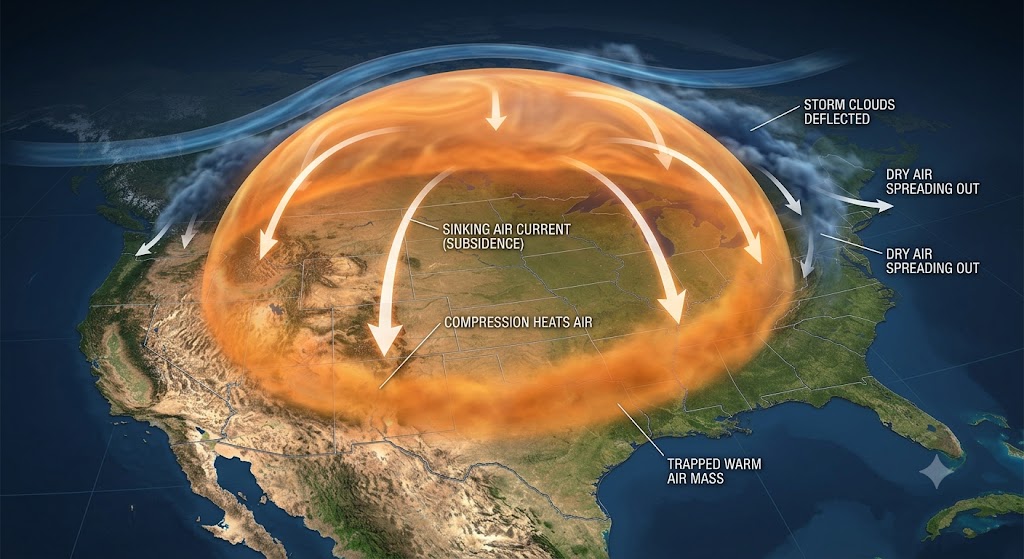
Understanding what is a heat dome has moved from a niche atmospheric science concept to vital life-saving knowledge. A heat dome occurs when the atmosphere traps hot ocean air like a rigid pressure cooker lid, preventing warm air from escaping and blocking cooling rain clouds from forming. The result is a prolonged, dangerous stretch of extreme temperatures that can persist for days or even weeks.
| HEAT DOME MECHANICS AT A GLANCE | |
|---|---|
| Primary Driver | Strong high-pressure system (Anticyclone) aloft |
| Ocean Precursor | Strong west-to-east Pacific ocean temperature gradients |
| Core Physical Effect | Sinking air (Subsidence) compresses & warms; blocks cloud formation |
| Trapping Mechanism | Meandering Jet Stream (Rossby Waves / Omega Block) locks ridge in place |
| Compounding Hazards | Severe humidity (high heat index), dry soil feedback, power grid stress |
1. Recent Context: Extreme Heat Grips the US South and West
The term "heat dome" has dominated weather bulletins as broad regions of the United States experience summer conditions characterized by high heat and humidity.
Current Extreme Heat Snapshot
• Louisiana & Gulf Coast: Heat Index values reaching 115°F due to high Gulf humidity.
• Desert Southwest & California: Air temperatures surpassing 110°F–120°F across valley sectors.
• National Impact: Over 100 million Americans under active Heat Advisories or Excessive Warnings.
2. What Is a Heat Dome? The Meteorological Definition
In meteorological terms, a heat dome is not a physical structure, but a large-scale atmospheric condition created by a persistent high-pressure system (an anticyclone) aloft. When a dominant ridge of high pressure parks itself over a geographic region, it acts like a giant cap or dome over the lower atmosphere.
The defining characteristic of a heat dome is subsidence—the downward movement of air within a high-pressure column. As air descends from the upper atmosphere toward the Earth's surface, it encounters higher atmospheric pressure. This compression causes the air to warm up rapidly in a thermodynamic process known as adiabatic heating.
3. How a Heat Dome Forms: Step-by-Step Atmospheric Mechanics
The creation of a major heat dome involves a sequence of ocean-atmosphere interactions that span thousands of miles.

4. Temperature vs. Humidity: Understanding the Wet-Bulb Hazard
Not all heat domes feel the same. The impact of a heat dome depends heavily on whether it forms over an arid environment (like the American Southwest) or a moist environment (like the US South and Gulf Coast).
| Parameter | Dry Heat Dome (e.g. Arizona/Nevada) | Humid Heat Dome (e.g. Louisiana/Texas) |
|---|---|---|
| Primary Driver | Extreme air temp (110°F–120°F+) | Moderate/high temp + high dew point |
| Humidity Profile | Low relative humidity (<20%) | High relative humidity (>60%) |
| Sweat Efficiency | High evaporation, rapid dehydration | Low evaporation, high heat stress |
| Primary Threat | Wildfires & extreme heat stroke | Surging Heat Index (115°F+) & WBT |
5. Cascading Impacts: Health, Infrastructure, and Agriculture
Heat domes cause wide-ranging impacts that extend beyond basic weather discomfort.
6. Safety and Survival Guide: Staying Safe During Extreme Heat
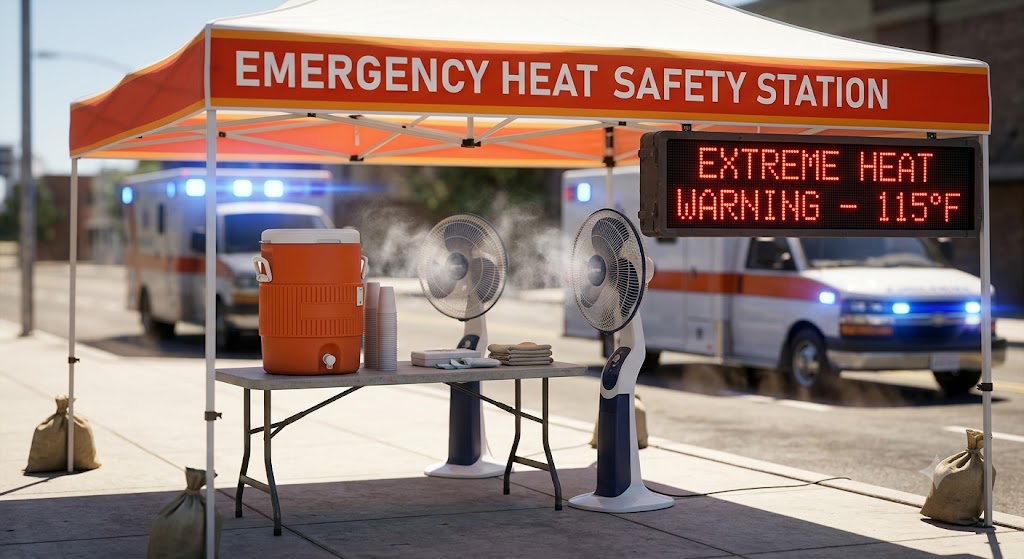
When a region is placed under an Excessive Heat Warning due to a heat dome, following evidence-based safety measures is essential to protect yourself and your family.
| HEAT EXHAUSTION | HEAT STROKE (EMERGENCY) |
|---|---|
| Heavy sweating, pale skin, dizziness, nausea, weak pulse, muscle cramps. | Red, hot, dry or moist skin, confusion, slurred speech, rapid strong pulse, core temp > 104°F. |
| Action: Move to cool place, loosen clothing, sip water, apply wet cloths. | Action: CALL 911 IMMEDIATELY! Apply ice packs to armpits/groin, cool rapidly. |
7. The Climate Connection: Are Heat Domes Becoming More Severe?
Global mean surface temperatures have risen due to greenhouse gas emissions. As a result, when an atmospheric high-pressure ridge forms today, it builds on a higher thermal baseline than a similar ridge would have fifty years ago. A heat dome that might have produced 100°F temperatures in the past now regularly pushes thermometer readings to 108°F or 115°F.
Key Takeaways
Core Definition: A heat dome is a large high-pressure system (anticyclone) that forces air downward to compress, warm, and trap heat.
Atmospheric Jet Stream: Held in place by stalled bends in the Jet Stream (Omega Blocks / Rossby Waves).
Safety Protocols: Stay in air-conditioned environments, drink water continuously, and avoid outdoor labor between 10 AM and 6 PM.
Stay Updated & Excel in Your Preparations
Track latest policy updates, current affairs, and comprehensive study materials on RRBCONTENTS.
Latest News Portal → Daily Current Affairs →Join our official Telegram channel for instant updates: @rrbcontents