Home › Blog › Why 23 Million Signatures Sought Argentina’s World Cup Ban
Why 23 Million Signatures Sought Argentina’s World Cup Ban: The Full Story
Football rarely stays only about football. When more than 23 million people appear to demand that a two-time World Cup winner be thrown out of the tournament forever, the story stops being a sporting dispute and becomes something larger. It becomes a mirror held up to nationalism, online rage, referee trust, presidential politics and the strange power of digital petitions in the 21st century.
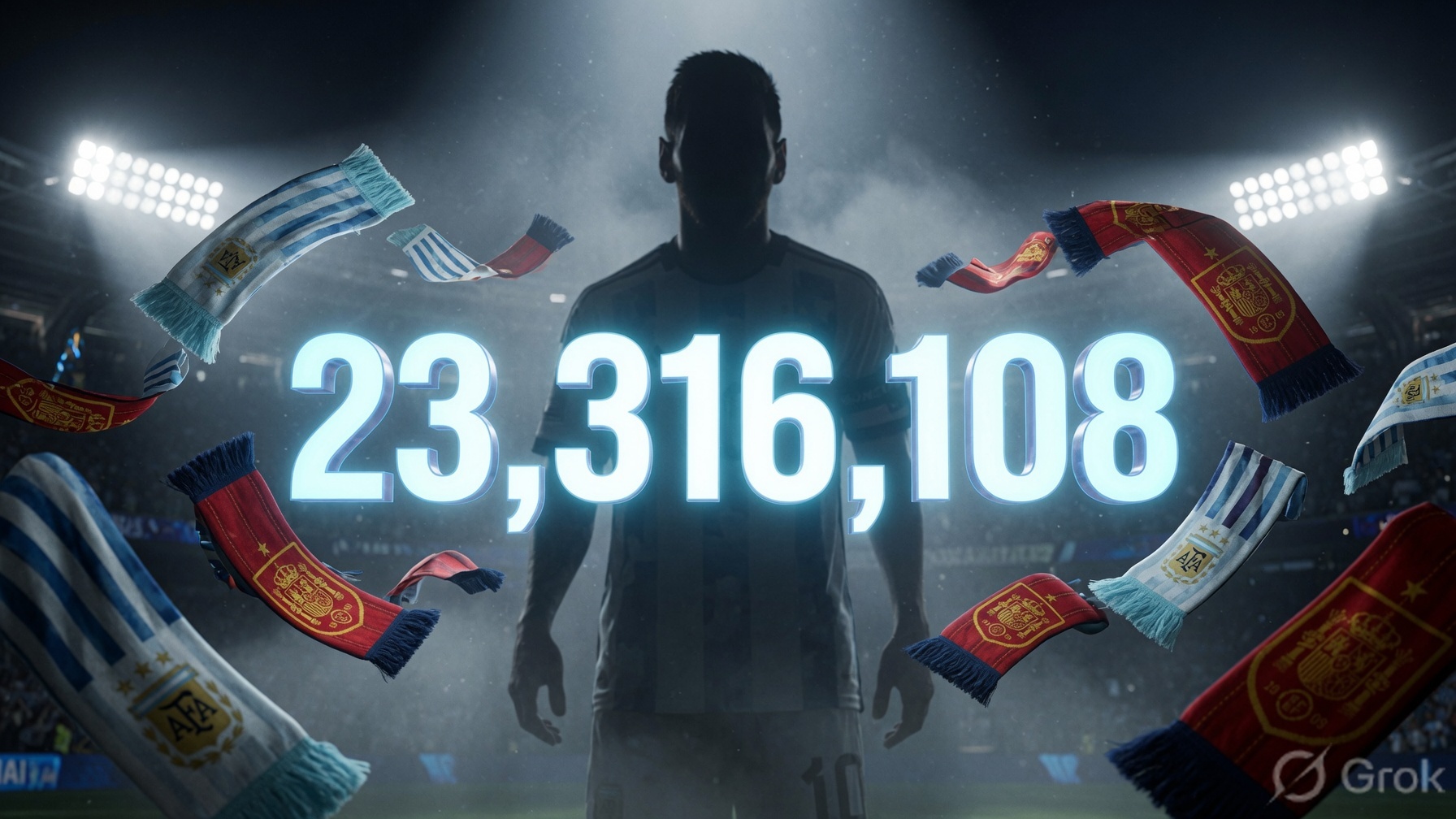
In July 2026, after Spain beat Argentina 1-0 in extra time in the World Cup final at MetLife Stadium, a campaign called “Argentina Out” closed with a claimed tally of 23,316,108 signatures. The petition accused FIFA and its referees of systematic favouritism towards Lionel Messi and the Argentine team. It asked a blunt question: why should the rest of the world bother competing if the winner is already decided? Within days the number became global news. Argentina’s President Javier Milei hit back, calling the critics jealous. FIFA opened investigations into post-match violence and an earlier political banner. And serious questions arose about whether those 23 million signatures were even real.
This is not a simple story of sore losers or biased officials. It is a layered episode that mixes sporting controversy, historical grievances, digital manipulation and the soft power of national pride. For students preparing for competitive exams, it offers a live case study in how sports, politics and technology collide.
Table of Contents
- 1. Background & Historical Context
- 2. What Exactly Happened: The Facts of the 2026 Campaign
- 3. Why It Happened: Causes and Triggering Factors
- 4. Political Dimension: Milei’s Defiant Response
- 5. Economic and Soft-Power Implications
- 6. Social & Cultural Dimension
- 7. International and Geopolitical Angle
- 8. Legal & Institutional Limits of Online Petitions
- 9. Impact on India and Global Football Governance
- 10. Criticism, Counter-Arguments and the Reality of the Numbers
- 11. Way Forward and Lessons
- 12. Comparison / Impact Table
- 13. Quick Revision / Must Remember Points
- 14. Conclusion
1. Background & Historical Context
Argentina’s relationship with the World Cup has always been intense. The country won in 1978 under military rule, again in 1986 with Diego Maradona’s genius and controversy, and most recently in 2022 with Lionel Messi’s crowning achievement in Qatar. That 2022 victory turned Messi into something close to a national saint and gave the Albiceleste an aura of destiny.
Yet the same success also sharpened old suspicions. Critics had long whispered about favourable refereeing for Argentina, especially when Messi was involved. The phrase “VARgentina” — a sarcastic blend of VAR and Argentina — circulated after several high-profile decisions in previous tournaments. By the time the 2026 tournament (hosted across the United States, Canada and Mexico) began, the defending champions carried both glory and a growing burden of resentment.
Add to this the unresolved Falklands/Malvinas dispute. In 1982 Argentina and Britain fought a short, bitter war over the islands. The memory remains raw in Argentine public culture. FIFA has repeatedly fined teams for displaying political messages, including Argentina itself in 2014 for a similar banner. The stage was therefore set for any Argentine celebration that touched politics to explode.
2. What Exactly Happened: The Facts of the 2026 Campaign
The 2026 World Cup final took place on 19 July. Spain defeated Argentina 1-0 after extra time, Ferran Torres scoring the decisive goal. Argentina managed no shots on target in normal time. Enzo Fernández received a second yellow card late in the second half. After the final whistle, ugly scenes erupted. Leandro Paredes appeared to grab Spain’s Eric García by the throat. Nahuel Molina and others were involved in confrontations. Assistant coach Roberto Ayala was also reported to have struck out. FIFA quickly appointed a disciplinary and ethics prosecutor.
Days earlier, after the semi-final win over England, several Argentine players had unfurled a banner reading “Las Malvinas son Argentinas.” The United Kingdom protested. FIFA confirmed it was examining the incident under rules that ban political slogans and symbols.
Amid this atmosphere the “Argentina Out” petition, hosted on argentinaout.com, gathered enormous online attention. Organisers claimed a final figure of 23,316,108 signatures from around 170 countries. The text accused FIFA of bias towards Messi and Argentina and demanded the team’s permanent exclusion so that “everyone else” could have a fair chance. After Spain’s victory the site posted a closing message: “FIFA ignored us but Spain delivered. Thank you Spain.”
A parallel Change.org petition asking for a replay of the final attracted far fewer signatures — in the low tens or hundreds of thousands. FIFA has given no indication it will act on either petition.
3. Why It Happened: Causes and Triggering Factors
Several factors converged. First, a series of contentious refereeing and VAR decisions throughout the tournament fed the perception of favouritism. Critics pointed to disallowed goals, unpunished fouls and cards that seemed to protect key Argentine players. Whether every claim holds up under calm review is another matter; perception, once formed, travels faster than evidence.
Second, the post-match brawl supplied emotional fuel. Fans already angry about earlier decisions now saw images of Argentine players and staff appearing to assault opponents after a defeat. Spain’s coach Luis de la Fuente publicly called the behaviour intolerable.
Third, the Malvinas banner transformed a football story into a political one. For many outside Argentina it looked like a deliberate provocation on the biggest stage in sport. For many inside Argentina it was a legitimate expression of national claim.
Fourth, the digital environment amplified everything. A website with a large, rapidly climbing counter, shared across social platforms, created the impression of a genuine global uprising. Whether the counter reflected verified individuals or a mixture of genuine clicks, refreshes and automated traffic remains contested.
4. Political Dimension: Milei’s Defiant Response
President Javier Milei did not stay silent. In a series of Instagram posts he framed the criticism as envy. “The problem with Argentina is that we stand out. We don’t go unnoticed, people are jealous of us, and we’re good at almost everything,” he wrote. Another post declared: “Do you have enemies? It means you once defended something. We defend Argentina.” He shared an AI-generated image of himself tearing open a suit to reveal an Argentina jersey underneath, captioned “Long live Argentina, damn it!”
Later Milei went further, suggesting a coordinated “anti-Argentina campaign” involving progressive forces, and at one point linking it to US Democrats and governments in Brazil and Mexico. The rhetoric fits his broader political style: confrontational, nationalist and quick to cast domestic and international criticism as ideological attack.
For a president who came to power promising radical economic change, the World Cup controversy offered a chance to rally patriotic sentiment at a moment when the team’s on-field failure might otherwise have been politically costly.
5. Economic and Soft-Power Implications
A permanent ban from the World Cup would have been catastrophic for Argentine football’s commercial value. Broadcast rights, sponsorship deals, player market values and tourism linked to the national team all depend on continued participation in the biggest tournament. Even the threat, however empty, temporarily damaged the brand.
More subtly, the episode reveals how soft power works in reverse. Argentina’s football success had been a major source of global admiration and domestic cohesion. The combination of alleged bias claims, political messaging and post-match violence turned that soft power into a liability in large parts of the international audience. Spain’s victory, by contrast, was framed by many as a return of “fairness.”
Argentina already has an automatic place at the 2030 World Cup as one of the hosts of the centenary tournament. That structural guarantee limits the practical damage of any temporary reputation hit.
6. Social & Cultural Dimension
Inside Argentina the petition was widely dismissed as foreign jealousy or coordinated trolling. Outside, especially among fans of teams that felt they had suffered from refereeing decisions, it became a vehicle for accumulated frustration. Football tribalism found a new expression in digital petitions that cost nothing to “sign.”
The episode also exposed the thin line between legitimate protest and collective online punishment. Calling for a national team’s expulsion from the World Cup is an extreme demand. It treats an entire country’s sporting identity as disposable. That intensity reflects how deeply football is woven into national self-image in many societies.
7. International and Geopolitical Angle
The Malvinas banner reopened a wound that diplomacy has never fully closed. Britain’s government publicly backed calls for FIFA investigation. Argentine officials treated the display as a normal expression of sovereignty. FIFA’s difficulty is structural: it must appear neutral on political questions while enforcing its own rules against political messaging inside the stadium.
The wider online campaign also showed how quickly sporting events can become proxies for larger cultural and political battles. Claims of “woke” campaigns, foreign financing of online attacks, and jealousy of Argentine success all travelled alongside the football discussion. In that sense the 23-million figure, real or not, functioned as a political symbol as much as a sporting one.
8. Legal & Institutional Limits of Online Petitions
FIFA’s statutes and disciplinary code contain no mechanism that allows a public petition — however large — to expel a member association from competitions. Sanctions require formal proceedings based on specific breaches: field invasions, discrimination, match-fixing, violent conduct, political messaging, and so on. The governing body has opened investigations into the post-match incidents and the Malvinas banner. Possible outcomes include individual suspensions, fines on the Argentine Football Association, and further monitoring. A lifetime ban on the national team is not on the table.
This gap between online mobilisation and institutional power is important. Digital campaigns can shape public narrative and apply reputational pressure. They cannot rewrite the rulebook of international sport.
9. Impact on India and Global Football Governance
For Indian audiences the episode matters in two ways. First, it demonstrates how quickly a major sporting event can generate secondary political and diplomatic friction — useful material for understanding soft power and sports diplomacy questions that appear in UPSC and state PSC papers. Second, it offers a cautionary case about the reliability of viral online numbers. Indian exam aspirants are frequently asked to evaluate the credibility of digital information and the difference between mobilisation and verified public opinion.
Globally, the affair reinforces pressure on FIFA to improve transparency around refereeing, VAR decision-making and the consistent application of political-message rules. Infantino’s reported post-final letter congratulating the Argentine federation, leaked and widely criticised, only added to perceptions of uneven treatment.
10. Criticism, Counter-Arguments and the Reality of the Numbers
Serious fact-checking has raised substantial doubts about the 23 million figure. Multiple reports noted that the argentinaout.com site lacked standard verification tools — email confirmation, CAPTCHA, identity checks. Independent analyses suggested the counter rose with page visits and refreshes, making it vulnerable to bots and repeated loading. The site’s own later archive language described the number as a “display counter” rather than a verified-signature total. Genuine Change.org petitions on the same themes attracted far smaller numbers.
Defenders of the campaign argue that even an inflated figure reflects real anger. Critics reply that an unverifiable number used to demand extreme punishment is itself a form of misinformation. Both sides have a point: the underlying frustration was real; the claimed scale was almost certainly not.
Argentina’s own counter-narrative — that the team was targeted because of success and that post-match behaviour, while regrettable, was the product of extreme disappointment — also deserves space. Every tournament produces disputed decisions. Singling out one nation for permanent exclusion is disproportionate.
11. Way Forward and Lessons
FIFA needs clearer, faster communication on disciplinary cases and more transparent VAR protocols. National associations must educate players and staff about the political-messaging rules before major tournaments. Hosts and organisers should prepare better for the diplomatic fallout that almost inevitably accompanies matches between countries with unresolved territorial disputes.
For fans and digital platforms the lesson is older: extraordinary claims require extraordinary evidence. A petition demanding the sporting exile of a nation should not rest on an opaque counter.
Argentina itself faces a choice. It can treat the episode as proof of external hostility and double down on defiant nationalism, or it can address the specific behavioural problems that fuelled the backlash while continuing to defend legitimate national positions. The first path is politically easier in the short term; the second is more sustainable for the country’s football reputation.
12. Comparison / Impact Table
| Aspect | Claimed Impact of Petition | Actual Institutional Reality | Longer-term Effect |
|---|---|---|---|
| Signature numbers | 23.3 million | Likely inflated / unverified | Narrative power, limited legal weight |
| FIFA response | Demand for lifetime ban | Disciplinary probes only | Possible fines & player bans |
| Political messaging | Highlighted Malvinas claim | Existing rules already ban such displays | Potential fine for AFA |
| Argentina’s 2030 status | Threatened | Automatic qualification as co-host | Unaffected |
| Soft-power cost | High reputational damage | Temporary among some audiences | Recoverable with better conduct |
13. Quick Revision / Must Remember Points
- Petition “Argentina Out” claimed 23,316,108 signatures after 2026 final.
- Core accusation: systematic referee/VAR bias towards Messi & Argentina.
- Post-final brawl and earlier Malvinas banner triggered FIFA investigations.
- President Milei called critics jealous and framed opposition as ideological.
- No mechanism exists for public petitions to expel a FIFA member.
- Signature total widely questioned as unverified / bot-inflated.
- Argentina retains automatic 2030 World Cup place as co-host.
- Useful for exams: sports diplomacy, soft power, digital misinformation, Falklands dispute, FIFA governance.
14. Conclusion
The 23-million-signature campaign against Argentina was never going to remove the team from the World Cup. FIFA’s rules do not work that way. What the episode did achieve was to expose the raw nerves that still run through international football: the thin trust in refereeing, the ease with which national grievances enter the stadium, the speed with which online numbers can be inflated, and the willingness of political leaders to turn sporting setbacks into narratives of external jealousy.
Spain won the final on the pitch. The larger contest over narrative, fairness and national honour continues. For students of politics, economics and international relations, the story is valuable precisely because it is messy. It shows how a single tournament can become a stage for historical memory, digital mobilisation and presidential rhetoric all at once.
Football remains the most global of languages. When that language turns angry, the translation is rarely simple. Understanding the full depth of the Argentina Out petition means accepting that complexity rather than reducing it to a single villain or a single number.
Stay updated with clear, exam-oriented analysis of current affairs and deeper stories behind the headlines. Visit rrbcontents.com for free study material, mock tests and structured notes. Join the Telegram channel @rrbcontents for daily updates, quizzes and focused content that helps serious aspirants stay ahead.
Explore More In-Depth Analysis on RRBCONTENTS
Access free study notes, current affairs updates, and sports diplomacy analysis for competitive exams.
Full Study Notes → Daily Current Affairs →Join our official Telegram channel for instant study resources: @rrbcontents