Home › Blog › Indian Polity › Why Abhijeet Dipke Demands Dharmendra Pradhan's Resignation
Why Abhijeet Dipke Insists on Dharmendra Pradhan's Resignation "At Any Cost": Inside the High-Stakes Battle for Education Accountability
Track UPSC, SSC, RRB & State PSC recruitment notifications on RRBCONTENTS Jobs Portal.
Key Takeaways & Summary
- Unyielding Resignation Demand: CJP founder Abhijeet Dipke insists that Union Education Minister Dharmendra Pradhan's resignation is non-negotiable under the principle of political ministerial responsibility.
- Rejecting Bureaucratic Scapegoating: CJP views IAS officer transfers (such as Higher Education Secretary Vineet Joshi) as "optical damage control" that avoids top-level executive accountability.
- Ultimatum to PM Modi: Dipke issued a 7-day ultimatum to Prime Minister Narendra Modi, warning that failure to remove Pradhan will shift the movement's target to the Prime Minister's office.
- Government Defense: Union Ministers argue that autonomous bodies (NTA/CBSE) execute exams, and pointing out proactive steps like the CBI probe, Radhakrishnan Committee, and Public Exams Act 2024.
Table of Contents
- 1. The Core Catalyst: The Principle of Ministerial Responsibility
- 2. The Five Key Reasons Behind Dipke’s Uncompromising Demand
- 3. The Government’s Counter-Stance: Why Dharmendra Pradhan Has Not Resigned
- 4. The Street Reality: Clashes, Fasting, and Water Cannons
- 5. Comprehensive Comparison: Dipke's Demands vs. Government Position
- 6. High-Yield Exam Corner for Competitive Aspirants
At New Delhi’s historic protest site of Jantar Mantar, amidst the sound of clashing brass plates, chanting youth, and heavy police deployments, one slogan has echoed louder than any other over recent weeks: "Dharmendra Pradhan must resign."
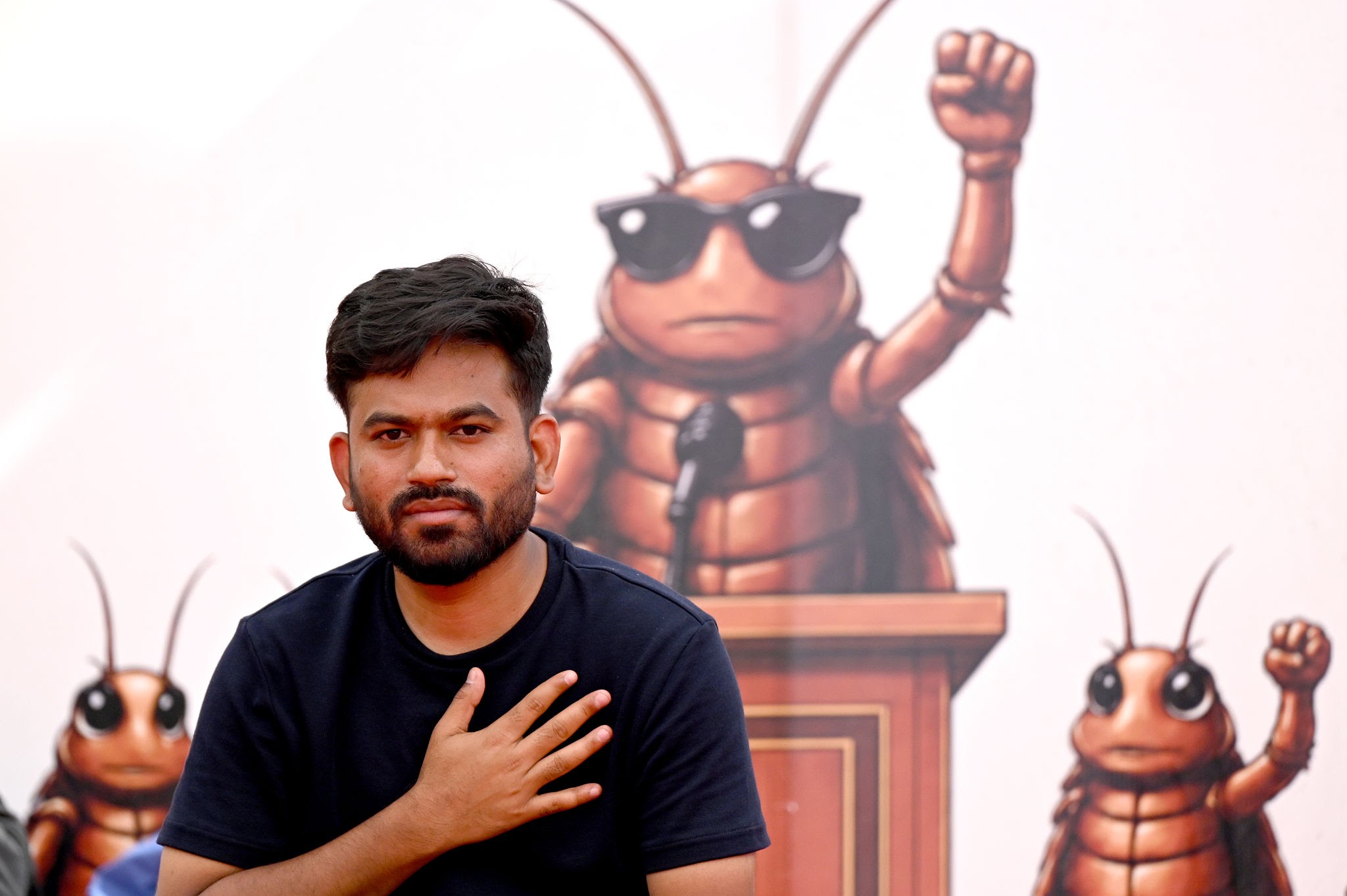
The man leading this charge is Abhijeet Dipke, a US-educated researcher and the founder of the Cockroach Janta Party (CJP). What began as a viral social media campaign targeting systemic examination failures has transformed into a high-stakes political confrontation that has halted parliamentary proceedings, drawn international media coverage, and forced top government officials to the negotiating table.
Yet, even as the government announced major administrative changes—including replacing the Higher Education Secretary, establishing fast-track courts for paper-leak syndicates, and deploying the Central Bureau of Investigation (CBI)—Dipke has remained immovable. In press conferences, public speeches, and social media posts, he has repeatedly declared that the resignation of Union Education Minister Dharmendra Pradhan is "non-negotiable" and must be achieved "at any cost." He went so far as to issue a direct warning to Prime Minister Narendra Modi, stating that if Pradhan is not removed, the movement's next target will be the resignation of the Prime Minister himself.
Why has the ouster of a single cabinet minister become the absolute line in the sand for Dipke and the CJP? Why reject administrative compromises or venue changes offered by senior ministers?
For students, competitive examination aspirants (UPSC, State PSCs, SSC, RRB, and Banking), and general citizens trying to make sense of this unfolding crisis, this deep analysis examines the personal motivations, political logic, administrative principles, and strategic calculations behind Abhijeet Dipke’s unyielding stance.
1. The Core Catalyst: The Principle of Ministerial Responsibility
To understand why Abhijeet Dipke insists on Union Education Minister Dharmendra Pradhan’s resignation above all else, one must first grasp the concept of political accountability in a parliamentary democracy.
| Administrative Accountability | Political / Ministerial Responsibility |
|---|---|
| • Handled by IAS officers & testing agency officials. | • Held by the Cabinet Minister who holds the constitutional portfolio. |
| • Actions: Transfers, audits, vendor cancellations. | • Actions: Resignation, accepting moral blame for systemic failure. |
| • Viewed by CJP as "routine bureaucratic scapegoating." | • Viewed by CJP as the ONLY way to signal genuine democratic reform. |
When news broke of widespread paper leaks, grace-mark anomalies, and organized syndicates compromising the National Eligibility cum Entrance Test (NEET-UG), the initial response from the Ministry of Education was to treat the issue as a technical glitch managed by an autonomous body—the National Testing Agency (NTA).
For Dipke and millions of affected students, this response was deeply insulting. In Dipke's view, when over two million young citizens have their academic year disrupted, their mental health shattered, and their faith in meritocracy broken, responsibility cannot simply be shifted down to lower-level clerks, private exam vendors, or IAS secretaries.
"Moral Responsibility Means Stepping Down"
During an address to protesters at Jantar Mantar, Dipke highlighted the distinction between administrative shifting and political ownership:
"When a train accident happens, the Railway Minister accepts moral responsibility and resigns. When a security breach happens, the Home Minister faces questions. But here, after repeated paper leaks affecting crores of students over years, the Education Minister stands before cameras, admits 'moral responsibility,' and then refuses to step aside. If accepting moral responsibility carries no actual consequence, then the phrase is completely meaningless."
Dipke’s insistence on Pradhan's resignation "at any cost" stems from a core belief: without an executive resignation, the government is treating the paper leaks as an unfortunate technical accident rather than a massive failure of governance. For Dipke, making Pradhan step down is the only way to establish a historical precedent that protecting the integrity of exams is a non-negotiable duty for any sitting government.
2. The Five Key Reasons Behind Dipke’s Uncompromising Demand
Analyzing Dipke’s public statements, petitions submitted to the government, and interviews across national and international outlets reveals five distinct motivations behind his single-minded focus on Dharmendra Pradhan's removal:
1. Breaking the Cycle of "Bureaucratic Scapegoating"
Over the past decade, Indian public administration has developed a predictable routine when exam scandals occur: an investigation is launched, a few local center superintendents or private vendors are arrested, an IAS officer is quietly transferred, and the core ministry leadership remains untouched.
Dipke argues that this pattern allows senior political leadership to enjoy power without taking heat when systems break down. By rejecting the government's transfer of Higher Education Secretary Vineet Joshi as mere "optical damage control," Dipke aims to break this cycle. He insists that real reform starts at the top of the pyramid, not the middle.
2. Honoring the 800,000 Signatures and Student Suicides
The CJP movement gained massive momentum after launching an online petition that gathered over 800,000 verified student and parent signatures demanding Pradhan's immediate removal. Furthermore, the tragedy of student suicides in coaching hubs like Kota and across states following exam delays added immense emotional weight to the agitation.
For Dipke, backing down on the resignation demand after mobilizing hundreds of thousands of grieving families would feel like a betrayal. As CJP spokesperson Sourav Das publicly stated, "The resignation of Dharmendra Pradhan is non-negotiable because it carries the weight of 22 young lives lost to systemic frustration. We cannot compromise on that memory."
3. A Sarcastic Weapon: The "Birthday Gift" and "Name is Nothing" Campaign
Dipke has skillfully used sharp, satirical messaging to keep public attention focused squarely on the Education Minister.
- The Birthday Gift Incident: On June 26, 2026, when Prime Minister Modi tweeted birthday wishes praising Dharmendra Pradhan for his work on the National Education Policy, Dipke responded on X with a sarcastic message: "Happy Birthday Dharmendra Pradhan ji! Please do us a favor and hand in your resignation. We will send a resignation letter as a birthday gift—please just stamp it with your thumb."
- The "Name is Nothing" Response: When PM Modi tweeted that "Nothing is more important than the welfare and future of our youth," Dipke immediately posted a picture of Dharmendra Pradhan with the caption "Hi, my name is Nothing."
This aggressive use of satire served a clear strategy: it prevented the government from quietly moving the public conversation toward technical committees or procedural delays.
| Step | Strategic Escalation Logic |
|---|---|
| STEP 1 | Focus initial protest on Education Minister's resignation. |
| STEP 2 | Issue a strict 7-day ultimatum to the Cabinet. |
| STEP 3 | Warn that if Pradhan isn't removed, the demand shifts to PM. |
| STEP 4 | Convert an exam issue into a nationwide electoral warning. |
4. The Ultimatum to PM Modi: Expanding the Political Risk
Dipke’s rhetoric reached its peak when he addressed a massive gathering at Jantar Mantar and directed his message straight to the Prime Minister:
"Modi ji, I once again request you to accept Dharmendra Pradhan's resignation. Otherwise, the issue will not remain limited to Dharmendra Pradhan's resignation alone; it will come for your resignation next. If an incompetent and failed minister is considered more important than crores of students, remember: no one in India's youth will vote for you in upcoming elections."
By raising the stakes to target the Prime Minister's office, Dipke intentionally transformed the CJP from a localized student grievance group into a formidable political movement. The logic was simple: make protecting Dharmendra Pradhan so politically expensive for the ruling party that keeping him in office becomes an unsustainable liability.
5. Rejecting "Closed-Door" Negotiations
When the government offered to hold official talks, Union Minister Jitendra Singh and BJP President J.P. Nadda stated that ministers were willing to meet CJP representatives at their official residences or offices.
Dipke and the CJP rejected this offer, demanding that any dialogue take place publicly at Jantar Mantar or a neutral public location like the Constitution Club of India. Dipke argued that closed-door meetings in private ministerial drawing rooms often result in vague promises and photo opportunities used to dilute protest momentum. By conditioning talks on either a public venue or Pradhan's prior resignation, Dipke maintained control over the negotiation space.
3. The Government’s Counter-Stance: Why Dharmendra Pradhan Has Not Resigned
To present a balanced and objective news analysis, one must also examine why the central government and the ruling National Democratic Alliance (NDA) have firmly resisted Dipke's resignation demands.
1. The Defense of Autonomous Institutions
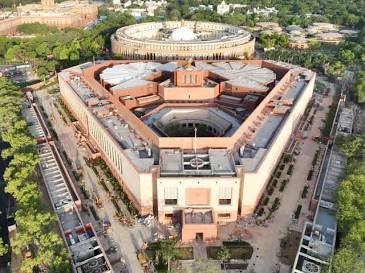
Speaking in Parliament and to news channels, Union Parliamentary Affairs Minister Kiren Rijiju characterized the demand for Pradhan's resignation as "purely political." Rijiju argued that organizations like the Central Board of Secondary Education (CBSE) and the National Testing Agency (NTA) are autonomous operational bodies.
The government's argument rests on a clear distinction: a minister sets policy frameworks, but the physical execution, printing, transport, and digital security of examination papers are handled by operational agencies and technical vendors. Therefore, penalizing the minister for a criminal breach carried out by underground paper-leak syndicates is administrative overreach.
2. Proactive Corrective Actions Taken
The government maintains that Dharmendra Pradhan has not "run away" from his duties, but has instead taken decisive corrective steps:
- CBI Probe: Handing over the entire NEET-UG paper leak investigation to the Central Bureau of Investigation (CBI), resulting in dozens of arrests across Bihar, Gujarat, and Maharashtra.
- Structural Reform Committee: Setting up a High-Level Committee of Experts, chaired by former ISRO Chief Dr. K. Radhakrishnan, to recommend complete structural overhauls for the NTA.
- Enforcing the 2024 Public Exams Act: Operationalizing stringent new legislation that imposes penalties up to 10 years in prison and ₹1 Crore in fines for paper leaks.
- Administrative Clean-up: Replacing key NTA leadership and transferring the Higher Education Secretary.
3. Avoiding Precedents of "Surrender to Street Ultimatums"
From a political strategy perspective, no sitting government wants to set a precedent where an agitation led by a non-electoral pressure group can force the removal of a senior Cabinet Minister. Ruling party strategists argue that surrendering to resignation ultimatums would encourage rival political groups to organize street sit-ins whenever a policy dispute arises, undermining the authority of elected parliamentary governance.
4. The Street Reality: Clashes, Fasting, and Water Cannons
While legal and political debates unfolded in television studios, the situation on the ground at Jantar Mantar grew tense and volatile.
The "Sansad Chalo" March and Police Action
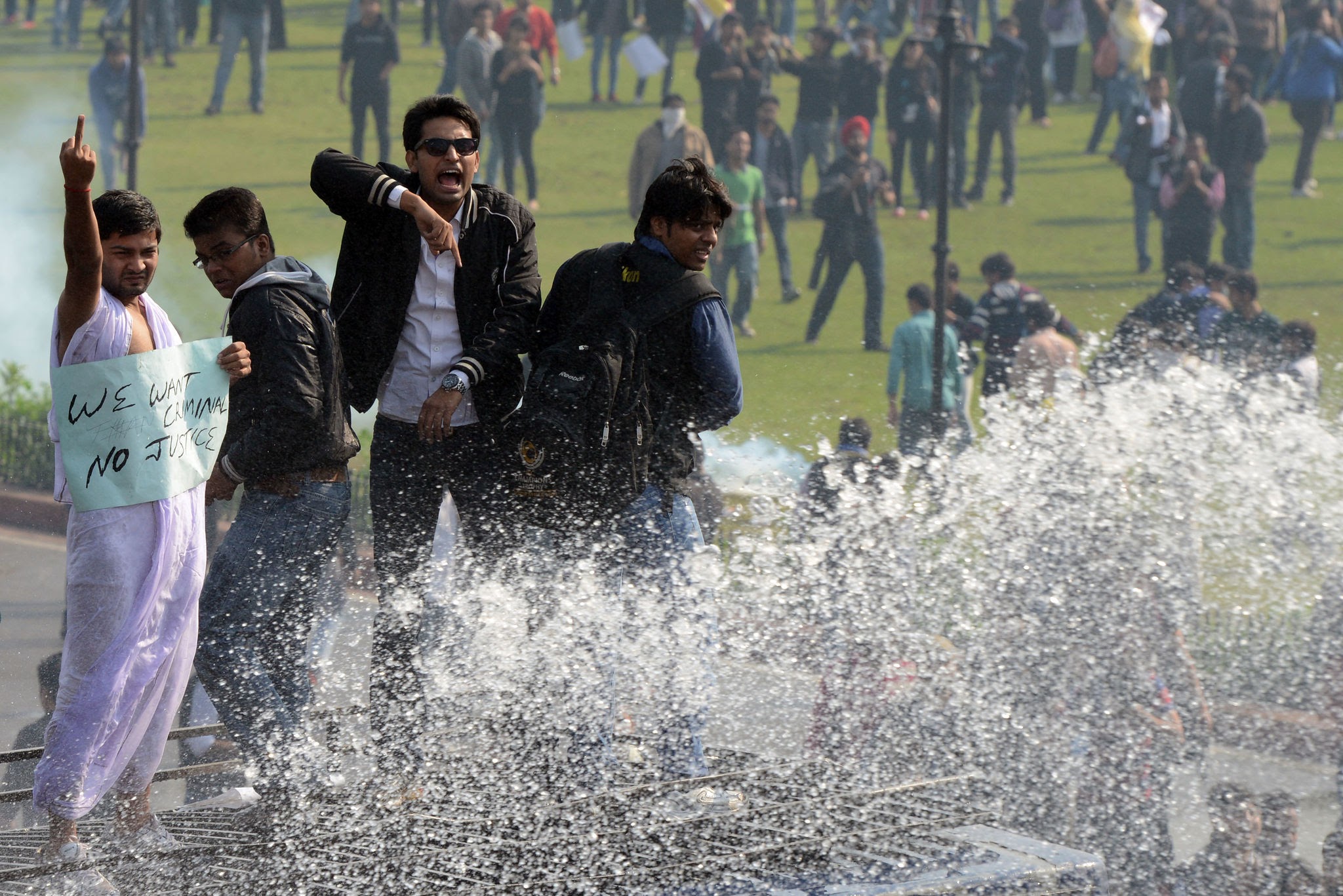
On July 20, 2026, thousands of CJP supporters who had gathered at Jantar Mantar attempted to march toward Parliament under the "Sansad Chalo" campaign. Armed with placards, clashing thalis, and shouting slogans against the Education Ministry, protesters tried to push past heavy security barricades erected along Janpath and Parliament Street.
Delhi Police personnel responded with water cannons, tear gas, and lathi-charges to disperse the crowd. According to official reports, over 180 people were injured, including 118 security personnel and 60 student protesters.
Following the clashes, Dipke condemned the police response as "cruel and heavy-handed," announcing that the CJP would pause further street marches to protect young students from physical harm while continuing their sit-in at Jantar Mantar.
The Sonam Wangchuk Factor and Hunger Strikes
The agitation gained moral backing when renowned educator, innovator, and climate activist Sonam Wangchuk joined the CJP at Jantar Mantar and launched an indefinite hunger strike demanding accountability for students.
When Delhi Police forcibly moved a weakened Wangchuk to Safdarjung Hospital, Dipke launched a counter hunger-strike at the protest site, vowing to fast until Wangchuk was released. Though Dipke broke his fast after 48 hours following an explicit appeal from Wangchuk to "preserve his energy for the long fight," the episode highlighted the deep emotional intensity surrounding the movement.
5. Comprehensive Comparison: Dipke's Demands vs. Government Position
To clearly understand where both sides stand in this ongoing confrontation, the table below compares the CJP's core demands against the central government's official actions:
| Issue / Domain | CJP Position (Abhijeet Dipke) | Central Government Position |
|---|---|---|
| Ministerial Accountability | Non-negotiable demand: Immediate resignation or sacking of Education Minister Dharmendra Pradhan. | Rejects resignation; states the Minister accepted moral responsibility and is actively leading reforms. |
| Testing Agency (NTA) | Complete scrapping or total restructuring of NTA; return to state-level or decentralized options. | Restructuring NTA via the Dr. K. Radhakrishnan Expert Committee; retaining a centralized testing body. |
| Compensation for Victims | ₹1 Crore financial compensation for families of students who died by suicide due to exam stress/leaks. | Offers state welfare support; focuses on fast-track judicial trials and prevention rather than direct cash payouts. |
| Legal Charges on Protesters | Immediate, unconditional withdrawal of all police FIRs filed against peaceful student protesters. | Cases reviewed individually by law enforcement based on destruction of public property or security clashes. |
| Dialogue Location | Public talks strictly at Jantar Mantar or a neutral venue like the Constitution Club. | Offers talks at official ministerial offices or the residence of senior cabinet leaders (e.g., J.P. Nadda). |
| Paper Leak Laws | Demands immediate fast-track courts and retroactive maximum punishment for offenders. | Enforced the Public Examinations Act, 2024 and established specialized fast-track courts. |
6. High-Yield Exam Corner for Competitive Aspirants (UPSC, SSC, RRB & State PSCs)
For students preparing for competitive examinations, this ongoing political and administrative crisis provides practical case studies across multiple General Studies subjects:
GS Paper 2: Indian Polity, Governance & Constitutional Law
- Collective and Individual Ministerial Responsibility:
• Article 75(3): The Council of Ministers is collectively responsible to the Lok Sabha (House of the People).
• Individual Responsibility: Ministers hold office during the pleasure of the President (Article 75(2)), though politically they answer to the Prime Minister and Parliament for their ministry's performance. - Role of Non-Party Pressure Groups: The Cockroach Janta Party represents an informal issue-based pressure group utilizing constitutional rights under Article 19(1)(a) (Freedom of Speech) and Article 19(1)(b) (Peaceful Assembly) to influence public policy outside traditional electoral channels.
- Delegated Legislation and Autonomous Bodies: Understanding the statutory vs. autonomous nature of organizations like the NTA, CBSE, and UGC, and how executive oversight functions over non-statutory testing bodies.
GS Paper 4: Ethics, Integrity & Public Aptitude
- Ministerial Ethics vs. Bureaucratic Ethics: Examining whether accepting "moral responsibility" requires a public official to resign, or whether staying in office to fix the broken system represents a higher ethical duty.
- Public Trust in Administrative Institutions: When paper leaks occur repeatedly, the "social contract" between the state and its youth fractures. Restoring public trust requires operational transparency, prompt grievance redressal, and visible accountability.
Interactive Polity Practice Quiz
Q1. Which Article of the Indian Constitution states that the Council of Ministers is collectively responsible to the Lok Sabha?
A) Article 74(1)
B) Article 75(3)
C) Article 78
D) Article 88
Correct Answer: B
Explanation: Article 75(3) establishes the principle of collective responsibility of the Council of Ministers to the Lok Sabha.
Q2. Who chairs the High-Level Expert Committee set up to recommend structural reforms for the NTA?
A) Dr. K. Radhakrishnan
B) Vineet Joshi
C) Atanu Chakraborty
D) Sonam Wangchuk
Correct Answer: A
Explanation: Former ISRO Chief Dr. K. Radhakrishnan chairs the High-Level Committee of Experts advising NTA reforms.
Master Your Competitive Exam Preparation with RRBCONTENTS
Explore free study notes, polity case studies, current affairs breakdowns, and mock tests for UPSC, SSC, RRB, and Banking exams.
Solve Polity PYQs → Check Govt Jobs →Join our official Telegram community: @rrbcontents