Home › Blog › Sports › Why Bhuvneshwar Kumar Is Excluded
Why Bhuvneshwar Kumar Is Excluded from Team India
Key Takeaways
- Tactical Selection Reset: Following the 2022 T20 World Cup, BCCI selectors prioritized express velocity (140+ kph), left-arm angles, and athletic fielding over 125–132 kph medium pace.
- Physical & Velocity Evolution: Multiple injuries (sports hernia, back strain) reduced Kumar's operating speed from his 2016–2018 peak of 138 kph down to 125–132 kph, diminishing aerial movement on flat international tracks.
- Departure from Red-Ball Cricket: Stepping away from First-Class Ranji Trophy matches turned Kumar into a single-format T20 contractor, limiting national recall channels.
- IPL Performance vs. National Framework: Despite winning the 2025 IPL title with Royal Challengers Bengaluru (RCB) taking 17 wickets, national selectors evaluate senior players on multi-year World Cup building cycles.
Table of Contents
- 1. The Post-2022 Selection Reset: Transitioning to Youth and Velocity
- 2. The Mechanics Paradox: Trade-off Between Pace and Swing
- 3. The Rise of the Next-Gen Pace Battery
- 4. Distance from Red-Ball Cricket and Single-Format Status
- 5. The IPL Paradox: Franchise Brilliance vs International Realities
- 6. Bhuvneshwar Kumar's Perspective & Player Acceptance
- 7. Why This Matters for Sports Quota & Govt Exam Aspirants
1. The Post-2022 Selection Reset: Transitioning to Youth and Velocity
The primary catalyst behind Bhuvneshwar Kumar's exclusion from the national setup stems from a fundamental shift in selection strategy executed by the BCCI selection committee following the 2022 ICC Men's T20 World Cup in Australia. During that tournament, India suffered a ten-wicket defeat against England in the semi-final at Adelaide Oval, exposing tactical limitations on Australian surfaces when operating at 125–132 kph without steep bounce or raw pace.
Following that tournament, the selection committee prioritized building a pace attack around bowler velocity exceeding 140 kph, complemented by left-arm angles and athletic outfielders capable of saving crucial runs in high-pressure matches.
2. The Mechanics Paradox: Trade-off Between Pace and Swing
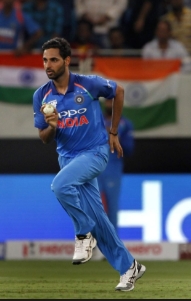
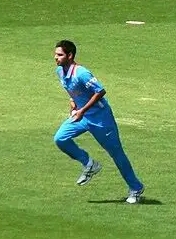
When Kumar made his international debut in late 2012, he operated at bowling speeds between 120 kph and 128 kph, relying on late hoop swing. Recognizing that lower speeds made him vulnerable on flat subcontinental pitches, Kumar underwent physical training in 2015–2016, increasing his average pace to 135 kph–140 kph and starring in India's 2018 Test victory over South Africa in Johannesburg.
However, maintaining higher speeds placed immense stress on his body, resulting in a recurring lower-back strain in 2018, sports hernia surgery in Germany in 2020, and thigh muscle injuries. Upon returning in 2021, his bowling speed settled into the 124 kph–132 kph range, decreasing his late aerial movement on flat international tracks.
3. The Rise of the Next-Gen Pace Battery
Another primary reason for Kumar's exclusion is the sudden surge of high-velocity pace bowling talent across the Indian domestic landscape:
| Bowler | Age | Primary Role | Operating Pace | Key Technical Advantage |
|---|---|---|---|---|
| Jasprit Bumrah | 32 | All-Format Leader | 140–148 kph | Unorthodox release, world-class yorkers |
| Mohammed Siraj | 32 | All-Format Seamer | 138–145 kph | Relentless seam movement & aggression |
| Arshdeep Singh | 27 | T20I & ODI Specialist | 132–140 kph | Left-arm wrist angle & death yorkers |
| Harshit Rana | 24 | Next-Gen Pacer | 140–146 kph | Steep bounce & heavy back-of-length |
| Mayank Yadav | 24 | Express Speedster | 148–156 kph | Raw, unadulterated pace & intimidation |
4. Distance from Red-Ball Cricket and Single-Format Status
Modern Indian team management places a premium on bowlers who maintain workload fitness through domestic red-ball matches in the Ranji Trophy. Between 2019 and 2023, Kumar played zero First-Class matches, returning briefly for just one Ranji match for Uttar Pradesh in January 2024 (where he took 8/115 against Bengal). By stepping away from red-ball cricket to preserve his body, he became a single-format T20 contractor, narrowing his national entry points.
5. The IPL Paradox: Franchise Brilliance vs International Realities
In the IPL, Kumar remains an undisputed legend. He stands as the all-time record holder for the most dot balls bowled in IPL history (over 1,800 dot balls) and won back-to-back Purple Caps in 2016 and 2017 with SRH. In 2025, Royal Challengers Bengaluru (RCB) acquired him for ₹10.75 Crore, where he took 17 crucial wickets to help drive RCB to their long-awaited IPL championship.
However, selectors apply a different framework for senior players over 34: evaluating pitch variations, boundary-riding athleticism, and long-term multi-year World Cup building cycles rather than subcontinental franchise results alone.
6. Bhuvneshwar Kumar's Perspective & Player Acceptance
Kumar himself has approached his national exclusion with grace and practical understanding, stating in recent media interviews:
"I don't play cricket anymore to prove anything to anyone or to chase selection. Today, I play because I love the game, I love competing in the IPL, and I enjoy mentoring young fast bowlers in the dressing room. If a call-up happens, it happens. If it doesn't, I am completely at peace with what I have achieved for India."
7. Why This Matters for Sports Quota & Govt Exam Aspirants
For candidates preparing for Sports Quota recruitments in Indian Railways, Defence Services (Army, Navy, Air Force), and State Police Departments, as well as general awareness sections in SSC and State PSC examinations:
Key Exam Highlights
- BCCI Selection Policy Dynamics: Understanding how national sports bodies utilize age-barriers, physical benchmarks (Yo-Yo test / 2-km run), and workload management in athlete evaluation.
- Sports Quota Eligibility: Candidates competing under Sports Quota must track major national tournaments (Ranji Trophy, Vijay Hazare, Syed Mushtaq Ali) alongside international participation for Grade-Pay allocations.
Quick FAQ
Why is Bhuvneshwar Kumar not selected in the Indian team?
BCCI selectors pivoted post-2022 to high-velocity pace bowling (140+ kph), left-arm angles, and athletic fielding, prioritizing younger multi-format seamers over senior 125-132 kph medium-pacers.
Which team did Bhuvneshwar Kumar play for in IPL 2025?
Bhuvneshwar Kumar was acquired by Royal Challengers Bengaluru (RCB) for ₹10.75 Crore in the IPL Mega Auction, taking 17 wickets to help RCB win their title.
How many total international wickets has Bhuvneshwar Kumar taken?
Bhuvneshwar Kumar has taken 294 international wickets across formats (63 in Tests, 141 in ODIs, and 90 in T20Is).
Sources: Board of Control for Cricket in India (BCCI), International Cricket Council (ICC), IPL Official Registry, ESPNcricinfo, Hindustan Times Sports Desk.
NEEDS DOUBLE-CHECK: none
Prepare for Sports Quota & Current Affairs
Explore free study notes and competitive exam preparation materials on RRBCONTENTS.
Solve Related PYQs → Check Govt Jobs →Join our official Telegram community: @rrbcontents