Home › Blog › Indian Polity › Ravneet Singh Bittu Resignation
Why Ravneet Singh Bittu Resigned as Union Minister: Inside the Constitutional Mandate and BJP's Strategic Pivot to Punjab
Track Ministry of Railways, Food Processing & Central Secretariat job updates on RRBCONTENTS Jobs Portal.
Key Takeaways Table: Resignation Dynamics at a Glance
| Factor / Dimension | Official / Verified Details |
|---|---|
| Official Resignation Date | July 24, 2026 |
| Portfolios Held | Minister of State for Railways; Minister of State for Food Processing Industries |
| Constitutional Basis | Clause (2) and Clause (5) of Article 75 of the Constitution of India |
| Parliamentary House Served | Rajya Sabha (representing Rajasthan, August 2024 – June 2026) |
| Immediate Next Role | Full-time organizational mobilization for Punjab BJP; prospective candidate for 2027 Assembly polls |
| Target Assembly Seat | Expected to contest from Ludhiana (Central) or Malwa region |
Table of Contents
- 1. Introduction & Official Resignation Statement
- 2. Reason 1: The Constitutional Mandate (Expiry of Rajya Sabha Tenure)
- 3. Reason 2: Strategic Shift to Ground-Level Punjab State Politics
- 4. Reason 3: The BJP's Solo 2027 Punjab Assembly Election Plan
- 5. High-Yield Exam Corner for Competitive Aspirants
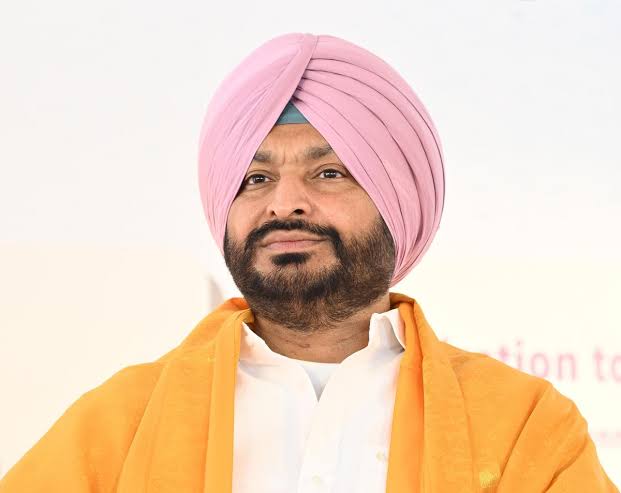
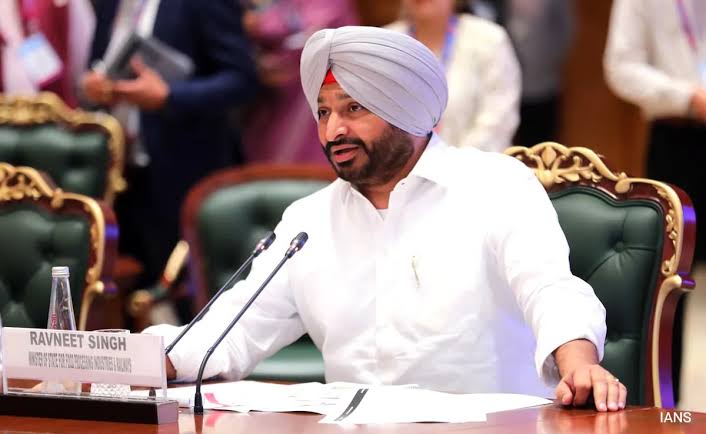
In a major political and administrative development in New Delhi, Ravneet Singh Bittu, the Union Minister of State for Railways and Food Processing Industries, tendered his resignation from the Union Council of Ministers. On the advice of Prime Minister Narendra Modi, President Droupadi Murmu formally accepted his resignation with immediate effect under Clause (2) of Article 75 of the Constitution of India.
Expressing his gratitude on social media platform X, Bittu stated:
"I express my heartfelt gratitude to Hon'ble President Smt. Droupadi Murmu Ji and Hon'Grand Prime Minister Shri Narendra Modi Ji for giving me the opportunity to serve the nation as Minister of State in the Government of India. It has been an honour to serve the people of India, especially my beloved Punjab. My journey of public service continues with renewed dedication."
While sudden ministerial resignations often stir speculation regarding political rifts or performance issues, an in-depth analysis of parliamentary records, constitutional law, and ground-level political strategy reveals that Bittu's exit is a calculated, dual-purpose move driven by both constitutional necessity and the BJP's organizational blueprint for Punjab.
Below is an exhaustive, fact-checked breakdown analyzing the exact legal reasons, strategic calculations, political history, and future implications of Ravneet Singh Bittu's resignation.
2. Reason 1: The Constitutional Mandate (Expiry of Rajya Sabha Tenure)
The primary legal driver behind Ravneet Singh Bittu's resignation is grounded in the constitutional provisions governing the Union Council of Ministers under the Constitution of India.
CONSTITUTIONAL TIMELINE OF BITTU'S CABINET TENURE
- March 2024: Bittu leaves Congress and joins the BJP.
- June 2024: Contests Lok Sabha election from Ludhiana on BJP ticket and loses; inducted as MoS in Modi 3.0 Cabinet.
- August 2024: Elected to Rajya Sabha from Rajasthan to fill the casual vacancy created by K.C. Venugopal.
- June 21, 2026: Term in Rajya Sabha officially expires; not renominated.
- July 24, 2026: Tenders formal resignation under Article 75(2); President accepts resignation on advice of PM.
Understanding Article 75(5) of the Indian Constitution
Under Article 75(5) of the Constitution of India:
"A Minister who for any period of six consecutive months is not a member of either House of Parliament shall at the expiration of that period cease to be a Minister."
When Narendra Modi was sworn in as Prime Minister for his third term in June 2024, Ravneet Singh Bittu was inducted into the Council of Ministers as a Minister of State despite losing the 2024 Lok Sabha election from Ludhiana. To fulfill the six-month membership requirement, the BJP nominated him to the Rajya Sabha from Rajasthan in August 2024 to complete the remainder of a casual vacancy term left by Congress leader K.C. Venugopal.
That casual term officially expired on June 21, 2026. Because the party opted not to re-nominate him to the Upper House during recent biennial elections, Bittu's formal exit from the Council of Ministers became an administrative mandate. (Notably, fellow Minister of State George Kurian followed the exact same constitutional trajectory after his Rajya Sabha term also concluded without re-nomination).
3. Reason 2: Strategic Shift to Ground-Level Punjab State Politics
While the constitutional clock necessitated his exit from the Cabinet, the political rationale behind not re-nominating Bittu to Parliament is tied to a major strategic pivot: re-deploying him as a core leader on the ground in Punjab.
A. "17 Years in Delhi is Enough — Returning to the Vidhan Sabha"
Speaking to reporters in New Delhi and Punjab, Bittu confirmed that he had previously expressed his desire to step down from central ministry duties to focus entirely on state politics:
"It has been 17 years in Delhi across Lok Sabha and Rajya Sabha. Now I feel like coming to the Vidhan Sabha and working directly for Punjab. Our entire leadership is fully ready to serve the state. Assign us the task, we will go to villages, street to street for the betterment of Punjab and knock on every door."
According to party sources, Bittu is expected to contest the upcoming Assembly election from the Ludhiana (Central) constituency or another high-profile urban seat in the Malwa belt.
4. Reason 3: The BJP's Solo 2027 Punjab Assembly Election Plan
THE BJP'S PUNJAB ELECTORAL REALITY
- 2022 Assembly Performance: Won 2 out of 117 seats (Contested alone).
- Shiromani Akali Dal (SAD) Status: BJP has ruled out re-entering an alliance with SAD; determined to contest all 117 seats solo.
- Key Challenge: Need for prominent, credible Sikh faces with deep roots across Panthic and urban belts.
- Strategic Role for Bittu: Grandson of former CM Beant Singh; 3-time former MP with high public visibility across 20+ assembly segments.
A. Building an Independent Sikh Leadership
Ever since the breakup of the decades-old BJP-Shiromani Akali Dal (SAD) alliance over the 2020 farm laws controversy, the BJP has faced a structural hurdle in Punjab: a shortage of prominent, mass-base Sikh leaders who can bridge the divide between urban commercial centers and rural agrarian belts.
Bittu carries a significant political lineage:
- He is the grandson of Beant Singh, the former Congress Chief Minister of Punjab who was assassinated in 1995 while fighting militancy.
- He served as a three-time Lok Sabha MP (Anandpur Sahib in 2009, Ludhiana in 2014 and 2019).
- He previously served as the Leader of the Congress Party in the Lok Sabha and party whip.
When Union Home Minister Amit Shah inducted Bittu into the BJP in March 2024, the party explicitly projected him as a key national and state Sikh face. By pulling him out of the Central Ministry and stationing him in Punjab full-time, the BJP high command is positioning him as a potential chief ministerial or campaign leadership face for the 2027 polls.
5. High-Yield Exam Corner for Competitive Aspirants (UPSC, State PSCs, SSC & Banking)
For candidates preparing for competitive examinations, Ravneet Singh Bittu's resignation provides a textbook case study on the Executive & Council of Ministers under Indian Polity:
Constitutional Articles Concerning the Council of Ministers
- Article 74(1): There shall be a Council of Ministers with the Prime Minister at the head to aid and advise the President.
- Article 75(1): The Prime Minister shall be appointed by the President and the other Ministers shall be appointed by the President on the advice of the Prime Minister.
- Article 75(2): The Ministers shall hold office during the pleasure of the President. (Statutorily, the President accepts resignations or dismissals strictly on the binding advice of the Prime Minister).
- Article 75(3): The Council of Ministers shall be collectively responsible to the House of the People (Lok Sabha).
- Article 75(5): A Minister who for any period of six consecutive months is not a member of either House of Parliament shall at the expiration of that period cease to be a Minister.
Conclusion: Ravneet Singh Bittu's resignation from the Union Cabinet is a classic example of constitutional compliance meeting strategic political realignment.
While the expiration of his Rajya Sabha term legally concluded his stint as a Minister of State, the decision not to seek a fresh parliamentary mandate reflects the BJP’s deliberate choice to deploy its top Sikh leader directly into the political trenches of Punjab. As the state gears up for an intense four-way contest between AAP, Congress, SAD, and the BJP, Bittu's transition from New Delhi to Punjab will be a key dynamic to watch.
Master Indian Polity & Governance Preparation
Explore free study notes, Article 75 breakdowns, and polity PYQs on RRBCONTENTS.
Solve Polity PYQs → Check Govt Jobs →Join our official Telegram community: @rrbcontents