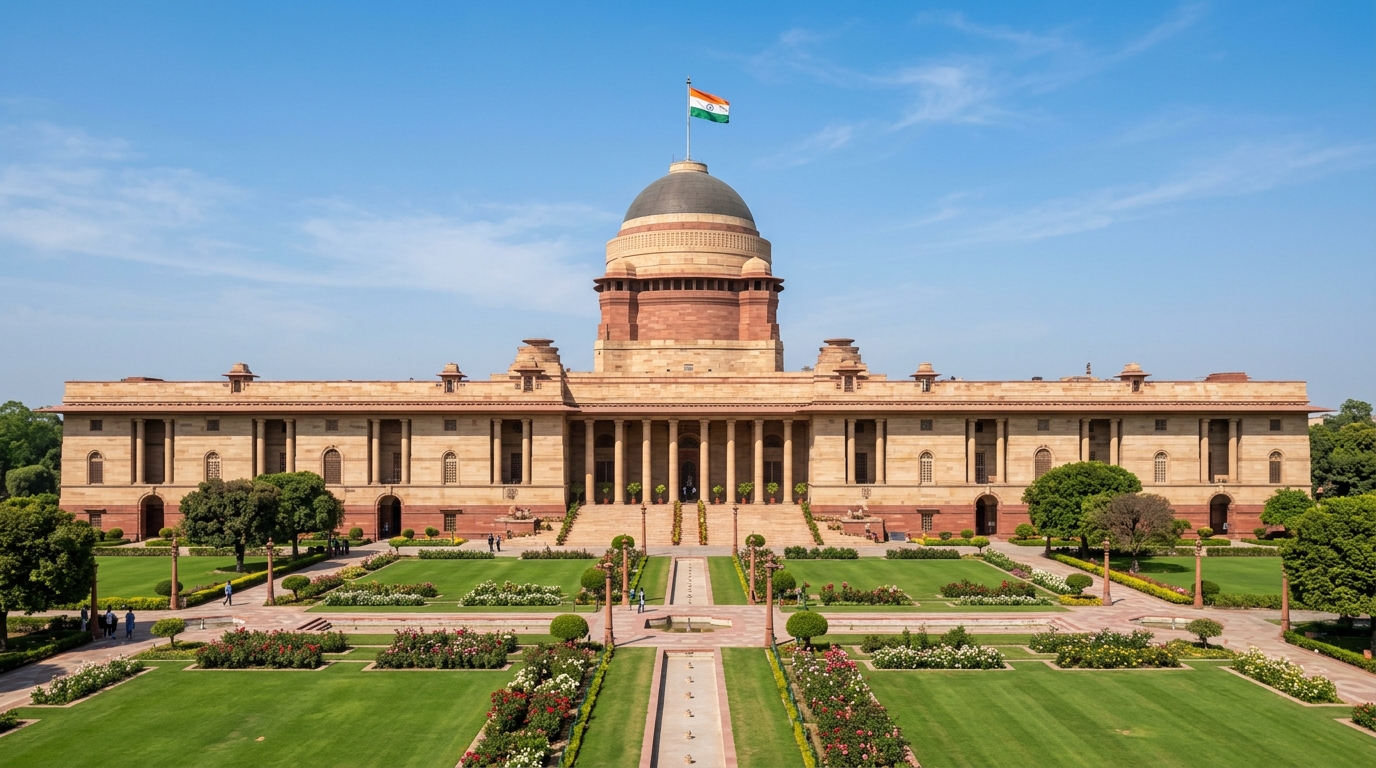
The President of India is the Head of State (De Jure Executive), the First Citizen of the Republic of India, and the Supreme Commander of the Indian Armed Forces. Under Part V (The Union) of the Constitution of India, Article 52 states: "There shall be a President of India."
In the Indian parliamentary system of governance modeled on the Westminster system, executive power is exercised in the name of the President, while real executive authority (De Facto Executive) resides with the Prime Minister and the Council of Ministers. However, the office of the President is far from a mere rubber stamp. The President acts as the constitutional guardian, the symbol of national unity, integrity, and solidarity, and exercises vital discretionary powers during political crises, hung parliaments, and constitutional emergencies.
For aspirants preparing for competitive examinations such as UPSC Civil Services, State Public Service Commissions (BPSC, UPPSC, MPPSC, RAS), SSC CGL, RRB NTPC, and Banking exams, mastering the Constitutional provisions, election methodology, powers, limitations, and impeachment of the President of India is indispensable.
Constitutional Articles
Constitutional Provisions & Articles at a Glance (Part V)
| Constitutional Article | Subject Matter / Provisions |
|---|---|
| Article 52 | There shall be a President of India. |
| Article 53 | Executive power of the Union shall be vested in the President. |
| Article 54 | Election of the President (Composition of the Electoral College). |
| Article 55 | Manner of Election of the President (Proportional Representation by STV). |
| Article 56 | Term of Office of President (5 Years) and Resignation procedures. |
| Article 57 | Eligibility for Re-election (Eligible for re-election any number of times). |
| Article 58 | Qualifications for Election as President (Age 35+, Citizen of India, LS eligibility). |
| Article 59 | Conditions of President's Office (No Office of Profit, Parliament allowances). |
| Article 60 | Oath or Affirmation by the President (Administered by Chief Justice of India). |
| Article 61 | Procedure for Impeachment of the President (For 'Violation of the Constitution'). |
| Article 62 | Time of holding election to fill vacancy in the office of President. |
| Article 72 | Power of President to grant pardons, reprieves, respites, remissions, or commute sentences. |
| Article 74 | Council of Ministers to aid and advise President (Bound by advice after 44th Amendment). |
| Article 75 | Appointment of Prime Minister and other Union Ministers by the President. |
| Article 76 | Appointment of Attorney General for India by the President. |
| Article 78 | Duties of Prime Minister in furnishing information to the President. |
| Article 85 | Sessions of Parliament, prorogation, and dissolution of Lok Sabha by the President. |
| Article 108 | Joint Sitting of both Houses of Parliament summoned by the President. |
| Article 111 | Assent to Bills passed by Parliament (Veto powers: Absolute, Suspensive, Pocket). |
| Article 123 | Power of President to promulgate Ordinances during recess of Parliament. |
| Article 143 | Power of President to consult the Supreme Court (Advisory Jurisdiction). |
| Article 352 | Proclamation of National Emergency by the President. |
| Article 356 | Proclamation of State Emergency / President's Rule in States. |
| Article 360 | Proclamation of Financial Emergency by the President. |
Background
Historical Background & Origin of the Presidency
Understanding the historical evolution of the Indian Head of State explains why the Constituent Assembly chose an elected President instead of a hereditary monarch or an American-style Presidential system.
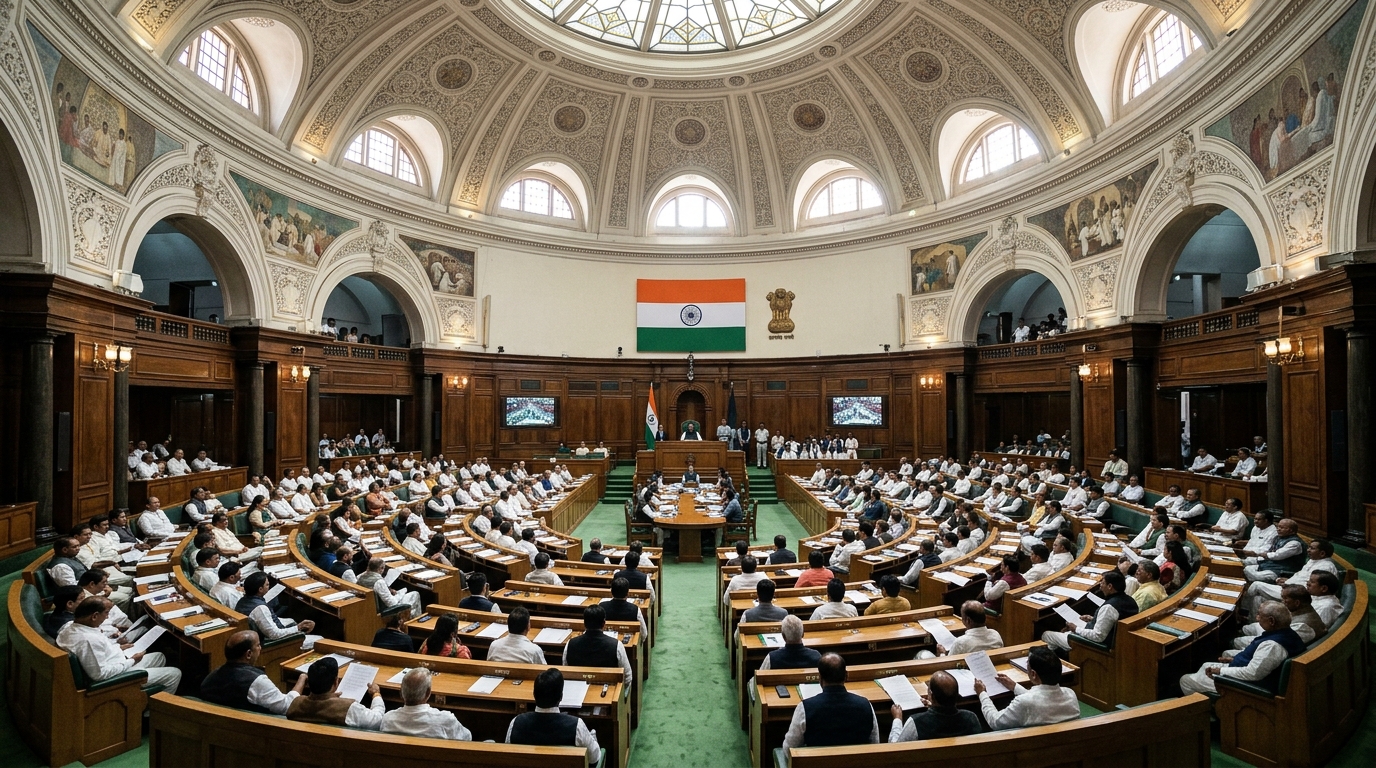
Historical Evolution of the Indian Presidency (1773 to 1950)
"The President occupies the same position as the King under the English Constitution. He is the head of the State but not of the Executive. He represents the Nation but does not rule the Nation. He is the symbol of the nation." — Dr. B.R. Ambedkar
Election & Impeachment
Electoral College (Art 54) & Impeachment (Art 61)
Comparison: Voting Eligibility in Election vs Impeachment
| Member Category | Presidential Election (Art 54) | Presidential Impeachment (Art 61) |
|---|---|---|
| Nominated Members of Parliament | Excluded (Do Not Vote) | Participate (Vote) |
| Elected MLAs of State Assemblies | Participate (Vote) | Excluded (Do Not Vote) |
| Elected MLAs of UTs (Delhi/Puducherry) | Participate | Excluded |
Judicial Powers
Pardoning Powers of the President (Article 72)
| Pardoning Term | Legal Meaning | Practical Example |
|---|---|---|
| Pardon | Completely absolves convict from all sentences & disqualifications. | Death row convict completely freed. |
| Commutation | Substitutes heavy punishment with lighter form. | Converting Death Sentence to Life Imprisonment. |
| Remission | Reduces period of sentence without changing character. | Reducing 10 years rigorous imprisonment to 5 years. |
| Respite | Awards lesser sentence on special grounds (pregnancy/disability). | Lessening sentence for a pregnant convict. |
| Reprieve | Temporary stay of execution of a sentence. | Postponing death execution pending pardon petition. |
Chronology
List of Presidents of India & Exam Highlights
| # | President Name | Tenure | Key Exam Highlights |
|---|---|---|---|
| 1 | Dr. Rajendra Prasad | 1950 – 1962 | Longest-serving President (12 yrs). Only President serving two terms. |
| 2 | Dr. S. Radhakrishnan | 1962 – 1967 | First Vice-President. Birthday (5 Sept) celebrated as Teachers' Day. |
| 3 | Dr. Zakir Husain | 1967 – 1969 | First Muslim President. First President to die in office. |
| - | M. Hidayatullah (Acting) | 1969 | Chief Justice of India who acted as President of India. |
| 4 | V.V. Giri | 1969 – 1974 | Only President elected as Independent candidate (2nd preference count). |
| 5 | Fakhruddin Ali Ahmed | 1974 – 1977 | Signed 1975 Emergency proclamation. Died in office. |
| 6 | Neelam Sanjiva Reddy | 1977 – 1982 | Only President elected Unopposed. Former Speaker of Lok Sabha. |
| 7 | Gyani Zail Singh | 1982 – 1987 | First Sikh President. Exercised Pocket Veto on Post Office Bill. |
| 8 | R. Venkataraman | 1987 – 1992 | Served during 4 Prime Ministers' tenures. |
| 9 | Dr. Shankar Dayal Sharma | 1992 – 1997 | Appointed 3 PMs in 1 year. |
| 10 | K.R. Narayanan | 1997 – 2002 | First Dalit President. First President to vote in LS election. |
| 11 | Dr. A.P.J. Abdul Kalam | 2002 – 2007 | People's President. Renowned Missile Scientist & Bharat Ratna. |
| 12 | Pratibha Devisingh Patil | 2007 – 2012 | First Female President of India. |
| 13 | Pranab Mukherjee | 2012 – 2017 | Veteran statesman & Bharat Ratna awardee. |
| 14 | Ram Nath Kovind | 2017 – 2022 | Second Dalit President. Former Bihar Governor. |
| 15 | Droupadi Murmu | 2022 – Present | First Tribal Female President & youngest President. |
Active Recall
Frequently Asked Questions (Exam Focus)
Q1: Who participates in the election of the President of India?
The President is elected by an Electoral College consisting of elected members of Lok Sabha, Rajya Sabha, and Legislative Assemblies (MLAs) of all 28 States and UTs of Delhi, Puducherry, and Jammu & Kashmir.
Q2: Do nominated members of Parliament vote in the Presidential Election?
No. Nominated members of Parliament do NOT vote in the Presidential election. However, they DO vote during Impeachment under Article 61.
Q3: What is the minimum age required to contest the Presidential election?
A candidate must have completed 35 years of age (Article 58).
Q4: On what ground can the President of India be impeached?
The President can be impeached ONLY on the ground of "Violation of the Constitution" under Article 61.
Q5: What is the maximum life of an Ordinance issued under Article 123?
An Ordinance must be approved within 6 weeks from Parliament's reassembly. Maximum life is 6 Months and 6 Weeks.
Master Indian Polity with RRBCONTENTS
Solve previous year questions, attempt mock tests, and join our Telegram community for daily study digests.
Join Telegram Channel (@rrbcontents) →Continue Revision